GOQii

Blog

  • HOME
  • HEALTHY LIVING
  • FITNESS
  • HEALTHY RECIPES
  • USER STORIES
  • KARMA
  • BUY GOQii

April 30, 2026 By GOQii Leave a Comment

The GOQii India Fit Report 2026: Unmasking the Gender Health Divide

When we talk about the “Healthspan Gap” the years lost to preventable chronic illness we often look at the national average. However, peeling back the layers of the GOQii India Fit Report 2026 reveals a stark reality: the burden of unhealthy ageing does not fall equally.

In India, women live longer than men. On paper, that looks like success. In reality, it masks a troubling truth: women spend more of those extra years in poor health. This is the Gender Health Divide. It is a complex web of biology, societal expectations, nutritional gaps, and chronic stress that quietly erodes women’s health over decades.

Quick Takeaways: The Female Healthspan Penalty

  • The Longevity Paradox: Women generally outlive men but suffer from higher rates of multi-morbidity (having two or more chronic conditions) in their later years.
  • The Caregiver’s Toll: Unpaid caregiving heavily restricts women’s time for personal preventive health, driving up chronic stress and sleep disruption.
  • The Silent Deficiencies: Rates of thyroid disorders and dangerous visceral fat accumulation remain disproportionately high among Indian women.
  • The Menopause Blindspot: The midlife transition accelerates cardiovascular and metabolic risks, yet remains one of the least supported phases in women’s healthcare.

The Staggering Reality in Numbers

Before we look at the causes, we must look at the outcomes. The data exposes the toughest truth in India’s health landscape: women are now almost twice as unhealthy as men.
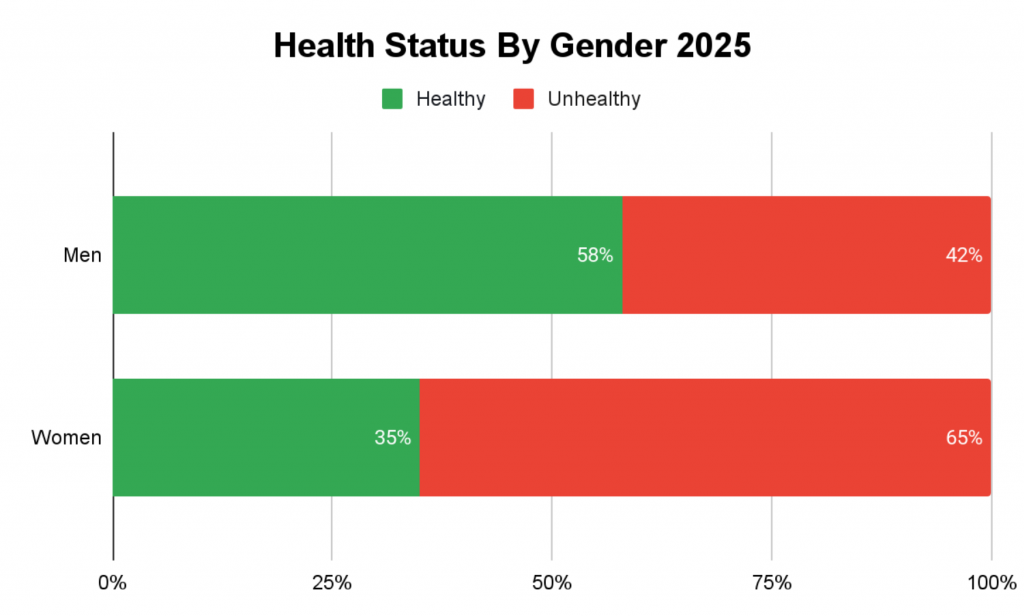
In 2025, only 35% of women fall into the healthy category, compared to 58% of men. Flip that around, and the picture is even starker: 65% of women are unhealthy, while men stay at 42%. This gap didn’t emerge overnight, and it has nothing to do with biology. Women are not getting sicker because their bodies are weaker; they are getting sicker because their lives are heavier.

The Caregiver’s Burnout: When “Caring for Others” Costs Your Health

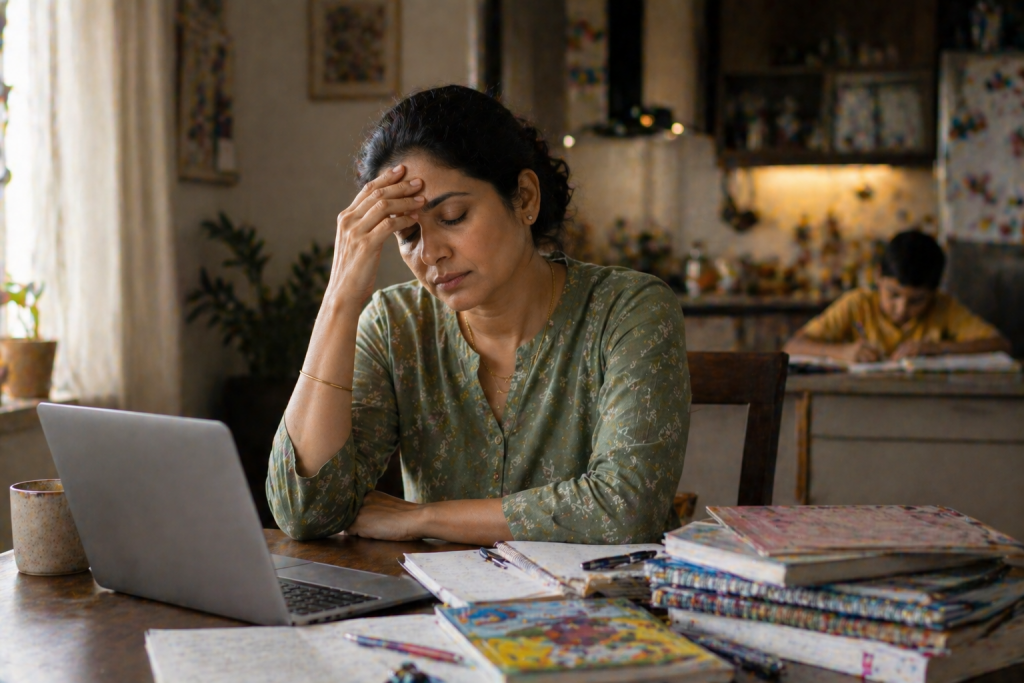
One of the most defining factors of the gender health divide is the unequal distribution of caregiving. From early adulthood onward, women shoulder a disproportionate share of unpaid labour: caregiving for children, elders, and extended family, managing households, and balancing paid work alongside all of this.

This constant state of responsibility leaves little room for rest, recovery, or preventive care.
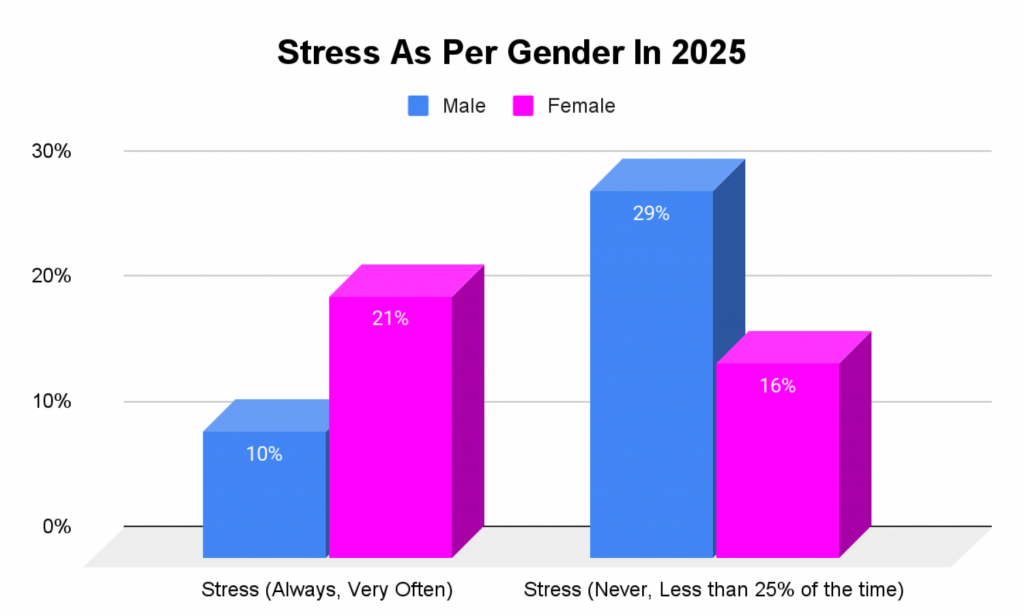
The numbers tell a stark story: 21% of women report feeling stressed “always or very often,” more than double the 10% of men who say the same.

  • Time Poverty: Women delay doctor visits because someone else needs attention first.
  • Chronic Stress: Persistent stress floods the body with cortisol, disrupting sleep and impairing metabolic health.
  • Sleep Disruption: Women are not just sleeping less; they are sleeping worse. Only 50% of women report sleeping well most of the time, compared to 61% of men.

The Nutritional, Diagnostic, and Metabolic Gap

When stress and exhaustion are normalised as part of “just managing life,” the body eventually keeps score. It shows up as thyroid imbalance, hypertension, insulin resistance, and burnout.
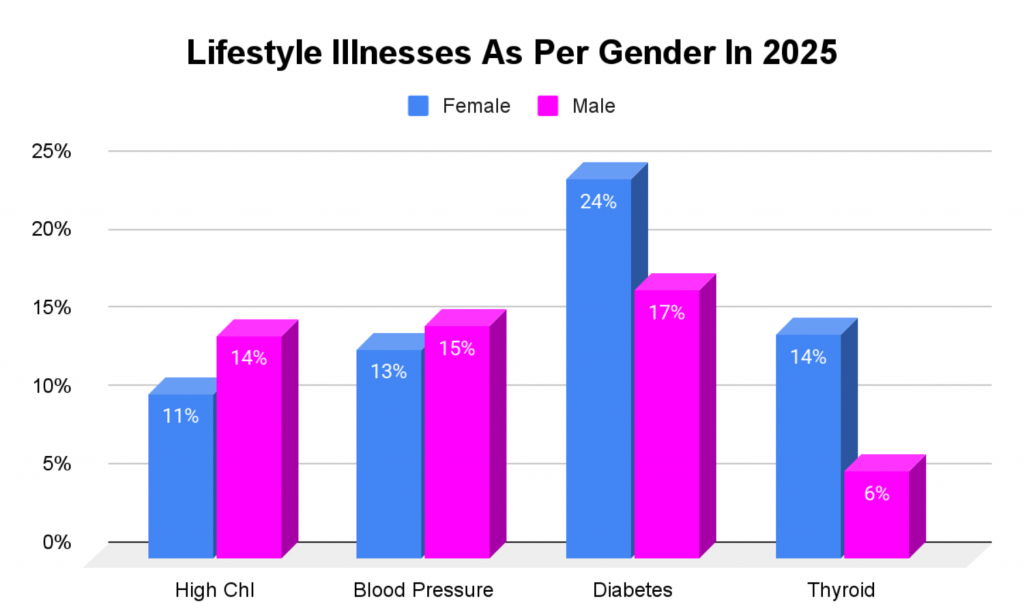
The GOQii data proves that lifestyle illnesses are gender-shaped:

  • Diabetes and Thyroid: 24% of women are affected by diabetes (versus 17% of men), and 14% struggle with thyroid disorders (versus 6% of men).
  • Dangerous Visceral Fat: Almost one in two women in India carries dangerous visceral fat. Staggeringly, 43.7% of women are in the “very high-risk” waist range, compared to just 12.7% of men. This is the kind of fat linked directly to diabetes, PCOS, heart disease, and early stroke.

Midlife and Menopause: The Critical Metabolic Window

Perhaps the most overlooked phase in women’s health is menopause. For decades, it has been treated purely as a reproductive transition. The data demands an immediate shift in this perspective.

Menopause is a long biological transition that reshapes metabolism, muscle mass, bone density, cardiovascular risk, and emotional health. Yet in India, very few women receive guidance on nutrition, strength training, sleep, or stress management during this phase. As a result, what could have been a powerful prevention window instead becomes a tipping point where weight gain accelerates, diabetes risk rises, and bone loss begins.

Closing the Divide: A Call for Self-Advocacy

Closing the gender health divide requires a fundamental shift in mindset and systems. It means recognising unpaid labour as a health risk factor, designing preventive care that accounts for hormonal transitions, and encouraging women to seek care early, without guilt.

The future of India’s health depends on the health of its women. It is time to put yourself back on your own priority list.

Click Here to Download the Full GOQii India Fit Report 2026 to explore the data on women’s health, understand the vital role of preventive screenings, and learn how to build a resilient healthspan.

Frequently Asked Questions (FAQs)

  1. What is the gender health divide?
    The gender health divide refers to the discrepancy in health outcomes between men and women. While Indian women typically have a longer lifespan than men , they often experience a shorter healthspan, spending their later years dealing with higher rates of obesity, chronic stress, thyroid disorders, and bone loss. Currently, 65% of Indian women are classified as unhealthy, compared to 42% of men.
  2. Why does menopause affect metabolic health?
    Menopause is not just a reproductive shift; it fundamentally alters a woman’s metabolism, muscle mass, bone density, and cardiovascular risk. If not managed actively with nutrition and exercise, it acts as a tipping point where weight gain accelerates and diabetes risk rises sharply.
  3. How does caregiving impact women’s healthspan?
    Unpaid caregiving creates immense time poverty and emotional strain. The constant state of responsibility leaves little room for rest, recovery, or preventive care, leading women to delay doctor visits and normalise exhaustion. This results in chronic stress, which is reported “always or very often” by 21% of women, compared to just 10% of men.

#BeTheForce

Disclaimer: The content provided in this blog, including all statistics, insights, and recommendations, is based on the findings of the GOQii India Fit Report 2026. This information is intended for educational and general informational purposes only and should not be construed as professional medical advice, diagnosis, or treatment. Every individual’s health journey is unique. Always consult with a qualified healthcare provider or a certified medical professional before making any significant changes to your diet, exercise routine, sleep schedule, or lifestyle, especially if you have pre-existing medical conditions. GOQii does not guarantee specific health outcomes or results based on the information shared in this report.

April 23, 2026 By GOQii Leave a Comment

The GOQii India Fit Report 2026: Why Living Longer Isn’t Enough Anymore

“India is living longer than ever before. That should be a moment of national pride, and it is. But here’s the uncomfortable truth: living longer is not the same as living well. For too many Indians, the last 10 to 12 years of life are spent fighting preventable disease, relying on medication, or depending on family for the simplest daily tasks. That is not the future any of us want.” – Vishal Gondal, Founder & CEO, GOQii
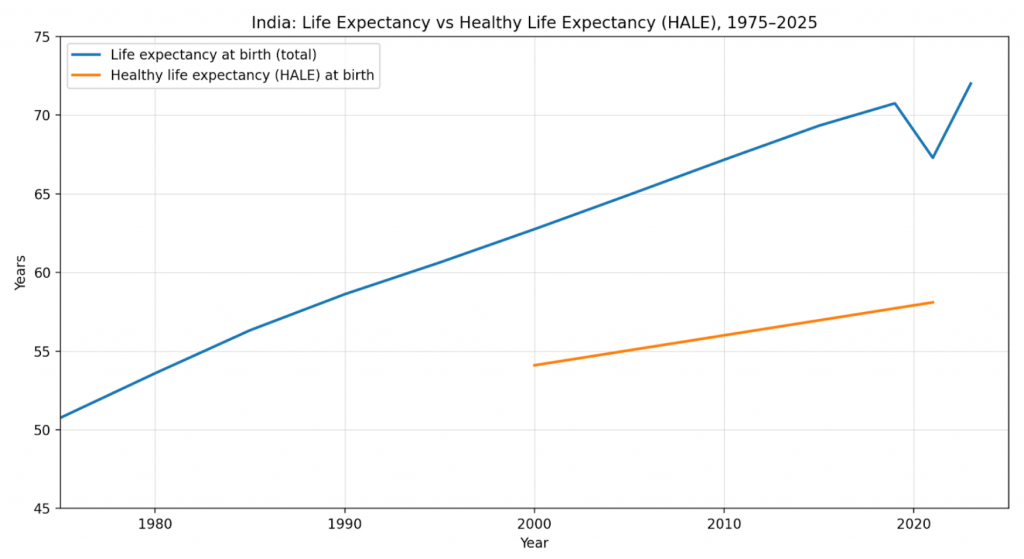
India stands at a pivotal moment in its health journey. In 1975, the average Indian lived to 52. Today, life expectancy has crossed 70, adding nearly two extra decades within a single generation. However, the newly released GOQii India Fit Report 2026 reveals an uncomfortable reality: while lifespan has increased, our “healthspan” the years we live in good physical, mental, and emotional health has not kept pace.

It is time to rethink what healthy ageing actually looks like in modern India.

Quick Takeaways: The Healthspan Gap

  • The 12-Year Deficit: Life expectancy in India is ~70.4 years , but Healthy Life Expectancy (HALE) is only ~59 years. Indians lose almost 12 years of healthy life to chronic illness or disability.
  • The Ageing Population: By 2050, one in five Indians, nearly 300 million people, will be over 60.
  • The True Threat: 63% of deaths in India are from Non-Communicable Diseases (NCDs).
  • The Good News: 80% of premature heart disease and diabetes is entirely preventable.

What is the Healthspan Gap?

Ageing itself is a sign of progress. The real challenge we face is unhealthy ageing. The healthspan gap is the distance between how long we live and how well we live.
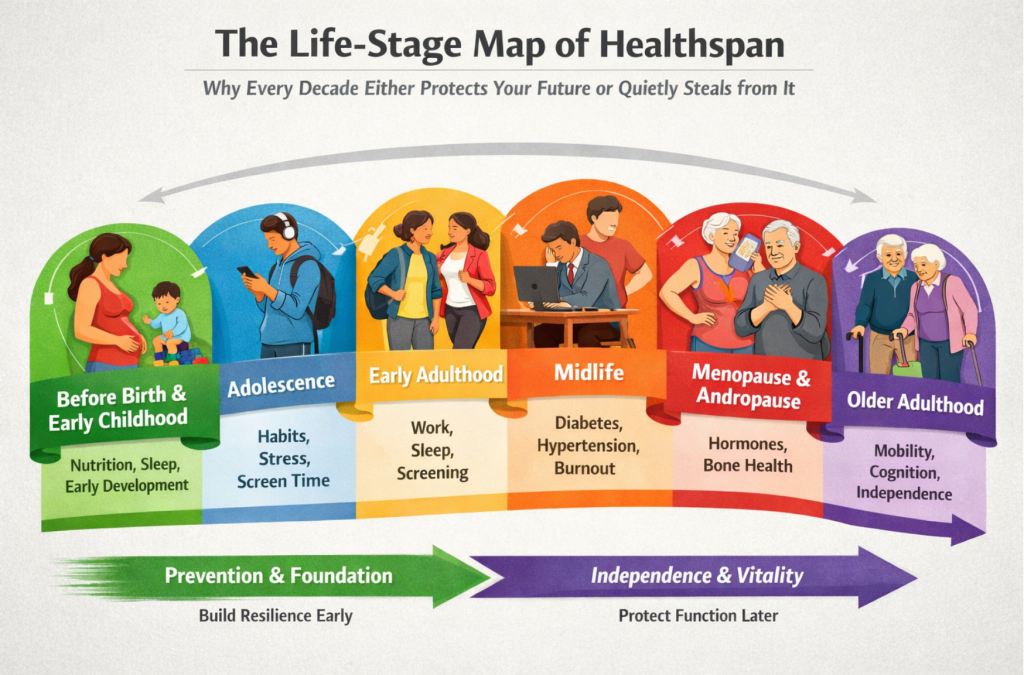
This gap does not happen by accident. We reward productivity and punish rest. Stress, poor sleep, sedentary work, and irregular diets have been completely normalised. Healthcare remains treatment-centric rather than prevention-led.

The Life-Stage Map: Healthspan is Not Built at 60

Perhaps the biggest misconception about lifestyle disease is that it is an old-age issue. Healthspan is not built at 60. It is built quietly and cumulatively across decades. Here is how healthspan is won or lost at every stage of life:
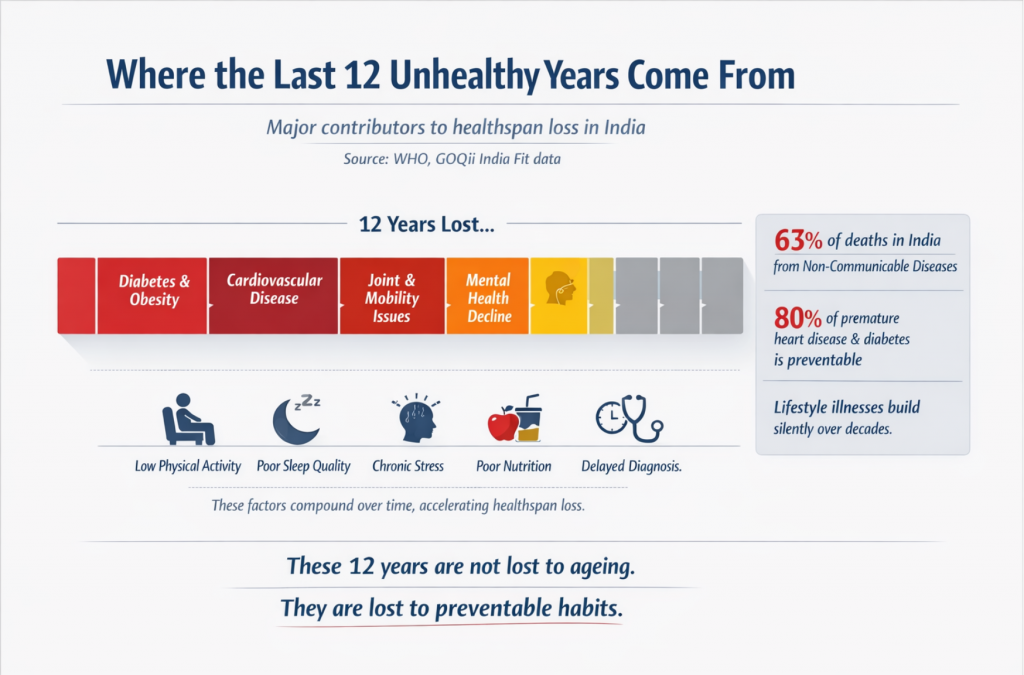
  • Adolescence (Where Habits Harden): This is the period when risks like long sedentary time, sleep disruption, poor diets, and emotional stress quietly rise. Health behaviours begin to harden into identity.
  • Early Adulthood (The “I’m Fine” Decade): In our 20s and 30s, weight gain feels manageable and poor sleep feels like a phase. Yet, this is exactly when insulin resistance, rising blood pressure, and inflammation begin to quietly accumulate .
  • Midlife (The Tipping Point): For most Indians, working life is the biggest driver of healthspan loss. Midlife is where silent epidemics like diabetes, hypertension, obesity, and high cholesterol begin to surface.
  • Menopause and Andropause: For women, the menopause transition changes metabolism, muscle mass, bone density, cardiovascular risk, sleep quality, and emotional regulation. Without guidance, it leads to accelerated weight gain and bone loss; with guidance, it can become a powerful health stabiliser.
  • Older Adulthood (Independence is the Goal): Old age does not automatically lead to decline. The most meaningful measures of healthy ageing here are functional: Can you walk independently? Can you climb stairs without fear?

The Rise of “Silent” Epidemics and Multi-Morbidity

The illnesses shortening our healthspan rarely announce themselves with sudden panic. High blood pressure rarely causes discomfort until it damages the heart, kidneys, or brain. High cholesterol builds arterial plaque silently over years.

The true threat is how these conditions compound over time, a process known as multi-morbidity. It follows a predictable chain: Sedentary Lifestyle → Weight Gain, Obesity → Diabetes Risk → Heart Disease. By the time multiple conditions take hold, healthspan shrinks rapidly.

The Hidden Costs of Ignoring Healthspan

When healthspan is neglected, the costs are borne not just by individuals but by families, workplaces, and the national economy:

  • The Caregiving Burden: Chronic illness in older age often shifts care responsibility to family members, most commonly women. This unpaid caregiving leads to lost income and emotional burnout.
  • Workforce Exits: Early onset of lifestyle diseases forces many adults to exit the workforce years before retirement age.
  • Healthcare Strain: Managing advanced diabetes, heart disease, kidney failure, and stroke consumes far more resources than preventing them.

Reclaim Your Healthspan

The GOQii India Fit Report 2026 calls for a decisive shift: from lifespan as a metric to healthspan as a goal.

Prevention does not require extreme discipline or perfect routines. It requires consistency. Ten minutes of daily movement is more powerful than an hour once a week, and stable sleep routines outperform weekend recovery. Healthspan is shaped by what you do on your most average days.

Are you ready to see where you stand and how you can protect your future?

Click Here to Download the GOQii India Fit Report 2026 to explore the complete data, uncover national trends on stress, sleep, and nutrition, and learn how to take charge of your health today.

Frequently Asked Questions (FAQs)

  1. What is the difference between lifespan and healthspan?

Lifespan refers to the total number of years a person lives. Healthspan refers to the number of those years lived in good physical, mental, and emotional health, free from chronic disease and disability. While India’s life expectancy is ~70.4 years, our healthy life expectancy is only ~59 years.

  1. What are the biggest threats to healthspan in India?

The biggest threats are “silent epidemics” or non-communicable diseases (NCDs) like diabetes, hypertension, obesity, and high cholesterol. These are heavily driven by lifestyle factors such as chronic stress, sedentary behavior, and poor sleep.

  1. When should I start worrying about healthy ageing?

Healthy ageing begins long before retirement. Habits formed in adolescence and early adulthood (like sleep routines and daily movement) dictate your metabolic risk in midlife. The earlier you focus on preventive health, the longer your healthspan will be.

#BeTheForce

Disclaimer: The content provided in this blog, including all statistics, insights, and recommendations, is based on the findings of the GOQii India Fit Report 2026 . This information is intended for educational and general informational purposes only and should not be construed as professional medical advice, diagnosis, or treatment. Every individual’s health journey is unique. Always consult with a qualified healthcare provider or a certified medical professional before making any significant changes to your diet, exercise routine, sleep schedule, or lifestyle, especially if you have pre-existing medical conditions.

April 9, 2026 By GOQii Leave a Comment

The ROI of Preventive Health: A Guide for Modern Corporate Wellness

For decades, Corporate Wellness was viewed by many executives as a “nice-to-have” HR perk a checkbox item featuring an annual step challenge or a discounted gym membership. However, in today’s high-pressure, hyper-connected business landscape, that outdated view is a costly mistake.



Modern forward-thinking CEOs and HR leaders are realizing that employee health is inextricably linked to company performance. When your workforce is unwell, burned out, or chronically stressed, the bottom line suffers.

Investing in preventive health is no longer an employee benefit; it is a critical business strategy. Let’s break down the hidden costs of the modern workplace and explore the undeniable ROI of a data-driven corporate wellness program.

The Hidden Cost of the Modern Workplace

To understand the return on investment, we must first understand the cost of inaction. The GOQii India Fit Report 2026 reveals a stark reality: for most Indians, working life is the biggest driver of healthspan loss.

As careers intensify and responsibilities multiply, chronic stress becomes background noise. The modern workplace inadvertently creates an environment where health takes a back seat to productivity. The data highlights exactly how this impacts your workforce:

  • The Sedentary Epidemic: A staggering 50% of Indians now spend 5 to 8 hours a day sitting. This prolonged inactivity slows metabolism and triggers inflammation, driving up the risk of heart disease and diabetes.
  • The Burnout Culture: Burnout culture, long work hours, constant digital connectivity, and sedentary routines accelerate health decline.
  • The Emotional Toll: Stress levels have reached critical highs, affecting 45% of the population. Furthermore, 40% of people experiencing frequent episodes of low mood report poor work-life balance.
  • The Economic Drain: Early onset of lifestyle diseases forces many adults to exit the workforce years before retirement age. According to NITI Aayog, non-communicable diseases reduce India’s economic output by billions annually through lost productivity and healthcare costs.

When employees are managing silent epidemics like hypertension, high cholesterol, and chronic fatigue, they are physically present but cognitively depleted a phenomenon known as presenteeism.

Defining the ROI: How Prevention Translates to Profits

Shifting from a sick-care model to a preventive corporate wellness framework yields measurable financial and operational returns. Here is how the ROI of preventive health materializes for modern businesses:

  1. Drastic Reduction in Healthcare Costs

India’s healthcare system is still heavily treatment-focused, and managing advanced diseases consumes far more resources than preventing them. By implementing preventive health screenings and continuous monitoring, companies can help employees detect lifestyle risks like insulin resistance or rising blood pressure before they become full-blown chronic diseases requiring expensive medical interventions, hospitalizations, and premium hikes.

  1. Elimination of Productivity Leaks (Absenteeism & Presenteeism)

Healthy employees are focused employees. Regular movement, adequate sleep, balanced nutrition, and stress regulation protect healthspan far more effectively than drastic changes made late in life. When corporate wellness programs actively improve sleep quality and reduce stress, employees experience sharper cognitive function, better decision-making, and higher sustained energy levels, directly boosting daily output.

  1. Superior Talent Attraction and Retention

In a competitive talent market, top-tier professionals look for employers who care about their holistic well-being. Workplaces that prioritize movement, rest, and recovery foster deep loyalty. Providing robust mental health support and personalized coaching reduces turnover rates, saving companies the massive costs associated with recruiting, hiring, and training new staff.

3 Pillars of a Modern Corporate Wellness Strategy

To achieve a true ROI, corporate wellness must evolve from episodic interventions (like an annual health camp) to continuous, habit-building support.

  1. Continuous Data & Insights: Utilizing digital health platforms and wearables enables earlier detection, sustained behavior change, and a move from episodic care to continuous prevention. Tracking daily metrics like sleep and activity allows employees to understand their baseline health.
  2. Personalised Human Coaching: Technology, when paired with human coaching and accountability, enables this shift across life stages. Data alone does not change habits; personalized guidance from health experts helps employees translate their data into actionable, daily lifestyle changes.
  3. Mental Resilience as a Core Focus: Emotional health must be treated as biological health. Companies need to invest in stress management programs, promote a healthy work-life balance, and provide support systems for mental health.

Frequently Asked Questions (FAQs)

  1. What is the actual ROI of a corporate wellness program?
    The ROI of a modern corporate wellness program is measured through three primary financial pillars: drastically reduced long-term healthcare costs and insurance premiums, the elimination of productivity leaks (such as absenteeism and presenteeism caused by chronic stress or illness), and significantly lower employee turnover rates. Preventive health transforms wellness from a sunk cost into a strategic driver of profitability.
  2. How does preventive health directly impact employee productivity?
    According to the GOQii India Fit Report 2026, chronic stress and poor sleep are major drivers of decreased cognitive function and “presenteeism” (being at work but underperforming). Preventive health programs target these root causes by improving sleep quality and managing stress, which directly results in sharper decision-making, higher sustained energy, and better daily output.
  3. Why do traditional corporate wellness initiatives fail to show an ROI?
    Traditional wellness programs fail because they are episodic—relying on annual health check-ups or one-off step challenges. True behavioral change requires a continuous approach. The modern workforce needs ongoing data monitoring combined with personalized human coaching to build sustainable, daily health habits that actually reverse chronic disease risks.
  4. How does GOQii help companies maximize their wellness ROI?
    GOQii provides a comprehensive, continuous preventive healthcare ecosystem. By combining digital health monitoring with personalized, one-on-one human coaching, GOQii helps employees transition from awareness to action. This proactive approach manages lifestyle diseases early, directly reducing corporate healthcare burdens and building a more resilient, focused workforce.

The Bottom Line for Business Leaders

Treating corporate wellness as an expense is a miscalculation. Unhealthy employees will always cost a business more in lost productivity, healthcare claims, and turnover than the cost of a comprehensive wellness program.

The future of corporate success relies on building an infrastructure of prevention. By partnering with comprehensive healthcare ecosystems like GOQii which seamlessly integrates wearable technology, continuous data monitoring, and personalized human coaching you are securing the operational resilience and financial ROI of your company tomorrow. Invest in your workforce’s healthspan today, and watch your business thrive.

#BeTheForce

Disclaimer: The information provided in this article is for educational and informational purposes only and is not intended to serve as professional medical, legal, financial, or HR compliance advice. The health statistics, productivity metrics, and ROI projections discussed—including data referenced from the GOQii India Fit Report—are based on aggregated trends and may vary significantly depending on individual organizational structures, industry, and workforce demographics. Always consult with qualified healthcare professionals, certified HR consultants, or corporate legal counsel before designing, implementing, or altering any employee wellness programs or company health policies.

Search

Recent Posts

  • Why Good Nutrition Matters: Benefits of Healthy Eating for a Healthy Life
  • Monsoon Health Tips: How to Boost Your Immunity During Seasonal Changes
  • Yoga for Healthy Ageing: Simple Practices to Add Life to Your Years
  • Calming Your Mind: Breathing Techniques for ADHD
  • Healthy Oats & Besan Pancake Recipe for a Nutritious Breakfast

Stay Updated

Archives

  • June 2026 (21)
  • May 2026 (20)
  • April 2026 (24)
  • March 2026 (18)
  • February 2026 (14)
  • January 2026 (14)
  • December 2025 (19)
  • November 2025 (15)
  • October 2025 (20)
  • September 2025 (6)
  • August 2025 (6)
  • July 2025 (11)
  • June 2025 (18)
  • May 2025 (16)
  • April 2025 (22)
  • March 2025 (27)
  • February 2025 (21)
  • January 2025 (25)
  • December 2024 (22)
  • November 2024 (23)
  • October 2024 (20)
  • September 2024 (23)
  • August 2024 (29)
  • July 2024 (20)
  • June 2024 (25)
  • May 2024 (26)
  • April 2024 (27)
  • March 2024 (27)
  • February 2024 (23)
  • January 2024 (21)
  • December 2023 (14)
  • November 2023 (10)
  • October 2023 (19)
  • September 2023 (22)
  • August 2023 (18)
  • July 2023 (21)
  • June 2023 (23)
  • May 2023 (20)
  • April 2023 (19)
  • March 2023 (23)
  • February 2023 (19)
  • January 2023 (15)
  • December 2022 (11)
  • November 2022 (15)
  • October 2022 (15)
  • September 2022 (12)
  • August 2022 (10)
  • July 2022 (17)
  • June 2022 (11)
  • May 2022 (10)
  • April 2022 (6)
  • March 2022 (6)
  • February 2022 (13)
  • January 2022 (11)
  • December 2021 (7)
  • November 2021 (3)
  • October 2021 (6)
  • September 2021 (3)
  • August 2021 (8)
  • July 2021 (7)
  • June 2021 (15)
  • May 2021 (16)
  • April 2021 (10)
  • March 2021 (7)
  • February 2021 (4)
  • January 2021 (4)
  • December 2020 (3)
  • November 2020 (4)
  • October 2020 (10)
  • September 2020 (3)
  • August 2020 (3)
  • July 2020 (2)
  • June 2020 (4)
  • May 2020 (10)
  • April 2020 (12)
  • March 2020 (10)
  • February 2020 (4)
  • January 2020 (4)
  • December 2019 (3)
  • November 2019 (7)
  • October 2019 (5)
  • September 2019 (4)
  • August 2019 (9)
  • July 2019 (9)
  • June 2019 (11)
  • May 2019 (4)
  • April 2019 (8)
  • March 2019 (8)
  • February 2019 (9)
  • January 2019 (8)
  • December 2018 (9)
  • November 2018 (3)
  • October 2018 (3)
  • September 2018 (5)
  • August 2018 (10)
  • July 2018 (6)
  • June 2018 (13)
  • May 2018 (8)
  • April 2018 (18)
  • March 2018 (9)
  • February 2018 (8)
  • January 2018 (15)
  • December 2017 (12)
  • November 2017 (19)
  • October 2017 (13)
  • September 2017 (15)
  • August 2017 (4)
  • July 2017 (8)
  • June 2017 (7)
  • May 2017 (6)
  • April 2017 (8)
  • March 2017 (6)
  • February 2017 (7)
  • January 2017 (9)
  • December 2016 (10)
  • November 2016 (7)
  • October 2016 (7)
  • September 2016 (7)
  • August 2016 (11)
  • July 2016 (9)
  • June 2016 (9)
  • May 2016 (12)
  • April 2016 (17)
  • March 2016 (17)
  • February 2016 (8)
  • January 2016 (6)
  • December 2015 (2)
  • November 2015 (9)
  • October 2015 (7)
  • September 2015 (9)
  • August 2015 (11)
  • July 2015 (9)
  • June 2015 (11)
  • May 2015 (9)
  • April 2015 (13)
  • March 2015 (8)
  • February 2015 (5)
  • January 2015 (12)
  • December 2014 (14)
  • November 2014 (11)
  • October 2014 (6)
  • September 2014 (13)
  • August 2014 (12)
  • July 2014 (6)
  • June 2014 (2)
  • May 2014 (7)
  • April 2014 (4)

From Shimla’s Slopes to Chandigarh’s Sidewalks: Surinder Kaur Bhalla’s Journey from Chaos to Control

Some journeys start with a plan. Others begin with a stumble literally. Surinder Bhalla, a government professional, born and raised in the scenic hill town of Shimla, had always lived a life of movement. “In Shimla, you walked everywhere,” she reflects. … [Read More...]

From “Laddu Nawin” to Fit and Fierce: How a 25-Year-Old Insurance Advisor Shed 20 Kilos and Gained His Life Back

When 25-year-old Nawin Yadav from Hyderabad walked into his office every morning, he carried more than just his files and policy papers. He had the weight of fatigue, sluggish energy, and an ever-growing belly that was becoming the butt of jokes. “People had even started calling me Laddu Nawin,” he says with a laugh, but […]

From Burnout to Balance: How Dr. Ranjit Reclaimed His Health

Dr Ranjit Bhatt has spent years tending to others. A practising doctor in Odisha, his days were packed with patients, surgeries, and emergencies. From the outside, it looked like a life lived in service. But on the inside, something wasn’t right. “I had no control over my schedule. I’d sleep late, eat at odd hours, […]

Ananda Mukherjee Health Story

From Terminal Illness To Complete Wellness! Ananda Mukherjee Health Story

As we observe World Cancer Day under the powerful theme ‘United by Unique’ (2025-2027)**, we are reminded that every individual’s journey with cancer is distinct, yet united by shared resilience, hope, and the collective fight against this disease. This theme places people at the centre of care and their stories at the heart of the […]

  • HOME
  • HEALTHY LIVING
  • FITNESS
  • HEALTHY RECIPES
  • USER STORIES
  • KARMA
  • BUY GOQii

Copyright ©2016 GOQii
