
GOQii

Blog

  • HOME
  • HEALTHY LIVING
  • FITNESS
  • HEALTHY RECIPES
  • USER STORIES
  • KARMA
  • BUY GOQii

Search Results for: sleep

December 10, 2024 By GOQii Leave a Comment

Feeding Your Emotions? Why You Need To Stop Emotional Eating

Feeding Your Emotions? Why You Need To Stop Emotional EatingRemember the old adage – Eat to Live and not Live to Eat? We don’t always eat simply to satisfy hunger. Sometimes, we turn to food for comfort, stress relief, or as a reward. It becomes an activity we do out of habit, like nail-biting, hair twirling, or finger tapping. Recent trends show that we often turn to food in response to certain emotions. For instance, eating chocolates or sweets when we’re sad or depressed. Whether you feel angry, sad, bored, or even excited—food can act as a buffer against these emotions. But is emotional eating good for you?

Emotional eaters know it’s easier to suppress feelings with each bite rather than confront them. Unfortunately, emotional eating doesn’t solve emotional problems. It usually makes you feel worse. Afterwards, not only does the original emotional issue remain, but you also feel guilty for overeating. This compounds the problem, as you stop learning healthier ways to deal with your emotions, struggle to control your weight, and feel increasingly powerless over both food and your feelings.

Where Do You Start To Stop Emotional Eating?

Before addressing how to stop emotional eating, have you ever wondered why we turn to food when emotionally distressed? When we eat, certain chemicals are released in the body which significantly impact our emotional health. Food and mood are intricately connected. For instance, we feel sadder when hungry due to lack of neurochemicals in the brain. Through eating, we experience changes in serotonin, endorphins and dopamine levels – all of which influence mood. Sugar, for example, increases serotonin in the brain, helping us feel more balanced and stable. Anti-depressants work on a similar chemical mechanism to improve mood. So, coming back to the point – what can you do to address this?

Recognize What Triggers You To Eat Emotionally

As mentioned earlier, people eat for many reasons. Which situations, places or feelings make you turn to food for comfort? Each time you feel a craving, ask yourself, “Am I really hungry, or am I responding to something else?” If hunger isn’t the reason, identifying the real cause can be challenging.

By tracking your food intake and associated emotions regularly, you might notice patterns, such as a tendency to overeat on Mondays. Ask yourself, “What is it about Mondays that leads to overeating? Stress from getting the kids to school? Frustration over returning to work? Lack of holidays?” Notice if you tend to snack in the evenings. Is it out of boredom, loneliness, anger, sadness, anxiety, or an unhappy relationship? Once you identify your emotional eating triggers, the next step is finding healthier ways to manage your feelings.

Find Ways To Fulfill Yourself Emotionally

Understanding the cycle of emotional eating and identifying triggers is only the beginning. The next step is finding healthier alternatives to fulfill yourself emotionally.

Here are some options to try:

  • Call someone who always makes you feel better
  • Play with your kids or pets
  • Look at a favorite photo or cherished memento whenever you feel low, depressed or lonely
  • If you’re anxious, expend your energy by dancing to your favorite song or squeezing a stress ball
  • Take a brisk walk for fresh air
  • If you’re exhausted, treat yourself to a hot cup of tea, take a bath, go to a spa for a massage, or light some scented candles and wrap yourself in a warm blanket
  • Take a break or go on a weekend getaway
  • If you’re bored, read a good book, watch a show, explore the outdoors, or try an enjoyable activity like painting or playing an instrument.

Form Healthier Habits

Last step to deal emotional eating requires long term modification i.e. healthy lifestyle habits. When you’re physically strong, relaxed, and well rested, you’re able to handle the challenges that life throws at you in a better way. But, when you’re already exhausted and overwhelmed, any little hiccup has the potential to send you off the rails and straight towards the kitchen>refrigerator>food. Exercise, sleep, and other healthy lifestyle habits will help you get through difficult times without emotional eating. Make daily exercise a priority.

Physical activity does wonders for your mood and your energy levels, and it’s also a powerful stressbuster. Give yourself permission to take at least 30 minutes every day to relax, decompress, and unwind. This is your time to take a break from your responsibilities and recharge your batteries for the next day. Connect with others. Don’t underestimate the importance of close relationships and social activities. Spending time with positive people who enhance your life will help protect you from the negative effects of stress.

With an arsenal of activities like trekking, journaling, or exploring hobbies, you can gradually overcome emotional eating. Success won’t come overnight, but accepting your mistakes and moving forward is key to breaking the cycle.

If you need help dealing with emotional eating, our experts are hereto guide you. Speak to a GOQii Coach to overcome emotional eating and achieve you weight loss goals. Subscribe for Personalised Health Coaching here.

For more tips on weight loss, explore Healthy Reads. If this article helped you or someone you know, let us know your thoughts in the comments below!

#BeTheForce
December 7, 2024 By GOQii Leave a Comment

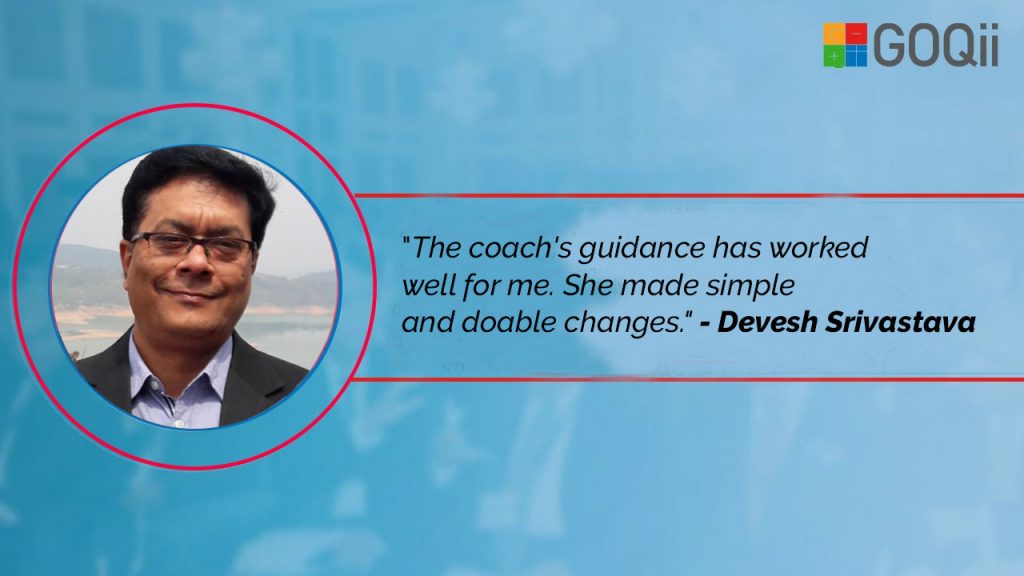
Devesh Srivastava Lowers His HbA1c from 6.7 to 5.8 With GOQii

Devesh SrivastavaHave you ever suffered from a cold or fever and thought to yourself that you can manage this? In fact, there’s a good chance that with some medication and rest, the symptoms of a cold or fever have subsided. But, when you deal with issues such as Diabetes and Hypertension, trying to manage the issue on your own might not be such a good idea. Our Player Devesh Srivastava came to realize that personalized health coaching is the best way forward!

Life Before Joining GOQii 

Devesh Srivastava is a 52 year old investment banker residing in the city of Ahmedabad. He was always keen on joining an app-based fitness solution. Back in 2014, he heard our Founder & CEO Vishal Gondal speak at an event. He says, “What he said connected well with me and I was looking forward to joining something like GOQii, but it never happened”.

While he did have a normal routine, he wanted someone to look over him and guide him towards a healthy lifestyle. He says, “Before the pandemic, things were manageable but during the pandemic, the situation was difficult as you were at home the whole time. Earlier I would walk with my friends and colleagues but then it all stopped during the lockdown. I did not have a proper routine and that created a weight issue”. 

During this time, Devesh Srivastava tried creating his own regime and restricted his diet to reduce weight. “I’ve seen other people reduce weight by doing their own things. So I decided to try as well. But, my sugar levels were not reducing,” he said. He was also on Diabetes and Hypertension medication. 

Joining GOQii and Making Lifestyle Changes 

After several trials and errors of trying to manage his health by himself, Devesh Srivastava said that he needed someone to keep a watch on his health and guide him properly. So, he came to the decision to subscribe for GOQii’s Personalised Health Coaching in November 2021. 

“The coach’s guidance worked well for me. She made simple and doable changes,” he says. Some of these changes included: 

  • Have soaked Methi seeds in the morning
  • Increase salad portion before lunch and consume fruits as mid-meal snacks 
  • Eat healthy evening snacks which include dry fruits, fruits or roasted snacks.
  • Eating an early dinner
  • Reduce carbs from dinner and replace them with fiber and protein
  • Drink green tea in the evening 
  • Begin the day with Surya Namaskar 
  • Increase steps count gradually

Apart from the above changes, his GOQii Coach kept a close watch on his food consumption, water intake, sleep and exercise, making timely corrections as per requirements. 

What Changes Did Devesh Srivastava Experience? 

Within 4 months, Devesh could experience changes in his health. As his journey continued, within 7 months he was able to lose approximately 7kg. From 80kg, he came down to 74.6kg. His waist size had reduced from 36 inches to 34 inches. 

In his current report, he found that his blood sugar and cholesterol levels had lowered down. “With Coaching, I feel better,” he says. “My stress levels are better managed. I am also able to sleep well for at least 6.5 hours daily,” he added.

What Does Coach Sakshi Agarwal Have To Say About Her Player? 

When he came onboard, he was overweight. His height is 170cm and weight was 80kg. His waist size was 36 inches and his BMI was 27.7. He was suffering from Diabetes and High Blood Pressure. His Triglyceride was also high at about 180.

Fortunately, Devesh Srivastava is a very sincere player and was always enthusiastic about taking on all the challenges I threw at him. He tried his absolute best to complete them. Within 4 months, he has made remarkable progress. 

Apart from reducing his weight and waist size, his blood sugar and cholesterol levels have also reduced. His HbA1c reduced from 6.7 to 5.8. His Triglyceride levels reduced from 180 to 148. His Blood Pressure reduced from 97fbs – 135pp to 85fbs – 119pp. 

He is quite happy with these transformations and I appreciate his positive response to my suggestions as well as his  dedicated approach to improving his lifestyle! 

Do you have a condition similar to Devesh Srivastava? You too can make a positive lifestyle change by getting the right guidance and motivation from certified experts. Join the GOQii Diabetes Care program – India’s only diabetes program that is driven by Smart Science and Personal Coaching to improve Fasting Blood Sugar (FBS), Postprandial Blood Sugar (PP), reduce HbA1c levels and let you win gold! You can subscribe here: https://store.goqii.com/diabetescare.

For more inspiring Health Stories, check out Healthy Reads.

#BeTheForce 

December 6, 2024 By Dr. Viral Thakkar 3 Comments

MIGRAINE – AN EXPLOSION IN YOUR HEAD

brain-headache-migraine“I don’t want that explosion in my head that my father used to have,” said Ramesh N., an 18-year-old engineering student, during his visit to my clinic. He was distressed by a severe headache that had lasted 5-6 hours, especially with exams around the corner. The throbbing pain made it impossible for him to concentrate.

Headaches are a common reason for visits to physicians, with migraine being the second most common cause of headache globally. Despite its prevalence, migraine often goes unnoticed or misunderstood, especially in childhood and adolescence. Many parents and teachers dismiss it as an excuse to avoid studying or working.

Migraine is a benign, episodic syndrome characterized by headache and accompanying neurological symptoms. A positive family history of migraines is common in those affected.

What Is Migraine?

A migraine attack can last anywhere from 4 to 72 hours. While predicting when an attack will occur is challenging, the pattern of each attack can often be identified. Understanding the stages of a migraine and sharing a detailed history with a doctor can help in diagnosis and treatment, reducing the intensity or frequency of attacks.

Stages of Migraine

Prodormal Phase: This phase includes subtle physical or mental changes like mood swings, thirst, or tiredness. It may last for minutes or hours.

Aura Phase: Neurological symptoms appear during this phase, such as:

    • Visual disturbances (dark spots, colored spots, or zigzag lines)
    • Numbness or weakness
    • Dizziness or vertigo
    • Speech changes or confusion

Attack Phase: The headache begins, often behind the eyes. It is typically severe, throbbing, and unilateral but can sometimes be bilateral. This stage is often accompanied by nausea, vomiting, and sensitivity to light (photophobia) or sound (phonophobia).

Postdromal Phase: After the headache subsides, many experience lingering effects like fatigue or a “hangover” feeling, which can take hours or even days to resolve.

Diagnosing Migraine: A simplified diagnostic criterion includes repeated headaches lasting 4-72 hours with no underlying physical or neurological causes. Migraine symptoms include:

  • Unilateral pain
  • Throbbing sensation
  • Worsening with movement
  • Nausea or vomiting
  • Sensitivity to light and sound

While the exact timing of an episode is unpredictable, lifestyle changes and triggers management can reduce the frequency or severity of attacks.

  1. Identifying and avoiding triggers is one of the most important ways to avoid an attack.
  2. Research shows that foods like nuts, cheese, citrus foods, chocolates, hot and spicy food, fermented, sour foods, alcohol and smoking can trigger a migraine attack.
  3. Untimely meals, irregular sleeping patterns which result in lack of sleep, excessive intake of processed or junk food, overthinking, extended exposure to laptops, mobile phones can all be responsible for triggering an attack.
  4. Increased exposure to direct sunlight is known to cause an attack. If sun exposure cannot be decreased or stopped, one must wear glasses and have to protect oneself. One must also be aware of strong odours and changes in weather.
  5. Being constantly acidic or constipated will always make you prone for repeated attacks.

A lifestyle change with proper sleeping hours, adequate water and the right food intake along with minimum 30minutes exercise will cause wonders in the management of Migraine.

  1. Certain yoga postures are extremely beneficial for migraine. Some of these are moon salutation, boat pose, bow pose (dhanurasan), spinal twist (matsyendrassana), tree pose and standing on toes.
  2. Meditation puts your mind at ease and reduces stress levels which brings a balance in one’s being.
  3. Pranayam (breathing exercises) has a long term impact in maintaining good health.
  4. 5 drops of brahmi ghee in each nostrils sometimes helps relieve the pain.
  5. During an attack it is best that you confine yourself to a closed dark room to avoid any loud sounds and excess light.
  6. You can also try tying a scarf or dupatta around your head if the pain is too much. Place some eye cubes wrapped in a towel on your eyes.
  7. Medicines are available to halt the progression of aura to a full-blown attack or to manage pain during the headache phase. However, always seek a doctor’s advice before taking any medication.

Migraines often improve over time, with many experiencing reduced severity and frequency after early adulthood. Adopting a healthy lifestyle can bring long-term benefits, making migraine episodes less frequent and more manageable.

If this article helped you understand migraines better, share your thoughts in the comments below! For further information or guidance, reach out to our certified experts by subscribing to GOQii’s Personalised Health Coaching here.

#BeTheForce

November 30, 2024 By Mubasheera Chaiwala Leave a Comment

Part 2: Stress and Your Diet – Foods to Avoid and Foods to Embrace

Avoid foods that are linked to stress and anxiety.

  1. Caffeine: Caffeine in the form of coffee and soft drinks can cause nervousness, irritation and palpitation
  2. High salt and processed food: High salt consumption increases the risk of heart
  3. Smoking: Causes tension, irritability and sleeplessness and is also linked with cancer.
  4. Alcohol: It depletes the vitamin B which are essential for reducing stress.
  5. Refined sugar: Refined sugar in candies, pastries, soft drinks, ice cream, and biscuits can give a quick energy boost, but it’s often followed by a sugar “crash.” This effect is due to how sugar impacts blood sugar levels. Instead of reaching for sugary treats, try a fruit salad, a homemade fruit-and-nut yogurt, or even a few squares of dark chocolate.

Certain foods are known to help relieve stress and anxiety and should be included regularly in your diet.

  1. Plant-Based Foods: Vegetables, fruits, legumes, nuts, seeds, and whole grains are packed with essential vitamins and minerals. Maintaining a plant-based diet, especially during stressful times, ensures your body functions optimally.
  2. Herbal Teas: Herbal teas like chamomile, lavender, and passionflower have calming properties that help you relax, reduce stress, and promote better sleep.
  3. Yogurt: Yogurt can help alleviate anxiety by supporting gut health. The brain and gut are connected, so stress can affect digestion. Probiotic yogurt consumed twice a day reduces brain activity in emotional areas, aiding in stress relief and anxiety management.
  4. Dark Chocolate: Cocoa in dark chocolate is rich in antioxidants that buffer stress. Opt for a chocolate bar with over 70% cocoa to enjoy its stress-relieving benefits.
  5. Avocado: Avocados are rich in Vitamin B6, which aids the production of serotonin, a neurotransmitter that influences mood. They also contain other B vitamins and healthy fats, which support the nervous system and reduce anxiety.
  6. Blueberries: Blueberries are high in Vitamin C and antioxidants, helping to repair and protect cells under stress. They also act as a healthier alternative to sugary snacks, boosting immunity and maintaining gut health to reduce anxiety.
  7. Almonds: Almonds are a great source of magnesium, a mineral known to alleviate anxiety-related symptoms. Including them in your diet can effectively support stress management.

In conclusion, the one important to remember is that making mindful dietary choices can significantly affect your stress levels. By avoiding certain foods and incorporating others, you can help manage your stress more effectively. Adjust your diet gradually, and over time, you may notice a positive change in how you feel both mentally and physically.

If you found this article helpful, let us know in the comments below! For further information or guidance, reach out to our certified experts by subscribing to GOQii’s Personalised Health Coaching here.

#BeTheForce

Disclaimer: The information provided in this blog is for general awareness and educational purposes only. It is not intended to replace professional medical advice, diagnosis, or treatment. Always consult a qualified healthcare provider for personalised medical guidance or concerns related to your health.

  • « Previous Page
  • 1
  • …
  • 24
  • 25
  • 26
  • 27
  • 28
  • …
  • 132
  • Next Page »

Search

Recent Posts

  • 4 Reasons Why Affirmations Are Not Working For You
  • The Social Side of GLP-1: Navigating “Food Culture” and Peer Pressure
  • Leaky Gut: Symptoms and Causes
  • Muscle Is Your Insurance Policy: Why Strength Predicts Lifespan More Than Cardio
  • The Fiber Gap: Managing Digestion on GLP-1 Therapy

Stay Updated

Archives

  • March 2026 (1)
  • February 2026 (14)
  • January 2026 (14)
  • December 2025 (19)
  • November 2025 (15)
  • October 2025 (20)
  • September 2025 (6)
  • August 2025 (6)
  • July 2025 (12)
  • June 2025 (18)
  • May 2025 (16)
  • April 2025 (22)
  • March 2025 (23)
  • February 2025 (22)
  • January 2025 (25)
  • December 2024 (22)
  • November 2024 (23)
  • October 2024 (21)
  • September 2024 (24)
  • August 2024 (30)
  • July 2024 (21)
  • June 2024 (26)
  • May 2024 (31)
  • April 2024 (27)
  • March 2024 (29)
  • February 2024 (25)
  • January 2024 (21)
  • December 2023 (15)
  • November 2023 (11)
  • October 2023 (19)
  • September 2023 (22)
  • August 2023 (18)
  • July 2023 (22)
  • June 2023 (24)
  • May 2023 (24)
  • April 2023 (23)
  • March 2023 (23)
  • February 2023 (19)
  • January 2023 (15)
  • December 2022 (11)
  • November 2022 (15)
  • October 2022 (15)
  • September 2022 (12)
  • August 2022 (10)
  • July 2022 (17)
  • June 2022 (11)
  • May 2022 (10)
  • April 2022 (6)
  • March 2022 (6)
  • February 2022 (13)
  • January 2022 (11)
  • December 2021 (7)
  • November 2021 (3)
  • October 2021 (6)
  • September 2021 (3)
  • August 2021 (8)
  • July 2021 (7)
  • June 2021 (15)
  • May 2021 (16)
  • April 2021 (10)
  • March 2021 (7)
  • February 2021 (4)
  • January 2021 (4)
  • December 2020 (3)
  • November 2020 (4)
  • October 2020 (10)
  • September 2020 (3)
  • August 2020 (3)
  • July 2020 (2)
  • June 2020 (4)
  • May 2020 (10)
  • April 2020 (12)
  • March 2020 (10)
  • February 2020 (4)
  • January 2020 (4)
  • December 2019 (3)
  • November 2019 (7)
  • October 2019 (5)
  • September 2019 (4)
  • August 2019 (9)
  • July 2019 (9)
  • June 2019 (11)
  • May 2019 (4)
  • April 2019 (8)
  • March 2019 (8)
  • February 2019 (9)
  • January 2019 (8)
  • December 2018 (9)
  • November 2018 (3)
  • October 2018 (3)
  • September 2018 (5)
  • August 2018 (10)
  • July 2018 (6)
  • June 2018 (13)
  • May 2018 (8)
  • April 2018 (18)
  • March 2018 (9)
  • February 2018 (8)
  • January 2018 (15)
  • December 2017 (12)
  • November 2017 (19)
  • October 2017 (13)
  • September 2017 (15)
  • August 2017 (4)
  • July 2017 (8)
  • June 2017 (7)
  • May 2017 (6)
  • April 2017 (8)
  • March 2017 (6)
  • February 2017 (7)
  • January 2017 (9)
  • December 2016 (10)
  • November 2016 (7)
  • October 2016 (7)
  • September 2016 (7)
  • August 2016 (11)
  • July 2016 (9)
  • June 2016 (9)
  • May 2016 (12)
  • April 2016 (17)
  • March 2016 (17)
  • February 2016 (8)
  • January 2016 (6)
  • December 2015 (2)
  • November 2015 (9)
  • October 2015 (7)
  • September 2015 (9)
  • August 2015 (11)
  • July 2015 (9)
  • June 2015 (12)
  • May 2015 (9)
  • April 2015 (13)
  • March 2015 (8)
  • February 2015 (5)
  • January 2015 (12)
  • December 2014 (14)
  • November 2014 (11)
  • October 2014 (6)
  • September 2014 (13)
  • August 2014 (12)
  • July 2014 (6)
  • June 2014 (2)
  • May 2014 (7)
  • April 2014 (5)

From “Laddu Nawin” to Fit and Fierce: How a 25-Year-Old Insurance Advisor Shed 20 Kilos and Gained His Life Back

When 25-year-old Nawin Yadav from Hyderabad walked into his office every morning, he carried more than just his files and policy papers. He had the weight of fatigue, sluggish energy, and an ever-growing belly that was becoming the butt of jokes. “People … [Read More...]

“I’ve Challenged Myself to Live 100 Years” – The Story of Chandubhai Savani’s Second Chance at Life

At 67, most people start slowing down. Not Chandubhai Savani. A resident of Surat, Chandubhai, thought life was on track. “My life was going well till I had my bypass surgery,” he says. That surgery, back in 2021, was a wake-up call.  Medication was routine, but exercise wasn’t. His diet? What he calls ‘normal.’ “I […]

From Shimla’s Slopes to Chandigarh’s Sidewalks: Surinder Kaur Bhalla’s Journey from Chaos to Control

Some journeys start with a plan. Others begin with a stumble literally. Surinder Bhalla, a government professional, born and raised in the scenic hill town of Shimla, had always lived a life of movement. “In Shimla, you walked everywhere,” she reflects. “Walking was never an exercise. It was just life.” But after shifting to Chandigarh, […]

Ananda Mukherjee Health Story

From Terminal Illness To Complete Wellness! Ananda Mukherjee Health Story

As we observe World Cancer Day under the powerful theme ‘United by Unique’ (2025-2027)**, we are reminded that every individual’s journey with cancer is distinct, yet united by shared resilience, hope, and the collective fight against this disease. This theme places people at the centre of care and their stories at the heart of the […]

  • HOME
  • HEALTHY LIVING
  • FITNESS
  • HEALTHY RECIPES
  • USER STORIES
  • KARMA
  • BUY GOQii

Copyright ©2016 GOQii