GOQii

Blog

  • HOME
  • HEALTHY LIVING
  • FITNESS
  • HEALTHY RECIPES
  • USER STORIES
  • KARMA
  • BUY GOQii

Search Results for: sleep

June 4, 2025 By GOQii 20 Comments

Myths, Tips and Tricks for Weight Loss

Weight LossAre you struggling to lose weight? Have you tried everything from fad diets to exercise routines and health clubs but found no lasting results? Perhaps you’ve even regained the kilos as quickly as you lost them. So, when it comes to weight loss—what actually works?

Since every person’s body type and composition differ, weight loss varies from individual to individual. What remains common, however, is that weight loss must be holistic—diet alone isn’t the answer. The ideal approach combines several lifestyle factors.

The key to weight loss lies in making lasting changes to both your eating habits and overall lifestyle. Weight gain doesn’t happen overnight—it’s not the result of a few weeks or even months, but often years of overeating and poor habits. The safest and most effective way to lose weight is sensibly. For instance, shedding a kilo a week is both achievable and sustainable.

Crash diets should be avoided—they tend to fail over time. Extreme diets can slow down the body’s metabolism. Sustainable weight loss comes from gradual, permanent dietary changes. Don’t try to overhaul your diet all at once. Begin with small tweaks and build on them until balanced, nutritious choices become your new normal. Gradual change is more likely to form lasting habits.

Some Myths, Tips & Fun Tricks For Weight Loss

Myths

  • A glass of warm water in the morning helps you lose weight: Many believe hot water on an empty stomach melts fat. But fat doesn’t dissolve in water—hot or cold.
  • Switching sugar with honey will aid weight loss: While honey has many therapeutic properties, curing obesity isn’t one of them.
  • Bananas are fattening: This fruit is often misunderstood. It has calories similar to other fruits and is a great source of potassium. It’s filling and helps relieve constipation.
  • Standing while eating burns more calories: Not quite. You’re likely to eat more while standing. It’s always better to sit and eat mindfully—unless circumstances demand otherwise.
  • Skipping breakfast is good for dieting: Avoid skipping breakfast. It may lead to overeating later. Your body is in a fasting state overnight, and breakfast helps refuel and kickstart metabolism.
  • Potatoes are fattening: Surprisingly, potatoes are a better option than bread—boiled potatoes are far less fattening than fried ones or refined carbs.
  • Saunas help in shedding kilos: You might feel refreshed post-sauna, but the weight lost is only water. Once you rehydrate, your weight returns.

Tips

  • Eat plenty of leafy greens, fruits and whole grains.
  • Stay well-hydrated. Often, what feels like hunger is actually thirst. Here’s how to tell the difference.
  • Watch your nutrient intake. Divide your plate into four quarters – fill half with vegetables and fruits. The rest can be balanced between dairy, beans or cereals.
  • Choose smaller, more frequent meals over the traditional three – breakfast, lunch and dinner. Ideally, eat every 2.5–3 hours.
  • Have a colourful plate – with natural colours! Think vibrant vegetables and fruits for both nutrition and visual appeal.
  • Eat mindfully and chew thoroughly. It improves digestion, encourages portion control and reduces overeating.
  • Got a sweet tooth? Don’t deny it—satisfy it mindfully. Pick something that lasts, like a peppermint. If it’s high in sugar or fat, just take a bite—you’re after the taste, not the calories.
  • If indulging in sweets or fried food, have them at breakfast. Your metabolism is most active then—and you’ve got the rest of the day to burn off the extra energy.
  • Lack of sleep can lead to unnecessary snacking. Prioritise restful sleep to support your weight goals.
  • Breathe deeply into your belly. Fat burns in the flame of oxygen. Equal focus on exhaling helps detoxify your system.
  • Move every day. If you’re short on time, even 20 minutes of activity makes a difference. Remember, some movement is better than none!

Tricks

  • Set up a reward system. Having something to look forward to at each milestone helps keep you emotionally and mentally on track.
  • Be realistic with your goals – don’t aim for an unrealistic figure. Achieving a practical target can boost your confidence to keep going.
  • This might sound odd – but it works. When tempted by a snack, take a deep breath and count to 100. Chances are, the craving will pass.
  • Craving chocolate? Take a whiff of a strong perfume—it can dull the urge.
  • Try pinching your ear! Reflexologists believe it can curb cravings and reduce appetite.
  • Stay motivated. Visualise your desired weight or outfit. Imagine how you’ll feel and how others will respond. That mental image can be a powerful motivator.

The takeaway? Weight loss is a by-product of a healthy, active lifestyle. It’s you who has to get up, get moving, and choose a healthier path—meal by meal, step by step.

Do you have any other myths, tips or tricks you’d like to share? Drop them in the comments below! For more on Weight Loss, check out Healthy Reads. For the right guidance and motivation to work towards your health goals, subscribe for GOQii’s Personalised Health Coaching here.

#BeTheForce

Disclaimer: The information provided in this blog is for general awareness and educational purposes only. It is not intended to replace professional medical advice, diagnosis, or treatment. Always consult a qualified healthcare provider for personalised medical guidance or concerns related to your health. Images shown are for representation purposes only and may not depict the exact recommendations or outcomes.

May 31, 2025 By GOQii Leave a Comment

Enabling Choices: How GLP-1 is Transforming Weight and Well-being Globally

A flat lay of wellness essentials including a GLP-1 medication pen, healthy food, water, sleep mask, and fitness tracker — symbolising holistic support for weight and health management.A Science-Based Shift from Shame to Strength

Let’s talk about weight — not as a number on the scale, but as a story we’ve been telling, often with shame, judgement, and whispered critiques. Across cultures, weight has been more than just about health; it’s been tangled up in expectations, appearances, and societal pressure.

For women, it’s long been linked to worth, desirability, and social acceptance. For men, mockery often comes disguised as humour, while lifestyle stress quietly takes its toll.

But a new story is emerging. And this time, it’s backed by science.

From Willpower to Biology: A Paradigm Shift

For decades, the weight-loss conversation has been stuck in a simplistic formula: eat less, move more. If you didn’t succeed, the blame fell on your discipline — or supposed lack of it.

But modern science tells a different story.

Weight is not just about willpower — it’s deeply influenced by how our brains regulate hunger, how our hormones respond to food, and how our bodies manage insulin.

Enter GLP-1 (glucagon-like peptide-1) receptor agonists — a class of medications initially developed to treat type 2 diabetes. Drugs like semaglutide and liraglutide work by mimicking the action of the natural GLP-1 hormone, helping to regulate appetite, glucose levels, and feelings of fullness.

What doctors began to notice was that many patients weren’t just managing their diabetes better — they were also losing weight, sustainably and safely.

Endocrinologists noted that this was science supporting the body to function as it was meant to — managing hunger cues, curbing intense cravings, and balancing metabolism.

A Tool, Not a Shortcut

Let’s be clear: GLP-1 therapies are not miracle pills. They’re tools — and remarkably effective ones — but they work best when used alongside healthy lifestyle habits like balanced nutrition, regular physical activity, good sleep, and mental well-being.

This isn’t about chasing an ideal body image. It’s about improving metabolic health, enhancing insulin sensitivity, reducing cardiovascular risk, boosting energy, and improving long-term quality of life.

For many people who have tried everything — from extreme diets to punishing fitness routines — GLP-1 treatment has been the first time they’ve felt in control.

Hunger is no longer all-consuming. Eating becomes mindful, not guilt-ridden. Their bodies start responding, not resisting.

Language Matters: From Fat Loss to Health Gain

It’s time to change the way we talk about weight and wellness.

Let’s move away from phrases like “fat loss” and instead centre conversations around “health gain.” Let’s talk about hormone balance, liver health, and emotional regulation — not just waistlines.

When we reduce health to aesthetics, we risk turning a deeply personal and biological journey into a beauty contest. GLP-1 therapies remind us that health isn’t about being thinner — it’s about being stronger, more balanced, and more in tune with your body.

A Personal Journey, Backed by Science

GLP-1 therapy is not a shortcut — it is a signal of a larger shift. From blame to understanding. From shame to support. It’s a tool that gives people their agency back.

For too long, the message has been: You need to try harder.
Now, science says: You deserve better tools.

Whether you’re navigating weight challenges, prediabetes, or simply trying to feel better in your body, know this:

You are not broken.
You are not weak.
You are not alone.

You’re human — and now, finally, the science is humanising your struggle.

The future of wellness isn’t about perfection.
It’s about empowerment, equity, and informed choice.
And with tools like GLP-1, we’re not just transforming bodies —
we’re transforming the very conversation around health.

#BeTheForce

Disclaimer: The information provided in this blog is for general awareness and educational purposes only. It is not intended to replace professional medical advice, diagnosis, or treatment. Always consult a qualified healthcare provider for personalised medical guidance or concerns related to your health. Images shown are for representation purposes only and may not depict the exact recommendations or outcomes.

May 28, 2025 By GOQii Leave a Comment

Not Lazy, Not Broken: Busting the Myths Around ADHD

First and foremost, we need to understand one thing very clearly – ADHD is not a character flaw. It’s not about being careless, lazy, or ‘just bad at adulting’. And no — it’s not just something children “grow out of”.

For countless adults, the reality of living with ADHD is far more complex – and often deeply misunderstood.

The Labels We Carry

If you have ADHD, chances are you’ve heard these before:

  • “You just need to try harder.”
  • “Why can’t you be more organised?”
  • “You’re always so distracted!”
  • “You were fine in school – how can you have ADHD now?”

These aren’t just throwaway comments. They’re echoes of a culture that still links productivity with morality, and neatness with intelligence. For adults with ADHD, these labels don’t just sting – they stick.

Myth 1: ADHD is a Childhood Disorder

Nope. ADHD doesn’t vanish with age – it just looks different.

While hyperactivity in children might mean bouncing off the walls, in adults it can show up as inner restlessness, racing thoughts, or never being able to switch off. Many adults (especially women) go undiagnosed for years because they’ve learned to “mask” or because their symptoms don’t match outdated stereotypes.

Myth 2: People with ADHD Are Just Lazy

This one’s a classic – and couldn’t be further from the truth.

ADHD isn’t a lack of effort. It’s a neurological difference that affects executive functioning – things like planning, organisation, impulse control, and motivation. When the brain struggles to prioritise tasks or regulate attention, even simple things like replying to an email or paying a bill can feel overwhelming.

And here’s the kicker: the same person might hyperfocus for 10 hours on a creative project they love, and then completely forget to eat or respond to messages. That’s not laziness – that’s how ADHD brains operate.

Myth 3: You Can’t Have ADHD If You’re Successful

Many people assume that if someone is doing well at work, maintaining relationships, or raising a family, they can’t possibly have ADHD.

The truth? Lots of adults with ADHD do succeed – but often at a high cost. Behind the scenes, they may be battling burnout, anxiety, chronic overwhelm, or a relentless inner critic. They’re functioning, but they’re exhausted.

It’s not uncommon for high achievers to get diagnosed later in life – once their coping strategies start falling apart, especially during major life changes like becoming a parent, switching jobs, or hitting burnout.

Myth 4: Everyone Gets Distracted – Why Make It a Disorder?

Yes, everyone gets distracted sometimes. But ADHD isn’t about the occasional lapse in attention.

It’s about a consistent, lifelong pattern of difficulties that affect everyday functioning. It impacts work, relationships, sleep, finances, and self-esteem. The difference lies in the intensity, frequency, and impact – not just the presence of those symptoms.

Saying “everyone has a bit of ADHD” is like saying “everyone gets sad” to someone with clinical depression. It’s not helpful – and it minimises the very real challenges people face.

Shame and Self-Blame

One of the hardest parts about ADHD isn’t the symptoms – it’s the shame that comes with it. Years of being told you’re not trying hard enough or feeling like you’re constantly falling behind can leave deep scars.

But here’s the truth: you are not lazy, broken, or a failure. Your brain just works differently – and once you understand how it works, you can build systems, habits, and support networks that work for you.

So, What Can We Do?

  • Educate ourselves and others. Share accurate information. Push back on stereotypes.
  • Validate experiences. If someone says they’re struggling, believe them.
  • Encourage diagnosis and support. Early intervention can be life-changing.
  • Normalise neurodiversity. ADHD is not a deficit – it’s a difference.

ADHD doesn’t define who you are. It’s just one part of a vibrant, complex, often brilliant mind.

So the next time someone calls you scatterbrained, impulsive, or disorganised, remember: you’re not broken. You’re wired differently. And that difference deserves to be understood – not judged.

#BeTheForce

Disclaimer: This blog is for informational purposes only and is not a substitute for professional medical advice, diagnosis, or treatment. Please consult a doctor for personalised guidance and recommendations related to ADHD.

May 23, 2025 By GOQii Leave a Comment

The Emotional Rollercoaster of ADHD

Woman holding cards with different facial expressions, symbolising ADHD emotionsWhy Emotions Feel Intensified – and How to Regulate Them

Living with ADHD isn’t just about being forgetful, distracted, or full of energy. There’s another side that often flies under the radar — the emotional side. If you’ve ever felt like your emotions are turned up to full volume, you’re not imagining things. For many people with ADHD, feelings hit harder, last longer, and can swing wildly in a matter of moments. It’s like being strapped into an emotional rollercoaster you never quite agreed to ride.

Why Emotions Feel So Intense

At its core, ADHD affects how the brain manages attention, impulses, and executive function. But here’s the catch: those same brain circuits also help regulate emotions. When they don’t work as efficiently, it’s not just thoughts that race — emotions do too.

Here are a few reasons why:

  • Delayed emotional regulation: People with ADHD may struggle to “hit the brakes” on emotional reactions. So frustration, excitement, anger or sadness can feel overwhelming and all-consuming.
  • Rejection Sensitivity: Many with ADHD experience what’s called Rejection Sensitive Dysphoria — an extreme emotional response to perceived criticism or failure. A small comment can feel like a personal attack.
  • Low dopamine levels: Dopamine, the brain’s “feel-good” chemical, plays a big role in mood. ADHD brains often have lower baseline levels, which can make mood dips feel sharper and harder to bounce back from.

Hyperfocus on feelings: While people often associate ADHD with distraction, it can also cause someone to hyperfocus — and yes, that includes hyperfocusing on negative emotions, which can be mentally exhausting.

Common Emotional Struggles

If this sounds familiar, you’re not alone. Many people with ADHD report:

  • Sudden anger or irritability that feels out of proportion
  • Emotional outbursts, followed by guilt or confusion
  • Feeling overwhelmed by stress or change
  • Anxiety that spirals quickly
  • Mood swings that can make relationships feel like walking on eggshells

And let’s not forget the emotional hangover that often follows these episodes — that lingering exhaustion after an intense surge of feelings.

Learning to Regulate Emotions

The good news? You can learn to ride the emotional waves without being tossed around by them. Here are a few strategies that help:

  1. Name It to Tame It

Labelling your emotion — “I’m feeling anxious,” or “I’m annoyed right now” — helps activate the rational part of your brain and can give you a small pause to regain control.

  1. Breathe Like You Mean It

Deep, slow breathing (especially using techniques like box breathing or 4-7-8 breathing) can calm your nervous system and reduce emotional intensity in the moment.

  1. Pause Before Reacting

This one takes practice, but try counting to five before responding during a heated moment. That brief delay can help shift your brain out of “reaction” mode.

  1. Keep a Mood Journal

Tracking your emotions can help you identify triggers and patterns. Are there certain people, situations or times of day that set you off? Awareness is half the battle.

  1. Work With a Therapist or Coach

Cognitive Behavioural Therapy (CBT), Emotional Regulation Coaching, or ADHD-specific counselling can help you build tools tailored to your brain’s wiring.

  1. Prioritise Sleep, Food, and Movement

It sounds basic, but if you’re hungry, sleep-deprived or haven’t moved your body in hours, emotions can spiral faster. Build in routines that keep your physical and emotional energy steady.

You’re Not “Too Much”

Being emotionally intense doesn’t make you broken, dramatic, or weak. It makes you human, just one with a slightly more sensitive emotional dial. Many with ADHD are deeply empathetic, creative, and passionate, partly because they feel things so strongly.

So the next time the emotional rollercoaster feels too much, remind yourself — you’re learning how to steer. And with time, awareness, and the right tools, you can ride the highs and lows with more ease.

#BeTheForce

Disclaimer: This blog is for informational purposes only and is not a substitute for professional medical advice, diagnosis, or treatment. Please consult a doctor for personalised guidance and recommendations related to ADHD.

  • « Previous Page
  • 1
  • …
  • 12
  • 13
  • 14
  • 15
  • 16
  • …
  • 130
  • Next Page »

Search

Recent Posts

  • Best Foods To Alleviate Irritable Bowel Syndrome
  • ALL ABOUT VERTIGO!
  • PCOS and Anxiety: Discover Relief with the 54321 Technique
  • Navigating the Maze of Nutrition: Finding Clarity Amidst Confusion
  • Get children active and keep them healthy

Stay Updated

Archives

  • December 2025 (6)
  • November 2025 (15)
  • October 2025 (20)
  • September 2025 (6)
  • August 2025 (6)
  • July 2025 (12)
  • June 2025 (18)
  • May 2025 (16)
  • April 2025 (23)
  • March 2025 (23)
  • February 2025 (22)
  • January 2025 (26)
  • December 2024 (26)
  • November 2024 (25)
  • October 2024 (22)
  • September 2024 (24)
  • August 2024 (31)
  • July 2024 (21)
  • June 2024 (26)
  • May 2024 (31)
  • April 2024 (27)
  • March 2024 (29)
  • February 2024 (26)
  • January 2024 (25)
  • December 2023 (15)
  • November 2023 (11)
  • October 2023 (22)
  • September 2023 (22)
  • August 2023 (20)
  • July 2023 (22)
  • June 2023 (24)
  • May 2023 (24)
  • April 2023 (24)
  • March 2023 (23)
  • February 2023 (20)
  • January 2023 (16)
  • December 2022 (12)
  • November 2022 (15)
  • October 2022 (15)
  • September 2022 (12)
  • August 2022 (10)
  • July 2022 (17)
  • June 2022 (11)
  • May 2022 (10)
  • April 2022 (6)
  • March 2022 (6)
  • February 2022 (13)
  • January 2022 (12)
  • December 2021 (7)
  • November 2021 (3)
  • October 2021 (6)
  • September 2021 (3)
  • August 2021 (8)
  • July 2021 (7)
  • June 2021 (15)
  • May 2021 (16)
  • April 2021 (10)
  • March 2021 (7)
  • February 2021 (4)
  • January 2021 (4)
  • December 2020 (3)
  • November 2020 (4)
  • October 2020 (10)
  • September 2020 (3)
  • August 2020 (3)
  • July 2020 (2)
  • June 2020 (4)
  • May 2020 (10)
  • April 2020 (12)
  • March 2020 (10)
  • February 2020 (4)
  • January 2020 (4)
  • December 2019 (3)
  • November 2019 (7)
  • October 2019 (5)
  • September 2019 (4)
  • August 2019 (9)
  • July 2019 (9)
  • June 2019 (11)
  • May 2019 (4)
  • April 2019 (9)
  • March 2019 (8)
  • February 2019 (9)
  • January 2019 (8)
  • December 2018 (9)
  • November 2018 (3)
  • October 2018 (3)
  • September 2018 (5)
  • August 2018 (10)
  • July 2018 (6)
  • June 2018 (13)
  • May 2018 (8)
  • April 2018 (18)
  • March 2018 (9)
  • February 2018 (8)
  • January 2018 (15)
  • December 2017 (12)
  • November 2017 (19)
  • October 2017 (13)
  • September 2017 (15)
  • August 2017 (4)
  • July 2017 (8)
  • June 2017 (7)
  • May 2017 (6)
  • April 2017 (8)
  • March 2017 (6)
  • February 2017 (7)
  • January 2017 (9)
  • December 2016 (10)
  • November 2016 (7)
  • October 2016 (7)
  • September 2016 (7)
  • August 2016 (11)
  • July 2016 (9)
  • June 2016 (9)
  • May 2016 (12)
  • April 2016 (17)
  • March 2016 (17)
  • February 2016 (8)
  • January 2016 (6)
  • December 2015 (2)
  • November 2015 (9)
  • October 2015 (7)
  • September 2015 (9)
  • August 2015 (11)
  • July 2015 (9)
  • June 2015 (12)
  • May 2015 (9)
  • April 2015 (13)
  • March 2015 (8)
  • February 2015 (5)
  • January 2015 (12)
  • December 2014 (14)
  • November 2014 (11)
  • October 2014 (6)
  • September 2014 (13)
  • August 2014 (12)
  • July 2014 (6)
  • June 2014 (2)
  • May 2014 (7)
  • April 2014 (5)

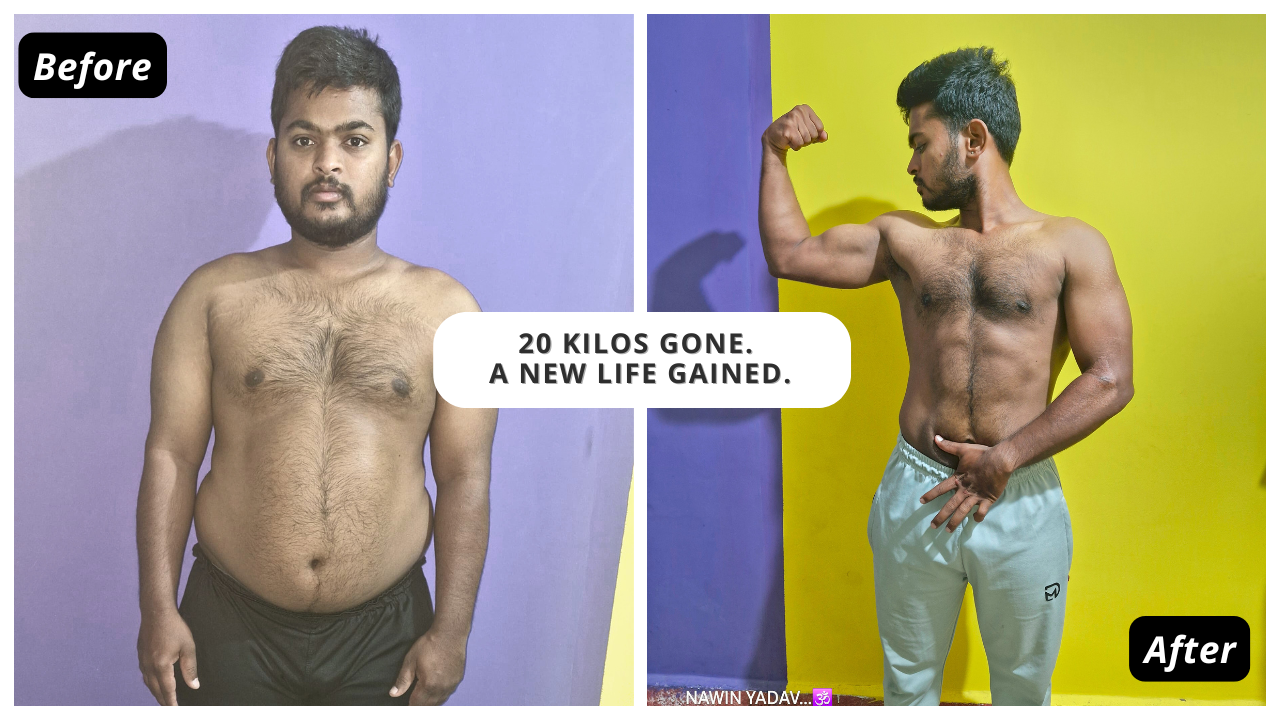
From “Laddu Nawin” to Fit and Fierce: How a 25-Year-Old Insurance Advisor Shed 20 Kilos and Gained His Life Back

When 25-year-old Nawin Yadav from Hyderabad walked into his office every morning, he carried more than just his files and policy papers. He had the weight of fatigue, sluggish energy, and an ever-growing belly that was becoming the butt of jokes. “People … [Read More...]

“I’ve Challenged Myself to Live 100 Years” – The Story of Chandubhai Savani’s Second Chance at Life

At 67, most people start slowing down. Not Chandubhai Savani. A resident of Surat, Chandubhai, thought life was on track. “My life was going well till I had my bypass surgery,” he says. That surgery, back in 2021, was a wake-up call.  Medication was routine, but exercise wasn’t. His diet? What he calls ‘normal.’ “I […]

From Shimla’s Slopes to Chandigarh’s Sidewalks: Surinder Kaur Bhalla’s Journey from Chaos to Control

Some journeys start with a plan. Others begin with a stumble literally. Surinder Bhalla, a government professional, born and raised in the scenic hill town of Shimla, had always lived a life of movement. “In Shimla, you walked everywhere,” she reflects. “Walking was never an exercise. It was just life.” But after shifting to Chandigarh, […]

Ananda Mukherjee Health Story

From Terminal Illness To Complete Wellness! Ananda Mukherjee Health Story

As we observe World Cancer Day under the powerful theme ‘United by Unique’ (2025-2027)**, we are reminded that every individual’s journey with cancer is distinct, yet united by shared resilience, hope, and the collective fight against this disease. This theme places people at the centre of care and their stories at the heart of the […]

  • HOME
  • HEALTHY LIVING
  • FITNESS
  • HEALTHY RECIPES
  • USER STORIES
  • KARMA
  • BUY GOQii

Copyright ©2016 GOQii