GOQii

Blog

  • HOME
  • HEALTHY LIVING
  • FITNESS
  • HEALTHY RECIPES
  • USER STORIES
  • KARMA
  • BUY GOQii

Search Results for: heart health

April 17, 2025 By Uzma Salam Leave a Comment

Role of Plant-Based Diets for Chronic Kidney Disease

Chronic Kidney Disease (CKD) affects millions globally and is one of the leading contributors to long-term health complications and premature deaths. CKD is marked by a gradual loss of kidney function, and in advanced stages, it can result in the build-up of fluids, toxins, and electrolytes—putting immense strain on the body.

While medication and medical monitoring are essential, diet plays a pivotal role in preventing and managing the progression of CKD. Emerging research points to the power of a plant-based diet, especially plant-based proteins, in helping slow down kidney damage and supporting overall well-being. Here’s how making some intentional dietary shifts can positively impact kidney health.

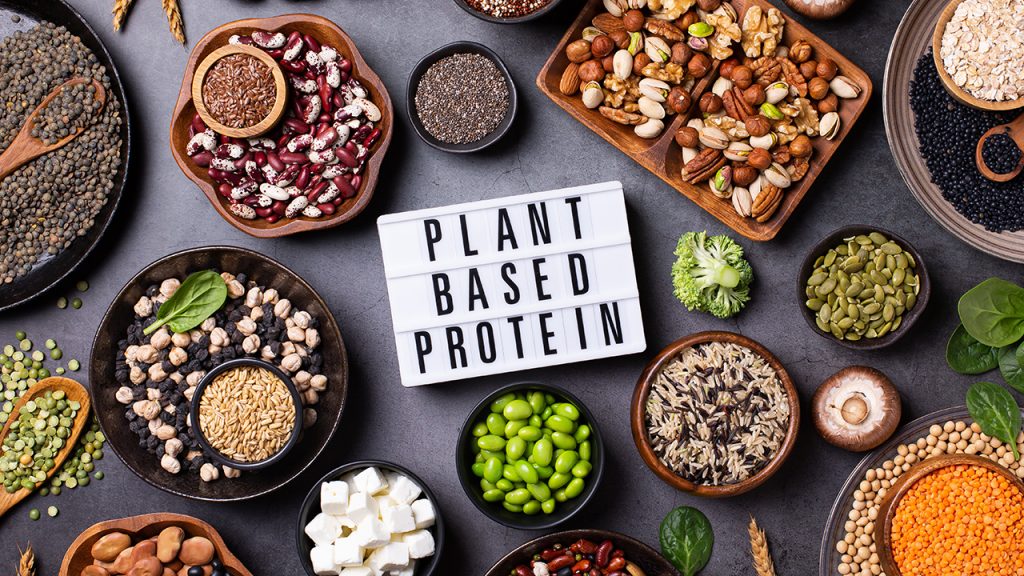
What Counts as Plant-Based Protein?

When most people think of protein, their minds go straight to animal sources like meat, fish, or eggs. But there’s a wide variety of plant-based foods rich in protein that offer just as much (if not more) benefit—without the downsides of saturated fat and cholesterol.

Common Plant-Based Protein Sources:

  • Lentils, chickpeas, green peas
  • Quinoa, oats, barley, rice with beans
  • Almonds, walnuts, peanuts
  • Chia seeds, pumpkin seeds
  • Potatoes

These foods are not only nutrient-dense but are also packed with fibre, antioxidants, vitamins and minerals.

Why Consider Plant-Based Proteins for CKD?

Proteins are essential for everything from muscle repair and hormone production to immune function. However, the source of your protein matters a great deal, especially for those with kidney conditions.

Animal proteins—particularly processed meats and red meats—are associated with:

  • Increased inflammation
  • Higher acid load
  • Elevated risk of heart disease and CKD progression

Plant-based proteins, on the other hand:

  • Are low in saturated fat
  • Contain natural antioxidants
  • Provide fibre, which supports gut health and blood sugar regulation
  • May improve blood pressure and cholesterol levels

Contribute to lowering the risk of diabetes—a major contributor to CKD

Pros and Cons of a Plant-Based Diet for CKD

Pros:

  • Reduces inflammation and acid load on kidneys
  • Helps manage blood pressure, blood sugar, and cholesterol
  • Supports gut health and overall digestive function
  • Associated with lower risk of CKD-related mortality
  • High in beneficial nutrients like magnesium, calcium, and vitamin C

Cons:

  • Many plant proteins are incomplete (they may lack one or more essential amino acids)
  • Risk of Vitamin B12 deficiency, which can lead to anaemia or neurological issues
  • Lower absorption rates than animal proteins—so quantity and variety matter
  • Some individuals may need supplementation or careful meal planning to meet protein needs

Kidneys work silently in the background—filtering blood, regulating blood pressure, and supporting vital body functions. With CKD, even small lifestyle shifts like embracing more plant-based proteins can delay progression, reduce complications, and improve quality of life.

If you’re exploring plant-based eating:

  • Diversify your sources (e.g., combine legumes with whole grains to get complete proteins)
  • Be mindful of any deficiencies, especially B12
  • Monitor portion sizes and nutrients—not all plant-based options are equally kidney-friendly

You don’t have to go fully vegan—but a gradual move towards plant-forward meals can make a real difference.

#BeTheForce

Disclaimer: The information provided in this blog is for general awareness and educational purposes only. It is not intended to replace professional medical advice, diagnosis, or treatment. Always consult a qualified healthcare provider for personalised medical guidance or concerns related to your health.

April 7, 2025 By GOQii Leave a Comment

What is High-Intensity Interval Training?

HIIT, or High-Intensity Interval Training, is a training technique where you give all-out, one hundred percent effort through quick, intense bursts of exercise, followed by short, sometimes active, recovery periods.
This type of training gets your heart rate up and keeps it up, which helps burn more fat in less time. The key is the ratio of intense work to recovery. A great starting point for beginners is a 1:2 work-to-rest ratio (e.g., 30 seconds of work followed by 60 seconds of rest). As you get fitter, you can progress to a more challenging 1:1 ratio (e.g., 30 seconds of work, 30 seconds of rest).

Because it’s so intense, it’s best to do HIIT 2-3 times per week on non-consecutive days to allow your body to recover. While the principles of HIIT can be adapted for many fitness levels, it’s always a good idea to consult with a doctor before starting, especially if you have any pre-existing health conditions.

A Quick & Correct HIIT Routine to Follow

This beginner-friendly routine uses a 1:1 work-to-rest ratio for a great cardio challenge. If you find it too difficult at first, simply increase your rest time to 60 seconds after each exercise.

  1. Warm-Up (5 minutes) Never skip the warm-up.
  • Jogging in place (2 minutes)
  • Arm circles (30 seconds forward, 30 seconds back)
  • Leg swings (30 seconds per leg)
  • Bodyweight squats (10-12 reps)
  1. The HIIT Workout (12 Minutes) Perform each exercise at maximum effort for 30 seconds, followed by 30 seconds of rest. Complete the full circuit two times.
  • WORK: 30 seconds of High Knees
  • REST: 30 seconds of marching or walking in place
  • WORK: 30 seconds of Jumping Jacks
  • REST: 30 seconds of marching or walking in place
  • WORK: 30 seconds of Burpees (or Squat Thrusts for a lower-impact option)
  • REST: 30 seconds of marching or walking in place
  • WORK: 30 seconds of Mountain Climbers
  • REST: 30 seconds of marching or walking in place

After completing all four exercises, rest for 1-2 minutes, then repeat the entire circuit one more time.

  1. Cool-Down (5 minutes) Don’t forget to stretch after your workout.
  • Quad Stretch: Hold for 30 seconds per leg.
  • Hamstring Stretch: Hold for 30 seconds per leg.
  • Calf Stretch: Hold for 30 seconds per leg.
  • Chest Stretch: Hold for 30 seconds.

Intensity is the key. Push yourself during high-effort intervals and use recovery periods to catch your breath without coming to a complete stop.

Important Tips Before You Begin

  • Start slow and safe if you’re new to exercise
  • Maintain proper form and posture to avoid injury
  • Stay hydrated
  • Warm up before and cool down after each session
  • If you have any medical conditions (especially heart, joint, or respiratory concerns), consult your doctor first

Disclaimer: This article is intended for educational purposes only. Always consult with a doctor, physiotherapist, or certified trainer before starting a new fitness program.

March 26, 2025 By GOQii Leave a Comment

Decode Your Food: How to Read Labels and Make Smarter Choices

Walking down the supermarket aisle, you’re bombarded with choices—”low fat,” “high protein,” “sugar-free,” “natural.” But what do these claims really mean? How do you know if a product is genuinely healthy or just smartly marketed? The answer lies in the fine print: the food label.

Reading food labels can feel like cracking a code, but once you know what to look for, it becomes second nature—and empowers you to make healthier, smarter decisions for yourself and your family.

Let’s break it down into simple, actionable steps with a few nutritionist-approved pro tips!

  1. Start With the Ingredients List 📝

This is where the truth of the product lies. Ingredients are listed in order of quantity, from most to least. If sugar, salt, or refined flour are among the first three, it’s a red flag.

  • Choose products with whole, recognisable ingredients.
  • Fewer ingredients usually mean less processing.

💡 Pro Tip: Ingredients like high fructose corn syrup, maltose, dextrose, or anything ending in “-ose” are forms of sugar. The same goes for hydrogenated oils, which signal unhealthy trans fats.

  1. Serving Size vs. Reality 🍿

The label might say 120 calories per serving—but what’s a serving? 5 crackers? Half a chocolate bar? Often, the serving size is much smaller than what we typically consume.

  • Always check the number of servings per package.
  • If you eat double the serving size, you’re getting double the calories, fat, and sugar.

💡 Pro Tip: For single-serve snacks, don’t assume the whole pack is one serving. Check to avoid underestimating your intake.

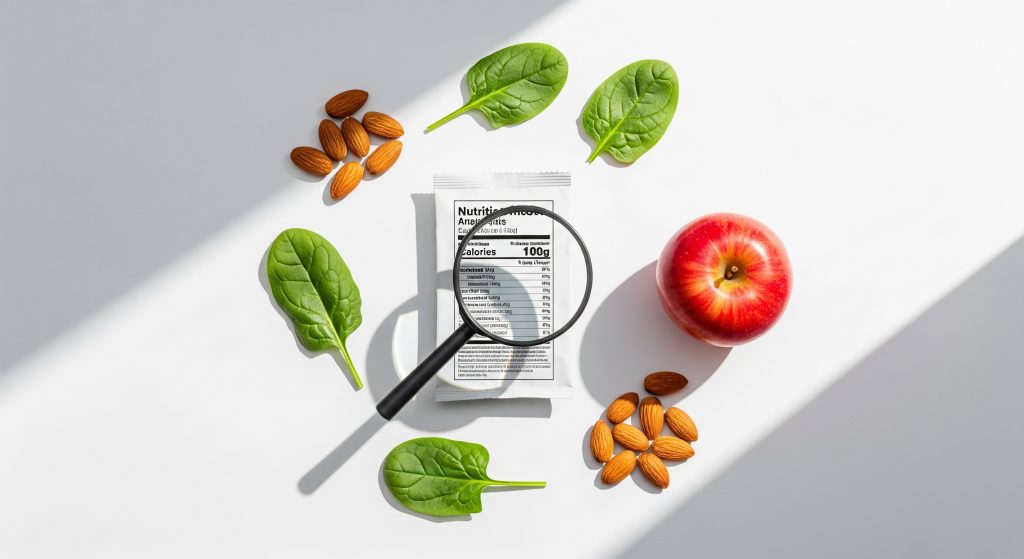
  1. Understanding Nutrition Per 100g vs. Per Serving 📊

Many labels show nutrition per 100g and per serving.

  • Use per 100g to compare products easily.
  • Use per serving to track your intake.

💡 Pro Tip: If you’re comparing two products, always use the per 100g column to avoid being misled by serving sizes that vary between brands.

  1. Know Your Daily Reference Intakes (RI) 📅

Labels often list percentages of nutrients based on a daily reference intake (also called Daily Value). These help you understand how much of a nutrient you’re getting per portion.

  • Aim for high %RI in fibre, protein, vitamins, and minerals.
  • Aim for low %RI in saturated fat, sugar, and salt.

💡 Pro Tip: A %RI of 5% or less is low; 20% or more is high. Use this to gauge whether a food is helping or hindering your goals.

  1. Nutrients to Prioritise ✅

  • Fibre: Go for 3g or more per serving. Fibre keeps you full, supports digestion, and stabilises blood sugar.
  • Protein: Helps with satiety and muscle maintenance—look for at least 5-10g per serving in snacks.
  • Vitamins & Minerals: Check for iron, calcium, vitamin D, and B vitamins. These often get overlooked!
  1. Nutrients to Watch Out For ⚠️

  • Added Sugars: Ideally less than 5g per serving. Sugar is often hidden in “healthy” foods like yoghurt and granola.
  • Saturated Fat: Keep this below 1.5g per 100g for a healthy heart.
  • Salt (Sodium): Aim for less than 0.3g per 100g. High salt intake can raise blood pressure.

💡 Pro Tip: Some products list sodium instead of salt. Multiply sodium by 2.5 to get the salt equivalent.

  1. Don’t Fall for Buzzwords ❌

“Natural,” “low fat,” “no added sugar”—these claims can be misleading.

  • “Low fat” might mean high sugar.
  • “No added sugar” doesn’t mean sugar-free—fruit concentrates count!
  • “Gluten-free” doesn’t mean healthy—many such products are high in fat or sugar.
  1. Example: Comparing Two Granola Bars 🍫 vs. 🥜

Nutrient

Bar A Bar B
Calories 200 160
Sugar 12g 5g
Fibre 2g 5g
Protein 3g 6g

✔ Bar B wins—lower sugar, higher fibre and protein, fewer calories. Always check beyond the front label!

Understanding food labels helps you cut through the noise, take control of your health, and make empowered choices. It’s not about perfection—it’s about making informed swaps that add up over time.

Next time you shop, take a closer look. Your future self will thank you for every smarter bite.

💬 Do you check labels regularly? What’s the biggest surprise you’ve found? Let us know in the comments!

#BeTheForce

Disclaimer: The information provided in this blog is for general awareness and educational purposes only. It is not intended to replace professional medical advice, diagnosis, or treatment. Always consult a qualified healthcare provider for personalised medical guidance or concerns related to your health.

March 25, 2025 By GOQii Leave a Comment

Understanding PCOS: Symptoms & Solutions

Polycystic Ovary Syndrome (PCOS) is more common than you might think. Affecting 1 in 10 women of reproductive age globally, it’s a hormonal condition that can often go undiagnosed for years—leaving many to silently struggle with irregular periods, weight gain, acne, or mood swings, without truly knowing why.



If you’ve ever felt that your body is working against you, or if your health concerns have been dismissed as “normal” or “just stress,” you’re not alone. PCOS can be complex, but with the right knowledge, support, and lifestyle changes, it is manageable—and many women go on to live healthy, balanced lives.

Let’s break it down together and explore what PCOS really is, its symptoms, and the steps you can take to regain control of your health.

What Is PCOS?

PCOS is a hormonal imbalance that affects how the ovaries work. It’s called “polycystic” because many women with PCOS have multiple small cysts on their ovaries—but not always.

At its core, PCOS involves excess androgen levels (male hormones like testosterone), insulin resistance, and irregular ovulation. These disrupt your menstrual cycle, metabolism, and can even impact fertility.

Common Symptoms of PCOS

PCOS affects each woman differently, but here are some common signs to look out for:

  • Irregular periods or no periods at all
  • Excessive hair growth on the face, chest, or back (hirsutism)
  • Acne that’s hard to control
  • Thinning hair or hair loss from the scalp
  • Weight gain, particularly around the abdomen
  • Difficulty losing weight
  • Mood swings, anxiety, or depression
  • Fatigue and low energy levels
  • Fertility challenges

If you identify with some of these symptoms, it’s worth consulting a GP or gynaecologist who can carry out blood tests and scans to confirm a diagnosis.

What Causes PCOS?

The exact cause of PCOS isn’t fully understood, but several factors are believed to play a role:

  • Genetics – If your mother or sister has PCOS, your chances increase.
  • Insulin resistance – When the body’s cells become resistant to insulin, blood sugar levels rise, triggering the ovaries to produce more androgens.
  • Inflammation – Chronic low-grade inflammation can increase androgen production.
  • Lifestyle factors – Sedentary living, poor diet, and stress can aggravate symptoms.

How PCOS Can Affect Long-Term Health

If left unmanaged, PCOS can increase the risk of:

  • Type 2 Diabetes
  • High blood pressure
  • Heart disease
  • Endometrial cancer
  • Sleep apnoea
  • Anxiety and depression

The good news? Early diagnosis and lifestyle changes can significantly reduce these risks and help you take back control of your health.

Natural Solutions for Managing PCOS

There’s no one-size-fits-all cure, but small, sustainable changes can make a big difference. Here’s how you can manage PCOS naturally:

  1. Nourish Your Body with the Right Foods

Focus on a balanced, low-GI diet to regulate blood sugar and manage insulin levels:

  • Whole grains (quinoa, oats, brown rice)
  • Lean proteins (fish, chicken, tofu, lentils)
  • Healthy fats (avocados, nuts, olive oil)
  • Plenty of vegetables and berries
  • Limit refined carbs, sugars, and processed foods

Tip: Don’t skip meals—this can cause blood sugar crashes and worsen fatigue.

  1. Stay Active, Your Way

Regular exercise helps manage weight, insulin resistance, and boosts mood:

  • Aim for 30 minutes of movement, 5 days a week
  • Mix it up—try walking, cycling, yoga, strength training, or dancing

Tip: Start small and stay consistent. Even daily walks make a difference.

  1. Prioritise Stress Management

Chronic stress affects hormones and can worsen symptoms. Try:

  • Deep breathing or meditation
  • Journaling or gratitude practice
  • Spending time in nature
  • Mindful movement like yoga or tai chi
  1. Improve Sleep Quality

PCOS can disrupt sleep, but quality rest is essential for hormone balance:

  • Stick to a regular sleep schedule
  • Limit screens before bed
  • Create a calm, dark sleep environment
  1. Seek Medical Support

Depending on your symptoms, a doctor may recommend medications like:

  • Metformin for insulin resistance
  • Hormonal birth control for regulating cycles
  • Fertility treatments, if needed

Note: Lifestyle changes can often reduce the need for medication over time.

PCOS may feel overwhelming, but you’re not alone. With the right approach and support, you can manage symptoms, boost your energy, improve your mood, and reclaim your well-being.

Small steps matter. Whether it’s preparing a nourishing meal, taking a walk, or simply resting when needed, every choice adds up to better health.

💬 Have you been managing PCOS? Share your tips and journey in the comments—we’d love to hear from you!

#BeTheForce

Disclaimer: The information provided in this blog is for general awareness and educational purposes only. It is not intended to replace professional medical advice, diagnosis, or treatment. Always consult a qualified healthcare provider for personalised medical guidance or concerns related to your health.

  • « Previous Page
  • 1
  • …
  • 58
  • 59
  • 60
  • 61
  • 62
  • …
  • 136
  • Next Page »

Search

Recent Posts

  • Beyond the Screen: How Your Digital Habits Are Impacting Your Longevity
  • Healthy Eating: Vegetable Stuffed Ragi Paratha
  • Sustaining the “GLP-1 Glow”: Nutrition for Skin and Tissue Elasticity
  • Nutritional Deficiencies That Can Cause Hair Loss (And How to Fix Them)
  • The Recovery Gap: Sleep Debt, Overwork and Silent Burnout Are Ageing You Faster

Stay Updated

Archives

  • March 2026 (11)
  • February 2026 (14)
  • January 2026 (14)
  • December 2025 (19)
  • November 2025 (15)
  • October 2025 (20)
  • September 2025 (6)
  • August 2025 (6)
  • July 2025 (12)
  • June 2025 (18)
  • May 2025 (16)
  • April 2025 (22)
  • March 2025 (23)
  • February 2025 (22)
  • January 2025 (25)
  • December 2024 (22)
  • November 2024 (23)
  • October 2024 (21)
  • September 2024 (24)
  • August 2024 (30)
  • July 2024 (21)
  • June 2024 (26)
  • May 2024 (31)
  • April 2024 (27)
  • March 2024 (27)
  • February 2024 (25)
  • January 2024 (21)
  • December 2023 (15)
  • November 2023 (11)
  • October 2023 (19)
  • September 2023 (22)
  • August 2023 (18)
  • July 2023 (22)
  • June 2023 (24)
  • May 2023 (24)
  • April 2023 (23)
  • March 2023 (23)
  • February 2023 (19)
  • January 2023 (15)
  • December 2022 (11)
  • November 2022 (15)
  • October 2022 (15)
  • September 2022 (12)
  • August 2022 (10)
  • July 2022 (17)
  • June 2022 (11)
  • May 2022 (10)
  • April 2022 (6)
  • March 2022 (6)
  • February 2022 (13)
  • January 2022 (11)
  • December 2021 (7)
  • November 2021 (3)
  • October 2021 (6)
  • September 2021 (3)
  • August 2021 (8)
  • July 2021 (7)
  • June 2021 (15)
  • May 2021 (16)
  • April 2021 (10)
  • March 2021 (7)
  • February 2021 (4)
  • January 2021 (4)
  • December 2020 (3)
  • November 2020 (4)
  • October 2020 (10)
  • September 2020 (3)
  • August 2020 (3)
  • July 2020 (2)
  • June 2020 (4)
  • May 2020 (10)
  • April 2020 (12)
  • March 2020 (10)
  • February 2020 (4)
  • January 2020 (4)
  • December 2019 (3)
  • November 2019 (7)
  • October 2019 (5)
  • September 2019 (4)
  • August 2019 (9)
  • July 2019 (9)
  • June 2019 (11)
  • May 2019 (4)
  • April 2019 (8)
  • March 2019 (8)
  • February 2019 (9)
  • January 2019 (8)
  • December 2018 (9)
  • November 2018 (3)
  • October 2018 (3)
  • September 2018 (5)
  • August 2018 (10)
  • July 2018 (6)
  • June 2018 (13)
  • May 2018 (8)
  • April 2018 (18)
  • March 2018 (9)
  • February 2018 (8)
  • January 2018 (15)
  • December 2017 (12)
  • November 2017 (19)
  • October 2017 (13)
  • September 2017 (15)
  • August 2017 (4)
  • July 2017 (8)
  • June 2017 (7)
  • May 2017 (6)
  • April 2017 (8)
  • March 2017 (6)
  • February 2017 (7)
  • January 2017 (9)
  • December 2016 (10)
  • November 2016 (7)
  • October 2016 (7)
  • September 2016 (7)
  • August 2016 (11)
  • July 2016 (9)
  • June 2016 (9)
  • May 2016 (12)
  • April 2016 (17)
  • March 2016 (17)
  • February 2016 (8)
  • January 2016 (6)
  • December 2015 (2)
  • November 2015 (9)
  • October 2015 (7)
  • September 2015 (9)
  • August 2015 (11)
  • July 2015 (9)
  • June 2015 (12)
  • May 2015 (9)
  • April 2015 (13)
  • March 2015 (8)
  • February 2015 (5)
  • January 2015 (12)
  • December 2014 (14)
  • November 2014 (11)
  • October 2014 (6)
  • September 2014 (13)
  • August 2014 (12)
  • July 2014 (6)
  • June 2014 (2)
  • May 2014 (7)
  • April 2014 (4)

From “Laddu Nawin” to Fit and Fierce: How a 25-Year-Old Insurance Advisor Shed 20 Kilos and Gained His Life Back

When 25-year-old Nawin Yadav from Hyderabad walked into his office every morning, he carried more than just his files and policy papers. He had the weight of fatigue, sluggish energy, and an ever-growing belly that was becoming the butt of jokes. “People … [Read More...]

“I’ve Challenged Myself to Live 100 Years” – The Story of Chandubhai Savani’s Second Chance at Life

At 67, most people start slowing down. Not Chandubhai Savani. A resident of Surat, Chandubhai, thought life was on track. “My life was going well till I had my bypass surgery,” he says. That surgery, back in 2021, was a wake-up call.  Medication was routine, but exercise wasn’t. His diet? What he calls ‘normal.’ “I […]

From Shimla’s Slopes to Chandigarh’s Sidewalks: Surinder Kaur Bhalla’s Journey from Chaos to Control

Some journeys start with a plan. Others begin with a stumble literally. Surinder Bhalla, a government professional, born and raised in the scenic hill town of Shimla, had always lived a life of movement. “In Shimla, you walked everywhere,” she reflects. “Walking was never an exercise. It was just life.” But after shifting to Chandigarh, […]

Ananda Mukherjee Health Story

From Terminal Illness To Complete Wellness! Ananda Mukherjee Health Story

As we observe World Cancer Day under the powerful theme ‘United by Unique’ (2025-2027)**, we are reminded that every individual’s journey with cancer is distinct, yet united by shared resilience, hope, and the collective fight against this disease. This theme places people at the centre of care and their stories at the heart of the […]

  • HOME
  • HEALTHY LIVING
  • FITNESS
  • HEALTHY RECIPES
  • USER STORIES
  • KARMA
  • BUY GOQii

Copyright ©2016 GOQii
