GOQii

Blog

  • HOME
  • HEALTHY LIVING
  • FITNESS
  • HEALTHY RECIPES
  • USER STORIES
  • KARMA
  • BUY GOQii

Search Results for: food

November 22, 2016 By Shimpli Patil 2 Comments

Preparing for a 50 km Trail walk – What you need to remember and do

Marathon walking

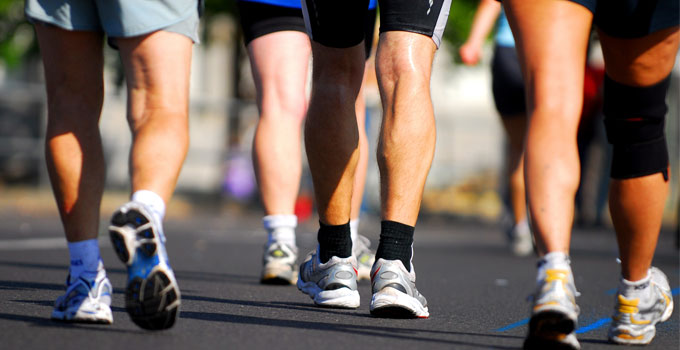
Walking is one of the easiest things one can do. We all do it every day. But how does it feel when I say let’s walk 50 km in 18 hours! “Are you kidding me?” That’s exactly how I reacted when I came across the 50 km Trail Challenge. It is indeed a crazy bet!!

I have been into dancing and fitness for years. But, I never wanted to stop at just being fit. There has always been a kind of restlessness within me, an unreasonable desire to try out something new that I would remember for life and proudly tell my grandchildren about. That’s when I decided to push my limits and test my endurance and willpower, and there was ‘No way’ I could say a ‘No’ to this breath-taking Challenge – A 50 km Trail Challenge.

Apart from training, there are 2 most crucial things that we need to pay special heed to.

Nutrition and Hydration

Let’s check out what we need to do before, during and after the trail walk.

  • NUTRITION BEFORE THE TRAIL WALK (3 days prior)-

We need to keep our Glycogen stores ready. Glycogen is nothing but a storage form of Glucose (energy), which disintegrates to release glucose in the bloodstream when body demands energy.

The only way to build up the glycogen stores is to Carbo-load our body 3 days prior to the event (exactly how the marathoners do). Many people consider it as a “golden opportunity”. That’s simply because we have all the liberty to relish the foods which are otherwise considered “fattening”. You might think I am joking, but we need this to blow up our glycogen reserves, which would ensure sustained energy supply during the event.

It’s a complete carb-treat for 3 days! We need to have a mix of complex and simple carbs. We can enjoy Rice, Rotis, Potatoes, Sweet Potatoes, Fruits, Dry Fruits, Breakfast Cereals (Oats, Cornflakes, Wheat flakes, Muesli), whole wheat bread with Peanut Butter, Daliya (broken wheat), Idli, Dosas, Biscuits, Noodles, Whole Wheat Pasta, Spaghetti, Nachos, Tortillas. Go for tomato sauce in pasta/spaghetti/nachos instead of cheese sauce. Foods with cheese is acidic which might just slow down our body.

Acidic body equals to less Oxygen to the cells. Thus, along with carb-loading, we also need to make sure we keep our body alkaline. Oxygen breeds in an alkaline medium, and our cells need maximum Oxygen during this period. Quick ways to ensure alkalinity- Grab a glass of lemon water twice a day or simply sprinkle lemon over your food before you eat or go for a bowl of sliced cucumber during lunch and dinner. Stay off Naans and Tandoori rotis. Most importantly, we need to stay miles away from the road-side food or unhygienic food as we don’t want to fall ill few days before the event or ever.

  • HYDRATION BEFORE THE TRAIL WALK

3 days prior, we need to double our water intake. If you drink 3 litres on a regular basis, you got to drink 6 litres now. This is just to make sure our body cells are well hydrated and well energized.

  • NUTRITION DURING THE TRAIL WALK

Surprisingly, you don’t feel very much hungry during the walk as your primary focus is on walking and completing it. Now that doesn’t mean you should forget to eat. We need the sugar boost, we need the food! Carry dry munchies with you such as dry fruits, nuts, khakras, biscuits, cookies, rice puffs or wheat puffs, roasted chanas, peanuts, fox nuts (makhanas), soya nuts, energy bars, etc. and munch on them at regular intervals not only for energy but to prevent acidity and headache caused due to large meal gaps.

When you halt for breakfast/lunch/dinner, make sure you aren’t loading your body with too much food. It might just make you sluggish and sleepy, making it difficult for you to get going again. Ensure that you effectively follow the ‘Portion Control’ mantra rather than going overboard with eating.

  • HYDRATION DURING THE WALK

Though we don’t feel the hunger, our thirst center is very much active and we need to quench our thirst at regular intervals. It’s important that we don’t GULP down water but patiently SIP it.

Apart from plain water, we also need electrolytes (Sodium-Potassium) to prevent cramps/spasms while walking. Carry a small 250 ml bottle filled with ORS (electoral/ glucon D/ enerzal/ lemon water with salt) and make sure it lasts for the 10 km distance, which means we need not even over consume the electrolytes. Remember, moderation is the key.

NUTRITION AFTER THE TRAIL WALK

Now this feels Wow! It’s time to celebrate! It’s time to rest and recover. Along with carbs, we now need adequate good quality proteins as well.

Look out for a good mix of carb+protein in your meals-

Milkshakes or Fruit Smoothies, Paneer Roll or Paneer toast, Hummus with Pita bread, roasted Chicken or Chicken gravy with bread/rotis, Yogurt sprinkled with crushed nuts/chopped fruits/pumpkin seeds/sunflower seeds, Sprout Chaat with chopped veggies, Egg and Cheese toast, Grilled Fish with Boiled Potatoes and Salad, Bean rice (Rajma-Kidney Beans) with curd.

These are a few ways of ensuring that your muscles are well treated with proteins for recuperation and that your body is fuelled with a good power supply (carbs).

HYDRATION AFTER THE TRAIL WALK-

You can get your water intake back to normal, but make sure it doesn’t go below 3 litres.

12 glasses or 3 litres is what our body needs to stay hydrated even on a regular basis.

So folks, gear up for the Mega event of your life, feel the rush and say it out loud- “BE THE FORCE!”
November 14, 2016 By Dr Ashwin Nanda 2 Comments

DECODING DIABETES

Diabetes-Day

Last month, I had 2 patients on the same day diagnosed with Diabetes- one an overweight 34 year old IT professional and the other a 6-year-old girl. The reason, why this incident comes to my mind today is because they were both diabetics but, had different diabetes and even their course of treatments was different.

But, the first question I was asked in both the cases was whether they will need to be put on insulin injections immediately. Well, this is a common question asked by patients. To understand this condition better, let me try and explain a bit about the different types of diabetes on the basis of which the required treatment is normally recommended.

Diabetes is a group of metabolic disorders in which the person has high blood glucose (blood sugar), either because insulin production is inadequate, or because the body’s cells do not respond properly to insulin or both. Common symptoms of either diabetes are unexplained weight loss, excess hunger, and excess thirst and delayed wound healing.

Today, I would like to take you through specifically 3 major types of diabetes namely, Type 1, Type 2 and gestational Diabetes.

Let’s talk about

Type 1 Diabetes: is caused by a loss or malfunction of the insulin-producing cells in the pancreas, called beta cells. Damage to beta cells results in absence or insufficient production of insulin. Most cases of Type 1 Diabetes have an autoimmune basis in which immune system mistakenly attacks and destroys its own beta cells. These cases are detected either in childhood or teenage years. There are many theories about what causes type 1 diabetes like autoimmune disease, viral infection, genetic predisposition and environmental factors may also play a role.

Whatever be the cause, this missing insulin has to be replaced as insulin is necessary to sustain life. It is responsible for entry of glucose into the body cells from where the glucose is further utilized for energy and other activities. This glucose which is not entering the cells is circulating in the blood which gets detected as high blood sugar. The replacement insulin is administered by injection using a syringe or an insulin pump. Thanks to the invention of Insulin clubbed with a healthy lifestyle, a Type 1 diabetic is able to lead a happy good quality life.

Coming to Type 2 diabetes most often than not your tissues will be resistant to insulin, so the insulin is being produced but unfortunately not being utilized properly. It is the most common form of diabetes worldwide and accounts for 90-95% of the cases.

Insulin resistance in type 2 diabetes means the signal insulin gives to a cell is weakened. This results in less glucose uptake by muscle and fat cells and a reduction in insulin mediated activities inside cells.

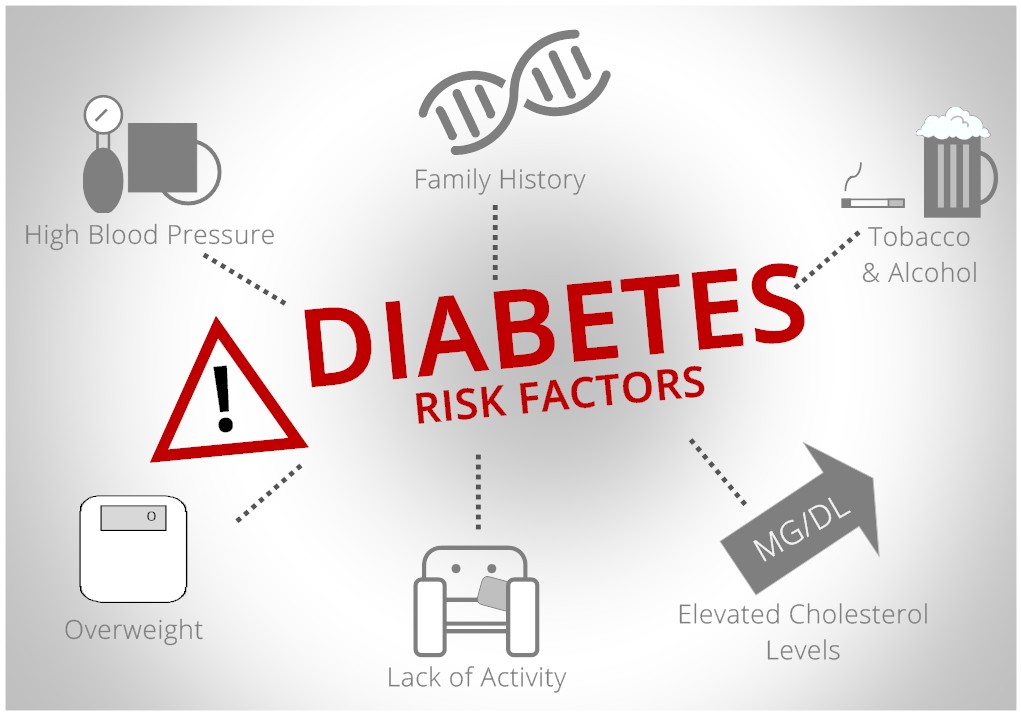
Risk factors for Type 2 Diabetes include an Unhealthy Lifestyle (being physically inactive or less active, erratic food and sleep habits, stress), being overweight or obese and importantly family history of diabetes in close relatives.

Diabetes-Risk

We have ample medicine combinations for type 2 diabetes like tablets which keep the blood sugar under control. But if sufficient sugar control is not achieved in spite of oral medications and a healthy lifestyle, then insulin might be required for further management.

Another type of Diabetes I would like to talk about is Gestational diabetes which basically refers to diabetes diagnosed during pregnancy.

Pregnancy hormones can interfere with the way insulin works in the mother’s body which can lead to elevated blood glucose levels during pregnancy. Women are typically screened for gestational diabetes at 24-28 weeks of pregnancy, however, women who have risk factors may be screened earlier.

Risk factors for developing gestational diabetes include having a family history of diabetes, being overweight, or over 28 years old. Blood glucose control during pregnancy is critical as elevated maternal glucose levels can lead to pregnancy complications and pose risks to the health of the baby. Gestational diabetes is likely to recur during subsequent pregnancies.

Gestational diabetes requires specialized treatment for the rest of the pregnancy. After the pregnancy is over, most women will have normal blood sugars again; however, up to 20-50 % can develop type 2 diabetes within 10 years. Regular screening is recommended.

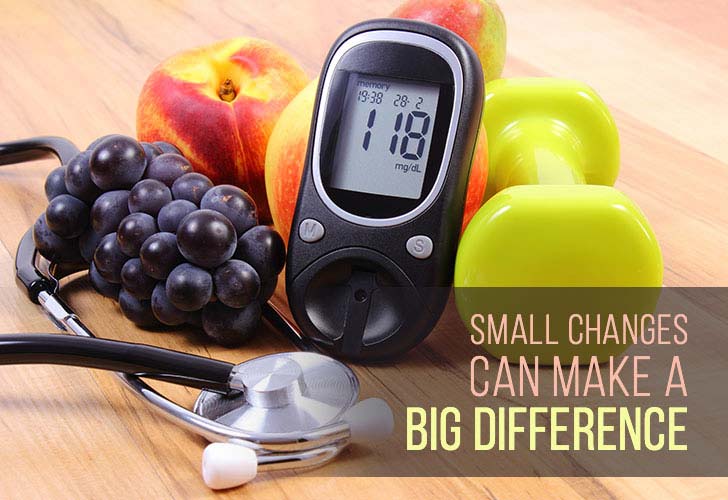
A study conducted on people at risk of type 2 diabetes, it was seen that those who lost just 7% of their weight and exercised about 30 minutes a day cut their risk of diabetes by nearly 60%. In a nutshell, irrespective of the type of diabetes the best prevention or diabetes management strategy is to eat healthy, stay active and keep a check on your weight.

Reference: University of California, San Francisco – Diabetes online Education website.

November 13, 2016 By Niti Nirvan Leave a Comment

Customized Postnatal Health Plan with GOQii

GOQii

Being a mom in today’s world, involves juggling a job, your chores, errands and ofcourse your family. Squeezing in some “me time” among the hustle and bustle seems close to impossible with all tasks already laid out on your schedule. But as the tale goes, catering to your health and throwing in some exercise goes a long way in assisting you with all that is lined up in your daily to – do list. We can help you build a customized postnatal health plan for shedding weight, which includes a diet and exercise plan. You will be able to interact with a doctor, who will be able to assist you with your postnatal health.

Making You A Part Of Your Day

Formulating a good exercise regime is vital to attain fitness goals. It is always good to get in your daily routine first thing in the morning. While a day is full with meetings, and other household tasks, there is a very good chance you may neglect a workout or find an excuse to skip it. Working out in the morning, not only gets your daily exercise out of the way, also sets up your tone for the rest of the day. It boosts metabolism and also the endorphin released helps to spike up your mood and increase energy levels.

Another important fact to keep in mind is that a nutritious diet assists in reaching your fitness goals. Finding time to prepare meals to attain a balanced nutrition is sometimes difficult. You should incorporate essential nutrients in every meal that you take. After delivery it is often paramount to lose the additional pounds you have packed on during pregnancy. In the first few months post delivery, the weight sheds off quite effectively, couple in breastfeeding, and moms note a constant reduction in their weight. However, with time a plateau is attained, and pushing forward to lose more weight is where new moms struggle the most.

A diet conducive to weight loss consists of minimally processed carbohydrates and fat, and a diet rich in fibre, protein and high energy carbohydrates. While the former provides almost zero nutrition, the latter is packed with energy boosting components. This usually includes food like fruits, fresh green vegetables, high fibre carbohydrates in the form of brown rice, pasta and bread and  protein sources include eggs, lean chicken, fish and legumes.

While all these are essential, putting plans into action is where the real conflict lies. A few tips include:

  • Setting a plan in writing: This makes you accountable and more likely to complete it. Noting it down as a task rather than a lingering thought will help you accomplish it daily.
  • Enlisting assistance: It is never a shameful thing to admit that you need help. Ask your spouse, friends and family, to help you with household chores and looking after your little one. Making time for yourself is crucial in order to look after your family.
  • Set realistic goals: While we all wish we looked a certain way, having a clear idea of what is achievable goes a long way. Start with a kilogram a week, and in no time you will find that you are able to achieve more than you set out to in the first place.
  • Choose what works for you: Be it a fitness regime or a diet, use what works for you. There are a plethora of options out there, when it comes to food as well as exercise regimes. Feel free to experiment and mix it up. Ultimately you will find something that suits you.

GOQii is teaming up with Babygogo 

We are giving 10 lucky moms a chance to win GOQii 3 Month subscription with free fitness tracker band. To become a contender, starting from the 14th of November; you will have to be the mom with the best answer of the day on the Babygogo app. Answering the queries with the most informative answer automatically puts you in the running to become the mom with the best answer for the day. So go ahead and send in your answers to the queries on the Babygogo app, and stand a chance to win this exciting opportunity towards a healthy and happy you.

November 10, 2016 By Farida Gohil 1 Comment

Whole Grains slash Pre-Diabetes Risk!

Whole grains

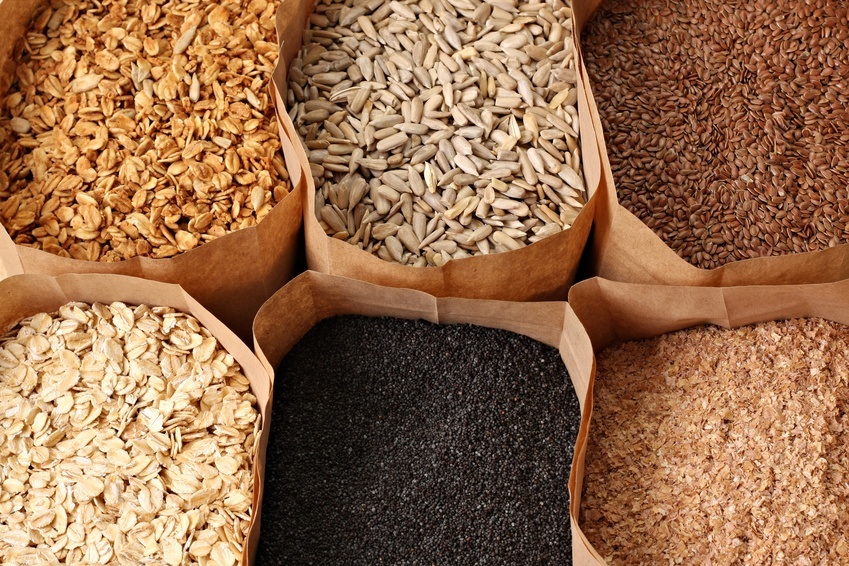
Whole grains are packed with nutrients, including protein, fiber, B vitamins, anti-oxidants, and trace minerals (iron, zinc, copper, and magnesium). A diet rich in whole grains has been shown to reduce the risk of heart disease, type 2 diabetes, obesity, and some forms of cancer.

The addition of more whole grains into a healthy diet is associated with a decreased risk of deteriorating glucose tolerance, including progression from normal glucose tolerance to pre-diabetes, according to a new study published in the American Journal of Clinical Nutrition.

According to a research paper titled Food Product Design, dated Dec 26, 2012 published in Health and Nutrition, researchers at Karolinska Institute and Karolinska University Hospital investigated whether a higher intake of whole grains protects against the development of pre-diabetes and type 2 diabetes and tested for modulation by polymorphisms of the TCF7L2 gene. Participants included 5,477 Stockholm residents aged 35 to 56 years who were not diagnosed with diabetes and who kept food journals of how much whole and refined grains they consumed. Researchers measured blood glucose in study participants and followed up 10 years later.

Participants who ate 59 grams of whole grains a day had a 34% lower risk to deteriorate in glucose tolerance compared to those who ate 30 grams of whole grains a day. Risk reduction was significant in men, but not in women. Participants who consumed 59 grams of whole grains a day also had a 27% reduced risk of becoming pre-diabetic.

Whole grains are rich in fibre. Fibre in the diet does not allow the blood glucose levels to rise thereby controls the rise in sugar levels in the body. Fibre also helps in lowering cholesterol as it helps in decreasing the low density lipoprotein whch is bad cholesterol and increases high density lipoprotein which is good cholesterol.

What foods are in the grains group?

Any food made from wheat, rice, oats, cornmeal, barley or another cereal grain is a grain product. Bread, pasta, oatmeal, breakfast cereals, tortillas, and grits are examples of grain products.

It is advised that at least half the grains in your diet should be whole grains. Whole-grain versions of rice, bread, cereal, flour and pasta can be found at most grocery stores. Many whole-grain foods come ready to eat. These include a variety of breads, pastas and cereals.

Examples of whole grains include:

  • Barley
  • Brown rice
  • Buckwheat
  • Bulgur (cracked wheat)
  • Millet
  • Oatmeal
  • Popcorn
  • Whole-wheat bread, pasta or crackers
  • Wild rice

It’s not always easy to tell what kind of grains a product has, especially bread. For instance, a brown bread isn’t necessarily whole wheat — the colour may come from added colouring. If you’re not sure something has whole grains, check the product label or the Nutrition Facts panel. Look for the word “whole” on the package, and make sure whole grains appear among the first items in the ingredient list.

  • « Previous Page
  • 1
  • …
  • 202
  • 203
  • 204
  • 205
  • 206
  • …
  • 245
  • Next Page »

Search

Recent Posts

  • Water Intake Pre, During and Post Workout
  • India Leads in Longevity: GOQii Sanjeevini Named Top 40 in $101M XPRIZE
  • The Importance Of Knowing If You’re Thirsty Or Hungry
  • Best Foods To Alleviate Irritable Bowel Syndrome
  • ALL ABOUT VERTIGO!

Stay Updated

Archives

  • December 2025 (9)
  • November 2025 (15)
  • October 2025 (20)
  • September 2025 (6)
  • August 2025 (6)
  • July 2025 (12)
  • June 2025 (18)
  • May 2025 (16)
  • April 2025 (23)
  • March 2025 (23)
  • February 2025 (22)
  • January 2025 (26)
  • December 2024 (26)
  • November 2024 (25)
  • October 2024 (22)
  • September 2024 (24)
  • August 2024 (31)
  • July 2024 (21)
  • June 2024 (26)
  • May 2024 (31)
  • April 2024 (27)
  • March 2024 (29)
  • February 2024 (26)
  • January 2024 (25)
  • December 2023 (15)
  • November 2023 (11)
  • October 2023 (20)
  • September 2023 (22)
  • August 2023 (20)
  • July 2023 (22)
  • June 2023 (24)
  • May 2023 (24)
  • April 2023 (24)
  • March 2023 (23)
  • February 2023 (20)
  • January 2023 (16)
  • December 2022 (12)
  • November 2022 (15)
  • October 2022 (15)
  • September 2022 (12)
  • August 2022 (10)
  • July 2022 (17)
  • June 2022 (11)
  • May 2022 (10)
  • April 2022 (6)
  • March 2022 (6)
  • February 2022 (13)
  • January 2022 (12)
  • December 2021 (7)
  • November 2021 (3)
  • October 2021 (6)
  • September 2021 (3)
  • August 2021 (8)
  • July 2021 (7)
  • June 2021 (15)
  • May 2021 (16)
  • April 2021 (10)
  • March 2021 (7)
  • February 2021 (4)
  • January 2021 (4)
  • December 2020 (3)
  • November 2020 (4)
  • October 2020 (10)
  • September 2020 (3)
  • August 2020 (3)
  • July 2020 (2)
  • June 2020 (4)
  • May 2020 (10)
  • April 2020 (12)
  • March 2020 (10)
  • February 2020 (4)
  • January 2020 (4)
  • December 2019 (3)
  • November 2019 (7)
  • October 2019 (5)
  • September 2019 (4)
  • August 2019 (9)
  • July 2019 (9)
  • June 2019 (11)
  • May 2019 (4)
  • April 2019 (9)
  • March 2019 (8)
  • February 2019 (9)
  • January 2019 (8)
  • December 2018 (9)
  • November 2018 (3)
  • October 2018 (3)
  • September 2018 (5)
  • August 2018 (10)
  • July 2018 (6)
  • June 2018 (13)
  • May 2018 (8)
  • April 2018 (18)
  • March 2018 (9)
  • February 2018 (8)
  • January 2018 (15)
  • December 2017 (12)
  • November 2017 (19)
  • October 2017 (13)
  • September 2017 (15)
  • August 2017 (4)
  • July 2017 (8)
  • June 2017 (7)
  • May 2017 (6)
  • April 2017 (8)
  • March 2017 (6)
  • February 2017 (7)
  • January 2017 (9)
  • December 2016 (10)
  • November 2016 (7)
  • October 2016 (7)
  • September 2016 (7)
  • August 2016 (11)
  • July 2016 (9)
  • June 2016 (9)
  • May 2016 (12)
  • April 2016 (17)
  • March 2016 (17)
  • February 2016 (8)
  • January 2016 (6)
  • December 2015 (2)
  • November 2015 (9)
  • October 2015 (7)
  • September 2015 (9)
  • August 2015 (11)
  • July 2015 (9)
  • June 2015 (12)
  • May 2015 (9)
  • April 2015 (13)
  • March 2015 (8)
  • February 2015 (5)
  • January 2015 (12)
  • December 2014 (14)
  • November 2014 (11)
  • October 2014 (6)
  • September 2014 (13)
  • August 2014 (12)
  • July 2014 (6)
  • June 2014 (2)
  • May 2014 (7)
  • April 2014 (5)

From “Laddu Nawin” to Fit and Fierce: How a 25-Year-Old Insurance Advisor Shed 20 Kilos and Gained His Life Back

When 25-year-old Nawin Yadav from Hyderabad walked into his office every morning, he carried more than just his files and policy papers. He had the weight of fatigue, sluggish energy, and an ever-growing belly that was becoming the butt of jokes. “People … [Read More...]

“I’ve Challenged Myself to Live 100 Years” – The Story of Chandubhai Savani’s Second Chance at Life

At 67, most people start slowing down. Not Chandubhai Savani. A resident of Surat, Chandubhai, thought life was on track. “My life was going well till I had my bypass surgery,” he says. That surgery, back in 2021, was a wake-up call.  Medication was routine, but exercise wasn’t. His diet? What he calls ‘normal.’ “I […]

From Shimla’s Slopes to Chandigarh’s Sidewalks: Surinder Kaur Bhalla’s Journey from Chaos to Control

Some journeys start with a plan. Others begin with a stumble literally. Surinder Bhalla, a government professional, born and raised in the scenic hill town of Shimla, had always lived a life of movement. “In Shimla, you walked everywhere,” she reflects. “Walking was never an exercise. It was just life.” But after shifting to Chandigarh, […]

Ananda Mukherjee Health Story

From Terminal Illness To Complete Wellness! Ananda Mukherjee Health Story

As we observe World Cancer Day under the powerful theme ‘United by Unique’ (2025-2027)**, we are reminded that every individual’s journey with cancer is distinct, yet united by shared resilience, hope, and the collective fight against this disease. This theme places people at the centre of care and their stories at the heart of the […]

  • HOME
  • HEALTHY LIVING
  • FITNESS
  • HEALTHY RECIPES
  • USER STORIES
  • KARMA
  • BUY GOQii

Copyright ©2016 GOQii