GOQii

Blog

  • HOME
  • HEALTHY LIVING
  • FITNESS
  • HEALTHY RECIPES
  • USER STORIES
  • KARMA
  • BUY GOQii

December 20, 2023 By Trupti Hingad Leave a Comment

Breathe Easy Through Pregnancy: A Guide to Prenatal Breathing Techniques

As you enter motherhood after conceiving, there are a lot of tips given to pregnant women on what to eat, how to stand, sit, how to sleep and so on.

But, one of the most important things to learn during pregnancy is how to breathe. The correct breathing technique makes a world of a difference because it helps every cell. Hence mother-to-be can master the techniques throughout pregnancy. Breathing is very important during pregnancy as it ensures efficient removal of waste from the body as well as get a plentiful supply of oxygen for both the mother and child. Effective breathing purifies and calms the nervous system and induces a feeling of pleasant well-being.

One can learn the following practices throughout pregnancy so that at the time of labour they become second nature.

Let me list down the types of breathing that can be practised during pregnancy.

Equal Breathing: While standing, sitting or lying down, breathe in fully, slowly and rhythmically, without jerks, using the whole respiratory system of the abdomen, chest, pharynx and nose. Breathe out an equal number of counts. Concentrate on breathing in = life-giving air and breathing out. A feeling of peacefulness or quietness floods in. This technique has a great advantage to relax during labour. This gentle breathing helps to relax the uterine muscles and diverts the mind.

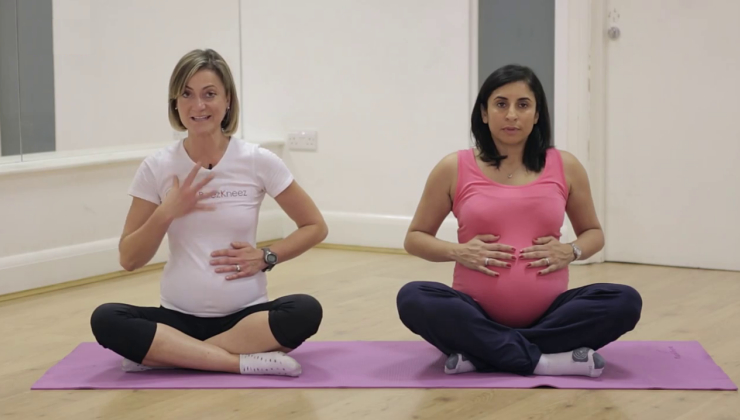
Diaphragmatic Breathing: While lying down on the back, flex the knees and keep the feet flat on the ground or bed. Keep one hand on the abdomen and keep one beside you. Slowly concentrate on the abdomen rising rhythmically with each inhalation and relaxation during exhalation. Thus, feel the abdomen rising and falling with breathing. Count up to ten seconds. Do not use force or jerks while inhaling. It helps to deal with stress for the Mother-to-be. The diaphragm muscle is supposed to rhythmically massage the organs of the body. The massage gently encourages blood flow, lymph flow, nutrient delivery, and waste removal in the organs and all tissues of the body, including tissues in the womb.  It also helps one deal with Shortness of Breath.

Chest Level Breathing: Place your hands on your chest, below your collarbone. In addition, you can have your partner place one hand at the same level on your back. Now breathe in and out through your mouth up to your hands, a shallow, slow and gentle breath. The rib cage and thoracic cavity expand to the sides, front and back for each inhalation and exhalation.  Do about 10-12 breaths in 30 seconds. If you exceed 12 breaths, then slow down.

Jaw Level Breathing – “OUT”: The jaw level breathing entails simply saying the word OUT with stress on T. Do not worry about your breathing; it will take care of itself as you say the word. Count about 20-25 breaths in 30 seconds.

Rechaka Pranayam or Expulsion Breathing: Breathing out and maximizing exhalation is a secret of relaxation while in labour. Breathe in for a count of four seconds or as convenient and slowly breath out for double the count. Again, take one breath in and breathe out for double the count. This can be done whenever a contraction is felt in the first stage of labour, while the opening of the cervix is dilating. An alternative to the same is to breathe in air and while exhaling, hum Aum or any pleasing sound. Singing works on the same principle of exhalation. Mental relaxation and peace are felt.

Blowing: At times breathing in from the nose, blowing out through the mouth and repeating the whole procedure, helps a great deal. Retaining breath and thrashing around with anxiety and clutching onto things can cause tension, exhaustion and discomfort. The secret is to LET GO! You are in a partnership with your baby to help them to emerge gracefully.

The Second Stage of Labour: When the mouth of the uterus is dilated completely, is the time of actual active pushing, not before that. When the contractions come, the breathing technique at that time would be to take a breath, hold it in and push down hard as if one is expelling a hard bowel movement. While the contraction lasts, again take in a deep breath, hold it in and push as long as possible. Do these two or three times during a contraction. Between contraction, the mother should relax in abdominal breathing. Continue till the baby is out. Soon you will hear the cry of your baby.

During the Third Stage of Labour: This stage of delivery is of the placenta. Breathe normally. It usually separates and comes within five or fifteen minutes. Slight uterine contractions may be felt during this period as the placenta slips out. This is the time to relax well. There should be relaxed joyful feeling throughout.

Benefits of Breathing Exercise:

  1. Calm deep breathing can help you deal with morning sickness in early pregnancy
  2. Deep breathing can help you fall in deep and rejuvenating sleep. Deep breathing with active visualization of images of your muscle groups relaxing can put your body in a state of relaxation. After this, one can imagine the healthy growth of both the mother and the child to help you fall into a happy sleep.
  3. Regular and proper breathing can help you deal with labour pain easily.
  4. Breathing can help transport nutrients and oxygen well to the baby and result in healthy baby growth
  5. Breathing can help you deal with, stress, depression, feeling low and unwanted advice from others during pregnancy as well.

NOTE: If you every feels dizzy during breathing practices, cover your nose and mouth with your palms and blow out once. Then breath normally. This will re-establish the proper balance of oxygen and carbon dioxide in your body and relieve dizziness if it is experienced.

If this article helped you, let us know your thoughts in the comments below. You can find more articles on women’s care here. To keep a track of your pregnancy, you can also download the GOQii App here and access the Women’s Care Feature.

For more tips on how to manage your health during pregnancy, reach out to your GOQii Coach by subscribing for Personalised Health Coaching here.

#BeTheForce 
October 7, 2023 By Payal Choudhury 72 Comments

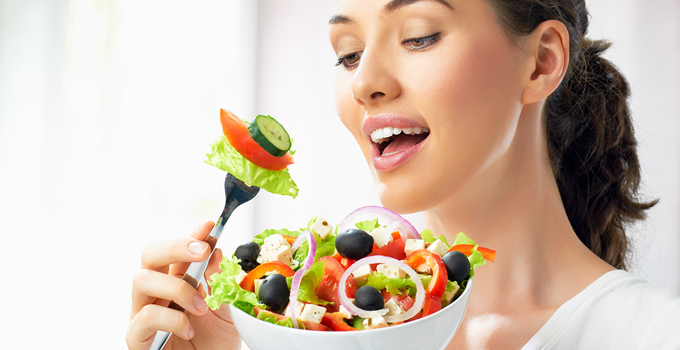
Healthy Eating Tips for Women at 40

Healthy-eating-tips-for-women-at-40

“Lordy, lordy, look who’s forty!” The big 40—it’s a milestone for sure, signalling a time of transition from young adulthood to middle-age.

This is an important decade for preventing lifestyle diseases such as diabetes, heart disease and many cancers later in life. So, if you’ve been making healthy lifestyle choices, keep it up in your 40s, and if you haven’t, now’s the time to start!

Healthy habits like eating right, exercising regularly, getting enough sleep, and not smoking can help reduce your risk for a number of chronic medical conditions.

Age 40 is a milestone when the risk of many health conditions increases. This makes the 40th birthday a perfect time for taking stock of your health. Today, Forty is considered the new twenty. So if you want to feel young and healthy now is a good time to take stock of the situation. Though there might be other things out there more important, do take a deep breath and feel good and healthy.

Adopting a healthy eating plan is the best preventive measure against disease. It involves both avoiding certain foods and incorporating others in varying proportions, making the transition gradual yet effective.

Good nutrition starts with the basics: a well-rounded diet consisting of whole grains, fresh fruits and vegetables, healthy fats, and lean sources of protein. These kinds of foods provide women with plenty of energy, the means for lifelong weight control, and the key ingredients for looking and feeling great at any age. Our diet has a major effect on our food cravings, stress levels and energy throughout the day.

Applying some simple rules will assist our bodies in maintaining hormonal balance and promoting long-term well-being.

Focus on whole, plant-based foods. Fill most of your plate with fruits and leafy green vegetables. Also include a variety of whole grains, beans, and other legumes to give a filling fiber.

Bone up on calcium. Women are at a greater risk than men of developing osteoporosis, so it’s important to get plenty of calcium to support your bone health. While dairy products are high in calcium, their animal fat and protein can accelerate bone loss. So also consider plant-based sources of calcium like beans, broccoli, kale, brussels sprouts, and collard greens.

Make sure you get enough iron. Many women don’t get enough iron in their diet. On top of that, women lose a lot of this important mineral during menstruation. Boost your intake by eating iron-rich foods such as lean red meat, dark poultry, lentils, spinach, almonds, and iron-fortified cereals.

Cut back on alcohol and caffeine. Women who consume more than two alcoholic drinks a day are at a higher risk of osteoporosis. Caffeine consumption interferes with hormone levels and also increases the loss of calcium. Try to limit alcohol consumption to one glass once in a while and caffeine to one cup a day.

Eat the right type of protein. Protein is an essential part of any healthy diet. Protein at this point in your life will help maximise your current metabolic rate and also prevent the loss of lean muscle mass. Eating too much animal protein can cause calcium loss and lead to a decrease in bone density and osteoporosis. Instead of red meat and processed meat, such as hot dogs, bacon, and salami, opt for fish, skinless chicken and turkey, low-fat dairy, and plant-based protein sources, such as beans, nuts, seeds, peas, tofu.

Some of the healthy tips to be focused on:

Avoid

– Ready made meals and microwaving your food in plastics and cling film.

– Genetically modified foods

– Sugar as much as possible

– Food additives such as MSG (monosodium glutamate or better known as Ajinomoto), Fructose, Glucose-Fructose-Syrup, Corn Syrup, Aspartame, Colourings, and E numbers.

– Cut down on sodium

– Eating any food that is burnt

– Carbonated beverages, especially ‘diet’ varieties

– Margarine and other ‘fake’ butter

All foods labelled ‘diet’ or ‘low calorie’ or ‘fat-free

Highly processed foods

Refined grains (white).

Options that can be included in the meal platter:

Eat plenty of raw organic fruit and vegetables

Eat complex carbohydrates

Eat Essential Fats – oily fish, nuts, & seeds (avoid nuts in cases of acne and allergies)

Include healthy fats such as coconut oil, olive oil and butter

Increase your fiber intake

Drink sufficient clean water every day

Eat good, clean sources of proteins.

Eat vegetarian at least once each day

Thoroughly wash all fruits and vegetables before eating.

Feed your body high-quality fuel, monitor its intake and routinely push your engine’s limits to keep it running smoothly. Remember, you are the captain of your plane. Just reach out and take the controls.

We hope this article equips you with valuable insights for maintaining a healthy and balanced life. If you found this information helpful, we’d love to hear your thoughts in the comments below. Find more articles on Women’s Health here. For further information or guidance, reach out to our certified experts by subscribing to GOQii’s Personalised Health Coaching here.

September 17, 2023 By Soni Thakur Leave a Comment

Menstrual Cramps & Ways To Combat It

menstrual crampsMenstrual cramps are also called as Dysmenorrhea, like its name says ‘dys’ meaning difficult, ‘meno’ meaning month and ‘rrhea’ meaning flow i.e. difficult or painful monthly flow, and often a nightmare for most women. Its usual onset occurs around the time that menstruation begins. The pain is usually in the pelvis or lower abdomen.

Apart from this, there are certain other manifestations which women put up with during menstruation:

  • Nausea
  • Acidity
  • Acne
  • Bloating
  • Dizziness
  • Mood swings

Why Do We Get Menstrual Cramps?

Menstrual cramps are caused by an excess of “prostaglandins” hormones that are released from the endometrium (inner lining) of the uterus as it prepares to shed off. This is a necessary part of the process but in excess, it causes pain. If the uterus contracts strongly, blood flow is reduced and the supply of oxygen to the uterus muscle tissue decreases, causing severe pain.

Why Do Some Women Experience More Cramps Than Others?

This could be possibly due to inflammation. As a more inflamed tissue tends to produce more prostaglandins, it causes more severe pain. Other factors that contribute to menstrual cramps include:

  • Poor eating habits
  • Not having adequate amount of potassium and magnesium in diet
  • Lack of Exercise
  • Smoking
  • Drinking Alcohol

How Do You Combat It?

Women have to go through a lot in general, so there is no chance these creepy cramps would spare us but we know how to fight it! So, let’s find out some easy and effective ways to combat menstrual cramps.

  1. Putting a heating pad on your belly or lower back.
  2. Rubbing Lavender oil on your belly helps relieve period pain.
  3. Ginger tea: Boil a piece of ginger in 250 ml water, simmer for 4-5 minutes and drink whenever required.
  4. Carom seeds: Having 1 tbsp. of carom seeds by boiling them in a glass of water may ease menstrual cramps.
  5. Eat potassium and magnesium rich foods like Bananas, oranges, grapefruit, raisins, dates, mushrooms, cucumbers, potatoes, sweet potatoes and dark chocolate (70% or more), nuts, legumes, tofu, seeds, wholegrains, green leafy vegetables respectively.
  6. Use yoga: Some simple yoga poses to try out are Head to Knee forward bend, bound angle pose, Child’s pose and inverted leg pose.
  7. Listen to good music that changes your mood or take a walk in nature or talk to your friends and family members. This will keep you engaged and diverted so you may not feel too much pain.

So, let’s try out these simple and effective ways to fight menstrual cramps and ease those difficult days! We hope this article helps you. Do leave your thoughts in the comments below. For more tips, check out Healthy Reads or you can get these home remedies and more directly from a GOQii Coach by subscribing for personalized health coaching here.

#BeTheForce  

July 14, 2023 By Prachi More Leave a Comment

Nourishing Women’s Health: Essential Nutrients for Every Stage of Life

Nourishing Women's Health: Essential Nutrients for Every Stage of Life

A woman’s journey through life is marked by remarkable milestones and transformative changes, from the onset of puberty to the joys of pregnancy, the nurturing of new life through lactation, and the transition into menopause. Throughout these stages, the female body undergoes significant hormonal fluctuations, making proper nutrition a vital aspect of maintaining optimal health. By ensuring the intake of essential nutrients, women can support their overall well-being and safeguard against potential deficiencies.

Essential Nutrients For A Healthy Diet In Women 

Let’s explore key nutrients crucial for women, including iron, folic acid, calcium, vitamin D, choline, and magnesium. By understanding the importance of these nutrients and incorporating them into a well-balanced diet, women can empower themselves to thrive at every phase of their extraordinary journey.

  1. Iron: It plays a vital role in the formation of red blood cells, transport of oxygen to different parts of the body, building immunity, etc. but is unfortunately most commonly deficient in women worldwide. This deficiency is due to poor nutrition consumption and loss of iron during menstruation which can lead to anemia. To avoid the same, its important to include Iron rich foods like green leafy vegetables, legumes, organ meat, chicken, nuts, tofu, etc. Iron gets effectively absorbed in the body when combined with Vitamin C, hence, adding citrus fruits, broccoli, and bell peppers to meals will be of great help.
  2. Folic acid: This vitamin has a special role to play during the child bearing age of women. During pregnancy, Folic Acid helps in the development of the neural tube that will develop into your baby’s brain and spinal cord. Apart from this, it also plays an important role in the formation of red blood cells, deficiency of which can lead to anemia. We can include green leafy vegetables, nuts, beans, and broccoli to ensure you’re getting a good amount of this vitamin!
  3. Calcium: During adulthood, adequate calcium consumption is necessary to ensure good bone and muscle health, sending & receiving nerve signals, releasing hormones & other chemicals but  after menopause, the fall in estrogen levels causes decreased calcium absorption. This can lead to fragile bones. Hence, its advised to further increase calcium consumption after menopause. We can do so by including dairy products, green leafy vegetables, tofu, nuts like almonds , chia & sesame seeds.
  4. Vitamin D: This sunshine vitamin is necessary for absorption of calcium & phosphorus in body. It also helps to build immunity, cell growth & reduce inflammation. If not absorbed in the body adequately through sunlight and diet, it can cause symptoms like bone pain, low mood, poor muscle strength, constant tiredness, frequent infections, and weight gain. Exposure to sunlight, adding food rich in Vitamin D like fatty fish, egg yolks, fortified cereals, and fortified milk helps when deficiency is minor. In case of severe deficiency, its advisable to take supplements.
  5. Choline: It is one of the necessary nutrients for women during the phase of pregnancy and breastfeeding as it plays an important role in the child’s growth . It also helps to maintain good  brain health & nervous system, muscle control, and cell formation. Including whole eggs, organ meats, fish, Soyabean, wheat germ, chicken, almonds, kidney beans, quinoa, and cottage cheese is a good way to keep its deficiency away.
  6. Magnesium: This is a mineral which is necessary to ensure proper functioning of muscles & nerves. It helps in protein production but its deficiency during pregnancy can lead to serious complications like gestational diabetes, restricted fetal growth, preterm labor, and pre-eclampsia. Eating a diet which includes nuts, pumpkin seeds, green leafy vegetables, beans, legumes and peas will help.

All in all, a well balanced diet rich in all food groups is the key to good health. If this article helped you, let us know in the comments below and share it with your friends and family too!

Find more articles on Women’s Health here. For further information or guidance, reach out to our certified experts by subscribing to GOQii’s Personalised Health Coaching here. 

#BeTheForce 
  • « Previous Page
  • 1
  • …
  • 4
  • 5
  • 6
  • 7
  • 8
  • …
  • 13
  • Next Page »

Search

Recent Posts

  • Navigating the Maze of Nutrition: Finding Clarity Amidst Confusion
  • Get children active and keep them healthy
  • What Gestational Diabetes Can Do To You & Your Unborn Child
  • Breathing – A Forgotten Art
  • The Incredible Benefits Of Milk You Might Not Know

Stay Updated

Archives

  • December 2025 (3)
  • November 2025 (15)
  • October 2025 (20)
  • September 2025 (6)
  • August 2025 (6)
  • July 2025 (12)
  • June 2025 (18)
  • May 2025 (16)
  • April 2025 (23)
  • March 2025 (23)
  • February 2025 (22)
  • January 2025 (26)
  • December 2024 (26)
  • November 2024 (25)
  • October 2024 (22)
  • September 2024 (24)
  • August 2024 (31)
  • July 2024 (21)
  • June 2024 (26)
  • May 2024 (31)
  • April 2024 (27)
  • March 2024 (29)
  • February 2024 (26)
  • January 2024 (25)
  • December 2023 (15)
  • November 2023 (11)
  • October 2023 (22)
  • September 2023 (22)
  • August 2023 (20)
  • July 2023 (22)
  • June 2023 (24)
  • May 2023 (24)
  • April 2023 (24)
  • March 2023 (23)
  • February 2023 (20)
  • January 2023 (16)
  • December 2022 (12)
  • November 2022 (15)
  • October 2022 (15)
  • September 2022 (12)
  • August 2022 (10)
  • July 2022 (17)
  • June 2022 (11)
  • May 2022 (10)
  • April 2022 (6)
  • March 2022 (6)
  • February 2022 (13)
  • January 2022 (12)
  • December 2021 (7)
  • November 2021 (3)
  • October 2021 (6)
  • September 2021 (3)
  • August 2021 (8)
  • July 2021 (7)
  • June 2021 (15)
  • May 2021 (16)
  • April 2021 (10)
  • March 2021 (7)
  • February 2021 (4)
  • January 2021 (4)
  • December 2020 (3)
  • November 2020 (4)
  • October 2020 (10)
  • September 2020 (3)
  • August 2020 (3)
  • July 2020 (2)
  • June 2020 (4)
  • May 2020 (10)
  • April 2020 (12)
  • March 2020 (10)
  • February 2020 (4)
  • January 2020 (4)
  • December 2019 (3)
  • November 2019 (7)
  • October 2019 (5)
  • September 2019 (4)
  • August 2019 (9)
  • July 2019 (9)
  • June 2019 (11)
  • May 2019 (4)
  • April 2019 (9)
  • March 2019 (8)
  • February 2019 (9)
  • January 2019 (8)
  • December 2018 (9)
  • November 2018 (3)
  • October 2018 (3)
  • September 2018 (5)
  • August 2018 (10)
  • July 2018 (6)
  • June 2018 (13)
  • May 2018 (8)
  • April 2018 (18)
  • March 2018 (9)
  • February 2018 (8)
  • January 2018 (15)
  • December 2017 (12)
  • November 2017 (19)
  • October 2017 (13)
  • September 2017 (15)
  • August 2017 (4)
  • July 2017 (8)
  • June 2017 (7)
  • May 2017 (6)
  • April 2017 (8)
  • March 2017 (6)
  • February 2017 (7)
  • January 2017 (9)
  • December 2016 (10)
  • November 2016 (7)
  • October 2016 (7)
  • September 2016 (7)
  • August 2016 (11)
  • July 2016 (9)
  • June 2016 (9)
  • May 2016 (12)
  • April 2016 (17)
  • March 2016 (17)
  • February 2016 (8)
  • January 2016 (6)
  • December 2015 (2)
  • November 2015 (9)
  • October 2015 (7)
  • September 2015 (9)
  • August 2015 (11)
  • July 2015 (9)
  • June 2015 (12)
  • May 2015 (9)
  • April 2015 (13)
  • March 2015 (8)
  • February 2015 (5)
  • January 2015 (12)
  • December 2014 (14)
  • November 2014 (11)
  • October 2014 (6)
  • September 2014 (13)
  • August 2014 (12)
  • July 2014 (6)
  • June 2014 (2)
  • May 2014 (7)
  • April 2014 (5)

From “Laddu Nawin” to Fit and Fierce: How a 25-Year-Old Insurance Advisor Shed 20 Kilos and Gained His Life Back

When 25-year-old Nawin Yadav from Hyderabad walked into his office every morning, he carried more than just his files and policy papers. He had the weight of fatigue, sluggish energy, and an ever-growing belly that was becoming the butt of jokes. “People … [Read More...]

“I’ve Challenged Myself to Live 100 Years” – The Story of Chandubhai Savani’s Second Chance at Life

At 67, most people start slowing down. Not Chandubhai Savani. A resident of Surat, Chandubhai, thought life was on track. “My life was going well till I had my bypass surgery,” he says. That surgery, back in 2021, was a wake-up call.  Medication was routine, but exercise wasn’t. His diet? What he calls ‘normal.’ “I […]

From Shimla’s Slopes to Chandigarh’s Sidewalks: Surinder Kaur Bhalla’s Journey from Chaos to Control

Some journeys start with a plan. Others begin with a stumble literally. Surinder Bhalla, a government professional, born and raised in the scenic hill town of Shimla, had always lived a life of movement. “In Shimla, you walked everywhere,” she reflects. “Walking was never an exercise. It was just life.” But after shifting to Chandigarh, […]

Ananda Mukherjee Health Story

From Terminal Illness To Complete Wellness! Ananda Mukherjee Health Story

As we observe World Cancer Day under the powerful theme ‘United by Unique’ (2025-2027)**, we are reminded that every individual’s journey with cancer is distinct, yet united by shared resilience, hope, and the collective fight against this disease. This theme places people at the centre of care and their stories at the heart of the […]

  • HOME
  • HEALTHY LIVING
  • FITNESS
  • HEALTHY RECIPES
  • USER STORIES
  • KARMA
  • BUY GOQii

Copyright ©2016 GOQii