GOQii

Blog

  • HOME
  • HEALTHY LIVING
  • FITNESS
  • HEALTHY RECIPES
  • USER STORIES
  • KARMA
  • BUY GOQii

June 12, 2024 By Yogita Agarwal 1 Comment

Top 5 Foods To Fight Wrinkles And Premature Aging

We all want healthy and glowing skin but do you know that your skin reflects what you eat? Healthy skin needs nutrients, a healthy diet, enough water and good sleep. When these aspects are balanced, it shows on our skin. Wrinkles are a sign of ageing. We can’t stop or avoid it but with healthy food and lifestyle, we can delay it. When it comes to premature aging or wrinkles, it happens due to Sun damage and loss of collagen and elastin. These two proteins take care of our skin and keep it healthy, young and firm. 

When UV rays hit our skin, it reduces the production of collagen and elastin. It increases the production of free radicals and premature aging. As we age, the skin starts losing its firmness and elasticity. Other factors that contribute to the process are pollution, smoking, stress, dehydration, lack of sleep and unhealthy food habits.

Which Foods Help Fight Wrinkles and Premature Aging? 

  1. Avocado: is a fruit with healthy fats. It has fiber and many nutrients like Folate, Magnesium, Potassium, Riboflavin (Vitamin B2), Niacin (Vitamin B3), Pantothenic Acid (Vitamin B5), Pyridoxine (Vitamin B6), Vitamin C, Vitamin E and Vitamin K. Vitamin E aids skin nourishment, reduces scars and fights free radicals. Avocado is high in the antioxidant glutathione, which helps the body to detoxify and keeps skin clear of acne and wrinkles.
  2. Berries: All the berries are extremely rich in antioxidants, are a good source of Fiber, Vitamin C, Manganese, Vitamin K1, Copper and Folate. Those are rich in Flavonoids, Vitamins and Polyphenol. So berries are perfect food to fight wrinkles and fine lines. Berries not only help in reducing wrinkles but also help in the regeneration of new skin cells. Add berries to your breakfast or morning smoothies.
  3. Buckwheat: It is gluten free, rich in fiber, Iron, provides B1, is a rich source of Magnesium and Calcium, Folate, helps in heart health and controls blood sugar levels and also reduces the signs of premature aging. It has Bioflavonoid Rutin which helps to maintain the production of collagen in the skin and encourage the body’s utilization of Vitamin C.
  4. Papaya: is rich in a variety of antioxidants, vitamins and minerals like Vitamin A, C, K and E, Calcium, Potassium, Magnesium, Phosphorus and Vitamin B. These help to improve skin elasticity and minimize the fine lines and wrinkles. Papaya is rich in the enzyme papain and chymopapain which helps to reduce inflammation. It helps to reduce acne by removing dead skin cells, and remove damaged keratin which can build up on the skin and form small bumps.
  5. Sweet Potatoes: are rich in Vitamin A, B, C, D, Calcium, Iron, Magnesium, Potassium, Phosphorus, Thiamine, Zinc. It has the antioxidant beta-carotene which is converted into Vitamin A and helps in restoring skin elasticity, prompts skin cell turnover, which means healthy glowing skin. The Vitamin C and E in it helps in protection of skin from free radicals and keeps complexion radiant. Both the Vitamins are crucial to keep skin healthy, glowing and supple. Vitamin C boosts collagen and promotes tightening of skin. 

Above are the few foods which help protect our skin from wrinkles and premature aging. In addition to including these foods to your diet, make sure that you have healthy fats, a variety of veggies and fruits, especially different colour veggies and fruits. Keep yourself well hydrated, do regular exercise, learn to manage stress and sleep well.

Reduce the consumption of alcohol, tea, coffee, preserved canned food and processed food. Our body does not have a voice but it talks to us through signs and symptoms, so pay attention to the health of the skin to be healthy and fit. With good food habits, healthy lifestyle, proper hydration, good sleep and stress management we can turn the clock on our skin to look 10 years younger. 

We hope this article helps you fight wrinkles! Do leave your thoughts in the comments below. For more tips on skincare, check out Healthy Reads or ask a GOQii Coach by subscribing for Personalised Health Coaching here.

#BeTheForce  

May 15, 2024 By GOQii Leave a Comment

Identifying Trigger Foods and Avoiding Unnecessary Dietary Limits: The Role of Food Diaries in Managing Atopic Dermatitis

It’s widely recognized that Atopic Dermatitis (AD) is a chronic condition prone to flare-ups, making it a persistent challenge for those affected. The question arises, can we enhance the quality of life for AD patients? The resounding answer is YES! A crucial step in this direction is mastering trigger management, which can significantly simplify life for AD sufferers.

Triggers, which can range from airborne pollen to specific food allergies, are essentially any factor that can precipitate an AD flare-up. Stress, physical activity leading to sweating, infections, and changes in weather can all exacerbate the condition, making the condition area redder, itchier, and significantly disrupting the lives of those with AD. For individuals without AD, managing these triggers might seem straightforward, but for those afflicted, it can feel overwhelmingly daunting.

So, how do we tackle these triggers? The solution lies in journaling in other words keeping a detailed skin diary or log, documenting daily skin conditions. This practice benefits not just the patient but also the healthcare provider managing the AD, allowing for the identification of personal triggers through regular tracking.

Diet also plays a crucial role in managing AD. Certain foods, especially those with added colours like Chinese dishes, seafood such as shellfish, citrus fruits, peanuts, tree nuts, dairy, and sometimes eggs, can trigger flare-ups. It’s essential for individuals with AD to consume these foods cautiously if the specific triggers are unknown.

Implementing these strategies, coupled with the support of a dermatologist and a nutritionist, can significantly improve life for an AD patient, making it more joyful and free from the constant irritation of itchiness. For further information or guidance, reach out to your GOQii Skin Coach.

#BeTheForce

References –

Tamagawa-Mineoka R, Katoh N. Atopic Dermatitis: Identification and Management of Complicating Factors. Int J Mol Sci. 2020 Apr 11;21(8):2671. doi: 10.3390/ijms21082671. PMID: 32290423; PMCID: PMC7215488.

Girolomoni G, Busà VM. Flare management in atopic dermatitis: from definition to treatment. Ther Adv Chronic Dis. 2022 Jan 13;13:20406223211066728. doi: 10.1177/20406223211066728. PMID: 35070252; PMCID: PMC8771745.

All guidance above with respect to elimination of foods is as per dietary guidance and not as per dermatologist

May 15, 2024 By GOQii Leave a Comment

Optimizing Skin Hydration: Effective Strategies for Managing Atopic Dermatitis

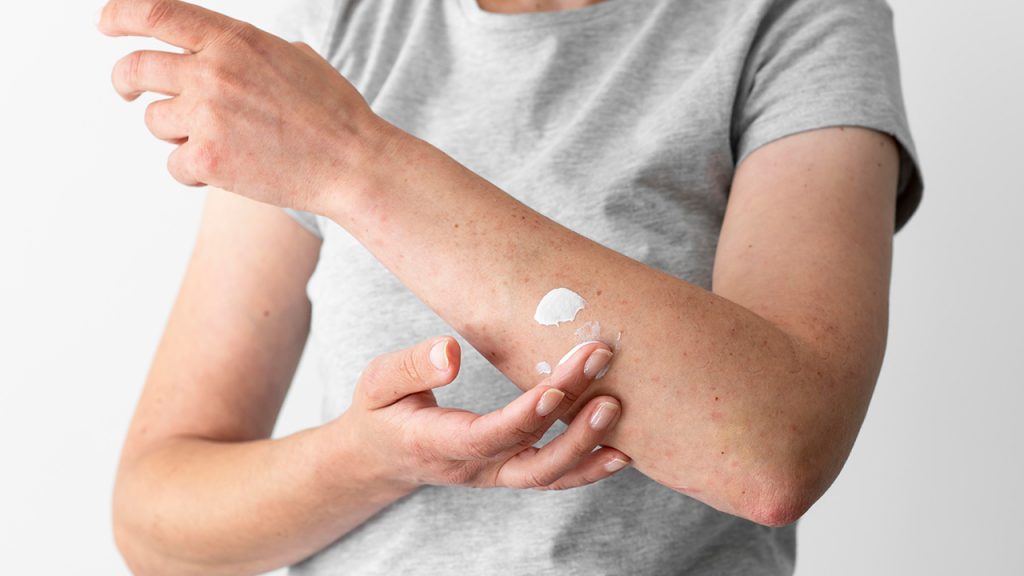
Atopic Dermatitis (AD) conjures up images of dry, itchy, and rough patches plaguing the skin. The instinctive response to ease the situation is often moisturization, and rightfully so, as maintaining hydration is fundamental in managing AD.

However, tackling AD’s persistent dryness typically requires more than a standard over-the-counter moisturizer. Dermatologists often recommend a medicated, rich, and occlusive moisturizer loaded with skin-barrier fortifying ingredients. For those living with AD, a one-time daily application simply won’t suffice; diligent and repeated moisturization throughout the day is essential for preventing dryness and improving moisture retention.

But is there more to skin hydration than just moisturizers? Indeed, a few straightforward lifestyle adjustments can make a significant difference. Shorter, lukewarm baths, the use of gentle, fragrance-free cleansers, and immediate post-shower skin moisturization while the skin is still damp can have long-term benefits for the skin’s natural barrier, keeping it supple and preventing dryness.

As for activities like swimming, which involve extended water exposure, it’s advisable to apply an occlusive substance, such as petroleum jelly, on dry patches to shield the skin from chlorine’s harsh effects. Nevertheless, consulting a dermatologist is crucial before undertaking such activities, as they can best assess one’s specific skin needs.

A common query arises about the role of internal hydration – does drinking ample water naturally moisturize the skin? Contrary to popular belief, internal hydration doesn’t directly translate to skin moisturization. However, staying well-hydrated is indispensable for overall bodily functions like digestion and excretion, which in turn support skin health by helping to eliminate toxins.

Investing in simple lifestyle changes pays dividends for skin health, offering an invaluable benefit for managing Atopic Dermatitis without a hefty price tag. For further information or guidance, reach out to your GOQii Skin Coach.

#BeTheForce

References – https://www.nhs.uk/conditions/atopic-eczema/

Rajagopalan M, De A, Godse K, Krupa Shankar DS, Zawar V, Sharma N, Mukherjee S, Sarda A, Dhar S. Guidelines on Management of Atopic Dermatitis in India: An Evidence-Based Review and an Expert Consensus. Indian J Dermatol. 2019 May-Jun;64(3):166-181. doi: 10.4103/ijd.IJD_683_18. PMID: 31148854; PMCID: PMC6537677.

https://www.ncbi.nlm.nih.gov/pmc/articles/PMC9954916/

May 15, 2024 By GOQii Leave a Comment

Understanding and Managing Atopic Dermatitis Triggers

Do relentless red, itchy, and parched patches frequently mar your skin, perhaps across your face or hidden in the bends of your body? Are allergies your constant, unwelcome companions, manifesting as persistent runny noses, morning sneezes, or reactions to certain foods? Or maybe you find yourself combatting the tell-tale wheeze of asthma? If these experiences resonate with you, it’s time to uncover the layers of Atopic Dermatitis (AD).

Atopic Dermatitis, a specific form of eczema, commonly makes its debut in childhood and can persist well into adult years in some cases. This condition is visually marked by red, inflamed, and dry and itchy eczematous lesions on the face & body. The origins of AD are complex, rooted in a combination of genetic predispositions and environmental elements, and it behaves in a cycle of exacerbations and calm.

This condition is best described as chronic and relapsing, which means that there may be periods of flareups (disease aggravation) and remissions (disease free period). Early diagnosis & therapeutic intervention play a crucial role in disease remission.

Understanding and identifying what ignites AD is critical. Triggers vary widely—some dwell within the body like a compromised skin barrier, while others lurk in our surroundings, such as dietary allergens or the sun’s harsh rays, climatic changes, physical exertion and sweating. These triggers can be very specific and subjective and recognising these culprits is pivotal. Thus, keeping a detailed skin diary can be instrumental in mastering an individual’s condition. It will really aid in disease control and management. These triggers if not monitored, lead to a FLARE.

A flare-up, or ‘flare’, signifies a severe intensification of symptoms that disrupts life and demands immediate medical attention. In such phases, the skin’s plight worsens: redness ravages, and itchiness intensifies, often leading to infected, weeping wounds.

This event often hampers the individual’s quality of life. Thus, trigger management and flare prevention are two very important parts in treating AD. But there’s a beacon of hope. Through meticulous trigger management and prevention strategies, flare-ups can be mitigated or reduced. Simple adjustments to one’s lifestyle and dietary habits can pave the way to managing this irksome condition.

With the collaborative efforts of a dermatologist, a dietician or nutritionist, and a physician, the goal is not just to treat but to transform lives. The objective is clear – enhance the quality of life through prolonged remission, navigating each individual towards a smoother journey with Atopic Dermatitis.

We hope this article helps you. For further information or guidance, reach out to your GOQii Skin Coach.

#BeTheForce

Reference – Girolomoni G, Busà VM. Flare management in atopic dermatitis: from definition to treatment. Ther Adv Chronic Dis. 2022 Jan 13;13:20406223211066728. doi: 10.1177/20406223211066728. PMID: 35070252; PMCID: PMC8771745.

Kolb L, Ferrer-Bruker SJ. Atopic Dermatitis. [Updated 2023 Aug 8]. In: StatPearls [Internet]. Treasure Island (FL): StatPearls Publishing; 2024 Jan-. Availabatopic-dermatitis-triggers-managementle from: https://www.ncbi.nlm.nih.gov/books/NBK448071

  • « Previous Page
  • 1
  • 2
  • 3
  • 4
  • 5
  • 6
  • Next Page »

Search

Recent Posts

  • Navigating the Maze of Nutrition: Finding Clarity Amidst Confusion
  • Get children active and keep them healthy
  • What Gestational Diabetes Can Do To You & Your Unborn Child
  • Breathing – A Forgotten Art
  • The Incredible Benefits Of Milk You Might Not Know

Stay Updated

Archives

  • December 2025 (3)
  • November 2025 (15)
  • October 2025 (20)
  • September 2025 (6)
  • August 2025 (6)
  • July 2025 (12)
  • June 2025 (18)
  • May 2025 (16)
  • April 2025 (23)
  • March 2025 (23)
  • February 2025 (22)
  • January 2025 (26)
  • December 2024 (26)
  • November 2024 (25)
  • October 2024 (22)
  • September 2024 (24)
  • August 2024 (31)
  • July 2024 (21)
  • June 2024 (26)
  • May 2024 (31)
  • April 2024 (27)
  • March 2024 (29)
  • February 2024 (26)
  • January 2024 (25)
  • December 2023 (15)
  • November 2023 (11)
  • October 2023 (22)
  • September 2023 (22)
  • August 2023 (20)
  • July 2023 (22)
  • June 2023 (24)
  • May 2023 (24)
  • April 2023 (24)
  • March 2023 (23)
  • February 2023 (20)
  • January 2023 (16)
  • December 2022 (12)
  • November 2022 (15)
  • October 2022 (15)
  • September 2022 (12)
  • August 2022 (10)
  • July 2022 (17)
  • June 2022 (11)
  • May 2022 (10)
  • April 2022 (6)
  • March 2022 (6)
  • February 2022 (13)
  • January 2022 (12)
  • December 2021 (7)
  • November 2021 (3)
  • October 2021 (6)
  • September 2021 (3)
  • August 2021 (8)
  • July 2021 (7)
  • June 2021 (15)
  • May 2021 (16)
  • April 2021 (10)
  • March 2021 (7)
  • February 2021 (4)
  • January 2021 (4)
  • December 2020 (3)
  • November 2020 (4)
  • October 2020 (10)
  • September 2020 (3)
  • August 2020 (3)
  • July 2020 (2)
  • June 2020 (4)
  • May 2020 (10)
  • April 2020 (12)
  • March 2020 (10)
  • February 2020 (4)
  • January 2020 (4)
  • December 2019 (3)
  • November 2019 (7)
  • October 2019 (5)
  • September 2019 (4)
  • August 2019 (9)
  • July 2019 (9)
  • June 2019 (11)
  • May 2019 (4)
  • April 2019 (9)
  • March 2019 (8)
  • February 2019 (9)
  • January 2019 (8)
  • December 2018 (9)
  • November 2018 (3)
  • October 2018 (3)
  • September 2018 (5)
  • August 2018 (10)
  • July 2018 (6)
  • June 2018 (13)
  • May 2018 (8)
  • April 2018 (18)
  • March 2018 (9)
  • February 2018 (8)
  • January 2018 (15)
  • December 2017 (12)
  • November 2017 (19)
  • October 2017 (13)
  • September 2017 (15)
  • August 2017 (4)
  • July 2017 (8)
  • June 2017 (7)
  • May 2017 (6)
  • April 2017 (8)
  • March 2017 (6)
  • February 2017 (7)
  • January 2017 (9)
  • December 2016 (10)
  • November 2016 (7)
  • October 2016 (7)
  • September 2016 (7)
  • August 2016 (11)
  • July 2016 (9)
  • June 2016 (9)
  • May 2016 (12)
  • April 2016 (17)
  • March 2016 (17)
  • February 2016 (8)
  • January 2016 (6)
  • December 2015 (2)
  • November 2015 (9)
  • October 2015 (7)
  • September 2015 (9)
  • August 2015 (11)
  • July 2015 (9)
  • June 2015 (12)
  • May 2015 (9)
  • April 2015 (13)
  • March 2015 (8)
  • February 2015 (5)
  • January 2015 (12)
  • December 2014 (14)
  • November 2014 (11)
  • October 2014 (6)
  • September 2014 (13)
  • August 2014 (12)
  • July 2014 (6)
  • June 2014 (2)
  • May 2014 (7)
  • April 2014 (5)

From “Laddu Nawin” to Fit and Fierce: How a 25-Year-Old Insurance Advisor Shed 20 Kilos and Gained His Life Back

When 25-year-old Nawin Yadav from Hyderabad walked into his office every morning, he carried more than just his files and policy papers. He had the weight of fatigue, sluggish energy, and an ever-growing belly that was becoming the butt of jokes. “People … [Read More...]

“I’ve Challenged Myself to Live 100 Years” – The Story of Chandubhai Savani’s Second Chance at Life

At 67, most people start slowing down. Not Chandubhai Savani. A resident of Surat, Chandubhai, thought life was on track. “My life was going well till I had my bypass surgery,” he says. That surgery, back in 2021, was a wake-up call.  Medication was routine, but exercise wasn’t. His diet? What he calls ‘normal.’ “I […]

From Shimla’s Slopes to Chandigarh’s Sidewalks: Surinder Kaur Bhalla’s Journey from Chaos to Control

Some journeys start with a plan. Others begin with a stumble literally. Surinder Bhalla, a government professional, born and raised in the scenic hill town of Shimla, had always lived a life of movement. “In Shimla, you walked everywhere,” she reflects. “Walking was never an exercise. It was just life.” But after shifting to Chandigarh, […]

Ananda Mukherjee Health Story

From Terminal Illness To Complete Wellness! Ananda Mukherjee Health Story

As we observe World Cancer Day under the powerful theme ‘United by Unique’ (2025-2027)**, we are reminded that every individual’s journey with cancer is distinct, yet united by shared resilience, hope, and the collective fight against this disease. This theme places people at the centre of care and their stories at the heart of the […]

  • HOME
  • HEALTHY LIVING
  • FITNESS
  • HEALTHY RECIPES
  • USER STORIES
  • KARMA
  • BUY GOQii

Copyright ©2016 GOQii