GOQii

Blog

  • HOME
  • HEALTHY LIVING
  • FITNESS
  • HEALTHY RECIPES
  • USER STORIES
  • KARMA
  • BUY GOQii

May 7, 2025 By GOQii Leave a Comment

Goodbye Sugar, Hello Health: A Real-Food Approach to Managing Diabetes

Have you ever wondered if you could take control of your diabetes rather than letting it control you? What if the secret wasn’t buried deep on a pharmacy shelf, but already sitting on your plate?

Welcome to the world of DIP (Diabetes Improvement Programme) Nutrition – a low-carb, real-food philosophy that’s helping people across the globe rewrite their diabetes story.

The Sugar Trap: Why We’ve Been Getting It Wrong

For years, conventional advice has often pointed those with type 2 diabetes towards a low-fat, high-carb diet—ironically the very combination that spikes blood sugar. We’ve been told to count calories, watch portions, and rely heavily on medication.

But here’s the uncomfortable truth: more carbs mean more glucose, and more glucose means more insulin… and the cycle continues.

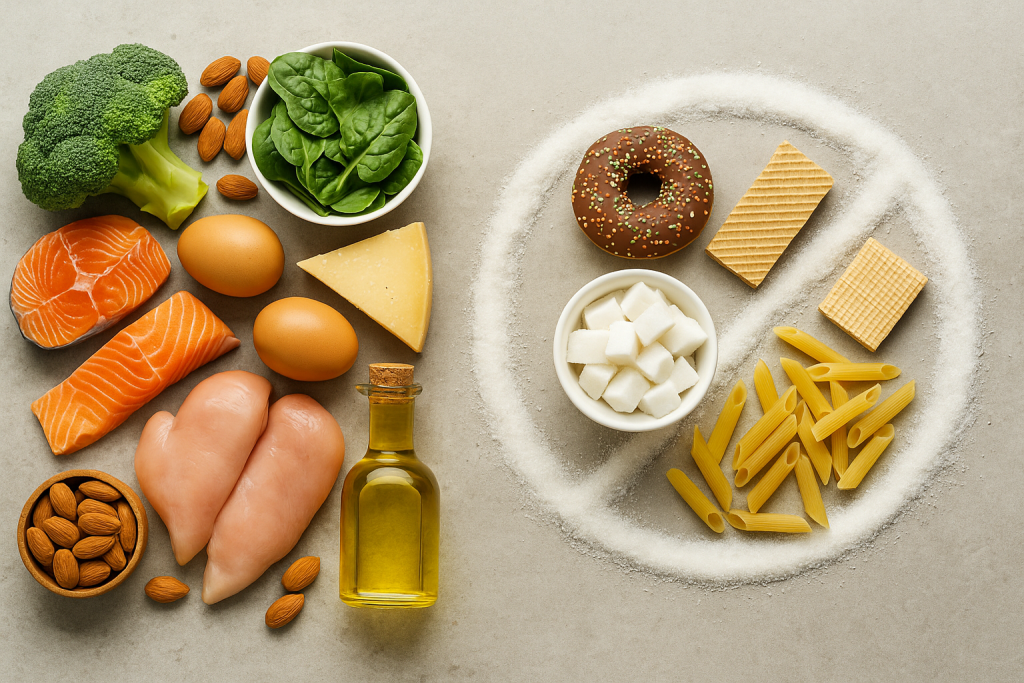
The DIP approach flips the script. It starts with one simple but powerful change: ditching sugar and refined starches. Think white bread, rice, pasta, sweets, sugary drinks – the usual suspects. Cutting these out helps reduce the constant glucose overload and gives the body the breathing space it needs to heal.

Low-Carb, Real-Food: What’s on the Menu?

This isn’t about deprivation or fad diets. It’s about getting back to basics. Real food – the kind your great-grandparents would recognise.

Think:

  • Above-ground vegetables
  • Healthy fats like nuts, seeds, and olive oil
  • Good-quality protein
  • And yes, even eggs and cheese

The DIP philosophy is rooted in nutrient-dense, whole food that nourishes rather than spikes.

The result? Lower blood sugar levels, improved insulin sensitivity, weight loss, better energy, and most importantly — hope.

Real Stories, Real Change

Across communities, people who follow the DIP way report feeling more in control than ever before. They’re reducing medications (under medical supervision), shedding stubborn weight, and finally breaking free from constant cravings and crashes.

It’s not magic. It’s metabolic science meets mindful eating.

Is This the Beginning of Your New Chapter?

If you’ve felt frustrated with traditional approaches…
If you’re tired of chasing highs and crashing lows…

Maybe it’s time for a fresh start.

“Goodbye sugar, hello health” isn’t just a catchy phrase – it’s a powerful reality waiting to unfold.

Let your first step be this: rethink what’s on your plate. Your body will thank you.

#BeTheForce

Disclaimer: The information provided in this blog is for general awareness and educational purposes only. It is not intended to replace professional medical advice, diagnosis, or treatment. Always consult a qualified healthcare provider for personalised medical guidance or concerns related to your health.
May 7, 2025 By GOQii Leave a Comment

Good Carbohydrates for Managing Diabetes

good carbohydratesDiabetes may be a lifelong condition, but with the right lifestyle changes, it can be managed and in some cases, even reversed. One of the most powerful changes you can make is to your diet.

Many people believe carbohydrates are the enemy and should be avoided completely. But that’s not true. Carbohydrates are an essential part of your diet it’s about choosing the right kind.

Two Types of Carbohydrates You Should Know

Type Description Impact
Simple Carbs Found in white bread, sugary drinks, sweets, and juices Broken down quickly, causing a rapid rise in blood sugar
Complex Carbs Found in whole grains, beans, vegetables, and fruits Digested slowly, causing a steady and gentle rise in blood sugar

The key is not to cut out carbs, but to choose complex, fibre-rich carbohydrates that support stable blood sugar and better health.

Diabetes-Friendly Carbohydrates to Include

You can confidently enjoy the following in moderate portions:

  • Fruits – Prefer whole fruits like apples, guavas, pears, cherries, and berries
  • Vegetables – Especially non-starchy types like spinach, cucumbers, okra, zucchini
  • Whole Grains – Brown rice, oats, whole wheat, barley, Jareesh, and Bulgur
  • Beans & Pulses – Lentils, Chickpeas, Fava Beans
  • Nuts & Seeds – Almonds, walnuts, flaxseeds, sunflower seeds

How to Add Good Carbs to Your Day

Here are some practical swaps and additions that fit right into Saudi meals:

Tip What to Do
Swap Your Bread Replace white khubz with whole wheat or multigrain varieties
Switch Up Your Rice Choose brown rice or mix with quinoa or Jareesh for better fibre
Bulk Up Your Stews Add more vegetables to dishes like salona or edam
Enjoy Traditional Salads Include Tabbouleh or a fresh green salad daily
Boost Your Salads Add boiled chickpeas, lentils, nuts, or mixed seeds for added fibre and protein
Snack Smart A small portion of dates with nuts, or fruit with a spoon of yoghurt, can be balanced snacks

It’s Not Just About Diet

Managing diabetes involves a full lifestyle approach:

  • 🏃 Stay physically active – even 30 minutes of walking helps
  • 🧘 Manage stress – through prayer, reflection, or breathing exercises
  • 🚭 Avoid smoking – it worsens insulin resistance
  • 🛏️ Prioritise good sleep – it’s essential for blood sugar control

If you’ve completely cut out carbs, it’s time to reintroduce the right ones in healthy, controlled portions.

Before making any dietary changes, consult your doctor or a licensed dietitian. Everyone’s body responds differently, and personalised guidance is essential.

If this article helped you, share it with your family and friends. Good health is better when shared.

#BeTheForce

Disclaimer: The information provided in this blog is for general awareness and educational purposes only. It is not intended to replace professional medical advice, diagnosis, or treatment. Always consult a qualified healthcare provider for personalised medical guidance or concerns related to your health. Images shown are for representation purposes only and may not depict the exact recommendations or outcomes.

May 7, 2025 By GOQii Leave a Comment

A Guide to Managing Diabetes with Everyday Foods

Diabetes is becoming an increasingly common health condition across Saudi Arabia. Many individuals and families are learning to manage this lifestyle challenge, which is marked by high blood sugar levels.



While medication and regular medical check-ups are essential, one of the most powerful tools for managing diabetes lies in your hands your food choices.

The Carbohydrate Challenge

For those living with diabetes, carbohydrates are a major concern. When we eat them, our body breaks them down into sugar. Simple carbs — like white bread, sugary drinks, juices, and sweets — are digested too quickly, leading to sharp spikes in blood sugar levels.

The Solution: Slow-Release, High-Fibre Foods

To manage blood sugar effectively, focus on foods that are digested slowly — often referred to as low glycaemic index (GI) foods.

These are typically high in fibre, which helps the body absorb sugar more gradually, offering major benefits:

✅ Improves insulin sensitivity, allowing your body to manage sugar better

✅ Lowers bad cholesterol (LDL), protecting your heart

✅ Reduces risk of cardiovascular disease

Everyday Foods That Support Diabetes Management

The good news? Many slow-release, diabetes-friendly foods are already part of Saudi kitchens and traditions. You don’t need expensive or foreign superfoods — just a few smart swaps and mindful portions.

Here’s what to add to your daily meals:

Food Why It’s Good Portion Tip
Foul Medames High in fibre and protein; keeps blood sugar stable and supports fullness for hours ~1 cup per serving
Hummus & Chickpeas Slow-digesting legume that’s great as a dip or in salads 2–4 tbsp hummus or ½ cup chickpeas
Lentil Soup Nourishing and gentle on blood sugar; packed with plant protein and iron 1 medium bowl
Jareesh & Harees Traditional wheat-based dishes rich in fibre and slow carbs — but watch preparation Avoid excess ghee/oil or fatty meat; keep portions moderate
Whole-Wheat Bread Higher fibre than white bread; helps prevent sugar spikes 1-2 small pieces (e.g. khubz or pita size)
Barley (Sha’ir) Known for stabilising blood sugar; try in soups or as Talbina Use unsweetened Talbina; ~½–1 cup

A Special Note on Dates (Tamr)

Dates are a cultural symbol of generosity and tradition in Saudi Arabia — and you don’t need to give them up.

However, they do contain natural sugars, so moderation is key:

  • Eat 1 to 3 dates at a time
  • Pair them with a handful of nuts (like almonds or walnuts) or a spoon of yoghurt — this slows down sugar absorption

Don’t Forget Fruits & Veggies

Non-starchy vegetables and low-GI fruits (like cucumbers, lettuce, spinach, apples, and berries) are your best friends. Include a variety in your meals to support overall health, digestion, and blood sugar control.

Your Health Starts at Home

With a few mindful swaps and a return to traditional whole foods, you can take charge of your health — right from your kitchen.

🟢 Choose wisely
🟢 Eat mindfully
🟢 Stay consistent

And always work closely with your doctor or registered dietitian for personalised care.

Disclaimer: This information is for educational purposes only. Always consult your doctor or a licensed dietitian before making changes to your diet.

April 23, 2025 By Srini Leave a Comment

What Is Circadian Rhythm and Why It Affects Your Sleep

sleep seriesEver wondered why you feel energised in the morning some days and groggy on others? Or why you naturally wake up at the same time every day—even without an alarm? The answer lies in your circadian rhythm—your body’s internal clock that runs the show when it comes to sleep, energy, alertness, and more.

Let’s break it down.

What is Circadian Rhythm?

The term “circadian” comes from Latin:

  • “Circa” – meaning about or around
  • “Dian” – related to the day
  • Rhythm – a repeating pattern or cycle

So, it literally refers to a roughly 24-hour internal cycle your body follows every day—governing things like sleep, wakefulness, body temperature, hormones, and alertness. Interestingly, it’s not exactly 24 hours—it’s about 24 hours and 15 minutes!

The Role of Light in Circadian Rhythm

The main trigger for circadian rhythm is light. Even though research shows it can still function without external light (like in a dark room), light exposure—especially sunlight—greatly influences it.

At the core of this system is a tiny region in your brain called the Suprachiasmatic Nucleus (SCN)—often referred to as your “third eye” or biological clock. It sits just above where the optic nerves from each eye cross and processes signals related to light, helping your body know when it’s time to wake up or wind down.

Your Circadian Type: Early Bird or Night Owl?

Not everyone’s rhythm is the same. People generally fall into three chronotype categories:

  • Early Birds (25%) – feel energised early in the morning
  • Night Owls (25%) – peak energy comes later in the day
  • The Majority (50%) – somewhere in between

This 1–2 hour variation explains why some thrive at sunrise, while others come alive at night. You can find your chronotype through various free online tests.

How Circadian Rhythm Impacts Your Day

Your energy levels, alertness, heart rate, and even body temperature follow a circadian pattern. For example:

  • Core body temperature can drop by 2°C during rest
  • Heart rate can fall by 20 beats per minute

Trying to maintain consistent productivity throughout the day isn’t always natural. That’s why timing your most demanding tasks to match your personal energy peaks—say 11 am to 1 pm or 4 pm to 6 pm—can make a real difference.

Even jet lag is a result of circadian misalignment—your internal body clock is out of sync with the local time zone.

How to Align Your Body Clock for Better Sleep

Want to improve your sleep and energy levels? Here’s how to work with—not against—your body clock:

  1. Understand Your Chronotype
    Discover when you’re naturally most alert and schedule important activities accordingly.
  2. Get Morning Sunlight
    Spend 10–15 minutes in natural light as early as possible. This helps set your body clock for sleep later in the evening.
  3. Use a ‘Bedtime Alarm’
    Instead of setting an alarm to wake up, set one to start your sleep routine. Going to bed at the same time daily trains your circadian rhythm.
  4. Dim the Lights After 7:30 PM
    Reduce screen and light exposure. Even better—enjoy a candlelight dinner to encourage natural melatonin production (your sleep hormone).

Understanding and aligning with your circadian rhythm isn’t just good for sleep—it’s great for your overall well-being. By syncing your routine to your natural rhythms, you’ll find yourself sleeping better, feeling more alert during the day, and living more in tune with your body.

#BeTheForce 

  • « Previous Page
  • 1
  • 2
  • 3
  • 4
  • 5
  • …
  • 14
  • Next Page »

Search

Recent Posts

  • PCOS and Anxiety: Discover Relief with the 54321 Technique
  • Navigating the Maze of Nutrition: Finding Clarity Amidst Confusion
  • Get children active and keep them healthy
  • What Gestational Diabetes Can Do To You & Your Unborn Child
  • Breathing – A Forgotten Art

Stay Updated

Archives

  • December 2025 (4)
  • November 2025 (15)
  • October 2025 (20)
  • September 2025 (6)
  • August 2025 (6)
  • July 2025 (12)
  • June 2025 (18)
  • May 2025 (16)
  • April 2025 (23)
  • March 2025 (23)
  • February 2025 (22)
  • January 2025 (26)
  • December 2024 (26)
  • November 2024 (25)
  • October 2024 (22)
  • September 2024 (24)
  • August 2024 (31)
  • July 2024 (21)
  • June 2024 (26)
  • May 2024 (31)
  • April 2024 (27)
  • March 2024 (29)
  • February 2024 (26)
  • January 2024 (25)
  • December 2023 (15)
  • November 2023 (11)
  • October 2023 (22)
  • September 2023 (22)
  • August 2023 (20)
  • July 2023 (22)
  • June 2023 (24)
  • May 2023 (24)
  • April 2023 (24)
  • March 2023 (23)
  • February 2023 (20)
  • January 2023 (16)
  • December 2022 (12)
  • November 2022 (15)
  • October 2022 (15)
  • September 2022 (12)
  • August 2022 (10)
  • July 2022 (17)
  • June 2022 (11)
  • May 2022 (10)
  • April 2022 (6)
  • March 2022 (6)
  • February 2022 (13)
  • January 2022 (12)
  • December 2021 (7)
  • November 2021 (3)
  • October 2021 (6)
  • September 2021 (3)
  • August 2021 (8)
  • July 2021 (7)
  • June 2021 (15)
  • May 2021 (16)
  • April 2021 (10)
  • March 2021 (7)
  • February 2021 (4)
  • January 2021 (4)
  • December 2020 (3)
  • November 2020 (4)
  • October 2020 (10)
  • September 2020 (3)
  • August 2020 (3)
  • July 2020 (2)
  • June 2020 (4)
  • May 2020 (10)
  • April 2020 (12)
  • March 2020 (10)
  • February 2020 (4)
  • January 2020 (4)
  • December 2019 (3)
  • November 2019 (7)
  • October 2019 (5)
  • September 2019 (4)
  • August 2019 (9)
  • July 2019 (9)
  • June 2019 (11)
  • May 2019 (4)
  • April 2019 (9)
  • March 2019 (8)
  • February 2019 (9)
  • January 2019 (8)
  • December 2018 (9)
  • November 2018 (3)
  • October 2018 (3)
  • September 2018 (5)
  • August 2018 (10)
  • July 2018 (6)
  • June 2018 (13)
  • May 2018 (8)
  • April 2018 (18)
  • March 2018 (9)
  • February 2018 (8)
  • January 2018 (15)
  • December 2017 (12)
  • November 2017 (19)
  • October 2017 (13)
  • September 2017 (15)
  • August 2017 (4)
  • July 2017 (8)
  • June 2017 (7)
  • May 2017 (6)
  • April 2017 (8)
  • March 2017 (6)
  • February 2017 (7)
  • January 2017 (9)
  • December 2016 (10)
  • November 2016 (7)
  • October 2016 (7)
  • September 2016 (7)
  • August 2016 (11)
  • July 2016 (9)
  • June 2016 (9)
  • May 2016 (12)
  • April 2016 (17)
  • March 2016 (17)
  • February 2016 (8)
  • January 2016 (6)
  • December 2015 (2)
  • November 2015 (9)
  • October 2015 (7)
  • September 2015 (9)
  • August 2015 (11)
  • July 2015 (9)
  • June 2015 (12)
  • May 2015 (9)
  • April 2015 (13)
  • March 2015 (8)
  • February 2015 (5)
  • January 2015 (12)
  • December 2014 (14)
  • November 2014 (11)
  • October 2014 (6)
  • September 2014 (13)
  • August 2014 (12)
  • July 2014 (6)
  • June 2014 (2)
  • May 2014 (7)
  • April 2014 (5)

From “Laddu Nawin” to Fit and Fierce: How a 25-Year-Old Insurance Advisor Shed 20 Kilos and Gained His Life Back

When 25-year-old Nawin Yadav from Hyderabad walked into his office every morning, he carried more than just his files and policy papers. He had the weight of fatigue, sluggish energy, and an ever-growing belly that was becoming the butt of jokes. “People … [Read More...]

“I’ve Challenged Myself to Live 100 Years” – The Story of Chandubhai Savani’s Second Chance at Life

At 67, most people start slowing down. Not Chandubhai Savani. A resident of Surat, Chandubhai, thought life was on track. “My life was going well till I had my bypass surgery,” he says. That surgery, back in 2021, was a wake-up call.  Medication was routine, but exercise wasn’t. His diet? What he calls ‘normal.’ “I […]

From Shimla’s Slopes to Chandigarh’s Sidewalks: Surinder Kaur Bhalla’s Journey from Chaos to Control

Some journeys start with a plan. Others begin with a stumble literally. Surinder Bhalla, a government professional, born and raised in the scenic hill town of Shimla, had always lived a life of movement. “In Shimla, you walked everywhere,” she reflects. “Walking was never an exercise. It was just life.” But after shifting to Chandigarh, […]

Ananda Mukherjee Health Story

From Terminal Illness To Complete Wellness! Ananda Mukherjee Health Story

As we observe World Cancer Day under the powerful theme ‘United by Unique’ (2025-2027)**, we are reminded that every individual’s journey with cancer is distinct, yet united by shared resilience, hope, and the collective fight against this disease. This theme places people at the centre of care and their stories at the heart of the […]

  • HOME
  • HEALTHY LIVING
  • FITNESS
  • HEALTHY RECIPES
  • USER STORIES
  • KARMA
  • BUY GOQii

Copyright ©2016 GOQii