GOQii

Blog

  • HOME
  • HEALTHY LIVING
  • FITNESS
  • HEALTHY RECIPES
  • USER STORIES
  • KARMA
  • BUY GOQii

June 9, 2023 By Mamta Joshi 4 Comments

What Is The Circadian Rhythm Diet & How Does It Help?

circadian rhythm diet

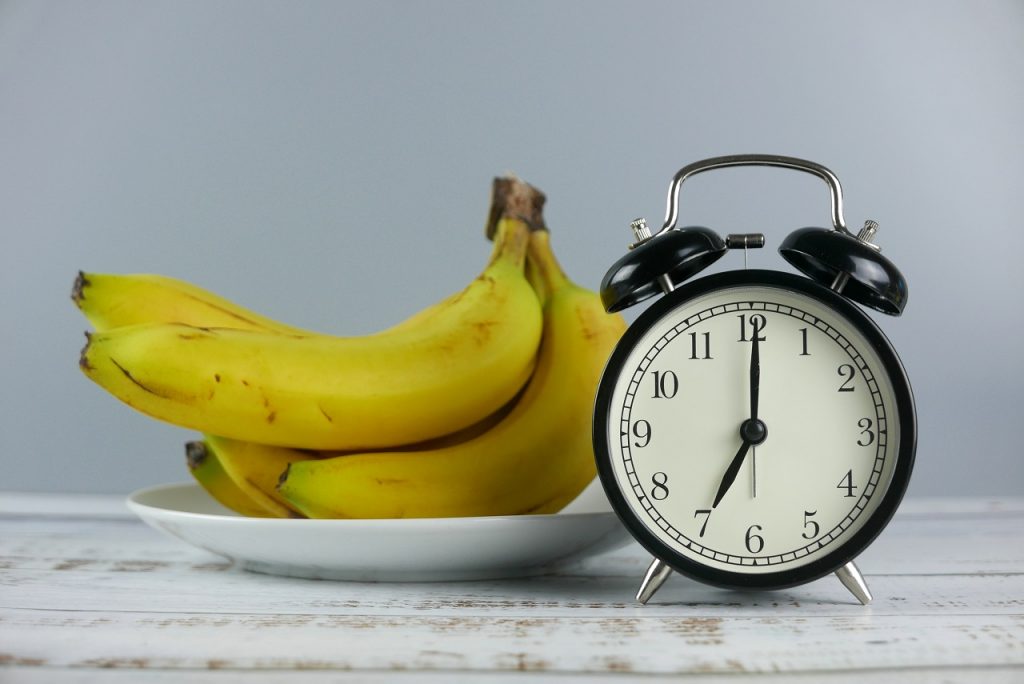
Have you heard about the Circadian Rhythm Diet or the 7am to 7pm diet and the recommended dietary habits & restrictions it involves? Surprisingly, there are no dos and don’ts on eating. It’s  all about when you should eat. The basic idea of this diet is to reset meal timings to the same one as our ancestors i.e. between sunrise and sunset – basically scheduling meals during daylight hours. 

Circadian Rhythm Diet also known as Body Clock Diet is basically a form of time restricted eating plan where we eat in sync with the body’s internal clock which gets regulated by change within the environment, mainly, light and darkness, and are controlled by a small area in the middle of the brain. This can affect metabolism, hunger, sleep, body temperature and other bodily functions.

The hormone cortisol, also known as the “get up and go” hormone is linked with body metabolism and hence weight. It rises and falls during the course of the day.  If someone eats when metabolism is at peak, calories consumed would be utilized well and not deposited as fat. On the other hand, food eaten at the wrong time may lead to weight gain.

Circadian rhythm is a natural, internal process that regulates the sleep-wake cycle and repeats every 24 hours and can be divided into 2 phases:

  1. Eating and metabolizing phase: Metabolism is high when cortisol is at its peak and slow when cortisol levels are down. The body releases cortisol naturally twice per day: once in the early morning and later in the evening and at that time, the stomach too is ready with the right amount of hormones and digestive enzymes and even good gut microbes to digest the food. So for health benefits eat with the Sun. In response to daylight, cortisol rises, insulin sensitivity increases and melatonin decreases, making one feel active and energized. Cortisol supports thyroid function and metabolism, and contributes to the energy needed  to complete daily tasks.
  2. Resting  and healing phase: When the sun sets, the body naturally wants to wind up and prepare for sleep. The sleep inducing hormone melatonin rises up, while cortisol and insulin sensitivity reduces. So food consumed later at night when cortisol levels are decreasing is more likely to be stored as fat.

As soon as one finishes dinner, the body slowly gets slow on metabolism, the body clock resets, going into repair and rejuvenation mode so that damaged cells can be repaired and replaced with healthy new cells and allergy causing chemicals or pathogens cannot attack the body. Thus, late night munching leads to weight gain and it disrupts the body’s natural healing mechanism too. 

Highlights Of The Circadian Rhythm Diet 

  1. Eat during daylight.
  2. Have breakfast and lunch as the biggest meals of the day, and dinner, the smallest.
  3. Have about 75% of nutrition before 3 pm
  4. Do not eat anything post dinner.

Benefits Of This Diet 

  1. Helps maximize weight loss efforts
  2. Reduces the risk of obesity
  3. Improves digestive health
  4. Improves metabolism
  5. Improves sleep, mood and energy levels
  6. Reduces inflammation in the body
  7. Lowers the risk of type-2 diabetes and cardiovascular disease
  8. Promotes longevity 

Those who schedule their meals between 12 hours (7 am to 7 pm) might have a much better circadian rhythm and health unlike those who delay dinner and eat within 15-16 hours (7am to 11pm or more). After 12-16 hours of fasting when we have the next meal i.e. breakfast – the body gets enough time to heal/repair as required. Don’t eat anything post dinner as the body enters the healing and rejuvenation mode. Compounds that encourage the inflammatory response rise at night. This is likely because the body is better at fighting infections while it is at rest, and energy can be poured into the effort, rather than into other functions like metabolism.

Even if the food choice & calorie consumed is the same, those who eat during daylight have better health than those who delay. Food at the wrong time can disturb the internal clock and break the metabolic balance in our body, and that can push us towards disease. Biological rhythms are meant to protect us. Disturbing this rhythm can lead to weight gain, hormonal issues, mental health issues, metabolic diseases like type -2 diabetes and heart problems. 

So do give this Circadian Rhythm Diet a go and let us know what you feel in the comments below! We hope this article helps you. For more informative articles such as this, check out Healthy Reads or you can get this information directly from a GOQii Coach by subscribing for personalized health coaching here.

#BeTheForce 
September 25, 2022 By Mamta Joshi 1 Comment

Smart and Healthy Recipes Using Leftovers

smart and healthy recipesWhen you’re really hungry and are not in the mood to cook or get your hands on fresh food, picking your phone and placing an order seems like a viable solution. But at the same time, if you’re worried that all the processed and junk food might not be good for your health, we’ve got the perfect solution for you! Try these smart and healthy recipes using leftovers from your kitchen! 

Smart and Healthy Recipes You Can Try 

These smart and healthy recipes can be prepared using leftover food which is common such as dal and rice. Let’s take a look:

1. Leftover Rice Chilla 

What you will need:

  • Cooked and mashed rice – 2 cups
  • Whole wheat flour – ¼th cup
  • Gram flour (besan) – ½ cup
  • Curd – 2 tbsp
  • Red chilli powder – 1/4th tsp
  • Turmeric powder – 1/4th tsp
  • Jeera -1/2 tsp
  • Asafoetida (hing) – a pinch
  • Chopped green chilli – 2
  • Small onion chopped – 1
  • Tomato finely chopped – 1
  • Coriander leaves – finely chopped
  • Salt – to taste
  • Oil for greasing tawa

How to prepare: 

  1. Take all the ingredients in a big bowl and pour little water to make a thick, pouring consistency batter.
  2. Now heat the non-stick Tawa and grease it with a little oil.
  3. Pour a ladle full of batter and spread evenly.
  4. Let it cook from one side till it gets crisp. Flip it over and cook the other side.
  5. Your leftover rice chilla is ready! Serve it with green chutney.

Tasty and healthy way to finish off leftover rice, plus it is an ideal recipe for breakfast.

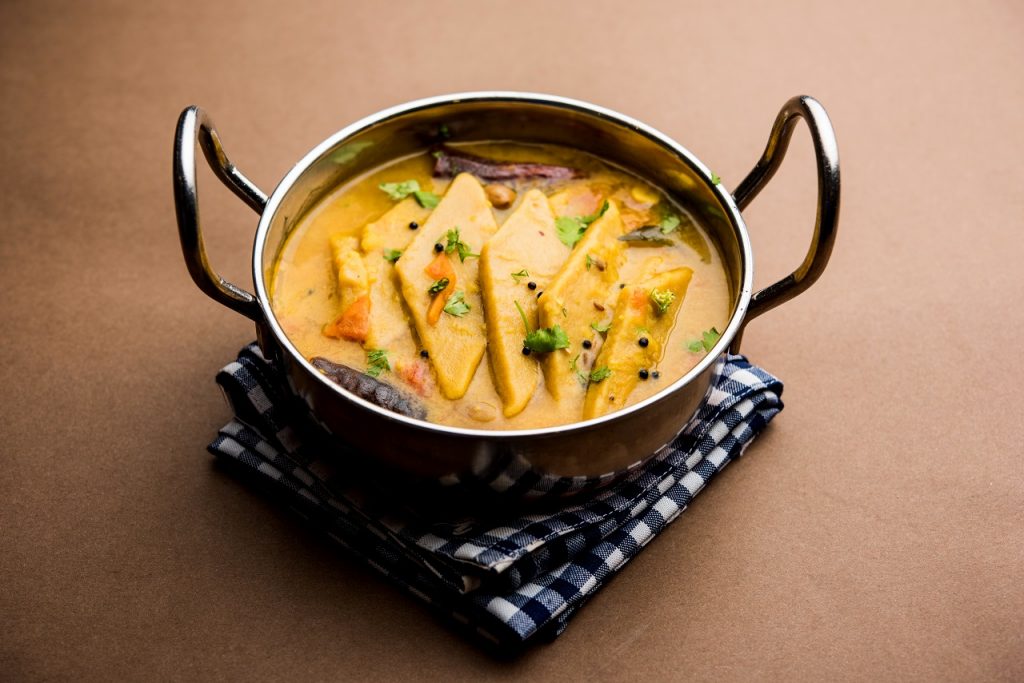
2. Dal Dhokli from Leftover Dal

What  you will need:

  • Leftover toor dal
  • Wheat flour – ½ cup
  • Gram flour (besan) – ¼ cup
  • Red chilli powder – ¾ cup
  • Coriander powder – ½ tsp
  • Turmeric powder – ¼ tsp
  • Carom seeds (ajwain) – ¼ tsp
  • Sesame seeds (white til) – ½ tsp
  • Baking soda – a pinch
  • 2 tsp oil
  • Salt to taste
  • Water to knead dough

Method: 

  1. Take wheat flour, besan in a large mixing bowl, add all other ingredients, combine well and knead the dough by adding water as required.
  2. As the dough turns soft and smooth, take a small ball size dough and roll it to form a thick chapati-like shape.
  3. Once rolled, cut it into diamond shapes of medium size. Keep dhokli aside.
  4. Boil the leftover dal, add a cup of water if the dal is thick.
  5. In the boiling dal, add 10-12 groundnuts, little tamarind pulp or juice, a small piece of jaggery and lastly, add the diamond-shaped dhokli and cover with a lid. Cook it for 10-15 minutes till the cooked dhokli will float over the dal (add diamond-shaped dhokli in dal depending on quantity of dal, adding too many may make dal dhokli too thick in consistency). 
  6. For Tempering: Heat 1 tsp of oil in a pan, add a tsp of mustard seeds, a few curry leaves and pour over the dal dhokli, garnish with coriander leaves.

It’s ready to serve! Dal dhokli in itself is a complete meal, a good combination of carbohydrates and proteins.

Do try the above recipes and share your thoughts with us in the comments below. For more recipes, check out Healthy Reads or ask a GOQii Coach by subscribing for personalised health coaching here: https://goqiiapp.page.link/bsr

#BeTheForce 

June 10, 2021 By Mamta Joshi 5 Comments

Should You Wear A Mask While Exercising Outdoors?

Exercising OutdoorsThe pandemic is far from over but it hasn’t stopped people from stepping out to get in a quick run or an outdoor exercise. If you’ve been vaccinated, chances of contracting the illness is slim but not negligible. So, the question remains, if you’re heading out, should you wear a mask while exercising outdoors? 
Should You Wear A Mask While Exercising Outdoors? 

Wearing a face mask while exercising outdoors helps prevent the spread of the virus, but it can also lead to breathing difficulties. When you are running, jogging, doing any activity which increases your respiratory rate, the oxygen requirement goes up several times and you need to inhale that much more air to deliver the required oxygen to the body. 

A mask can restrict airflow in and out of the mouth and nose, creating a situation where oxygen and carbon dioxide exchange are compromised. There’s a possibility that you may not be able to fulfil the increased oxygen requirement when exercising with a mask on. There are chances of inhaling the exhaled carbon dioxide. This can create health complications, especially in people with weaker lungs, chronic bronchitis, asthma and other health complications.

Symptoms You Might Experience While Wearing a Mask and Exercising Include: 

  • Anxiety
  • Fatigue
  • Headaches
  • Breathlessness
  • Dizziness
  • Loss of consciousness

Precautions To Be Taken While Exercising Outdoors 

Though it is important to wear a face mask in an enclosed space where social distancing may not be possible – like when going out for work, when using public transport or at grocery stores, restaurants, malls, etc. but when it comes to exercising with a mask on, be cautious. 

  • Listen to your body: You may feel fatigue faster due to a mask, so do not push your exercise limits.
  • Don’t ignore any of the symptoms mentioned above or any other difficulties and put a  break on your exercise immediately.
  • Wearing a face mask or not is a matter of social distancing. For someone walking/running and alone outside where social distancing is maintained, a mask isn’t required.
  • Try exercises where you use the same spot. For instance, stationary cardio workout – you can pick a location where there aren’t any people around. 
  • Keep your distance and be mindful of others. Keep as much space between yourself and others as possible or bring a mask with you and put it on when needed. You can also put a face covering down around the neck and pull it up over your face if you encounter someone.
  • Opt for a breathable, well-fitting face mask. Too tight can make you feel uneasy. 
  • Masks become wet when you wear them and can lead to skin infections. If you’re using a reusable mask, wash it regularly to prevent the build-up of bacteria.

Ideally, it would be best to not rush out. Prefer indoor workouts. You can learn a few of them from Healthy Reads or join our fitness experts LIVE on GOQii Play every day! More so, you can get some good exercise routines directly from your GOQii Coach via personalized coaching. You can subscribe here: https://goqiiapp.page.link/wssu

We hope this article helps you. Do share your thoughts in the comments below! 

Stay home, stay safe, get active and #BeTheForce  

January 4, 2021 By Mamta Joshi 1 Comment

Decluttering And The Joy Of Giving

Decluttering2020 was a rollercoaster of a year with the pandemic, lockdown, being enclosed within 4 walls and being panic-stricken thanks to COVID-19. The battle with COVID-19 is far from over but there is a little something you can do for your soul and peace of mind in 2021 – that’s decluttering! There are many people who have faced hardships and have lost more than just their jobs. Let’s utilize the first month of 2021 with an exercise that benefits us and the underprivileged people in need as well. 

Decluttering Your House 

Are you ready to clean your closets? Clean them and take out things you no longer have a use for. You can either choose to discard, donate or give them to people who may have use for them. For such an activity to be successful and not time consuming, reorient your home by category instead of by room – clothes, kitchen utensils, toys, stationary, footwear, accessories, etc. so that it becomes easy for you to reach the right person with the right things. Believe me, we all will face some troubles but amid all that, when we give to the needy, it will make us feel good too! 

How Do You Go About Doing This? 

If you have things you don’t use anymore, consider giving them away. One of the best ways to decide is to ask yourself when you used the item last. If you are unable to recall or if it’s more than 3 years, you’re better off giving it to someone else who needs it because there’s a good chance you’re not going to use it in the future too. 

Even though you don’t want your old things anymore, it’s almost guaranteed that someone else will. There are many people in need of usable items and your donations can help. When you throw away your used items, they have no chance of reaching people who need them the most.

Also, before donating take the condition of the item into consideration as well. Only donate the items that are new, unused, or gently used. This means items which are in a good condition, clean and presentable. Do not donate items that don’t work properly, with missing parts, or are ripped, torn or stained. If you can’t use them in their current state, neither can others.

Benefits of  Decluttering

  • Decluttering teaches us how to let go and create space. Owing less helps save time and feel lighter and self actualized.
  • It exercises our decision making skills. What to keep and what to get rid of is basically solving a problem. It works our brain and gives us a sense of satisfaction.
  • Clutter can affect our brain, our ability to focus, our sleep, and our anxiety levels. While decluttering improves concentration, sleep quality, reduces stress and enhances mood.
  • Decluttering exercise will leave us delighted, our home clean and organized. There’s something deeply satisfying about being in a space that’s free of clutter and where the only thing in use has its place. We feel more relaxed and focused when we find the item we need, easily. So better to get rid of extra things and enjoy the organized, clutter-free, calm and energetic home space . 

Once Decluttered, Where Do You Donate? 

  • One can donate to a residence or to any charitable organization involved in such activities.
  • You can check with your househelp, your local cleaners and watchmen, etc. if they require any of the items you wish to discard.  
  • Involve the entire family in the process, especially the young ones. They will learn decision making, know the noble cause behind and experience the joy of giving.

We hope this article helps you declutter and donate to a good cause. You can also up your Karma on the GOQii App by walking, earning Karma Points and donating it to a charity listed within the GOQii App. Check out the Karma feature now! 

#BeTheForce 

  • « Previous Page
  • 1
  • 2
  • 3
  • Next Page »

Search

Recent Posts

  • Navigating the Maze of Nutrition: Finding Clarity Amidst Confusion
  • Get children active and keep them healthy
  • What Gestational Diabetes Can Do To You & Your Unborn Child
  • Breathing – A Forgotten Art
  • The Incredible Benefits Of Milk You Might Not Know

Stay Updated

Archives

  • December 2025 (3)
  • November 2025 (15)
  • October 2025 (20)
  • September 2025 (6)
  • August 2025 (6)
  • July 2025 (12)
  • June 2025 (18)
  • May 2025 (16)
  • April 2025 (23)
  • March 2025 (23)
  • February 2025 (22)
  • January 2025 (26)
  • December 2024 (26)
  • November 2024 (25)
  • October 2024 (22)
  • September 2024 (24)
  • August 2024 (31)
  • July 2024 (21)
  • June 2024 (26)
  • May 2024 (31)
  • April 2024 (27)
  • March 2024 (29)
  • February 2024 (26)
  • January 2024 (25)
  • December 2023 (15)
  • November 2023 (11)
  • October 2023 (22)
  • September 2023 (22)
  • August 2023 (20)
  • July 2023 (22)
  • June 2023 (24)
  • May 2023 (24)
  • April 2023 (24)
  • March 2023 (23)
  • February 2023 (20)
  • January 2023 (16)
  • December 2022 (12)
  • November 2022 (15)
  • October 2022 (15)
  • September 2022 (12)
  • August 2022 (10)
  • July 2022 (17)
  • June 2022 (11)
  • May 2022 (10)
  • April 2022 (6)
  • March 2022 (6)
  • February 2022 (13)
  • January 2022 (12)
  • December 2021 (7)
  • November 2021 (3)
  • October 2021 (6)
  • September 2021 (3)
  • August 2021 (8)
  • July 2021 (7)
  • June 2021 (15)
  • May 2021 (16)
  • April 2021 (10)
  • March 2021 (7)
  • February 2021 (4)
  • January 2021 (4)
  • December 2020 (3)
  • November 2020 (4)
  • October 2020 (10)
  • September 2020 (3)
  • August 2020 (3)
  • July 2020 (2)
  • June 2020 (4)
  • May 2020 (10)
  • April 2020 (12)
  • March 2020 (10)
  • February 2020 (4)
  • January 2020 (4)
  • December 2019 (3)
  • November 2019 (7)
  • October 2019 (5)
  • September 2019 (4)
  • August 2019 (9)
  • July 2019 (9)
  • June 2019 (11)
  • May 2019 (4)
  • April 2019 (9)
  • March 2019 (8)
  • February 2019 (9)
  • January 2019 (8)
  • December 2018 (9)
  • November 2018 (3)
  • October 2018 (3)
  • September 2018 (5)
  • August 2018 (10)
  • July 2018 (6)
  • June 2018 (13)
  • May 2018 (8)
  • April 2018 (18)
  • March 2018 (9)
  • February 2018 (8)
  • January 2018 (15)
  • December 2017 (12)
  • November 2017 (19)
  • October 2017 (13)
  • September 2017 (15)
  • August 2017 (4)
  • July 2017 (8)
  • June 2017 (7)
  • May 2017 (6)
  • April 2017 (8)
  • March 2017 (6)
  • February 2017 (7)
  • January 2017 (9)
  • December 2016 (10)
  • November 2016 (7)
  • October 2016 (7)
  • September 2016 (7)
  • August 2016 (11)
  • July 2016 (9)
  • June 2016 (9)
  • May 2016 (12)
  • April 2016 (17)
  • March 2016 (17)
  • February 2016 (8)
  • January 2016 (6)
  • December 2015 (2)
  • November 2015 (9)
  • October 2015 (7)
  • September 2015 (9)
  • August 2015 (11)
  • July 2015 (9)
  • June 2015 (12)
  • May 2015 (9)
  • April 2015 (13)
  • March 2015 (8)
  • February 2015 (5)
  • January 2015 (12)
  • December 2014 (14)
  • November 2014 (11)
  • October 2014 (6)
  • September 2014 (13)
  • August 2014 (12)
  • July 2014 (6)
  • June 2014 (2)
  • May 2014 (7)
  • April 2014 (5)

From “Laddu Nawin” to Fit and Fierce: How a 25-Year-Old Insurance Advisor Shed 20 Kilos and Gained His Life Back

When 25-year-old Nawin Yadav from Hyderabad walked into his office every morning, he carried more than just his files and policy papers. He had the weight of fatigue, sluggish energy, and an ever-growing belly that was becoming the butt of jokes. “People … [Read More...]

“I’ve Challenged Myself to Live 100 Years” – The Story of Chandubhai Savani’s Second Chance at Life

At 67, most people start slowing down. Not Chandubhai Savani. A resident of Surat, Chandubhai, thought life was on track. “My life was going well till I had my bypass surgery,” he says. That surgery, back in 2021, was a wake-up call.  Medication was routine, but exercise wasn’t. His diet? What he calls ‘normal.’ “I […]

From Shimla’s Slopes to Chandigarh’s Sidewalks: Surinder Kaur Bhalla’s Journey from Chaos to Control

Some journeys start with a plan. Others begin with a stumble literally. Surinder Bhalla, a government professional, born and raised in the scenic hill town of Shimla, had always lived a life of movement. “In Shimla, you walked everywhere,” she reflects. “Walking was never an exercise. It was just life.” But after shifting to Chandigarh, […]

Ananda Mukherjee Health Story

From Terminal Illness To Complete Wellness! Ananda Mukherjee Health Story

As we observe World Cancer Day under the powerful theme ‘United by Unique’ (2025-2027)**, we are reminded that every individual’s journey with cancer is distinct, yet united by shared resilience, hope, and the collective fight against this disease. This theme places people at the centre of care and their stories at the heart of the […]

  • HOME
  • HEALTHY LIVING
  • FITNESS
  • HEALTHY RECIPES
  • USER STORIES
  • KARMA
  • BUY GOQii

Copyright ©2016 GOQii


