GOQii

Blog

  • HOME
  • HEALTHY LIVING
  • FITNESS
  • HEALTHY RECIPES
  • USER STORIES
  • KARMA
  • BUY GOQii

April 18, 2018 By Luke Coutinho 2 Comments

Dehydration and your Metabolism

water

Water is the most important thing that we should never ignore. How many of us have been told that we should drink at least 2.5 to 3 litres of water every day or 8 glasses minimum. And, how many of us actually follow this? Most of us drink water only when we realize that we are very thirsty. But, ideally that should not be the case.


(adsbygoogle = window.adsbygoogle || []).push({});

Don’t wait until you are thirsty to drink water. If you are thirsty, then it is already too late. The problem is that many of us have trouble deciding when we are thirsty.

I know I am thirsty when I feel sluggish or tired, experience mild headaches, have trouble concentrating or constipated. A dry mouth and a flushed or tired feeling are all signs that you could be thirsty, but you have realized it when it’s already too late.

‘Thirst’ is a tricky phenomenon to understand. The feeling of thirst is governed by the hypothalamus in the brain. It reads the salt levels in the body. When you are dehydrated, the salt concentration in your body rises. That triggers your thirst alarm. But, by this time, many of your vital organs are already severely deprived of water.


Water is a miracle liquid. You are a mixture of water, protein and a myriad of molecules blended together to create a physical you. Two-thirds of your body is water. Cells, bones and blood both hold water and float in it. Muscles are 75% water.


You need water to enable your body to keep eliminating the toxins generated, to produce digestive enzymes, maintain healthy skin, hair, organs and to help your body absorb essential vitamins, minerals and natural sugars. Water also regulates your body temperature, cooling you down by evaporating through your skin.

Even on a cold winter day your body will use and lose about 2 liters of water. Imagine how much greater that amount is on a hot summer day.


The important point over here is to understand that less water or getting dehydrated frequently SLOWS DOWN YOUR METABOLISM.  A slow metabolism means slower fat loss and slumps in your energy levels and growth.


SIGNS OF DEHYDRATION:

  • Fatigue
  • Lethargy
  • Irritability
  • Headache
  • Blurred vision
  • Flushed skin
  • Lack of mental clarity
  • Constipation
  • Cystitis
  • Back pain
  • High cholesterol
  • Cellulite
  • Water retention
Don’t reach a point of dehydration.

** Always carry a water bottle with you.
** Wake up to 500ml to 800ml of water every morning.
** Sip through the day and keep a bottle at your desk so you remember to drink in case you get busy.
** Remember, coffee is a diuretic, if you drink coffee you need to drink 2 cups of water post that.
** If you drink alcohol, drink one glass of water for every drink you have.

January 26, 2018 By Luke Coutinho Leave a Comment

Nutrient Absorption and Metabolism: A Catch-22?

Nutrient-Absorption
Optimal digestive function means we’re breaking down food properly, absorbing enough of the right nutrients and eliminating the waste that we don’t need. It’s a very organized, efficient and meticulous process.

But we need energy to perform these tasks, and much of that energy comes from nutrients we digest. It seems like a bit of a catch-22: We need energy in order for our digestive system to break down food, but we get much of that energy from food. If digestion is sluggish, we can’t break down nutrients properly to get more energy. This creates a vicious cycle that leads to a type of malnutrition in our cells, tissues and organs.


(adsbygoogle = window.adsbygoogle || []).push({});

Wastes build up, you retain water and your body converts excess calories to fat, since the body isn’t digesting them properly. Usually, this cycle starts with unhealthy dietary habits: eating too many processed foods that hinder digestive function by depleting our enzymes, probiotics and other factors critical for strong digestion. Unhealthy foods, particularly refined sugars, also spike glucose and insulin. The result is inflammation — another major culprit in weight gain and slow metabolism.

Essentially, a nutritious diet has a direct relationship to healthy body weight — not just because we’re avoiding inflammatory, fat-fueling foods like sugar and hydrogenated oils, but also because nutritious foods give our digestive system the building blocks it needs to function efficiently. Our mitochondria, the tiny cellular engines that create energy for the body, are a central part of our metabolism and digestion.

How quickly and efficiently the mitochondria can turn nutrients such as glucose into energy reflects metabolic health. If our mitochondria are inefficient, we store glucose as fat.

Where does digestion come into play?

When we’re not digesting properly, mitochondria don’t get their nutrients to produce energy, and excess waste creates inflammation and toxic buildup. As a result, we feel sluggish, tired and bloated. It’s all part of a complex, interrelated system where metabolism and digestion rely on one another to keep all the body’s systems fully energized and functioning at peak capacity.

September 12, 2017 By Luke Coutinho 1 Comment

Are you a sugar addict?

sugar-addict

At first we want to believe that we are not addicts. The very word ‘ addict ‘ makes us think  ‘ Drugs ‘  or  ‘ Alcohol ‘

But, did you know that sugar is sweet poison….it’s a silent killer. The effects of massive sugar consumption creeps in on us and suddenly strikes, in the form of a deadly disease or mood swings or depression or extreme fatigue, lowered libido etc…

There is too much to write about the dangers of white refine sugar or its other ‘disguises’.
The results though, of this consumption can be seen all around us.

~ Obese children and obese parents.

~ People with midriff fat or a ‘ tyre’

~ Bulging bellies.

~ Increasing cases of cancer, diabetes, cardiovascular diseases, depression, and inability to sleep.

~ Hyper children

~Children finding it difficult to concentrate and focus in school.

~ Individual behaviors that stem from low self-esteem caused due to one’s looks

~ Depression and unhappiness caused because the’ scale does not move ‘

~ Supposedly ‘ fit’ people dying of heart attacks.

If you are told to give up sugar for 10 days, and it worries or angers you, you should accept that you are addicted to it

if your children cannot go 10 days without sugar, they are addicted.

If you can’t control your portions of sugar, for example: if you start with a piece of chocolate and end up finishing the whole bar or the cake or many cupcakes at one go (that’s me) you are addicted to sugar.

Some of the worst stages of cancer require the person to starve the body of sugar, and yet if the only pleading request from that person is to do anything, but not take away sugar from the diet then it definitely sounds like an addiction.

There’s nothing wrong with a little bit of sugar, but when you have a diet that comprises of packaged foods, outside foods and junk, you are in taking more sugar than your body can handle.

Here are three reasons why you should immediately make plans to cut your sugar intake –

Sugar makes you crave for more sugar and if you restrict yourself it leads to mood swings, behavioral changes and a feeling of ‘restriction’. Sugar starts the chain reaction of addiction and more sugar means more calories which in turn mean more weight.

Sugar is the chief cause of ‘ belly’ fat or love handles or Cellulite. It ferments in the body making the body acidic and giving rise to bloating and gas. We then tend to perceive these problems as something else, and end up doing a whole load of wrong things to beat the bloating and gas. For example, we cut down on beans, because we think that all that bloat and gas formation is because of these extremely healthy and nutritious beans. And, so we eliminate beans from our diet and fail to cut down on the substance that is the real cause, sugar.

Sugar makes the environment in our cells acidic.Almost all diseases breathe in an acidic environment. Enough has been said about that. If you feel you’re addicted, get aware of your consumption and slowly start reducing it over time.

Find sweet substitutes, or set small milestones to reach your goal of consuming less sugar.

Till then, be conscious of your sugar intake. At times no matter how much you work out or walk, but if you are consuming too much sugar, you will find you lose some weight, but not from your belly or sides or not as much as you want to and that obstacle is nothing but sugar.

September 11, 2017 By Luke Coutinho 4 Comments

Signs you need to know to support your metabolism

fast-metabolism

When we hear the term “fast metabolism,” it’s usually regarding people — often younger than us —who seem to be able to eat whatever they want and as much of it as they can: They can indulge in sweets, fried food, simple carbs and more without gaining an ounce of fat.

But just because they don’t appear to gain weight, it doesn’t necessarily mean they’re optimally healthy.

They may experience the same low energy, mood swings, brain fog, digestive upset and other effects of unhealthy dietary habits which over time can worsen.

You see, true metabolic health isn’t just about having your cake and eating it too, so to speak.
The state of your metabolism has much more to do with your overall health than simply your weight. Metabolism lies at the foundation of health. It’s a complex system that directly influences how our cells, tissues and body systems function and get the nutrients they need — while getting rid of what they don’t.

Metabolic processes are involved in our most critical areas of health, including cardiovascular, cognitive, inflammation and immunity. Essentially, good metabolism doesn’t mean you don’t gain weight, it means you feel good every day, have plenty of energy for daily activities and are in good overall health. Poor metabolism often means the opposite.

Just as metabolic health can be influenced by a variety of factors, a number of signs and symptoms can indicate that your metabolism needs support. If left unchecked, these early signs may eventually manifest into metabolic syndrome and its dangerous offspring, Type 2 Diabetes. If you experience a number of these signs regularly, it’s time to take action.

Wide Waist: What’s your waist size? Extra fat around the abdomen is the unhealthiest type of fat and one of the most common signs that you may need to support your metabolism. If you are a man with a waistline of 40 inches or greater, or a woman with a waistline of 35 inches or greater, your metabolic health may need to be examined.

Fatigue: Do you generally feel run down, like you’re “running on fumes?” Do you become exhausted after eating? Feeling sleepy once in a while after a restless night can be expected. But, if you are frequently tired with low energy throughout the day — even after a good night’s sleep — your metabolism may be to blame.

Excessive Sweating: Do you sweat for no apparent reason? Perspiring when it’s hot or you’re doing hard physical exertion is normal and healthy. But if simple, daily tasks like doing the dishes or walking up a flight of stairs make you drip, you may need to address your metabolic health.

Poor Circulation: Do you feel cold all time? Are your fingers and toes always chilled or do your hands and feet fall asleep easily? When you hurt yourself, does it take a long time to heal? Low circulation may be a sign that your metabolism could use some help.

Unhealthy Gums And Teeth: Do your gums bleed when you brush or floss? Are they painful? Do you have a propensity for cavities?
More and more research points to a relationship between gum disease and chronic health conditions such as heart disease, cancer, and metabolic issues such as diabetes and metabolic syndrome.
How regularly do you see the dentist? If your oral health is suffering, your metabolic health may be deteriorating according to research demonstrating links between metabolic dysfunction and periodontitis.

Maintain Metabolic Health: So you’ve determined that your metabolism isn’t what you want it to be. Now what? The good news is that a large part of your metabolic health can be improved using targeted diet, exercise and lifestyle adjustments.

Handle Stress: High stress is a culprit in metabolic mayhem. It fuels inflammation and metabolic-disrupting stress hormones like cortisol. Try adding 15 minutes of meditation to your daily routine. In addition, when you feel your stress levels are getting out of hand, take 20 seconds to stop whatever you’re doing and simply breathe. Take three deep breaths and exhale fully, pulling your bellybutton toward your spine to completely empty your diaphragm. A mere 20 seconds is so quick that nobody will even notice that you “checked out” for that time.
But it may be enough to bring you (and your metabolism) some peace.

Exercise: Any kind of cardio (aerobic exercise) helps to both rev up your metabolism and reduce your stress. Studies show that 1½ hours per week of moderate physical activity, like brisk walking, keeps the average person healthy (more is needed if you want to lose weight). What’s more, studies show that 10 minutes work out too work just as well as 45-minute workouts, as long as your total exercise time adds up to 90 minutes or more over the course of the week.

This is a relief for any busy person; it’s much easier to fit a 15-minute walk into your daily lunch break than it is to get up an hour early to go to the gym. Although light cardio is important, don’t forget to include some muscle-building exercises. Muscle is more active than fat, so more muscle means more efficient metabolism. Explore different ways to fit muscle training into your day. Do squats while you’re waiting for dinner to cook. Do some push-ups or sit-ups while waiting for your shower to get hot. Install an over-the-door pull-up bar and do one or two pull-ups every time you walk by. Be creative!
Healthy Diet:

Easy metabolic tip:

(i) Eat more green vegetables, fiber and protein. Eat less sugar and simple carbs.

This alone should be enough to put you well on your way to metabolic health, but it’s not hard to take your food consciousness to an even higher level for greater vitality and health.

(ii) Learn the difference between good fats and bad fats. For example: deep-fry oil, trans-fat and anything hydrogenated are all bad. Omegas, coconut, avocados, olive oil, seeds and nuts: These are good.

(iii)  Incorporate vegetables of some form into every meal: Yes, even eat these at breakfast! Try blending some spinach or kale into a fruit and yogurt smoothie and I bet you won’t even taste the greens. Vegetables should make up at least half of each meal.

Supplements

Natural supplements like curcumin, caratirm, and special teas like Green and herbal infusions can stroke the metabolism and help in the whole process of wellness.

Your metabolism defines your health from a cellular level. Take care of it. It’s never about weight loss, it’s about your metabolism and how strong it is.


  • « Previous Page
  • 1
  • …
  • 5
  • 6
  • 7
  • 8
  • 9
  • 10
  • Next Page »

Search

Recent Posts

  • Navigating the Maze of Nutrition: Finding Clarity Amidst Confusion
  • Get children active and keep them healthy
  • What Gestational Diabetes Can Do To You & Your Unborn Child
  • Breathing – A Forgotten Art
  • The Incredible Benefits Of Milk You Might Not Know

Stay Updated

Archives

  • December 2025 (3)
  • November 2025 (15)
  • October 2025 (20)
  • September 2025 (6)
  • August 2025 (6)
  • July 2025 (12)
  • June 2025 (18)
  • May 2025 (16)
  • April 2025 (23)
  • March 2025 (23)
  • February 2025 (22)
  • January 2025 (26)
  • December 2024 (26)
  • November 2024 (25)
  • October 2024 (22)
  • September 2024 (24)
  • August 2024 (31)
  • July 2024 (21)
  • June 2024 (26)
  • May 2024 (31)
  • April 2024 (27)
  • March 2024 (29)
  • February 2024 (26)
  • January 2024 (25)
  • December 2023 (15)
  • November 2023 (11)
  • October 2023 (22)
  • September 2023 (22)
  • August 2023 (20)
  • July 2023 (22)
  • June 2023 (24)
  • May 2023 (24)
  • April 2023 (24)
  • March 2023 (23)
  • February 2023 (20)
  • January 2023 (16)
  • December 2022 (12)
  • November 2022 (15)
  • October 2022 (15)
  • September 2022 (12)
  • August 2022 (10)
  • July 2022 (17)
  • June 2022 (11)
  • May 2022 (10)
  • April 2022 (6)
  • March 2022 (6)
  • February 2022 (13)
  • January 2022 (12)
  • December 2021 (7)
  • November 2021 (3)
  • October 2021 (6)
  • September 2021 (3)
  • August 2021 (8)
  • July 2021 (7)
  • June 2021 (15)
  • May 2021 (16)
  • April 2021 (10)
  • March 2021 (7)
  • February 2021 (4)
  • January 2021 (4)
  • December 2020 (3)
  • November 2020 (4)
  • October 2020 (10)
  • September 2020 (3)
  • August 2020 (3)
  • July 2020 (2)
  • June 2020 (4)
  • May 2020 (10)
  • April 2020 (12)
  • March 2020 (10)
  • February 2020 (4)
  • January 2020 (4)
  • December 2019 (3)
  • November 2019 (7)
  • October 2019 (5)
  • September 2019 (4)
  • August 2019 (9)
  • July 2019 (9)
  • June 2019 (11)
  • May 2019 (4)
  • April 2019 (9)
  • March 2019 (8)
  • February 2019 (9)
  • January 2019 (8)
  • December 2018 (9)
  • November 2018 (3)
  • October 2018 (3)
  • September 2018 (5)
  • August 2018 (10)
  • July 2018 (6)
  • June 2018 (13)
  • May 2018 (8)
  • April 2018 (18)
  • March 2018 (9)
  • February 2018 (8)
  • January 2018 (15)
  • December 2017 (12)
  • November 2017 (19)
  • October 2017 (13)
  • September 2017 (15)
  • August 2017 (4)
  • July 2017 (8)
  • June 2017 (7)
  • May 2017 (6)
  • April 2017 (8)
  • March 2017 (6)
  • February 2017 (7)
  • January 2017 (9)
  • December 2016 (10)
  • November 2016 (7)
  • October 2016 (7)
  • September 2016 (7)
  • August 2016 (11)
  • July 2016 (9)
  • June 2016 (9)
  • May 2016 (12)
  • April 2016 (17)
  • March 2016 (17)
  • February 2016 (8)
  • January 2016 (6)
  • December 2015 (2)
  • November 2015 (9)
  • October 2015 (7)
  • September 2015 (9)
  • August 2015 (11)
  • July 2015 (9)
  • June 2015 (12)
  • May 2015 (9)
  • April 2015 (13)
  • March 2015 (8)
  • February 2015 (5)
  • January 2015 (12)
  • December 2014 (14)
  • November 2014 (11)
  • October 2014 (6)
  • September 2014 (13)
  • August 2014 (12)
  • July 2014 (6)
  • June 2014 (2)
  • May 2014 (7)
  • April 2014 (5)

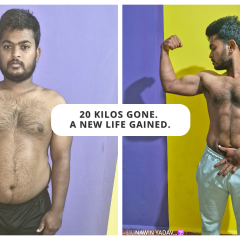
From “Laddu Nawin” to Fit and Fierce: How a 25-Year-Old Insurance Advisor Shed 20 Kilos and Gained His Life Back

When 25-year-old Nawin Yadav from Hyderabad walked into his office every morning, he carried more than just his files and policy papers. He had the weight of fatigue, sluggish energy, and an ever-growing belly that was becoming the butt of jokes. “People … [Read More...]

“I’ve Challenged Myself to Live 100 Years” – The Story of Chandubhai Savani’s Second Chance at Life

At 67, most people start slowing down. Not Chandubhai Savani. A resident of Surat, Chandubhai, thought life was on track. “My life was going well till I had my bypass surgery,” he says. That surgery, back in 2021, was a wake-up call.  Medication was routine, but exercise wasn’t. His diet? What he calls ‘normal.’ “I […]

From Shimla’s Slopes to Chandigarh’s Sidewalks: Surinder Kaur Bhalla’s Journey from Chaos to Control

Some journeys start with a plan. Others begin with a stumble literally. Surinder Bhalla, a government professional, born and raised in the scenic hill town of Shimla, had always lived a life of movement. “In Shimla, you walked everywhere,” she reflects. “Walking was never an exercise. It was just life.” But after shifting to Chandigarh, […]

Ananda Mukherjee Health Story

From Terminal Illness To Complete Wellness! Ananda Mukherjee Health Story

As we observe World Cancer Day under the powerful theme ‘United by Unique’ (2025-2027)**, we are reminded that every individual’s journey with cancer is distinct, yet united by shared resilience, hope, and the collective fight against this disease. This theme places people at the centre of care and their stories at the heart of the […]

  • HOME
  • HEALTHY LIVING
  • FITNESS
  • HEALTHY RECIPES
  • USER STORIES
  • KARMA
  • BUY GOQii

Copyright ©2016 GOQii