 We live in a world that celebrates through food. In the UK, it’s the Sunday Roast or the Friday night pint; in India, it’s the festive feast; in the US, it’s the backyard BBQ. For most of our lives, “having a good time” has been synonymous with “eating a good amount.”
But what happens when you are on a GLP-1 journey and your internal “volume” for food has been turned down? Suddenly, the social rituals we once navigated without a second thought can feel like a source of anxiety. If you’ve ever felt “food-shamed” for leaving half a plate or felt awkward at a dinner party, this is for you.
The Science of “Social Satiety”
GLP-1 (Glucagon-like peptide-1) doesn’t just stay in the gut; it reaches the hypothalamus, the part of your brain that regulates appetite. It also affects the hindbrain, which handles the “reward” we feel from eating.
Essentially, the medication provides you with “Biologic Willpower.” While your brain now says “I’m satisfied,” the people around you, your family, friends, and colleagues haven’t had their signals reset. They are still operating on the old cultural script: More food = More love. When you stop eating, they may perceive it as a rejection of their hospitality or a sign that you aren’t enjoying yourself.
How to Navigate the Social Minefield
Navigating your new lifestyle doesn’t mean you have to stop being social. It just means you need a new set of tools for your “Social Toolkit.”
- The “Quality Over Quantity” Narrative: When someone comments on your small portion, shift the conversation. Instead of saying, “I can’t eat much,” try saying, “I’m really enjoying the flavor of this, so I’m taking my time to savor it.” This validates the cook while honoring your body’s signals.
- The Art of the “Side Plate”: In family-style dining or buffets, use a smaller plate if possible. Visually, a small plate that is full looks more “normal” to others than a large, mostly empty plate. This reduces the “Why aren’t you eating?” questions before they even start.
- Navigating the “Food Pushers”: We all have that one friend or relative who insists on “just one more scoop.” Have a polite but firm script ready. “It looks delicious, and I’d love to take some home for lunch tomorrow since I’m full right now.” It’s a win-win you honor your GLP-1 fullness, and they feel their food is appreciated.
- Be the “Activity Architect”: If you’re the one planning the catch-up, suggest an activity that isn’t centered on a three-course meal. Suggest a walk in a local park, a visit to a museum, or a round of mini-golf. By changing the venue, you remove the pressure of the plate.
- Dealing with Alcohol Culture: Many on GLP-1 therapy find their desire for alcohol drops significantly. If you’re at a pub or a party, a “Club Soda with Lime” looks exactly like a Gin & Tonic. You can stay part of the “cheers” without the empty calories or the potential nausea that alcohol can trigger on this medication.
The Psychological Shift: Food Peace is Not a Secret
There is often a stigma associated with using GLP-1 medications the “easy way out” myth. But reframing obesity as a disease is key. You are managing a biological condition with a biological tool. You don’t owe anyone an explanation for your medical journey, but you do owe yourself the grace to eat in a way that makes you feel healthy and vibrant.
Tip: Remember, your value at a social gathering is your presence, not your appetite. Your laughter, your stories, and your company are what people are there for, not to watch you finish a plate of chips.
By mastering the social side of this journey, you move from “surviving” social events to truly “thriving” in them. You are reclaiming your social life on your own terms.
#BeTheForce
Disclaimer: GOQii is committed to providing accurate, up-to-date, and comprehensive health information. This article is intended for informational purposes only and should not be used as a substitute for professional medical advice, diagnosis, or treatment. Always consult a qualified healthcare professional before starting or changing any medication. Individual responses to treatment may vary.
 Most people measure fitness in steps. Ten thousand a day feels productive. Calories burned feel like progress. But long-term health is not just about movement. It is about muscle.
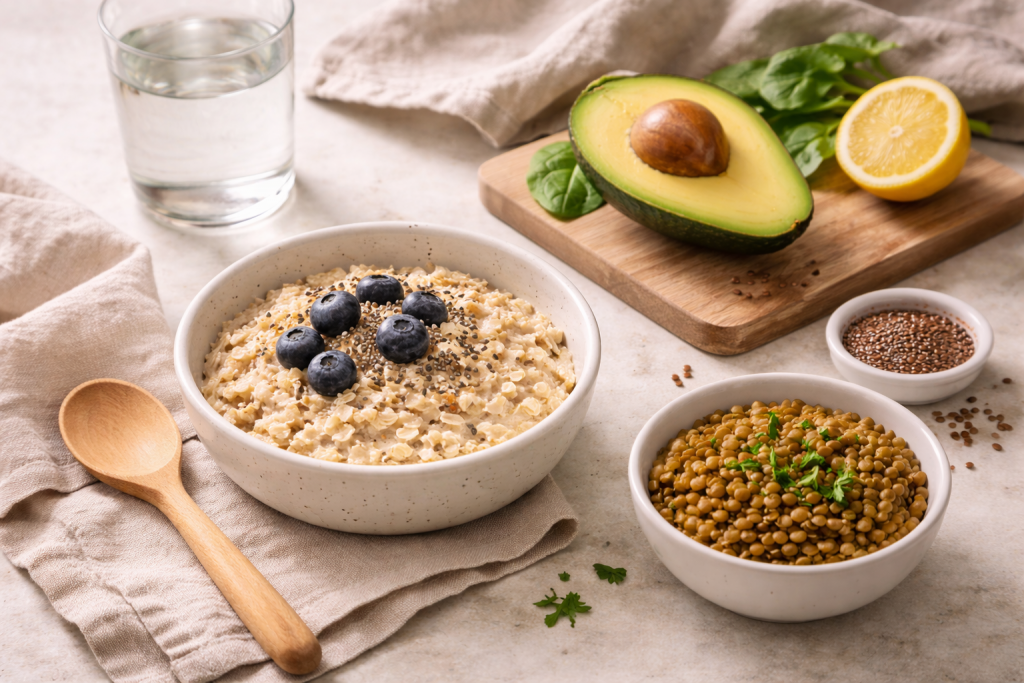 One of the most remarkable things about GLP-1 therapy is how it slows down “gastric emptying.” This is the magic behind the feeling of fullness it keeps food in your stomach longer, sending a constant signal to your brain that you are satisfied. However, a slower stomach means your digestive tract needs a different kind of support to keep things moving.


