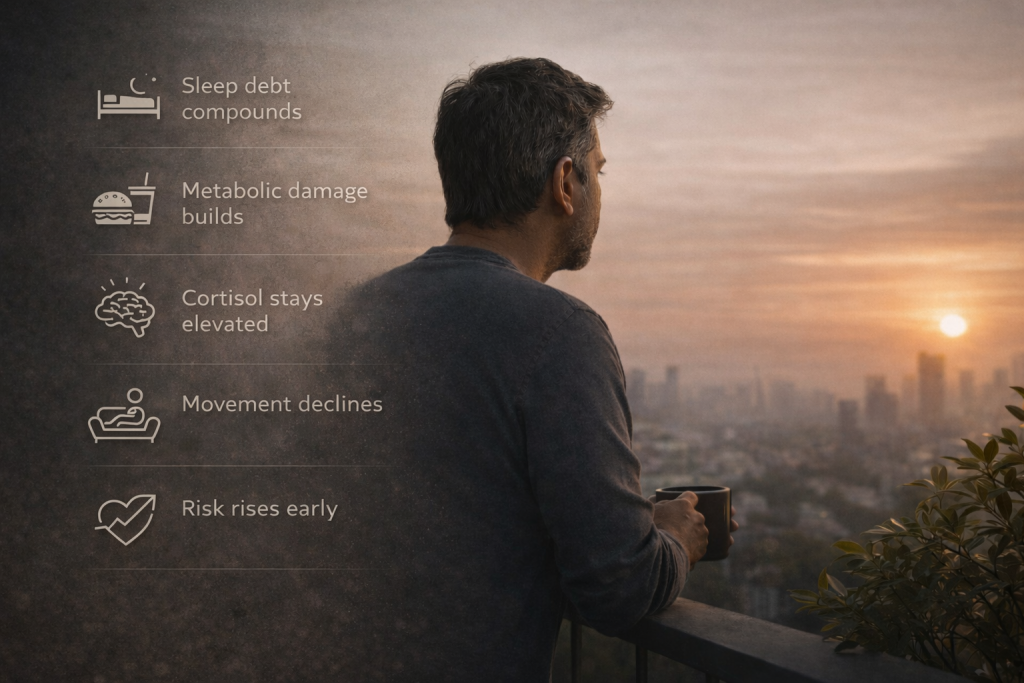
 We don’t get sick overnight.
We drift into it slowly, quietly and call it normal.
This is exactly why this year’s World Health Day theme – “Together for health. Stand with science.” matters.
Because the problem isn’t that we don’t know what to do.
It’s that we act too late.
The Reality We’re Avoiding
India is living longer than ever before.
But here’s what we don’t talk about:
We’re also spending more of those years managing poor health.
Data from the newly released India Fit Report 2026 highlights a clear pattern—health decline isn’t sudden. It builds over time, often without obvious warning.
On average, nearly 12 years of life are impacted by reduced health, chronic conditions, or loss of function.
Not at the end.
Across life.
This Isn’t Ageing. It’s Accumulation
Most people think health breaks down later.
It doesn’t.
It builds gradually:
- Habits form early
- Biology adapts silently
- Symptoms show up last
Lifestyle diseases are not events. They are timelines.
What Science Actually Shows
Science doesn’t just tell us what happens.
It explains why.
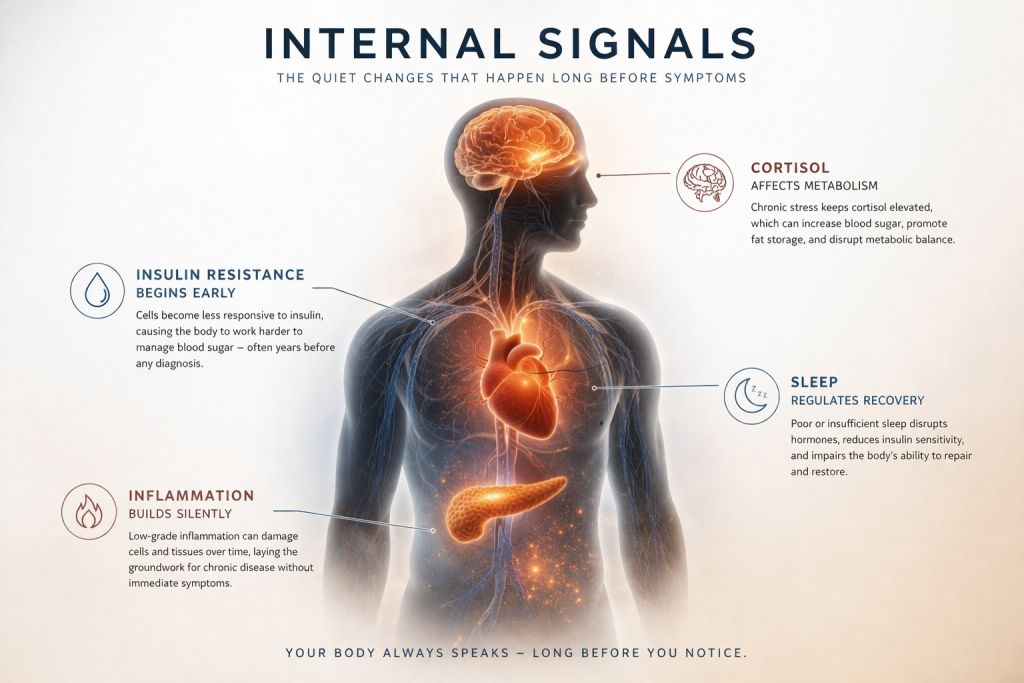
Long before diagnosis, the body shows signals:
- Insulin resistance begins before blood sugar rises
- Chronic stress elevates cortisol, impacting metabolism and heart health
- Poor sleep disrupts hormone balance, recovery, and appetite regulation
- Inflammation builds quietly, increasing long-term risk
These changes are not theoretical.
They are:
- measurable
- trackable
- and most importantly, modifiable
What gets measured early can be managed early.
The Real Problem Isn’t Disease. It’s Delay
Nothing feels urgent.
- No pain
- No disruption
- No immediate consequence
So nothing changes.
And that’s where the real damage happens.
The problem isn’t awareness.
It’s delay.
Where the Real Opportunity Lies
A large part of the population today sits in a grey zone:
- Not sick
- Not fully healthy
Functioning but fragile.
This is where outcomes are still flexible.
Because at this stage:
- risks can be reversed
- habits can be corrected
- trajectories can change
But only if action is taken early.
What It Means to “Stand With Science”
It doesn’t mean doing more.
It means doing things earlier and doing them consistently.
- Acting on signals, not symptoms
- Using data instead of assumptions
- Focusing on patterns, not quick fixes
Because most long-term health outcomes are shaped before they are diagnosed.
See the Data Behind This Shift
The India Fit Report 2026 brings together large-scale behavioural insights to show how everyday habits are shaping long-term health outcomes.
Download the full report here.
We are not losing years at the end of life.
We are losing them every day, in ways that feel normal, until they aren’t.
This World Health Day:
Don’t wait for symptoms.
Start acting earlier.
Because the goal isn’t just to live longer.
It’s to stop losing the years that matter.
#BeTheForce
Disclaimer: The information provided in this article is for general awareness and educational purposes only. It should not be considered medical advice. Individual health needs and responses may vary. Readers are advised to consult a qualified healthcare professional before making any health-related decisions or changes to treatment, diet, or lifestyle.
Frequently Asked Questions (FAQs)
- What is the difference between lifespan and healthspan?
Lifespan refers to how long you live, while healthspan refers to how many of those years are lived in good health. - What causes loss of healthy years?
Poor sleep, chronic stress, inactivity, and metabolic changes contribute to long-term health decline before symptoms appear. - Can lifestyle diseases be prevented early?
Yes. Many conditions like diabetes and heart disease develop gradually and can be delayed or prevented with early intervention.



Leave a Reply