GOQii

Blog

  • HOME
  • HEALTHY LIVING
  • FITNESS
  • HEALTHY RECIPES
  • USER STORIES
  • KARMA
  • BUY GOQii

August 2, 2025 By Anusha Subramanian Leave a Comment

Why Resistance Training Matters More Than Ever on GLP-1 Therapy

Starting GLP-1 therapy can feel like a breakthrough. After years of battling weight, countless diets, and the exhausting cycle of losing and regaining weight, medications like semaglutide and liraglutide often offer something many people have never experienced before: a sense of control. Hunger fades, cravings quieten, and for once, weight starts to come down steadily. It’s not an exaggeration to say it can feel life-changing.



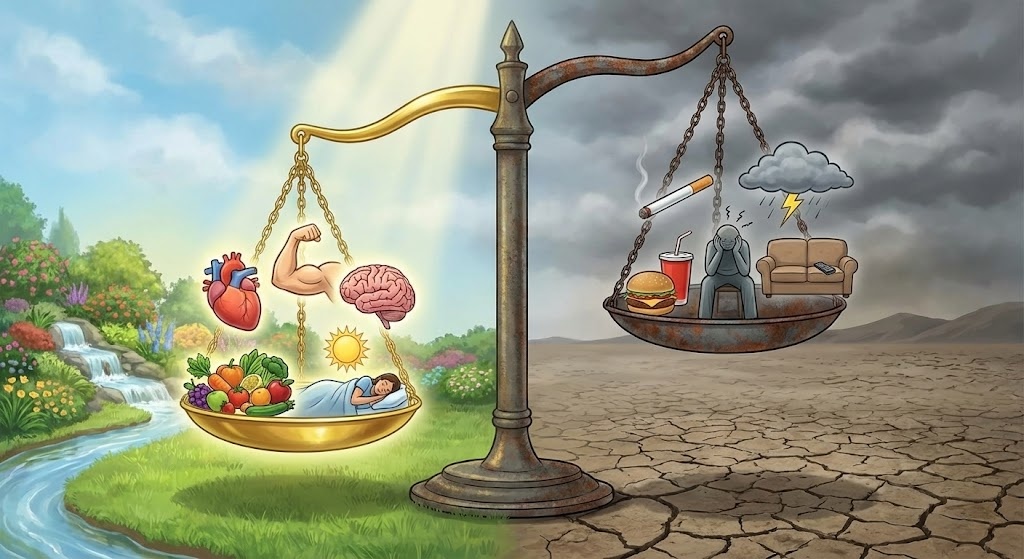
But here’s something most people aren’t told when they start: while the kilos may be dropping, not all that weight loss is necessarily fat. You could also be losing something your body desperately needs muscle. And this is where resistance training becomes a game-changer.

So, What’s Happening When You’re on GLP-1 Medications?

These drugs work by slowing digestion and helping you feel fuller for longer, which naturally leads to eating less. This calorie deficit drives the weight loss. But here’s the catch: when your body receives fewer calories, it doesn’t always discriminate. Yes, it burns fat but unless you’re actively working to protect it, your body may also start breaking down lean muscle for energy.

And that’s a problem worth paying attention to. Losing muscle is bad news for your metabolism, your strength, and your long-term health.

Why You Must Focus on Muscle While Losing Fat

Muscle is metabolically active tissue. Simply put:

  • It helps you burn more calories, even at rest
  • It supports posture, mobility, and everyday function
  • It protects against injury as you age
  • It’s essential for healthy ageing and longevity

When you lose weight with GLP-1 medications without strength training, your body may sacrifice muscle as well as fat. Over time, this can slow your metabolism making further weight loss harder and weight maintenance even tougher.

What Is Resistance Training?

Resistance training is all about giving your muscles a reason to stay. Every time you challenge them with weights, bands, or just your bodyweight your body gets the message: muscle matters. It says, “Don’t burn this muscle. I need it.”

That’s why resistance training is so important, especially when you’re eating less. It helps your body burn fat while preserving lean mass. Think of it as the ideal partner to your GLP-1 medication.

But What If the Gym Isn’t Your Thing?

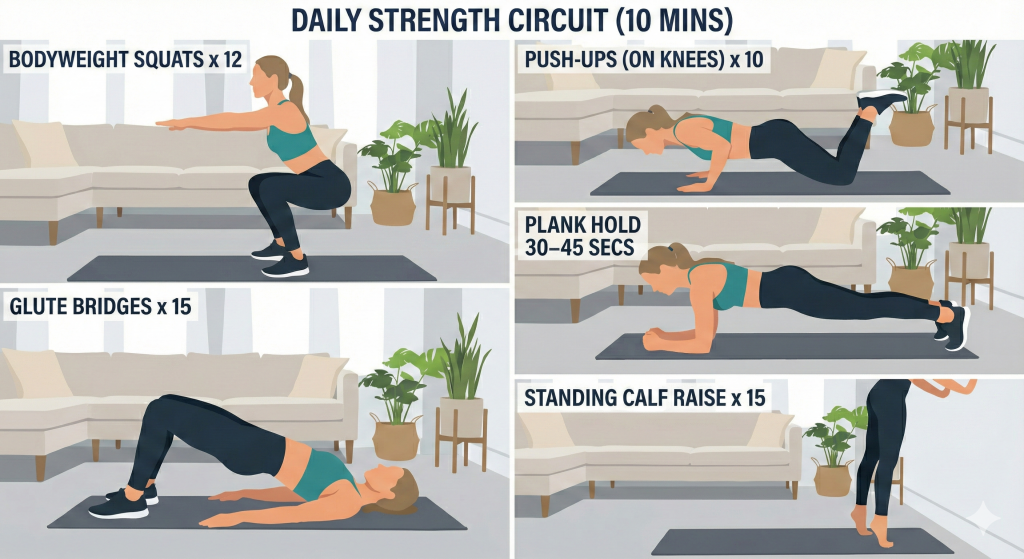
No worries. You don’t need fancy equipment or a gym membership to start building strength. Here’s how to integrate resistance training into your week:

  • Use your bodyweight

Squats, lunges, push-ups, and glute bridges are effective — and require no equipment.

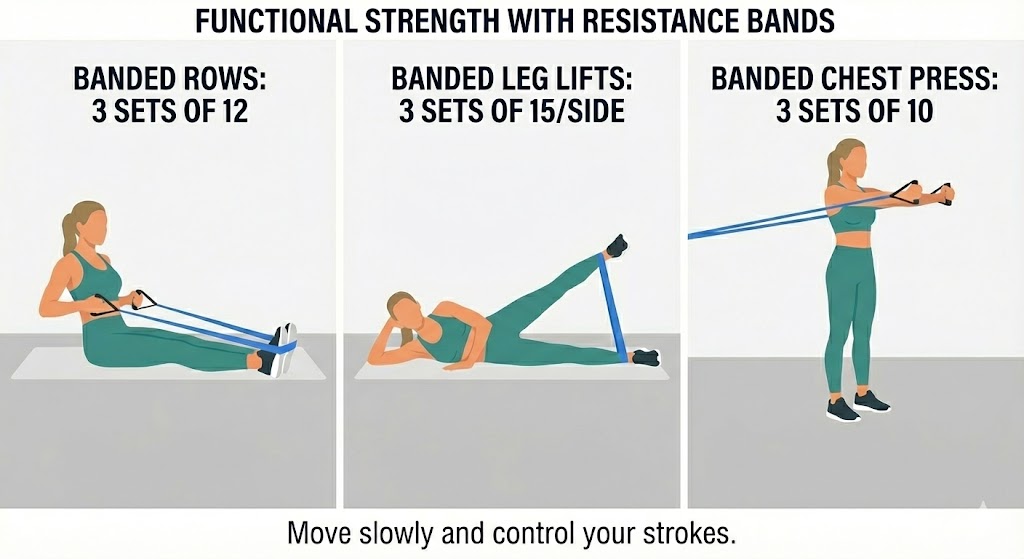
  • Grab a resistance band

Lightweight, portable, and surprisingly powerful for full-body workouts.

  • Get creative


Use water bottles, backpacks, or heavy books in place of weights. Try bicep curls, shoulder presses, or loaded squats.

  • Keep it short
    Two to three sessions a week, just 15–20 minutes each, is enough to signal your body to retain muscle.

You don’t need to train like a bodybuilder. You just need to move your muscles regularly.

Benefits of Resistance Training on GLP-1 Therapy

Here’s why strength training even at home matters during your GLP-1 journey:

  • Preserves lean muscle mass
  • Prevents metabolic slowdown
  • Improves body composition (think firm and toned, not just smaller)
  • Boosts insulin sensitivity and blood sugar control
  • Enhances mood, energy, and mental clarity

Start small. Stay consistent. Focus on progress, not perfection. With resistance training, you’re not just losing weight — you’re gaining strength and long-term resilience.

Move to Protect Your Muscles

GLP-1 medications can help you lose weight but resistance training ensures you lose fat, not strength.

So if you’re on GLP-1 therapy, remember:

  • Prioritise protein
  • Move your muscles
  • Celebrate non-scale victories

Because in the long run, preserving muscle is what will keep your metabolism strong, your body capable, and your health thriving.

#BeTheForce

Disclaimer: The information provided in this blog is for general awareness and educational purposes only. It is not intended to replace professional medical advice, diagnosis, or treatment. Always consult a qualified healthcare provider for personalised medical guidance or concerns related to your health. Images shown are for representation purposes only and may not depict the exact recommendations or outcomes.

June 5, 2025 By Anusha Subramanian Leave a Comment

Exercise and dieting helps you lose belly fat

Loss Belly FatHere are some effective strategies to lose belly fat and improve overall health:

Discover effective strategies to lose belly fat and improve your overall health. Learn about proven methods to reduce visceral fat and achieve your goals.

  1. Create a calorie deficit: To lose belly fat, you need to consume fewer calories than you burn. Calculate your daily calorie needs and ensure that you eat in a calorie deficit. Focus on nutrient-dense, whole foods or consider following a structured diet plan.
  2. Regular exercise: Incorporate cardiovascular exercises such as running, swimming or cycling into your routine to burn calories and fat. Additionally, include strength training exercises like squats, lunges and planks to build muscle and increase your metabolism.
  3. Reduce refined carbohydrates: Limit your intake of refined carbohydrates such as white bread, pasta and sugary snacks. These foods can lead to weight gain and increased belly fat.
  4. Increase protein intake: Including protein-rich foods such as lean meats, fish, beans and lentils in your diet can aid weight loss and promote feelings of fullness.
  5. Eat more fruits and vegetables: These low-calorie, high-fibre foods help keep you satisfied while providing essential vitamins and minerals. They can also aid in reducing belly fat by supporting healthy digestion.
  6. Mindful eating: Pay attention to your hunger and fullness cues while eating. Avoid distractions and savour each bite. This can help prevent overeating and improve digestion.
  7. Manage stress levels: High levels of stress can contribute to weight gain, particularly around the waistline. Engage in stress-reducing activities such as meditation, yoga or any hobby that helps you relax.
  8. Limit alcohol consumption: Alcoholic beverages are high in empty calories and can contribute to weight gain, especially around the abdominal area. Cut back on how much you drink or opt for lower-calorie options.
  9. Get quality sleep: A lack of quality sleep can lead to weight gain and an increase in visceral fat. Aim for 7–9 hours of uninterrupted sleep each night to support your weight loss efforts.
  10. Stay consistent and be patient: Losing belly fat takes time and commitment. Stay consistent with your healthy eating and exercise habits, and be patient with the process. Remember — slow and steady progress is more sustainable in the long run.

Note: It’s always a good idea to consult a healthcare professional or registered dietitian before making significant changes to your diet or exercise routine.

Conclusion: Effective Ways to Lose Belly Fat and Achieve a Healthier Body

In conclusion, there are several effective ways to lose belly fat and achieve a healthier body. The first step is to commit to a healthy lifestyle that includes regular exercise and a balanced diet. Exercise is crucial in burning calories and reducing overall body fat, which in turn helps target belly fat. Incorporating both cardiovascular exercises, such as running or swimming, and strength training exercises, such as weightlifting or pilates, can help build lean muscle mass and boost metabolism.

Additionally, focusing on eating a diet rich in whole foods — like fruits, vegetables, lean proteins and whole grains — while limiting processed and sugary foods, can greatly contribute to reducing belly fat. It is important to stay consistent and patient, as losing belly fat takes time and effort.

Lastly, remember that everyone’s body is different, so it’s important to listen to your own body and make necessary adjustments to find what works best for you in achieving a healthier body and losing belly fat.

#BeTheForce

Disclaimer: The information provided in this blog is for general awareness and educational purposes only. It is not intended to replace professional medical advice, diagnosis, or treatment. Always consult a qualified healthcare provider for personalised medical guidance or concerns related to your health. Images shown are for representation purposes only and may not depict the exact recommendations or outcomes.

September 2, 2024 By Vandana Juneja 1 Comment

Strength Training Benefits For Aging Bodies

strength trainingStrength training is essential for everyone, serving not just to enhance muscle strength but also to bolster overall health regardless of age. Whether you are 25 or 65, incorporating some form of strength training into your daily routine is beneficial, though the specifics of the exercises may vary depending on one’s age group.

In this blog post, I will discuss the changes that begin to occur in our bodies as we enter our thirties and forties—changes that are often less than welcome. More importantly, I’ll explore how strength training plays a crucial role in counteracting these changes and significantly enhancing the quality of our lives.

I have experienced the positive changes, that my body has undergone over the last 4-5 years, just by incorporating a strength training routine in the form of workouts with weights, and using my own body weight, as I do in my yoga practice. One can even use resistance bands, the various gym equipment, or own body weight for resistance, by doing push-ups, pull-ups, crunches, leg squats or push-ups against a wall etc.

What Happens As We Age?

The human body goes through changes as we age, and some of the effects are obvious, as we cross middle age. Even healthy, normal ageing includes:

  • A Slower metabolism
  • Decreased muscle mass and strength
  • Increased body fat
  • Reduced bone density
  • Increased bone porosity
  • Stiff joints
  • Slower reflexes and reaction times
  • Decreased aerobic capacity

These are normal changes that we may experience as we age, though the severity varies from person to person. One of the most important reasons to exercise, and specifically include strength training, is to slow and minimize these changes.  

Benefits of Strength Training

1. Increases Muscle Mass
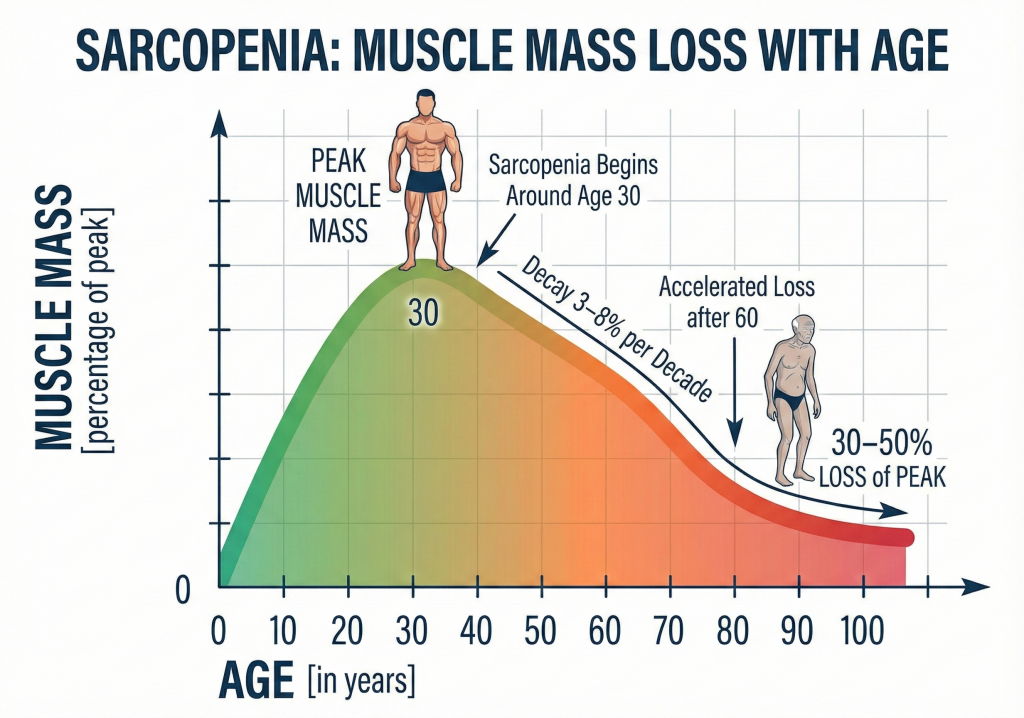
As you age, muscle mass gradually decreases – a condition known as Sarcopenia. Individuals who are less active can expect to lose between 3% to 5% of their muscle mass each decade after turning 30, with this rate accelerating after age 65. By age of 70, the average adult may have lost up to 25% of their muscle mass primarily due to disuse and inactivity. However, this loss isn’t irreversible. Engaging in any form of exercise can help regain muscle mass and strength, but weight lifting, strength training, and resistance training are particularly effective. Research shows that after just six months of strength training twice a week, the biochemical, physiological, and genetic characteristics of older muscles can be rejuvenated by nearly 15 to 20 years.

2. Improves Bone Health
Bone fractures and breaks are quite prevalent among older adults due to decreased bone density and osteoporosis. While there are various causes of osteoporosis that may require medical intervention, substantial evidence suggests that exercise can significantly enhance bone density. Moreover, osteoporosis can be both prevented and managed through strength training. Just as muscles grow stronger with activity, bones also gain strength when engaged in physical exercise. Weight-bearing exercises, in particular, bolster bone health by stimulating the production of new cells.

3. Improves Functional Ability/Movement
Increasing strength through training is crucial for enhancing everyday functionality. Regular strength training enables older adults to enhance their mobility, walk longer distances, and potentially decrease their reliance on assistive devices such as canes and walkers.

Additionally, building strength supports a variety of functional movements, including walking, sitting down and standing up from chairs or beds, climbing stairs or escalators, and carrying groceries. These improvements in physical capabilities make daily life more manageable and empower individuals to engage in a wider range of activities that they desire to pursue.

4. Increases Metabolism
Strength training is highly effective for enhancing your metabolism, which is the rate at which your body burns calories while at rest. Engaging in strength training causes your body to require more energy based on the intensity of the exercise. This not only leads to calories being burned during the workout but also increases calorie burn after the workout as your body returns to a resting state. Additionally, hormones like Testosterone and DHEA, which are vital for strength and energy, naturally decrease with age. However, regular strength training can significantly boost these hormone levels within 8-12 weeks.

5. Improves Brain Health
Aging can increase the risk of loneliness, social isolation, depression, and other mental health challenges. However, building strength enhances mobility and functionality, which can significantly improve overall health, elevate mood, and enhance the quality of life. Additionally, resistance training has been shown to slow cognitive decline associated with aging. Studies indicate that lifting weights can improve memory, attention span, and conflict resolution skills.

6. Improves Health Conditions
Type 2 Diabetes: Strength training effectively lowers blood sugar levels and enhances insulin sensitivity. This improvement helps facilitate the transport of blood sugar into cells, thereby optimizing how the body utilizes glucose.

Cardiovascular Health: When properly executed, strength training benefits both the muscular and cardiovascular systems. Strengthened muscles reduce the workload on the heart, enabling the lungs to process oxygen more efficiently with less effort. This efficiency leads to the heart pumping more blood with fewer beats, which in turn increases the blood supply to the muscles.

How Often Should You Do It? 

It is recommended to engage in strength training three to five times per week for 20 to 30 minutes at a moderate intensity or two to three times per week for 15 to 20 minutes at a high intensity. However, always consult your doctor before starting any workout regimen, particularly if you have any pre-existing medical conditions, and seek professional guidance to ensure the correct technique. This helps in preventing injuries and maximizing the benefits of your workouts, especially when focusing on larger muscle groups which offer greater returns.

Let’s move beyond using age as an excuse and start prioritizing muscle health to enhance both our physical health and psychological well-being!

We hope this article helps you care for your muscles a little more and helps you improve your physical and psychological well-being as well. If you’re about to begin your strength training routine or need help, speak to a certified expert by subscribing to GOQii’s Personalised Health Coaching here.

Want to explore more articles on fitness? Click here.

#BeTheForce

February 13, 2024 By Trishala Chopra 2 Comments

Strength Training for Runners: A Comprehensive Guide

Strength training

Dear marathoners/runners, I am sure this blog is going to catch your attention! Do read the article, and I would be happy to answer your questions!

Well, not just runners though! Whether you are a runner or cyclist or if you plan any endurance sport, strength training becomes very important. Everybody wants to be good at the sport they play, so this article will help give you some insights about various topics with regard to strength training.

 In this blog, I shall take you through four main aspects namely

  • What is an endurance sport?
  • Why is strength training and its importance for an endurance sport?
  • If strength training is important, how much is too much or how much is ideal?
  • Which exercises should be included in strength training protocol?

All I knew was running is endurance. I knew of more examples but what exactly is endurance I couldn’t really get through. It’s over time that I learnt what endurance training means. Endurance training uses your aerobic system as opposed to your anaerobic system.

Aerobic system:- Body uses oxygen to produces energy

Anaerobic system:- Body does not use oxygen to produce energy

So why is strength training important for any endurance sport?

I come across runners who say, “I run 5k, 10k and 21k which takes a lot of energy, why should I put exact PRESSURE on my body?”

Here are 3 benefits of doing strength training from runners’ perspective!

  • Your pace will improve, you can run faster!

Your speed matters a lot when it comes to any marathons! What determines your speed?

  • Stride length
  • Stride Frequency

If you are a runner, it is important for you to know that stride length means how long is your step and stride frequency relates to how many steps you take per minute/second.

So the technical formula here is,

 Speed= Stride length x Stride frequency.

But, what does this have to do with strength training? Well, to improve your speed/pace you have to take longer strides and of course faster strides

How to take longer strides?

  • Forcing your legs to the ground.

How to put more force?

  • For this, your legs should be strong.

How to make your legs stronger?

  • By doing strength training.

 So, this shows that strength training is required to help runners run faster!

(2)  With Strength training, your endurance will get better!

“How can strength training make endurance better? Endurance training will make endurance better right?” Well, the answer is that strength training and endurance training both are required and helps in increasing the endurance but the mechanism used is different.

Let me take you through some technicalities but in a way, you will understand. Are you aware of maximal aerobic capacity? Maximal aerobic capacity means the maximum rate of inhaling oxygen by your body during any exercise. Maximal aerobic capacity is also called as VO2max.

Your VO2max is made up of 2 components: Central and peripheral

Central component= Heart

Peripheral component= Muscle

  VO2max = Q x (a – Vo2 difference)

Here is the complete breakup

Q is the Cardiac output

The cardiac output means how much blood your heart is able to pump per minute. This covers your central component

(a – Vo2 difference) where a is arteries and v is veins and this means that the difference between the oxygen in your arteries and veins.

Smaller the difference, more the endurance!

In simple words, it is the ability of your body to extract the oxygen from the blood. This covers your peripheral component

The reason why I have discussed this in depth is, because endurance training works on the central component which is the heart but the peripheral component which are the muscles is ignored. To get the maximum endurance it is important for your peripheral component to be strong and strength training here helps. High repetitions (reps) helps in pumping your peripheral component.

Hence, to improve your endurance you should do strength training.

(3) Strength training helps reduce injury risks!

Runners, I am sure you can relate to this! More kms to run, more risk of injuries! When I say injuries here I am talking about overuse injuries.

What is overuse injuries?

  • Your muscles, tendons and bones have a restriction to work.
  • When you cross that restriction, you tend to injure your muscles, tendons and bones.
  • Then post injury either you take a break from your routine or you do some other exercises.

Once the injury is done, we cannot do much about it but as the old adage goes – ‘Prevention is better than cure! Strength training helps in increasing the tolerance of your tissues to work which reduces the risk of overuse injuries and helps you train better

If strength training is important, how much is too much or how much is ideal?

There are 3 main points here which everyone should understand. Strength training of runners completely depends upon,

  • Distance
  • The phase of training (current phases and upcoming phases)
  • Goal

 (1) Distance

  • Greater the distance to be covered, shorter is the strength training requirement.
  • For e.g., if you are running for 5k you need to do more strength training then someone who runs a 21k.
  • Goal strength training of a runner and the adaptability of the stress is completely different from all the other sports/events
  • A 5K runner needs about 65% of endurance training and 35% of strength training and for a runner who is planning to run 21k needs about 80% of endurance training and 20% of strength training.

Just because the proportion of strength training is less, it does not mean that we can skip it. As discussed above, strength training is equally important too.

(2) Phase of training (current phases and upcoming phases)

  • Training phase depends on your competition date
  • For example, your endurance training is lesser when your competition is about 3 months away which is the perfect time to concentrate on strength training.
  • Closer the competition, higher is the endurance training.

For example,

When competition is far away then do 2-4 sets 2-3 times per week

When competition is near then do 1-2 sets 1-2 times per week

Variations in between are always accepted.

(3) Goal

Every runner has a period where there are no marathons. This is called as “off-season”. You might be running very little so this gives you a chance to recover the lost muscle during the endurance period.

Most people are of the notion that strength training is only done to gain muscle mass or get those big biceps, chest and arms but that’s not true. I have mentioned above that strength training for everyone depends upon the goal they want to achieve.

Runners might be thinking that strength training will make them gain weight which will make it difficult for them to run but that’s not true at all. Protocol for runners’ strength training only depends upon their goal and not a generic plan which is followed.

When I talk about a goal for runners, during their off-season phase strength training can be done 3-4 times per week. Whenever the competition period comes near, strength training can be done 1-2 times per week and strength training will only be used to minimize muscle loss.

During endurance training, muscle loss is bound to happen but when you strength train the muscle loss will be reduced. The focus of adding strength training is, to only slow down the process of muscle loss or maintain muscle during the competition phase.

How does this muscle loss happen?

As I mentioned, your body has limited capacity to adapt to things. Either it can be endurance training or strength training. For an endurance athlete, adapting to endurance training is more important than strength training but a blend of both of these is important. Cardio and strength training are 2 opposite goals. While in cardio you burn muscles, strength training helps in building muscles. More endurance means more muscle loss, strength training helps in maintaining those muscles

Finally, which exercises should be included in strength training protocol?

I have been with athletes for a year now where I have seen that maximum of my athletes don’t train their legs or they avoid doing them. They often tell me that running in itself is a good exercise for legs so why should we add additional training?

Well, most of the runners have them but that’s not true. Runners have good endurance in their legs but that doesn’t mean that they are strong.

We have covered a lot of endurance and strength training. Now let me come to exercises that are important. Runners you don’t need to do lots of exercises but few major ones are important.

Focus on these lower body exercises first-

  • Level 1 Squats
  • Level 2 Lunges
  • Level 3 can be with deadlifts

Just as lower body exercises are a must, upper body exercises are also a must and should not be ignored. Well, your upper body counter-balances your lower body.

I am not sure if anybody has noticed but when you move your right leg ahead, your left arm goes ahead. If your upper body is not having enough strength then it can reduce the lower body force to coordinate with your upper body. Your lower body is definitely stronger than your upper body but if the imbalance increases, the performance of runners can be affected.

Focus on these upper body exercises first,

  • Level 1 pushups
  • Level 2 pull-ups
  • Head press

We hope this comprehensive guide empowers you to enhance your running performance through effective strength training. Share your thoughts or ask your questions in the comments below. For personalised guidance, speak to a certified expert by subscribing to GOQii’s Personalised Health Coaching here.

#BeTheForce

  • 1
  • 2
  • 3
  • Next Page »

Search

Recent Posts

  • Navigating the Maze of Nutrition: Finding Clarity Amidst Confusion
  • Get children active and keep them healthy
  • What Gestational Diabetes Can Do To You & Your Unborn Child
  • Breathing – A Forgotten Art
  • The Incredible Benefits Of Milk You Might Not Know

Stay Updated

Archives

  • December 2025 (3)
  • November 2025 (15)
  • October 2025 (20)
  • September 2025 (6)
  • August 2025 (6)
  • July 2025 (12)
  • June 2025 (18)
  • May 2025 (16)
  • April 2025 (23)
  • March 2025 (23)
  • February 2025 (22)
  • January 2025 (26)
  • December 2024 (26)
  • November 2024 (25)
  • October 2024 (22)
  • September 2024 (24)
  • August 2024 (31)
  • July 2024 (21)
  • June 2024 (26)
  • May 2024 (31)
  • April 2024 (27)
  • March 2024 (29)
  • February 2024 (26)
  • January 2024 (25)
  • December 2023 (15)
  • November 2023 (11)
  • October 2023 (22)
  • September 2023 (22)
  • August 2023 (20)
  • July 2023 (22)
  • June 2023 (24)
  • May 2023 (24)
  • April 2023 (24)
  • March 2023 (23)
  • February 2023 (20)
  • January 2023 (16)
  • December 2022 (12)
  • November 2022 (15)
  • October 2022 (15)
  • September 2022 (12)
  • August 2022 (10)
  • July 2022 (17)
  • June 2022 (11)
  • May 2022 (10)
  • April 2022 (6)
  • March 2022 (6)
  • February 2022 (13)
  • January 2022 (12)
  • December 2021 (7)
  • November 2021 (3)
  • October 2021 (6)
  • September 2021 (3)
  • August 2021 (8)
  • July 2021 (7)
  • June 2021 (15)
  • May 2021 (16)
  • April 2021 (10)
  • March 2021 (7)
  • February 2021 (4)
  • January 2021 (4)
  • December 2020 (3)
  • November 2020 (4)
  • October 2020 (10)
  • September 2020 (3)
  • August 2020 (3)
  • July 2020 (2)
  • June 2020 (4)
  • May 2020 (10)
  • April 2020 (12)
  • March 2020 (10)
  • February 2020 (4)
  • January 2020 (4)
  • December 2019 (3)
  • November 2019 (7)
  • October 2019 (5)
  • September 2019 (4)
  • August 2019 (9)
  • July 2019 (9)
  • June 2019 (11)
  • May 2019 (4)
  • April 2019 (9)
  • March 2019 (8)
  • February 2019 (9)
  • January 2019 (8)
  • December 2018 (9)
  • November 2018 (3)
  • October 2018 (3)
  • September 2018 (5)
  • August 2018 (10)
  • July 2018 (6)
  • June 2018 (13)
  • May 2018 (8)
  • April 2018 (18)
  • March 2018 (9)
  • February 2018 (8)
  • January 2018 (15)
  • December 2017 (12)
  • November 2017 (19)
  • October 2017 (13)
  • September 2017 (15)
  • August 2017 (4)
  • July 2017 (8)
  • June 2017 (7)
  • May 2017 (6)
  • April 2017 (8)
  • March 2017 (6)
  • February 2017 (7)
  • January 2017 (9)
  • December 2016 (10)
  • November 2016 (7)
  • October 2016 (7)
  • September 2016 (7)
  • August 2016 (11)
  • July 2016 (9)
  • June 2016 (9)
  • May 2016 (12)
  • April 2016 (17)
  • March 2016 (17)
  • February 2016 (8)
  • January 2016 (6)
  • December 2015 (2)
  • November 2015 (9)
  • October 2015 (7)
  • September 2015 (9)
  • August 2015 (11)
  • July 2015 (9)
  • June 2015 (12)
  • May 2015 (9)
  • April 2015 (13)
  • March 2015 (8)
  • February 2015 (5)
  • January 2015 (12)
  • December 2014 (14)
  • November 2014 (11)
  • October 2014 (6)
  • September 2014 (13)
  • August 2014 (12)
  • July 2014 (6)
  • June 2014 (2)
  • May 2014 (7)
  • April 2014 (5)

From “Laddu Nawin” to Fit and Fierce: How a 25-Year-Old Insurance Advisor Shed 20 Kilos and Gained His Life Back

When 25-year-old Nawin Yadav from Hyderabad walked into his office every morning, he carried more than just his files and policy papers. He had the weight of fatigue, sluggish energy, and an ever-growing belly that was becoming the butt of jokes. “People … [Read More...]

“I’ve Challenged Myself to Live 100 Years” – The Story of Chandubhai Savani’s Second Chance at Life

At 67, most people start slowing down. Not Chandubhai Savani. A resident of Surat, Chandubhai, thought life was on track. “My life was going well till I had my bypass surgery,” he says. That surgery, back in 2021, was a wake-up call.  Medication was routine, but exercise wasn’t. His diet? What he calls ‘normal.’ “I […]

From Shimla’s Slopes to Chandigarh’s Sidewalks: Surinder Kaur Bhalla’s Journey from Chaos to Control

Some journeys start with a plan. Others begin with a stumble literally. Surinder Bhalla, a government professional, born and raised in the scenic hill town of Shimla, had always lived a life of movement. “In Shimla, you walked everywhere,” she reflects. “Walking was never an exercise. It was just life.” But after shifting to Chandigarh, […]

Ananda Mukherjee Health Story

From Terminal Illness To Complete Wellness! Ananda Mukherjee Health Story

As we observe World Cancer Day under the powerful theme ‘United by Unique’ (2025-2027)**, we are reminded that every individual’s journey with cancer is distinct, yet united by shared resilience, hope, and the collective fight against this disease. This theme places people at the centre of care and their stories at the heart of the […]

  • HOME
  • HEALTHY LIVING
  • FITNESS
  • HEALTHY RECIPES
  • USER STORIES
  • KARMA
  • BUY GOQii

Copyright ©2016 GOQii