GOQii

Blog

  • HOME
  • HEALTHY LIVING
  • FITNESS
  • HEALTHY RECIPES
  • USER STORIES
  • KARMA
  • BUY GOQii

July 14, 2026 By GOQii 11 Comments

Planks: The Quick and Easy Way to Stay Fit!

Benefits of PlanksThe Big Question: Can one simple exercise strengthen your core, improve posture, build full-body stability, and fit into even the busiest schedule?

Between work deadlines, family commitments, and daily responsibilities, finding time to exercise isn’t always easy. While many people believe they need long gym sessions to stay fit, the truth is that a few minutes of focused movement can make a meaningful difference.

One exercise that consistently delivers excellent results is the plank. It requires no equipment, very little space, and can be performed almost anywhere. More importantly, it engages multiple muscle groups simultaneously, making it one of the most effective bodyweight exercises for improving strength, stability, and overall fitness. Whether you’re just beginning your fitness journey or looking to level up your workouts, planks deserve a permanent place in your routine.

Why Are Planks So Effective?

Unlike standard crunches or sit-ups, which mainly target the front abdominal muscles, planks activate your entire core while recruiting muscles throughout your entire body to fight against gravity. A correctly performed plank works your:

  • Rectus abdominis: The front abdominal muscles.
  • Transverse abdominis: The deep core muscles that wrap around your spine.
  • Obliques: The side abdominal muscles.
  • Lower back and Glutes: The posterior chain that supports your pelvis.
  • Shoulders and Chest: For upper body stability.
  • Quadriceps and Hip Stabilizers: To keep your lower body rigid and aligned.

These muscles work seamlessly together to stabilize your spine, improve your movement efficiency, and support everyday activities—from safely lifting heavy groceries to climbing a steep flight of stairs.

8 Powerful Benefits of Planks

  1. Builds Foundational Core Strength

Your core acts as the body’s foundation. A stronger core supports better physical movement, protects your spine, and improves performance during everyday activities and sports.

  1. Improves Posture naturally

Weak core muscles often contribute to slouching and poor posture. Regular planks strengthen the specific muscles that keep your shoulders, back, and hips properly aligned, helping you stand taller and sit more comfortably.

  1. Supports Spinal Stability

Strong core muscles help distribute forces more evenly across your spine, reducing unnecessary strain on your lower back. While planks are not a medical treatment for chronic back pain, they are a vital part of a balanced exercise program for improving spinal stability.

  1. Improves Balance and Coordination

Maintaining a plank challenges your body’s ability to remain stable. This improves your baseline balance, coordination, and body awareness—skills that become increasingly important as we age.

  1. Enhances Athletic Performance

Whether you run, cycle, swim, play sports, or lift weights, a stronger core improves the transfer of force between your upper and lower body, making all movement more efficient and powerful.

  1. Increases Muscular Endurance

Unlike explosive, high-impact exercises, planks build endurance by training your muscles to maintain tension over a sustained period of time. This helps you perform daily physical activities with far less fatigue.

  1. Requires Zero Equipment

One of the biggest advantages of planks is their universal accessibility. You don’t need a gym membership, a bench, or expensive equipment—just enough floor space to stretch out.

  1. Saves Valuable Time

A focused plank routine lasting just 5 to 10 minutes can engage nearly every major muscle group in your body, making it the ideal workout for busy lifestyles.

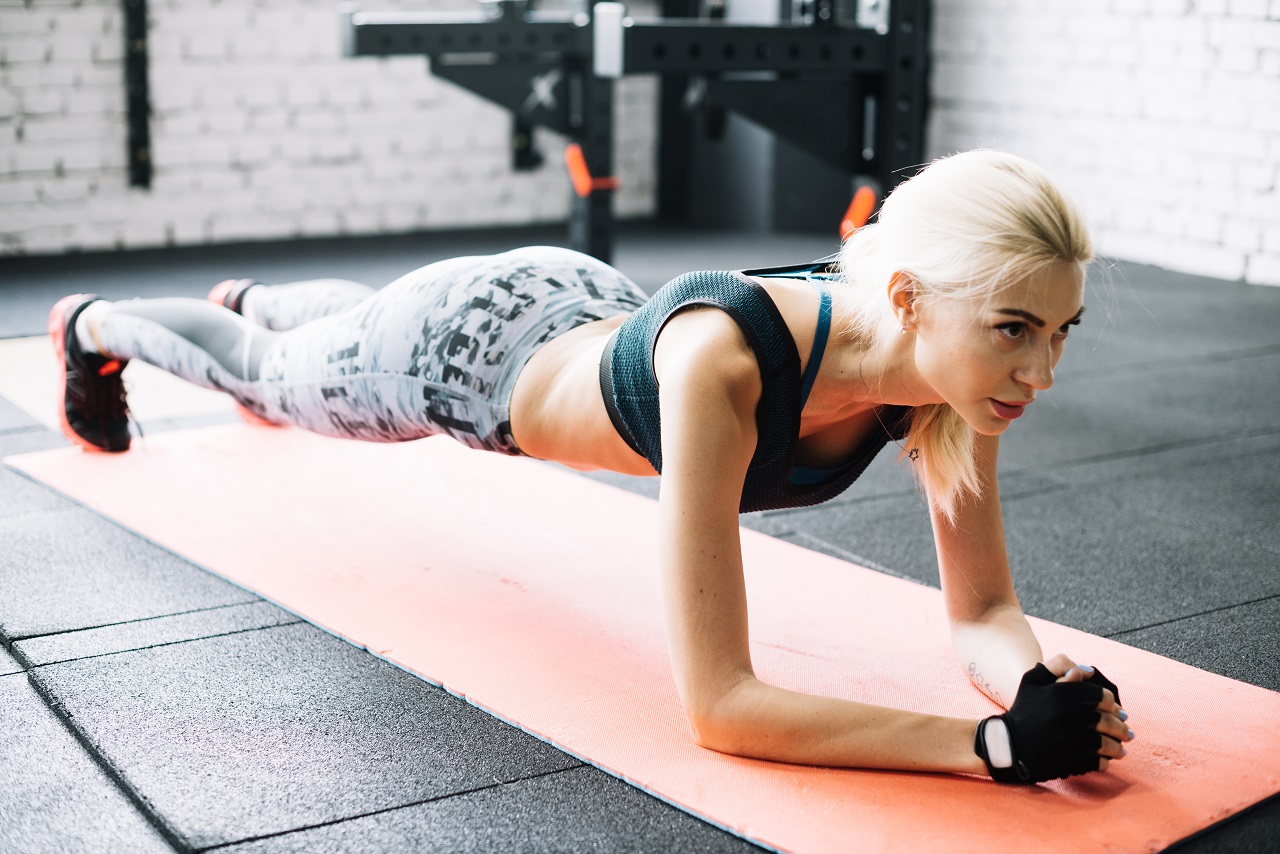
How to Perform the Perfect Forearm Plank

Proper form is infinitely more important than how long you can hold the position. Follow these structural steps to get it right:

  • Lie face down on a yoga mat or comfortable floor surface.
  • Position your elbows directly beneath your shoulders.
  • Keep your forearms parallel to each other or gently clasp your hands together.
  • Extend your legs straight out behind you and lift up onto your toes.
  • Tighten your abdominal muscles intensely, as though preparing for a punch.
  • Squeeze your glutes tightly to stabilize your pelvis.
  • Keep your ribs pulled down and avoid arching your lower back.
  • Maintain one straight, rigid line from your head down to your heels.
  • Keep your neck neutral by looking at the floor slightly ahead of your hands.
  • Breathe normally throughout the exercise—do not hold your breath!

Remember: Good form for 20 seconds always beats a 2-minute hold with poor technique.

5 Plank Variations to Challenge Yourself

As your core gets stronger, you need to challenge it in new planes of motion. Here are five excellent variations to incorporate:

Plank Variation Difficulty Primary Target Area Execution
Side Plank Intermediate Obliques, shoulders, and hip stabilizers. Support yourself on one forearm with feet stacked. Lift hips to form a straight line.
Reverse Plank Intermediate Glutes, hamstrings, shoulders, and upper back. Sit with legs extended, place palms behind you, and lift hips up into a straight line.
Dynamic Plank Intermediate Core control and shoulder mobility. From a forearm plank, push hips high into an inverted “V”, then slowly lower back down.
Plank to Push-Up Advanced Upper-body strength and anti-rotational stability. Move from forearms to hands (high plank) one arm at a time, then back down.
Plank Jacks Advanced Core training combined with cardiovascular conditioning. In a high plank, jump your feet wide apart and back together, keeping your torso stable.

New to Planks? Your 4-Week Starter Plan

If you’re new to planks, do not worry about holding the position for a full minute on your first attempt. Try this simple, progressive schedule:

Timeline Goal per Set Sets to Complete
Week 1 15–20 seconds 3 Sets
Week 2 20–30 seconds 3 Sets
Week 3 30–45 seconds 3 Sets
Week 4 45–60 seconds 3 Sets

Progress gradually and only move to the next week if you can maintain excellent, pain-free technique.

Reality Check: Can Planks Help You Lose Belly Fat?

One of the biggest fitness myths in the industry is that planks specifically burn belly fat. The reality is different.

Planks strengthen your abdominal muscles and massively improve core stability, but they cannot spot-reduce fat from one specific area of the body. Fat loss only occurs when you combine regular physical activity with balanced nutrition to maintain a calorie deficit over time. Think of planks as the tool that builds and strengthens the muscles beneath the fat, while your overall diet and lifestyle determine how much body fat you actually lose.

Common Plank Mistakes to Avoid

Even seasoned athletes make these structural errors. Check your form and avoid:

❌ Holding your breath during the isometric hold.

❌ Letting your hips sag toward the floor (strains the lower back).

❌ Raising your hips too high into the air (removes tension from the core).

❌ Looking straight up or ahead instead of keeping your neck neutral.

❌ Positioning your elbows too far in front of your shoulders.

❌ Prioritizing a longer hold time over proper structural alignment.

Who Should Modify or Avoid Planks?

While planks are generally safe and highly effective for most healthy individuals, you should consult your healthcare provider or a physiotherapist before performing them if you have:

  • Recent shoulder or wrist injuries.
  • An active hernia.
  • Severe or chronic lower back pain.
  • Recent abdominal surgery.
  • Pregnancy (certain modified variations are required for safety).

Stop immediately if you experience sharp, shooting pain during the exercise.

You don’t need an hour-long, exhausting workout to become a stronger, healthier version of yourself. Planks are one of the simplest, most effective, and most accessible exercises for improving core strength, posture, balance, and functional fitness. The key isn’t holding the longest plank possible—it is maintaining proper form and practicing consistently. Just a few minutes several times a week can make a highly noticeable difference to your overall strength and stability!

Pro Tip: Consistency builds results. Use the GOQii App to track your workouts, activity levels, and progress over time. Your GOQii Personalised Health Coach can recommend exercises suited to your fitness level and help you build a sustainable routine.

Frequently Asked Questions (FAQs)

  1. Are planks better than traditional crunches?

Both exercises have their place, but planks engage multiple muscle groups simultaneously (including the back, glutes, and shoulders) and improve overall functional core stability, whereas crunches strictly isolate the front abdominal muscles.

  1. How long should absolute beginners hold a plank?

Most beginners should start with 15 to 30 seconds while focusing entirely on maintaining proper form. Gradually increase the duration by 5–10 seconds as your core strength improves.

  1. Can doing planks every day reduce my belly fat?

No. Planks strengthen your core muscles but cannot specifically burn fat from your belly. Fat loss depends on your overall nutrition, daily physical activity, and sustaining a healthy calorie balance.

  1. Is it safe to do planks every single day?

Many people can safely perform planks daily if they use proper technique and do not overtrain. However, your muscles need time to recover, so if you experience deep muscle soreness, take a rest day or alternate with other forms of exercise. Listen to your body!

Disclaimer: This article is intended for educational and informational purposes only and should not be considered medical advice. Consult a qualified healthcare provider or certified fitness professional before beginning a new exercise program, particularly if you have an existing medical condition, injury, or concerns about your physical health.

#BeTheForce
December 2, 2024 By Neha Sharma 3 Comments

Easy and Effective Tabata Routine For Beginners

effective tabata routineWhen it comes to getting active and losing weight, people generally get confused about where to start. So, let’s look at this effective Tabata routine which is simple and easy. TABATA (also called Tabata protocol) is a type of HIIT (high intensity interval training). It originated when a Japanese Scientist Dr. Izumi Tabata and his team from The National Institute of Fitness and Sports at Kagoshima, Japan were working on the fact that shorter high intensity workouts followed by a shorter period of rest can impact the body better rather than longer periods of continuous workout.

The structure of program is like: 

  • Exercise hard for 20 seconds
  • Rest for 10 seconds
  • Complete 8 rounds

A combination of any exercise can be used in Tabata. It targets a wider range of muscles and helps in burning fat during and after workouts. 

Three major health benefits of this Effective Tabata routine are:

  1. Helps in burning more fat in a shorter period of time
  2. Helps in increasing endurance
  3. As it is high intensity training, it needs to be focused & attentive, thus, increases efficiency.

Before You Begin, Keep in Mind:  

  • A beginner has to first check his/her flexibility, efficiency and endurance before picking up the sets of exercises
  • Make sure to complete a dynamic warm up before you begin this easy and effective Tabata routine.
  • You can choose a group of 3-4 exercises for a week and then add some other exercises one by one depending upon your stamina.
  • Don’t do exercises in a hurry. Rather do it in proper posture and manner.
  • Always keep a stopwatch with you.

Exercise To Include In Your Tabata Routine  

There are basic 10 exercises which you can include in your Tabata protocol when you are planning to start. These are:

  1. Burpees: Toughest among all exercises and increases endurance, strength & power. It is most effective but for a beginner can be placed at last.
  2. Lunges: Can be included in beginners protocol & difficulty level can be increased once you are comfortable in traditional lunges.
  3. Jump Rope: It is an effective and portable form of exercise and can be included in the beginners list.
  4. Squat Jack: It combines two bodyweight exercises which are squats and jumping jacks. Can be safely included in the list.
  5. Tabata Sprints: It starts with 20 seconds of sprints followed by 10 seconds of walking, jogging or rest.
  6. Push Ups: One of the most simple and familiar exercises which can be included in the list.
  7. Super man: This will strengthen the back and core muscles and can be included in the list.
  8. Plank jack: These are simple. The difficulty level can be increased at one’s comfort ability.
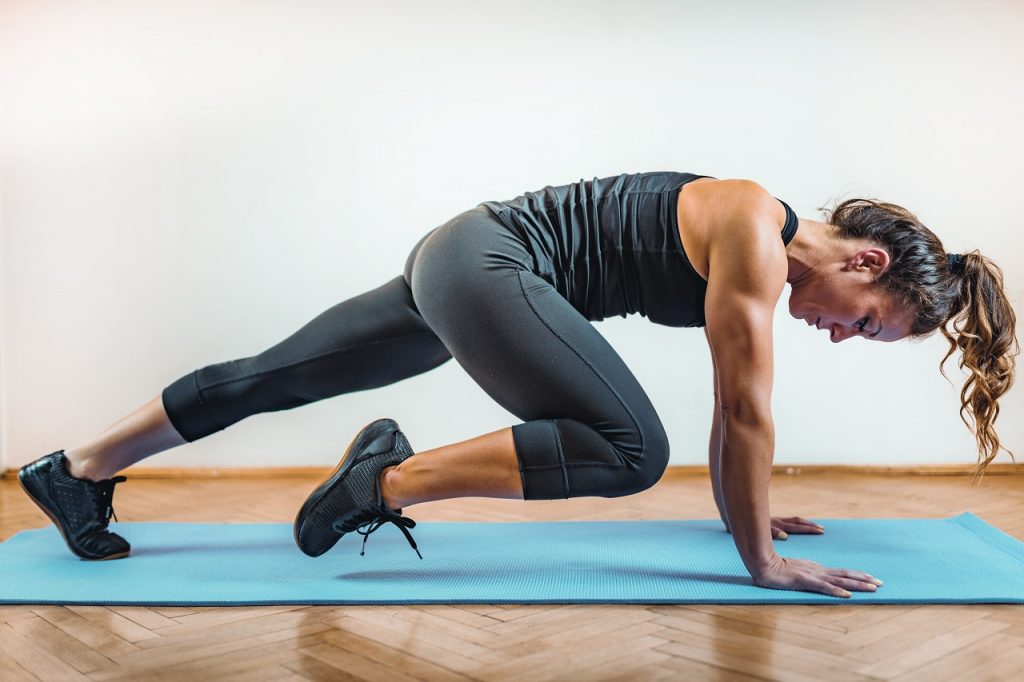
  9. Mountain Climbers: Very effective for legs and most suitable for beginners.
  10. Windshield Wipers: Easy to do and can be included in the list and variations can be done later.

From the list above, you can choose any 4-5 exercises and start practicing according to the Tabata protocol and always start with high energy and not in a hurry.

For more effective workouts and to learn more about fitness, check out Healthy Reads or tune in to our live, interactive classes on GOQii PRO, where our experts will guide and motivate you in real time. Book a class now from the GOQii App.

#BeTheForce 

August 21, 2023 By ASHWINI PRAKASH CHAUDHARI 7 Comments

A Quick 6 Minute Workout You Can Do Anywhere

fitness

With the gloomy weather and continuous downpour, it can get difficult to venture out to get some of that essential exercise. But don’t let the heavy rainfall keep you from working out. Get fit at home with this quick 6 minute workout! It is designed to help you reap all the benefits of a workout using only your body weight, a chair and a wall. You won’t need any special equipment and can perform this routine anywhere! We’d say it’s perfect for a rainy day!

The Quick 6 Minute Workout

  1. Jumping Jacks: This classic cardio move is a great way to warm up. It improves strength and endurance, increases metabolic rate, burns calories and is great for your heart and lungs as well!
  2. Wall Sit: Wall Sits are great in working out the two groups of muscles in your thighs. Repetitions of Wall Sits would naturally give you thighs that can withstand prolonged strenuous activities.
  3. Push-Ups: work many muscle groups at the same time, giving your body a full workout! You can work the quads, hamstrings, calves, chest, shoulders and arms all at the same time with a few push-ups. It stimulates metabolism and blood circulation, allowing you to burn more calories throughout the rest of your workout.
  4. Abdominal Crunch: Crunches work on the Rectus Abdominis Muscles. It is a core working exercise and burns less calories comparatively but, they move in a controlled manner, flexing and releasing the core muscles, thus helping you build abs.
  5. Step Up Onto Chair: This exercise is great for targeting your quad and Gluteus Maximus Muscles, giving you strong, powerful legs.
  6. Squats: are great for a total lower body workout. They effectively work most of the major muscle groups of the butt, hips and thighs. Squats are also a versatile exercise. Squats engage the core muscles of the body. The result is a tighter, flatter abdomen and a stronger lower back.
  7. Triceps Dips On Chair: It is a triceps-strengthening and a most effective body-weight exercise. Dips target your triceps – the muscles on the back of your upper arm.
  8. Planks: help in strengthening the midsection, upper-body and lower-body muscles along the front of your body. Planks also strengthen the inner core muscles that support your joints. It helps in reducing belly fat and back pain. At a time, it works on all your core muscles.
  9. High Knees Running: This is a nice warm-up. High Knees Running on Spot is good practice for runners and athletes to improve running form and develop lower body muscles. It also enhances your strength, speed, balance and flexibility. What’s more? It provides you more energy, burns calories, builds muscles and enhances blood circulation.
  10. Lunges: are easy-to-learn, safe and an incredibly effective exercise. Lunges target the quadriceps, but involve additional muscles, including the glutes, hamstrings, calves and core muscles, making them an important exercise for toning the lower body.
  11. Push-Up & Rotation: This exercise is great for building shoulder stabilization and strengthening your entire core. Don’t let your hips drop when you go into side rotation. Try to keep everything in a straight diagonal line throughout.
  12. Side Plank: works your entire core but particularly targets an often weak muscle called the Quadratus Lumborum. It helps to reduce risk for lower back pains, improves your balance and structure.

Perform the above exercises in rapid succession with 20 seconds for each exercise followed by 10 seconds of rest in between. Don’t forget to stretch before you begin!

These 6 minutes that you will give to your body and your health are equal to 0.5% of your day! So go out there and get fit the HIIT way! Don’t forget to leave your thoughts in the comments below.

Find more exciting, quick workouts and fitness related articles here. You can also tune in to our live, interactive classes on GOQii PRO, where our certified fitness experts will guide you on the correct form and posture in real time, while making sure that you are well motivated! Book a class now from the GOQii App.

#BeTheForce 

August 8, 2022 By GOQii 10 Comments

Put Your Fat On Flame With Interval Training

Interval TrainingMost of us have this desirable goal of losing fat but, when asked to act on it, we have a fixed set of excuses ready – No time! Too tough for me! Too boring to repeat the same pattern, etc. It’s time to ditch these excuses and rev up workouts which consume less time, can be done easily and are not monotonous. We suggest going for Interval Training!
What Is Interval Training?

Interval training is a workout in which we alternate the bursts of high-intensity exercises with intervals of lighter activity. All that we do here is, we repeatedly challenge our body and then give it shorter breaks to recover, for a massive cardio blast. It helps burn more calories in a short period of time, as compared to a steady-state exercise.

How Does It Work?

When we vary the intensity while working out, it leads to muscle confusion. Our body gets confused and wonders what’s happening! As a regulatory mechanism, our heart rate shoots up and it starts pumping more blood. More the blood, higher the Oxygen and to your surprise, fat combustion occurs more efficiently in the presence of Oxygen.

Ever wondered why a candle stops burning when we put a glass over it and block the Oxygen? That’s exactly the principle. Any burning process requires O2 which is a key to burning fat. And since interval training involves a lot of Oxygen, it’s been gaining fame in the fat loss/inch loss sector.

There are no hard and fast rules in interval training. We can have variations as we want, to make it most enjoyable and keep boredom at bay. We can:

  • Interval walk: Walking fast for 2 minutes, then walking slowly for a minute, again fast, then slow and go on this way as long as we can
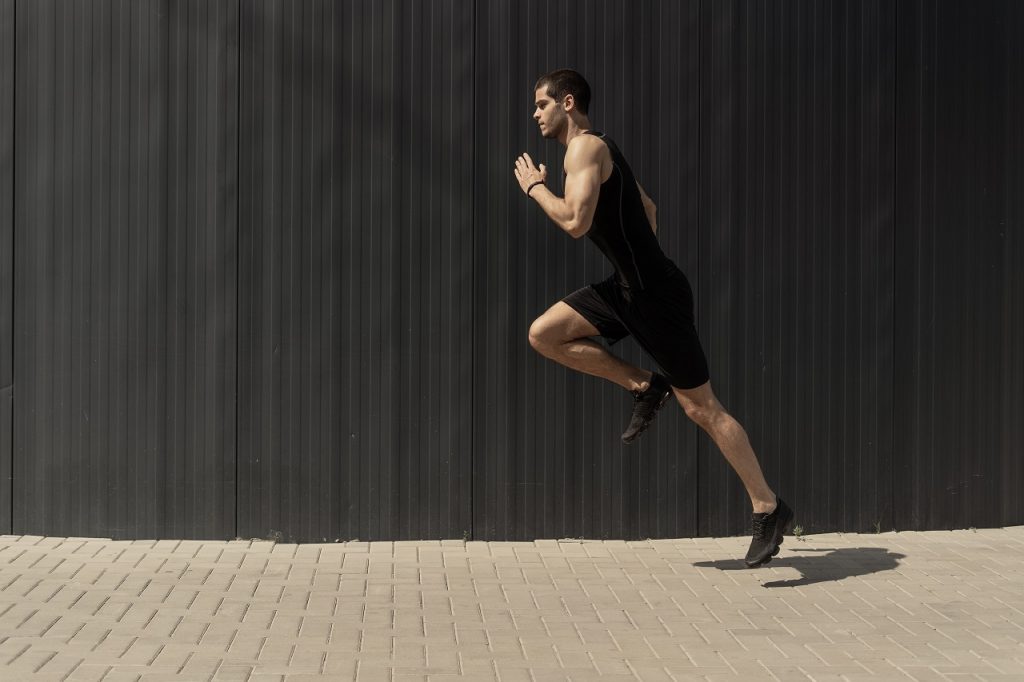
  • Interval runs Alternating 2 minutes run with a 1-minute walk
  • Interval swim: Alternating fast-paced swimming moves with slow-paced moves

We can also try this with cycling, dancing, strengthening exercises (Tabata – being the most popular form of High Intensity Interval Training) and the list can go on.

Interval training 2It’s quite possible to take interval training to many levels. The length and speed of each high-intensity interval solely depend upon our strength and capacity. To get better with it, we need to make sure we push our body way past our comfort zone each time we do it. Remember, not to rush into strenuous exercise before our body is ready, to avoid injury. Ensure a good warm-up session before starting with it, and end it with stretches.



If you are a beginner to exercising, We’d say, don’t start with interval training directly. Give your body some time to build the stamina with steady cardio workouts for a few weeks to a month. You can then add interval training to your routine. In fact, you can also add these interval training plans to your gym routine once a week to enhance your speed and cardiovascular endurance.

So what are you waiting for? Jump into your workout shoes and jazz up your workout routine by adding interval training! If you have a chronic health condition (Hypertension or Cardiovascular illness), it’s better to keep away from interval training to avoid any aggravation. You can check with your trainer or coach to take the best course. For further guidance, you can subscribe for GOQii’s personalized health coaching and get the best exercises and habits to meet your weight loss goals.

Additionally, you can also join our online classes on GOQii PRO, where our certified fitness experts will guide you on the correct form and posture in real time, while making sure that you are well motivated! You can book a class now from the GOQii App.

For more on fitness and weight loss, check out Healthy Reads.

Get Active and #BeTheForce 

Search

Recent Posts

  • Immunity-Boosting Kadhas: Why Natural Defense Matters During the Monsoon
  • Healthy Eating: Crispy Monsoon Corn Tikkis
  • Antenatal Exercises: Your Guide to a Fit and Healthy Pregnancy
  • Managing Type 2 Diabetes: Dietary Choices and Lifestyle Adjustments for Better Blood Sugar Control
  • Hormones and Longevity: Why Midlife Health Depends on Hormonal Balance

Stay Updated

Archives

  • July 2026 (22)
  • June 2026 (22)
  • May 2026 (20)
  • April 2026 (24)
  • March 2026 (18)
  • February 2026 (14)
  • January 2026 (14)
  • December 2025 (19)
  • November 2025 (15)
  • October 2025 (20)
  • September 2025 (6)
  • August 2025 (6)
  • July 2025 (10)
  • June 2025 (18)
  • May 2025 (16)
  • April 2025 (22)
  • March 2025 (26)
  • February 2025 (21)
  • January 2025 (25)
  • December 2024 (22)
  • November 2024 (22)
  • October 2024 (20)
  • September 2024 (22)
  • August 2024 (28)
  • July 2024 (16)
  • June 2024 (23)
  • May 2024 (26)
  • April 2024 (27)
  • March 2024 (27)
  • February 2024 (23)
  • January 2024 (21)
  • December 2023 (14)
  • November 2023 (10)
  • October 2023 (19)
  • September 2023 (22)
  • August 2023 (16)
  • July 2023 (18)
  • June 2023 (21)
  • May 2023 (20)
  • April 2023 (19)
  • March 2023 (23)
  • February 2023 (19)
  • January 2023 (15)
  • December 2022 (11)
  • November 2022 (15)
  • October 2022 (15)
  • September 2022 (12)
  • August 2022 (9)
  • July 2022 (17)
  • June 2022 (11)
  • May 2022 (10)
  • April 2022 (6)
  • March 2022 (6)
  • February 2022 (13)
  • January 2022 (11)
  • December 2021 (7)
  • November 2021 (3)
  • October 2021 (6)
  • September 2021 (3)
  • August 2021 (8)
  • July 2021 (7)
  • June 2021 (15)
  • May 2021 (16)
  • April 2021 (10)
  • March 2021 (7)
  • February 2021 (4)
  • January 2021 (4)
  • December 2020 (3)
  • November 2020 (4)
  • October 2020 (10)
  • September 2020 (3)
  • August 2020 (3)
  • July 2020 (2)
  • June 2020 (4)
  • May 2020 (10)
  • April 2020 (12)
  • March 2020 (10)
  • February 2020 (4)
  • January 2020 (4)
  • December 2019 (3)
  • November 2019 (7)
  • October 2019 (5)
  • September 2019 (4)
  • August 2019 (9)
  • July 2019 (9)
  • June 2019 (11)
  • May 2019 (4)
  • April 2019 (8)
  • March 2019 (8)
  • February 2019 (9)
  • January 2019 (8)
  • December 2018 (9)
  • November 2018 (3)
  • October 2018 (3)
  • September 2018 (5)
  • August 2018 (10)
  • July 2018 (6)
  • June 2018 (13)
  • May 2018 (8)
  • April 2018 (18)
  • March 2018 (9)
  • February 2018 (8)
  • January 2018 (15)
  • December 2017 (12)
  • November 2017 (19)
  • October 2017 (13)
  • September 2017 (15)
  • August 2017 (4)
  • July 2017 (8)
  • June 2017 (7)
  • May 2017 (6)
  • April 2017 (8)
  • March 2017 (6)
  • February 2017 (7)
  • January 2017 (9)
  • December 2016 (10)
  • November 2016 (7)
  • October 2016 (7)
  • September 2016 (7)
  • August 2016 (11)
  • July 2016 (9)
  • June 2016 (9)
  • May 2016 (12)
  • April 2016 (17)
  • March 2016 (17)
  • February 2016 (8)
  • January 2016 (6)
  • December 2015 (2)
  • November 2015 (9)
  • October 2015 (7)
  • September 2015 (9)
  • August 2015 (11)
  • July 2015 (9)
  • June 2015 (11)
  • May 2015 (9)
  • April 2015 (13)
  • March 2015 (8)
  • February 2015 (5)
  • January 2015 (12)
  • December 2014 (14)
  • November 2014 (11)
  • October 2014 (6)
  • September 2014 (13)
  • August 2014 (12)
  • July 2014 (6)
  • June 2014 (2)
  • May 2014 (7)
  • April 2014 (4)

From Burnout to Balance: How Dr. Ranjit Reclaimed His Health

Dr Ranjit Bhatt has spent years tending to others. A practising doctor in Odisha, his days were packed with patients, surgeries, and emergencies. From the outside, it looked like a life lived in service. But on the inside, something wasn’t right. “I had no … [Read More...]

From Shimla’s Slopes to Chandigarh’s Sidewalks: Surinder Kaur Bhalla’s Journey from Chaos to Control

Some journeys start with a plan. Others begin with a stumble literally. Surinder Bhalla, a government professional, born and raised in the scenic hill town of Shimla, had always lived a life of movement. “In Shimla, you walked everywhere,” she reflects. “Walking was never an exercise. It was just life.” But after shifting to Chandigarh, […]

“I’ve Challenged Myself to Live 100 Years” – The Story of Chandubhai Savani’s Second Chance at Life

At 67, most people start slowing down. Not Chandubhai Savani. A resident of Surat, Chandubhai, thought life was on track. “My life was going well till I had my bypass surgery,” he says. That surgery, back in 2021, was a wake-up call.  Medication was routine, but exercise wasn’t. His diet? What he calls ‘normal.’ “I […]

Ananda Mukherjee Health Story

From Terminal Illness To Complete Wellness! Ananda Mukherjee Health Story

As we observe World Cancer Day under the powerful theme ‘United by Unique’ (2025-2027)**, we are reminded that every individual’s journey with cancer is distinct, yet united by shared resilience, hope, and the collective fight against this disease. This theme places people at the centre of care and their stories at the heart of the […]

  • HOME
  • HEALTHY LIVING
  • FITNESS
  • HEALTHY RECIPES
  • USER STORIES
  • KARMA
  • BUY GOQii

Copyright ©2016 GOQii
