GOQii

Blog

  • HOME
  • HEALTHY LIVING
  • FITNESS
  • HEALTHY RECIPES
  • USER STORIES
  • KARMA
  • BUY GOQii

March 26, 2025 By GOQii Leave a Comment

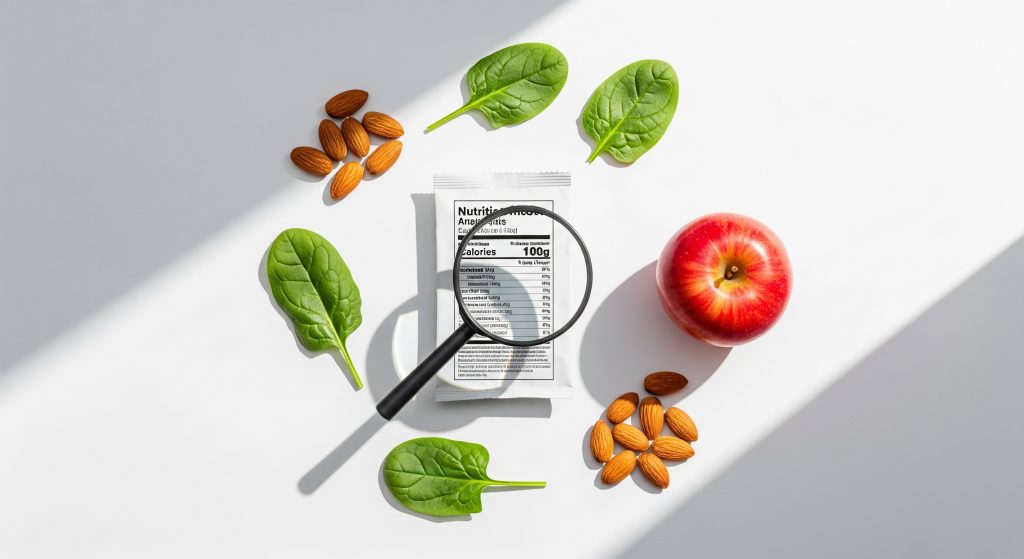
Decode Your Food: How to Read Labels and Make Smarter Choices

Walking down the supermarket aisle, you’re bombarded with choices—”low fat,” “high protein,” “sugar-free,” “natural.” But what do these claims really mean? How do you know if a product is genuinely healthy or just smartly marketed? The answer lies in the fine print: the food label.

Reading food labels can feel like cracking a code, but once you know what to look for, it becomes second nature—and empowers you to make healthier, smarter decisions for yourself and your family.

Let’s break it down into simple, actionable steps with a few nutritionist-approved pro tips!

  1. Start With the Ingredients List 📝

This is where the truth of the product lies. Ingredients are listed in order of quantity, from most to least. If sugar, salt, or refined flour are among the first three, it’s a red flag.

  • Choose products with whole, recognisable ingredients.
  • Fewer ingredients usually mean less processing.

💡 Pro Tip: Ingredients like high fructose corn syrup, maltose, dextrose, or anything ending in “-ose” are forms of sugar. The same goes for hydrogenated oils, which signal unhealthy trans fats.

  1. Serving Size vs. Reality 🍿

The label might say 120 calories per serving—but what’s a serving? 5 crackers? Half a chocolate bar? Often, the serving size is much smaller than what we typically consume.

  • Always check the number of servings per package.
  • If you eat double the serving size, you’re getting double the calories, fat, and sugar.

💡 Pro Tip: For single-serve snacks, don’t assume the whole pack is one serving. Check to avoid underestimating your intake.

  1. Understanding Nutrition Per 100g vs. Per Serving 📊

Many labels show nutrition per 100g and per serving.

  • Use per 100g to compare products easily.
  • Use per serving to track your intake.

💡 Pro Tip: If you’re comparing two products, always use the per 100g column to avoid being misled by serving sizes that vary between brands.

  1. Know Your Daily Reference Intakes (RI) 📅

Labels often list percentages of nutrients based on a daily reference intake (also called Daily Value). These help you understand how much of a nutrient you’re getting per portion.

  • Aim for high %RI in fibre, protein, vitamins, and minerals.
  • Aim for low %RI in saturated fat, sugar, and salt.

💡 Pro Tip: A %RI of 5% or less is low; 20% or more is high. Use this to gauge whether a food is helping or hindering your goals.

  1. Nutrients to Prioritise ✅

  • Fibre: Go for 3g or more per serving. Fibre keeps you full, supports digestion, and stabilises blood sugar.
  • Protein: Helps with satiety and muscle maintenance—look for at least 5-10g per serving in snacks.
  • Vitamins & Minerals: Check for iron, calcium, vitamin D, and B vitamins. These often get overlooked!
  1. Nutrients to Watch Out For ⚠️

  • Added Sugars: Ideally less than 5g per serving. Sugar is often hidden in “healthy” foods like yoghurt and granola.
  • Saturated Fat: Keep this below 1.5g per 100g for a healthy heart.
  • Salt (Sodium): Aim for less than 0.3g per 100g. High salt intake can raise blood pressure.

💡 Pro Tip: Some products list sodium instead of salt. Multiply sodium by 2.5 to get the salt equivalent.

  1. Don’t Fall for Buzzwords ❌

“Natural,” “low fat,” “no added sugar”—these claims can be misleading.

  • “Low fat” might mean high sugar.
  • “No added sugar” doesn’t mean sugar-free—fruit concentrates count!
  • “Gluten-free” doesn’t mean healthy—many such products are high in fat or sugar.
  1. Example: Comparing Two Granola Bars 🍫 vs. 🥜

Nutrient

Bar A Bar B
Calories 200 160
Sugar 12g 5g
Fibre 2g 5g
Protein 3g 6g

✔ Bar B wins—lower sugar, higher fibre and protein, fewer calories. Always check beyond the front label!

Understanding food labels helps you cut through the noise, take control of your health, and make empowered choices. It’s not about perfection—it’s about making informed swaps that add up over time.

Next time you shop, take a closer look. Your future self will thank you for every smarter bite.

💬 Do you check labels regularly? What’s the biggest surprise you’ve found? Let us know in the comments!

#BeTheForce

Disclaimer: The information provided in this blog is for general awareness and educational purposes only. It is not intended to replace professional medical advice, diagnosis, or treatment. Always consult a qualified healthcare provider for personalised medical guidance or concerns related to your health.
March 22, 2025 By Trupti Hingad 3 Comments

7 Tips To Help You Drink Water The Right Way

7 tips to help you drink water the right way World Water Day 2025 is a timely reminder of the value water holds in our lives—not just globally, but personally. While this year’s theme focuses on glacier preservation, we often overlook a key question: Are we drinking water in the best possible way for our health?

We all know hydration is important. But how you drink water matters just as much as how much you drink. Water is a vital life force—it fuels digestion, flushes out toxins, supports metabolism, and keeps every cell functioning. Yet, many of us are unaware that drinking water incorrectly can impact our health.

How To Drink Water The Right Way 

Let’s explore 7 essential tips to help you hydrate better, smarter, and more mindfully every day.

  1. Sit Down to Drink Water
    When you stand and drink water you upset the balance of fluids in the body and this may lead to more accumulation of fluids in the joints. When you sit and drink, your muscles and nervous system is relaxed and you absorb it nicely. Also, kidney pace of filtration is good when you sit and drink water
  2. Sip, Don’t Gulp Large Quantities
    Avoid drinking large amounts of water in one go. Gulping too much too quickly can block air intake into your lungs and put undue pressure on your heart and lungs. Instead, sip water slowly throughout the day—this helps your body absorb and utilise it more effectively.
  3. Avoid Ice-Cold Water
    Cold or chilled water may feel refreshing, but it disrupts digestion by cooling the internal fire needed to digest food properly. Cold water also reduces blood flow to various organs and can lead to issues like constipation. Try to drink room temperature or warm water instead—it aids digestion, supports metabolism, and even helps control cholesterol levels.
  4. Listen to Your Body’s Thirst Cues
    Your body is smart—it tells you when it’s low on water. Dark yellow urine, dry lips, dry tongue, and persistent fatigue are signs of dehydration. Clear or pale urine means you’re well-hydrated. Pay attention to these signs and hydrate accordingly.
  5. Start Your Day with Water
    Drinking a glass of water first thing in the morning helps flush out toxins and cleanses your digestive system. It supports smoother bowel movements and kickstarts your metabolism—setting a healthy tone for the rest of the day.
  6. Store Water the Right Way
    Traditionally, water stored in copper or silver vessels is believed to balance the body’s energies by positively charging the water. Copper is known for its antioxidant and antibacterial properties, while silver is believed to have a cooling effect on the digestive system.While copper and silver vessels might not be common everywhere, you can opt for glass or stainless steel bottles as safe and eco-friendly alternatives to plastic. These options are free from harmful chemicals like BPA and help maintain the water’s purity.
  7. Drinking Water Isn’t Just to Quench Thirst
    Water is essential for replenishing lost minerals and salts, especially after sweating or physical activity. It hydrates muscles and joints, supports digestion, maintains fluid balance, and prevents acidity. Make water a daily habit of recovery and rejuvenation, not just a thirst response.

Drinking water the right way is about more than just hitting your daily quota. By being mindful of how and when you drink water—and how you store it—you can improve digestion, boost energy, and support overall well-being.

Let this World Water Day inspire a renewed appreciation for water—not only as a global resource but as a vital part of our personal health.

💧 How do you ensure you stay hydrated daily? Share your tips in the comments below!

#BeTheForce

Disclaimer: The information provided in this blog is for general awareness and educational purposes only. It is not intended to replace professional medical advice, diagnosis, or treatment. Always consult a qualified healthcare provider for personalised medical guidance or concerns related to your health.

March 5, 2025 By GOQii Leave a Comment

The Difference Between Emotional Eating & Binge Eating Disorder

Many people use food as a coping mechanism, but when does it cross the line into something more serious like Binge Eating Disorder (BED)? Let’s explore the key differences.



What is Emotional Eating?

Emotional eating is when we eat in response to feelings rather than physical hunger. It is often triggered by stress, boredom, sadness, or even happiness.

Signs of Emotional Eating:

  • Eating in response to stress, sadness, boredom, or anxiety.
  • Craving specific comfort foods (e.g., sweets, crisps, or junk food).
  • Eating even when not physically hungry.
  • Feeling temporarily better after eating, but then experiencing guilt or regret.
  • Occurs occasionally and in smaller portions.

While emotional eating is a common behaviour, it becomes a concern when it happens frequently and disrupts your relationship with food.

What is Binge Eating Disorder (BED)?

Binge Eating Disorder (BED) is a serious mental health condition characterised by frequent, uncontrollable episodes of eating large quantities of food. Unlike emotional eating, BED involves a sense of loss of control and distress around food.

Signs of Binge Eating Disorder:

  • Frequent episodes of eating large amounts of food within a short time.
  • Eating even when uncomfortably full or not hungry.
  • Feeling out of control during eating episodes.
  • Eating very quickly and secretly, due to shame or embarrassment.
  • Feeling distressed, ashamed, or guilty after binge episodes.
  • Episodes occur at least once a week for three months (as per clinical diagnosis).

Unlike emotional eating, BED is a compulsive disorder that can have serious long-term effects on both physical and mental health.

Key Differences Between Emotional Eating & Binge Eating Disorder

Factor

Emotional Eating

Binge Eating Disorder (BED)

Triggers

Stress, boredom, sadness

Can be emotional or compulsive without a clear trigger

Portion Size

Small to moderate

Large amounts of food in one sitting

Control Over Eating

Some level of control

Complete loss of control

Frequency

Occasional

Recurring (at least once a week for 3+ months)

Aftermath Feelings

Mild guilt or regret

Intense guilt, shame, distress

Eating Speed

Normal

Very fast, often secretive

Physical Consequences

Rare

Can lead to obesity, diabetes, heart issues

How to Manage Emotional Eating & Binge Eating Disorder

Whether you struggle with occasional emotional eating or suspect you may have BED, there are steps you can take to regain control of your eating habits.

  1. Recognise Your Triggers

Keep a food and mood journal to identify what emotions drive your eating habits. Do you eat when you’re stressed? Lonely? Bored? Understanding your triggers is the first step to making changes.

  1. Find Healthier Coping Mechanisms

Instead of turning to food, try activities like:

    • Exercise – A natural mood booster.
    • Journaling – Helps process emotions.
    • Meditation or Deep Breathing – Reduces stress and anxiety.
    • Social Connection – Call a friend or spend time with loved ones.
  1. Eat Mindfully
    • Pay attention to hunger cues – eat when you’re physically hungry, not emotionally hungry.
    • Practise portion control – serve food on a plate rather than eating straight from a packet.
    • Slow down while eating – chew properly and enjoy your food.
  1. Professional Help for BED
    • Cognitive Behavioural Therapy (CBT) – A proven method to change binge-eating behaviours.
    • Mindful Eating Therapy – Helps individuals reconnect with hunger and fullness cues.
    • Support Groups & Counselling – Having a support system makes recovery easier.
    • Medical Interventions – In some cases, doctors may prescribe medication to help manage BED.

Occasionally turning to food for comfort is normal, but when it becomes a frequent coping mechanism or involves loss of control, it’s important to take action. Understanding the difference between emotional eating and Binge Eating Disorder is the first step toward a healthier relationship with food.

Have you ever struggled with emotional eating? What strategies have helped you? Share in the comments!

#BeTheForce

Disclaimer: The information provided in this blog is for general awareness and educational purposes only. It is not intended to replace professional medical advice, diagnosis, or treatment. Always consult a qualified healthcare provider for personalised medical guidance or concerns related to your health.

February 5, 2025 By Akshay Karlawar 1 Comment

Tips To Alleviate & Avoid Back Pain

avoid back painBack pain usually originates from the joints, bones, nerves or muscles. It is one of the most common complaints. Back pain may be felt as mild chronic pain going on for years or just for a few seconds or minutes. It can be felt as continuous dull ache, appearing at intervals as well. Constant, sharp pain is usually found in one place or it radiates to other areas like limbs. It can also present a weak, tingling sensation or numbness.

Few Facts About Back Pain 

  • The spine consists of bones, joints, spinal cord, nerves, tendons, ligaments and muscles. Back pain can originate from any of these or overlying muscles
  • In a majority of cases, back pain is self-limited. Most common back pain symptoms are due to inflammation or trauma which may be mild or severe
  • The two most common conditions that cause back pain are degenerative spinal disc disease and spinal disc herniation
  • Innocent causes of the back pain include ligament tear, muscle strain, ruptured or herniated spinal disks, and irritated joints. Environmental factors that cause or aggravate back pain include arthritis, posture at work, obesity, psychological and physical stress.
  • Some other causes include – lack of core strength that creates too much strain on the back, tight muscles which cause inflammation and tight hip flexors as they extend towards the lower back via the pelvic girdle due to improper posture.

Causes and Tips To Avoid Back Pain 

  • Obesity: is a common cause of back pain. As a heavy body contributes to increased pressure on the spine, maintaining a healthy body weight can help reduce your back pain. If you’re seriously overweight, those extra pounds could be straining your spine. Lose some weight and you just might lose the pain. A weight-loss program that includes regular exercise is bound to make your whole body feel better. A nutritious diet, lifestyle modifications and healthy weight can prevent back pain.
  • Poor posture: is a common cause of back pain. Maintain correct postures while standing, sitting and while lifting things. While using a computer or laptop, try to take breaks frequently and practice stretches which will lower your chances of getting back pain. Take regular short breaks in between work. Just getting up from your chair can help break the cycle of clenched muscles.

Tips To Reduce The Pain 

  • Applying a cold compress to the affected area can numb the pain temporarily by desensitizing the underlying nerves. 
  • Heat application through a heating pad, warm bath or hot water bottle can stimulate blood circulation in the area and loosen the tight muscles.
  • Massage therapy could provide short-term relief from acute and chronic back pain.
  • Frequent massages may be costly, but getting a massage once a month can be effective and affordable as well. It is important to select the massage best suited to your problem.
  • Consume a healthy diet consisting of Vitamin D as deficiency and insufficiency can cause or worsen back pain. The correction of it plays an important role in the treatment of chronic back pain. Foods like Fatty fish, liver, egg yolk and mushrooms can improve Vitamin D levels.
  • Avoid high-inflammatory foods such as sugars, trans fats and processed foods to prevent back pain.
  • Train with proper form, regular rehab-strengthening of lower back with exercise such as back extension, superman holds can help strengthen rhomboids to improve posture. 
  • Stretching itself can damage muscle fibers as you’re just tearing them by stretching them instead of contracting them. If you want to stop feeling sore, aggressive stretching is the last thing you’d want to do.

Quick Fix: A foam roller can help in releasing tight muscles. You may look a little weird if you’re the only person in your gym who doesn’t stretch before exercise and prefers to foam roll a sore muscle rather than stretch it out, but your muscles will thank you for it! 

We hope this article helps you alleviate and avoid back pain. If any of the tips above helped you, do share your experience in the comments below! For more tips on improving health and fitness levels, check out Healthy Reads or ask a GOQii Coach by subscribing for Personalised Health Coaching here.

#BeTheForce 

Disclaimer: The information provided in this blog is for general awareness and educational purposes only. It is not intended to replace professional medical advice, diagnosis, or treatment. Always consult a qualified healthcare provider for personalised medical guidance or concerns related to your health.

  • « Previous Page
  • 1
  • 2
  • 3
  • 4
  • …
  • 7
  • Next Page »

Search

Recent Posts

  • India Leads in Longevity: GOQii Sanjeevini Named Top 40 in $101M XPRIZE
  • The Importance Of Knowing If You’re Thirsty Or Hungry
  • Best Foods To Alleviate Irritable Bowel Syndrome
  • ALL ABOUT VERTIGO!
  • PCOS and Anxiety: Discover Relief with the 54321 Technique

Stay Updated

Archives

  • December 2025 (8)
  • November 2025 (15)
  • October 2025 (20)
  • September 2025 (6)
  • August 2025 (6)
  • July 2025 (12)
  • June 2025 (18)
  • May 2025 (16)
  • April 2025 (23)
  • March 2025 (23)
  • February 2025 (22)
  • January 2025 (26)
  • December 2024 (26)
  • November 2024 (25)
  • October 2024 (22)
  • September 2024 (24)
  • August 2024 (31)
  • July 2024 (21)
  • June 2024 (26)
  • May 2024 (31)
  • April 2024 (27)
  • March 2024 (29)
  • February 2024 (26)
  • January 2024 (25)
  • December 2023 (15)
  • November 2023 (11)
  • October 2023 (20)
  • September 2023 (22)
  • August 2023 (20)
  • July 2023 (22)
  • June 2023 (24)
  • May 2023 (24)
  • April 2023 (24)
  • March 2023 (23)
  • February 2023 (20)
  • January 2023 (16)
  • December 2022 (12)
  • November 2022 (15)
  • October 2022 (15)
  • September 2022 (12)
  • August 2022 (10)
  • July 2022 (17)
  • June 2022 (11)
  • May 2022 (10)
  • April 2022 (6)
  • March 2022 (6)
  • February 2022 (13)
  • January 2022 (12)
  • December 2021 (7)
  • November 2021 (3)
  • October 2021 (6)
  • September 2021 (3)
  • August 2021 (8)
  • July 2021 (7)
  • June 2021 (15)
  • May 2021 (16)
  • April 2021 (10)
  • March 2021 (7)
  • February 2021 (4)
  • January 2021 (4)
  • December 2020 (3)
  • November 2020 (4)
  • October 2020 (10)
  • September 2020 (3)
  • August 2020 (3)
  • July 2020 (2)
  • June 2020 (4)
  • May 2020 (10)
  • April 2020 (12)
  • March 2020 (10)
  • February 2020 (4)
  • January 2020 (4)
  • December 2019 (3)
  • November 2019 (7)
  • October 2019 (5)
  • September 2019 (4)
  • August 2019 (9)
  • July 2019 (9)
  • June 2019 (11)
  • May 2019 (4)
  • April 2019 (9)
  • March 2019 (8)
  • February 2019 (9)
  • January 2019 (8)
  • December 2018 (9)
  • November 2018 (3)
  • October 2018 (3)
  • September 2018 (5)
  • August 2018 (10)
  • July 2018 (6)
  • June 2018 (13)
  • May 2018 (8)
  • April 2018 (18)
  • March 2018 (9)
  • February 2018 (8)
  • January 2018 (15)
  • December 2017 (12)
  • November 2017 (19)
  • October 2017 (13)
  • September 2017 (15)
  • August 2017 (4)
  • July 2017 (8)
  • June 2017 (7)
  • May 2017 (6)
  • April 2017 (8)
  • March 2017 (6)
  • February 2017 (7)
  • January 2017 (9)
  • December 2016 (10)
  • November 2016 (7)
  • October 2016 (7)
  • September 2016 (7)
  • August 2016 (11)
  • July 2016 (9)
  • June 2016 (9)
  • May 2016 (12)
  • April 2016 (17)
  • March 2016 (17)
  • February 2016 (8)
  • January 2016 (6)
  • December 2015 (2)
  • November 2015 (9)
  • October 2015 (7)
  • September 2015 (9)
  • August 2015 (11)
  • July 2015 (9)
  • June 2015 (12)
  • May 2015 (9)
  • April 2015 (13)
  • March 2015 (8)
  • February 2015 (5)
  • January 2015 (12)
  • December 2014 (14)
  • November 2014 (11)
  • October 2014 (6)
  • September 2014 (13)
  • August 2014 (12)
  • July 2014 (6)
  • June 2014 (2)
  • May 2014 (7)
  • April 2014 (5)

From “Laddu Nawin” to Fit and Fierce: How a 25-Year-Old Insurance Advisor Shed 20 Kilos and Gained His Life Back

When 25-year-old Nawin Yadav from Hyderabad walked into his office every morning, he carried more than just his files and policy papers. He had the weight of fatigue, sluggish energy, and an ever-growing belly that was becoming the butt of jokes. “People … [Read More...]

“I’ve Challenged Myself to Live 100 Years” – The Story of Chandubhai Savani’s Second Chance at Life

At 67, most people start slowing down. Not Chandubhai Savani. A resident of Surat, Chandubhai, thought life was on track. “My life was going well till I had my bypass surgery,” he says. That surgery, back in 2021, was a wake-up call.  Medication was routine, but exercise wasn’t. His diet? What he calls ‘normal.’ “I […]

From Shimla’s Slopes to Chandigarh’s Sidewalks: Surinder Kaur Bhalla’s Journey from Chaos to Control

Some journeys start with a plan. Others begin with a stumble literally. Surinder Bhalla, a government professional, born and raised in the scenic hill town of Shimla, had always lived a life of movement. “In Shimla, you walked everywhere,” she reflects. “Walking was never an exercise. It was just life.” But after shifting to Chandigarh, […]

Ananda Mukherjee Health Story

From Terminal Illness To Complete Wellness! Ananda Mukherjee Health Story

As we observe World Cancer Day under the powerful theme ‘United by Unique’ (2025-2027)**, we are reminded that every individual’s journey with cancer is distinct, yet united by shared resilience, hope, and the collective fight against this disease. This theme places people at the centre of care and their stories at the heart of the […]

  • HOME
  • HEALTHY LIVING
  • FITNESS
  • HEALTHY RECIPES
  • USER STORIES
  • KARMA
  • BUY GOQii

Copyright ©2016 GOQii