
GOQii

Blog

  • HOME
  • HEALTHY LIVING
  • FITNESS
  • HEALTHY RECIPES
  • USER STORIES
  • KARMA
  • BUY GOQii

February 26, 2026 By GOQii Leave a Comment

Muscle Is Your Insurance Policy: Why Strength Predicts Lifespan More Than Cardio

Most people measure fitness in steps. Ten thousand a day feels productive. Calories burned feel like progress. But long-term health is not just about movement. It is about muscle.

Research over the past decade has consistently shown that muscle mass and grip strength are strong predictors of longevity. In simple terms: how strong you are may matter more than how many kilometres you clock.

After 35, Muscle Starts Declining

From your mid-thirties onward, you naturally begin to lose muscle. This gradual loss, known as sarcopenia, accelerates with age, especially among those who are sedentary.

Muscle loss is not just about looking softer. It directly affects:

  • Blood sugar control
  • Metabolic rate
  • Bone strength
  • Balance and fall risk
  • Daily energy levels

Many urban Indians, despite having a “normal” weight on the scale, are severely under-muscled. That means lower metabolic resilience and a higher long-term risk for lifestyle diseases.

Grip Strength and Survival

Large population studies have found that lower grip strength is directly linked to a higher risk of heart disease, disability, and even early death.

Grip strength reflects your overall muscle quality. When muscle declines, your body’s reserve capacity declines with it. Strength gives you a vital buffer against illness, injury, and ageing. It is not about bodybuilding. It is about maintaining functional capacity.

Muscle Protects Your Metabolism

Muscle is the body’s largest glucose sink. After a meal, it helps absorb and store blood sugar. The more muscle you have, the better your insulin sensitivity.

Having less muscle often means:

  • Higher blood sugar spikes
  • Greater insulin resistance
  • Increased abdominal fat
  • Higher diabetes risk

Resistance training has been shown to improve HbA1c levels and insulin sensitivity, even without major weight loss. For a country facing rapidly rising diabetes rates, this is critical. Cardio strengthens the heart, but strength training protects the metabolism. You need both, but muscle deserves much more attention than it currently gets.

A Simple Longevity Strength Plan

You do not need hours in the gym. Two to three 30-minute sessions per week are enough.

Each session should include:

  • A lower-body movement: such as squats or lunges.
  • An upper-body push: such as push-ups or overhead presses.
  • An upper-body pull: such as dumbbell rows or resistance band pulls.
  • Core work: such as planks or bird-dogs.

Focus on controlled repetitions that feel challenging toward the end of your set. Combine this with adequate protein intake around 1.0 to 1.2 grams per kilogram of body weight daily, spread evenly across your meals.

Strength Is Independence

Longevity is not just about living longer. It is about staying capable. It’s the ability to climb stairs without breathlessness, carry your own groceries, recover quickly from an illness, and stay steady on your feet.

Muscle is your insurance policy for those moments. Steps are good. Cardio is important. But if you truly want to invest in your long-term health, start lifting. Your future health depends on it.

Ready to start building your strength and metabolic resilience? Reach out to our certified experts by subscribing to GOQii’s Personalised Health Coaching here.

#BeTheForce

Disclaimer: The information provided in this blog is for general awareness and educational purposes only. It is not intended to replace professional medical advice, diagnosis, or treatment. Always consult a qualified healthcare provider for personalised medical guidance or concerns related to your health or before beginning a new exercise regimen.
February 21, 2026 By GOQii Leave a Comment

When Favorites Fade: Navigating Taste and Texture Changes on GLP-1

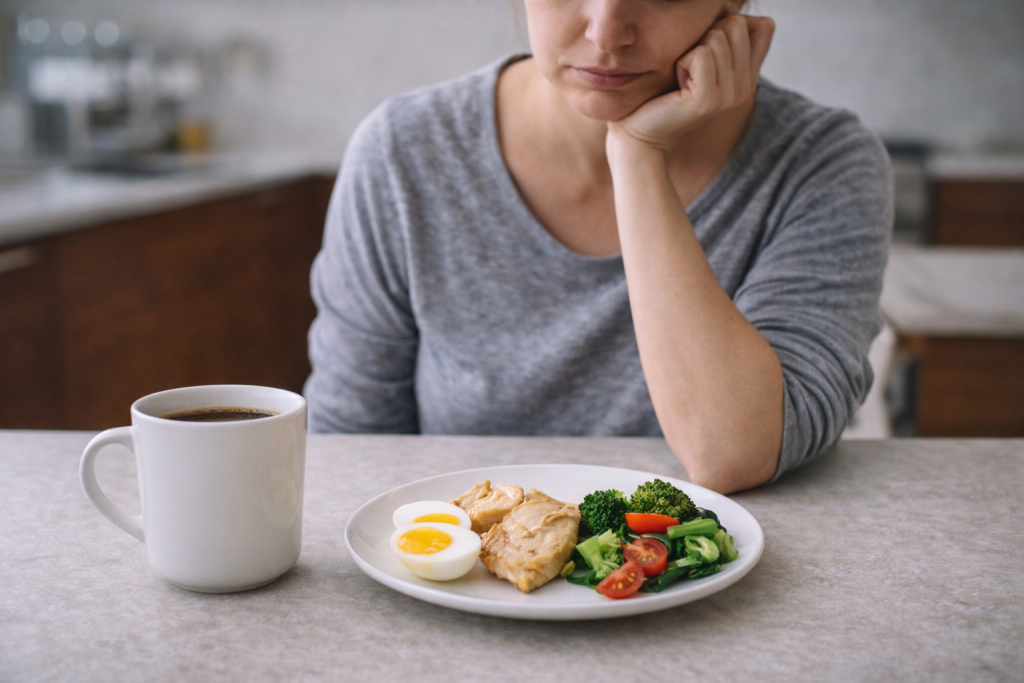
Have you noticed that your morning cup of coffee, once the highlight of your day, now tastes metallic or overly bitter? Or perhaps the thought of a juicy steak something you used to love now makes you feel slightly uneasy?
If you are on GLP-1 therapy, you aren’t imagining things. This phenomenon is known as “sensory-specific satiety” and texture aversion. It’s a fascinating, albeit sometimes frustrating, part of how your body’s chemistry is being rewritten for the better.

The Brain-Gut Rewiring

GLP-1 is a hormone that talks directly to the “reward center” of your brain (the mesolimbic system). This is the area responsible for cravings and the “pleasure” we get from high-fat or high-sugar foods. When you increase your GLP-1 levels, the brain’s dopamine response to certain foods changes. Essentially, the “volume” on food cravings is turned down.

Because your brain is no longer seeking a “hit” from food, your taste buds become more sensitive. Subtle bitterness or heavy textures that you used to ignore become much more apparent. This is why many people on this journey find themselves gravitating toward “cleaner,” simpler flavors.

Practical Strategies for Sensory Shifts

If you are struggling with taste changes or aversions, use these tactics to stay nourished:

  • Modify Temperatures: Aversions are often linked to the strong aromas of hot food. If a steaming dinner feels overwhelming, try “cold plates.” Chilled chicken salad, Greek yogurt bowls, or cold grain salads are often much better tolerated.
  • The “Neutral” Pivot: If bold flavors are off the table, stick to a “beige but healthy” palette for a few days. Foods like oats, cottage cheese, bananas, and sourdough bread provide nutrition without overwhelming the senses.
  • Hydration Hacks: Many find that plain water starts to taste “different.” Try infusing your water with mint, cucumber, or frozen berries. The subtle change can override the metallic taste some experience.
  • Check Your Zinc Levels: Sometimes, a persistent metallic taste can be linked to mineral shifts. Ensure you’re eating zinc-rich foods like pumpkin seeds or chickpeas, or speak to a coach about a multivitamin.

Tip: Don’t panic if you lose your “joy” for food temporarily. Think of this as a biological “reset button.” You are moving away from emotional eating and toward intuitive, functional nutrition.

#BeTheForce

Disclaimer: GOQii is committed to providing accurate, up-to-date, and comprehensive health information. This article is intended for informational purposes only and should not be used as a substitute for professional medical advice, diagnosis, or treatment. Always consult a qualified healthcare professional before starting or changing any medication. Individual responses to treatment may vary.

May 7, 2025 By GOQii Leave a Comment

Goodbye Sugar, Hello Health: A Real-Food Approach to Managing Diabetes

Have you ever wondered if you could take control of your diabetes rather than letting it control you? What if the secret wasn’t buried deep on a pharmacy shelf, but already sitting on your plate?
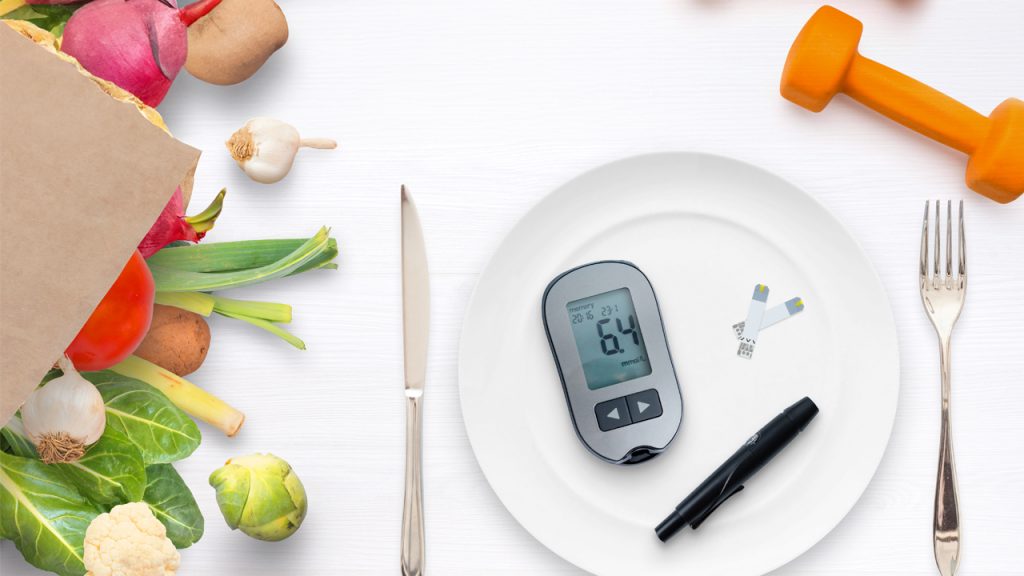
Welcome to the world of DIP (Diabetes Improvement Programme) Nutrition – a low-carb, real-food philosophy that’s helping people across the globe rewrite their diabetes story.

The Sugar Trap: Why We’ve Been Getting It Wrong

For years, conventional advice has often pointed those with type 2 diabetes towards a low-fat, high-carb diet—ironically the very combination that spikes blood sugar. We’ve been told to count calories, watch portions, and rely heavily on medication.

But here’s the uncomfortable truth: more carbs mean more glucose, and more glucose means more insulin… and the cycle continues.

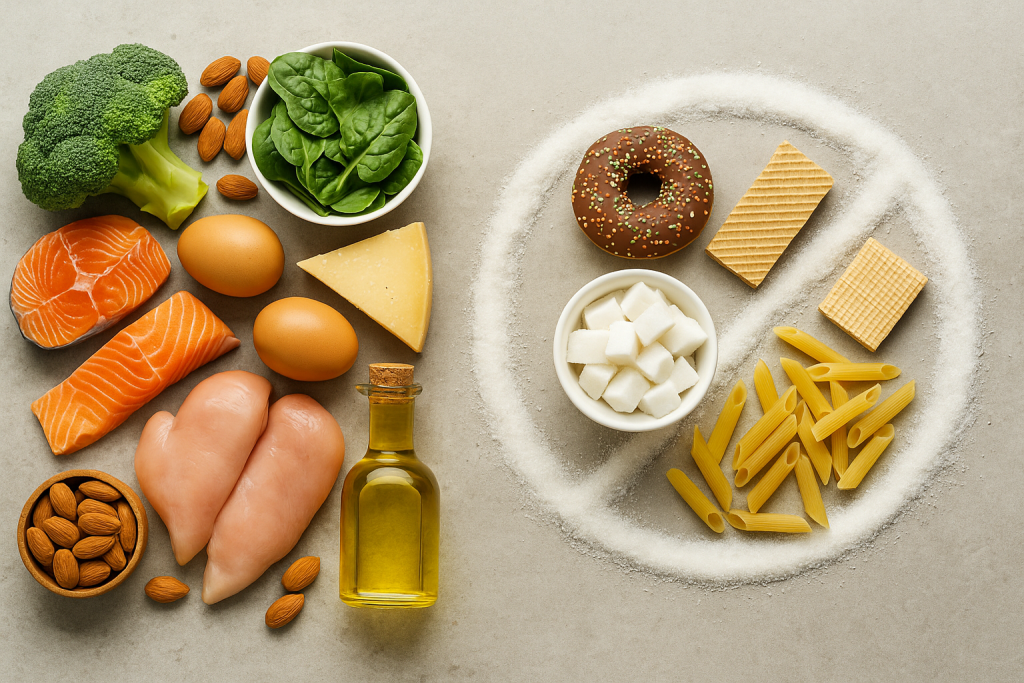
The DIP approach flips the script. It starts with one simple but powerful change: ditching sugar and refined starches. Think white bread, rice, pasta, sweets, sugary drinks – the usual suspects. Cutting these out helps reduce the constant glucose overload and gives the body the breathing space it needs to heal.

Low-Carb, Real-Food: What’s on the Menu?

This isn’t about deprivation or fad diets. It’s about getting back to basics. Real food – the kind your great-grandparents would recognise.

Think:

  • Above-ground vegetables
  • Healthy fats like nuts, seeds, and olive oil
  • Good-quality protein
  • And yes, even eggs and cheese

The DIP philosophy is rooted in nutrient-dense, whole food that nourishes rather than spikes.

The result? Lower blood sugar levels, improved insulin sensitivity, weight loss, better energy, and most importantly — hope.

Real Stories, Real Change

Across communities, people who follow the DIP way report feeling more in control than ever before. They’re reducing medications (under medical supervision), shedding stubborn weight, and finally breaking free from constant cravings and crashes.

It’s not magic. It’s metabolic science meets mindful eating.

Is This the Beginning of Your New Chapter?

If you’ve felt frustrated with traditional approaches…
If you’re tired of chasing highs and crashing lows…

Maybe it’s time for a fresh start.

“Goodbye sugar, hello health” isn’t just a catchy phrase – it’s a powerful reality waiting to unfold.

Let your first step be this: rethink what’s on your plate. Your body will thank you.

#BeTheForce

Disclaimer: The information provided in this blog is for general awareness and educational purposes only. It is not intended to replace professional medical advice, diagnosis, or treatment. Always consult a qualified healthcare provider for personalised medical guidance or concerns related to your health.

April 5, 2025 By GOQii Leave a Comment

Reversing Type 2 Diabetes Through a Low-Carbohydrate Lifestyle

Type 2 diabetes is often seen as a lifelong condition, but research and real-world experience show that it can be managed—and even reversed—with the right dietary approach. One of the most effective strategies is adopting a low-carbohydrate lifestyle, which not only helps regulate blood sugar levels but also improves insulin sensitivity.


Unlike traditional high-carb diets that lead to frequent glucose spikes, a low-carb approach stabilises energy levels, reduces cravings, and supports long-term health. If you’re looking for a sustainable way to take control of your diabetes, reducing your carbohydrate intake might be the key.

Why Reduce Carbohydrates?

Carbohydrates break down into glucose in the bloodstream. For individuals with type 2 diabetes, the pancreas struggles to produce enough insulin to move glucose into cells for energy. This results in persistently high blood sugar levels, which can eventually lead to complications such as nerve damage, kidney issues, and cardiovascular disease.

By reducing carbohydrate intake to 60–130g per day, you prevent large spikes in blood glucose after meals, easing the pressure on your pancreas. Over time, this can allow your pancreatic beta cells to recover and improve insulin sensitivity, helping your body regulate blood sugar more effectively.

The Ideal Process:

  1. Carb-controlled meals → lower glucose load
  2. Less strain on pancreas → beta cells recover
  3. Improved insulin sensitivity → glucose absorbed into cells
  4. Stable, healthy blood sugar levels

Which Carbohydrates to Avoid?

Starchy foods are typically high in carbohydrates and should be limited:

  • Bread (white, whole grain, multigrain)
  • Pasta
  • Rice (white, brown, basmati)
  • Potatoes (including sweet potatoes)
  • Grains (wheat, oats, barley, corn, quinoa)

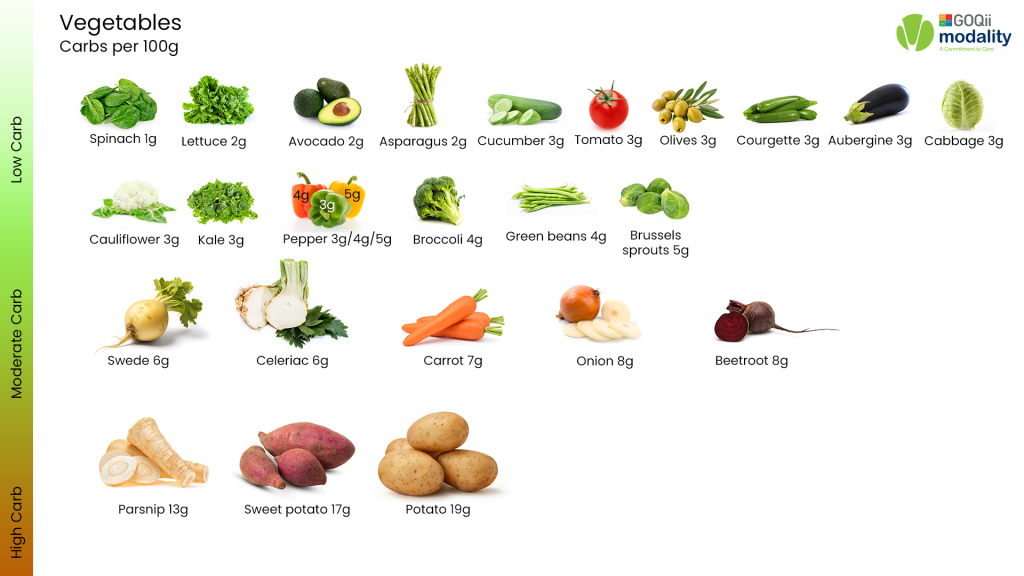
The general rule: vegetables that grow underground (e.g., potatoes, carrots) contain more carbs than those that grow above ground.

Best Low-Carb Vegetables (per 100g)

Leafy Greens
Lettuce (2g), Spinach (1g), Arugula (1.6g), Kale (3g), Swiss Chard (1.8g)

Cruciferous Vegetables
Broccoli (4g), Cauliflower (3g), Brussels Sprouts (5.1g), Cabbage (3g)

Other Non-Starchy Vegetables
Asparagus (2g), Courgette (3g), Aubergine (3g), Tomatoes (3g),
Mushrooms (3.3g), Bell Peppers (4.6g), Onions (8g), Garlic (33.1g),
Radishes (3.4g), Cucumbers (3g), Celery (3g), Green Beans (4g), Artichokes (10.5g)

Focus on nutrient-dense, high-fibre, low-carb vegetables to meet your nutritional needs while keeping carbohydrate intake low.

What Are Net Carbs?

You may come across the term “net carbs,” which refers to the total carbs minus fibre and sugar alcohols—the carbs that actually raise blood sugar.

Net Carbs = Total Carbs – Fibre – Sugar Alcohols

While this can offer a more accurate reflection of how food impacts blood glucose, we recommend focusing on total carbohydrate intake for now, as calculating net carbs can be confusing in the early stages.

Protein: An Essential Nutrient

Protein supports muscle maintenance, satiety, and metabolism. On a low-carb diet, protein should be moderate, not excessive.

Target: 1.5–2.0g per kg of body weight per day

Portion Guide:

  • Women: ~85g cooked meat/tofu, 1 cup Greek yoghurt/cottage cheese, 2 whole eggs
  • Men: ~115g cooked meat/tofu, 1 cup Greek yoghurt/cottage cheese, 2 whole eggs

Low-Carb Dairy Options

Milk (per 240 ml / 1cup):

  • Whole or Semi-Skimmed: 12g carbs
  • Unsweetened Almond Milk: 1g carbs

Cheese (30g / 1oz):

  • Cheddar: 0.4g, Brie: 0.1g, Feta: 0.8g, Cream Cheese: 0.8g

Yoghurt (170g / 6oz):

  • Full-Fat Greek: 5g, Low-Fat Greek: 7g

Cream (30ml/ 1fl oz):

  • Double Cream: 0.6g, Single Cream: 0.7g

Butter (14g / 1 tbsp):

  • Salted/Unsalted: 0.1g

Avoid flavoured yoghurts and sweetened milk which can have hidden sugars.

Alcohol on a Low-Carb Diet

You can enjoy alcohol occasionally by choosing low-carb options:

Wines (per 5oz glass):

  • Dry White (e.g., Sauvignon Blanc, Pinot Grigio): 2–4g carbs
  • Dry Red (e.g., Merlot): 2–4g carbs

Beers (per 12oz):

  • Bud Light: 4.6g, Michelob Ultra: 2.6g, Beck’s Premier Light: 3.9g, Brewdog Pale Ale: 7 g

Spirits (per 1oz):

  • Gin, Vodka, Rum, Tequila, Whisky: 0g (when consumed neat)
  • Add low-carb mixers like soda water, diet tonic, diet ginger ale

Low-Carb Cocktails:

  • Vodka Soda with lime, Gin & Diet Tonic, Whisky Ginger with diet ginger ale, Rum & Diet Coke

❗ Note: Avoid beer and cider unless opting for very light versions. Also, steer clear of sugary mixers, juices, and syrups which can add a substantial carb load to your drink.

Don’t Forget to Keep a Food Diary

Tracking what you eat helps in:

  1. Increasing awareness and mindfulness
  2. Identifying hidden sugars and carbs
  3. Tracking progress over time
  4. Identifying behavioural patterns
  5. Ensuring accountability and better food choices

You can use your phone, an app, or even a journal to keep track. Share it with your nutritionist or coach to get tailored guidance.

A low-carbohydrate lifestyle, when well-planned, can help reverse type 2 diabetes by addressing the root causes—excessive glucose and insulin resistance.

By:
✔ Lowering carbs to 60–130g per day
✔ Prioritising non-starchy vegetables and whole foods
✔ Including moderate protein and healthy fats
✔ Avoiding sugary, starchy, and processed foods
✔ Tracking food intake and blood sugar

…you can achieve stable glucose levels, improved insulin sensitivity, and potentially reduce or eliminate medication.

It’s not about perfection—it’s about consistency and sustainability. And remember: you’re not alone on this journey.

💬 Have you tried a low-carb approach to manage your diabetes or weight? Share your experience in the comments below!

#BeTheForce

  • 1
  • 2
  • Next Page »

Search

Recent Posts

  • The Recovery Gap: Sleep Debt, Overwork and Silent Burnout Are Ageing You Faster
  • Sleep Well, Live Better: Lifestyle Habits That Improve Sleep Quality
  • Our Kidneys, Our Planet: How Environmental Health Impacts Your Body
  • Caution: Smoking is Injurious to health!!
  • The Sleep-Metabolism Connection: Why Rest is Your Best GLP-1 Partner

Stay Updated

Archives

  • March 2026 (7)
  • February 2026 (14)
  • January 2026 (14)
  • December 2025 (19)
  • November 2025 (15)
  • October 2025 (20)
  • September 2025 (6)
  • August 2025 (6)
  • July 2025 (12)
  • June 2025 (18)
  • May 2025 (16)
  • April 2025 (22)
  • March 2025 (23)
  • February 2025 (22)
  • January 2025 (25)
  • December 2024 (22)
  • November 2024 (23)
  • October 2024 (21)
  • September 2024 (24)
  • August 2024 (30)
  • July 2024 (21)
  • June 2024 (26)
  • May 2024 (31)
  • April 2024 (27)
  • March 2024 (28)
  • February 2024 (25)
  • January 2024 (21)
  • December 2023 (15)
  • November 2023 (11)
  • October 2023 (19)
  • September 2023 (22)
  • August 2023 (18)
  • July 2023 (22)
  • June 2023 (24)
  • May 2023 (24)
  • April 2023 (23)
  • March 2023 (23)
  • February 2023 (19)
  • January 2023 (15)
  • December 2022 (11)
  • November 2022 (15)
  • October 2022 (15)
  • September 2022 (12)
  • August 2022 (10)
  • July 2022 (17)
  • June 2022 (11)
  • May 2022 (10)
  • April 2022 (6)
  • March 2022 (6)
  • February 2022 (13)
  • January 2022 (11)
  • December 2021 (7)
  • November 2021 (3)
  • October 2021 (6)
  • September 2021 (3)
  • August 2021 (8)
  • July 2021 (7)
  • June 2021 (15)
  • May 2021 (16)
  • April 2021 (10)
  • March 2021 (7)
  • February 2021 (4)
  • January 2021 (4)
  • December 2020 (3)
  • November 2020 (4)
  • October 2020 (10)
  • September 2020 (3)
  • August 2020 (3)
  • July 2020 (2)
  • June 2020 (4)
  • May 2020 (10)
  • April 2020 (12)
  • March 2020 (10)
  • February 2020 (4)
  • January 2020 (4)
  • December 2019 (3)
  • November 2019 (7)
  • October 2019 (5)
  • September 2019 (4)
  • August 2019 (9)
  • July 2019 (9)
  • June 2019 (11)
  • May 2019 (4)
  • April 2019 (8)
  • March 2019 (8)
  • February 2019 (9)
  • January 2019 (8)
  • December 2018 (9)
  • November 2018 (3)
  • October 2018 (3)
  • September 2018 (5)
  • August 2018 (10)
  • July 2018 (6)
  • June 2018 (13)
  • May 2018 (8)
  • April 2018 (18)
  • March 2018 (9)
  • February 2018 (8)
  • January 2018 (15)
  • December 2017 (12)
  • November 2017 (19)
  • October 2017 (13)
  • September 2017 (15)
  • August 2017 (4)
  • July 2017 (8)
  • June 2017 (7)
  • May 2017 (6)
  • April 2017 (8)
  • March 2017 (6)
  • February 2017 (7)
  • January 2017 (9)
  • December 2016 (10)
  • November 2016 (7)
  • October 2016 (7)
  • September 2016 (7)
  • August 2016 (11)
  • July 2016 (9)
  • June 2016 (9)
  • May 2016 (12)
  • April 2016 (17)
  • March 2016 (17)
  • February 2016 (8)
  • January 2016 (6)
  • December 2015 (2)
  • November 2015 (9)
  • October 2015 (7)
  • September 2015 (9)
  • August 2015 (11)
  • July 2015 (9)
  • June 2015 (12)
  • May 2015 (9)
  • April 2015 (13)
  • March 2015 (8)
  • February 2015 (5)
  • January 2015 (12)
  • December 2014 (14)
  • November 2014 (11)
  • October 2014 (6)
  • September 2014 (13)
  • August 2014 (12)
  • July 2014 (6)
  • June 2014 (2)
  • May 2014 (7)
  • April 2014 (4)

From “Laddu Nawin” to Fit and Fierce: How a 25-Year-Old Insurance Advisor Shed 20 Kilos and Gained His Life Back

When 25-year-old Nawin Yadav from Hyderabad walked into his office every morning, he carried more than just his files and policy papers. He had the weight of fatigue, sluggish energy, and an ever-growing belly that was becoming the butt of jokes. “People … [Read More...]

“I’ve Challenged Myself to Live 100 Years” – The Story of Chandubhai Savani’s Second Chance at Life

At 67, most people start slowing down. Not Chandubhai Savani. A resident of Surat, Chandubhai, thought life was on track. “My life was going well till I had my bypass surgery,” he says. That surgery, back in 2021, was a wake-up call.  Medication was routine, but exercise wasn’t. His diet? What he calls ‘normal.’ “I […]

From Shimla’s Slopes to Chandigarh’s Sidewalks: Surinder Kaur Bhalla’s Journey from Chaos to Control

Some journeys start with a plan. Others begin with a stumble literally. Surinder Bhalla, a government professional, born and raised in the scenic hill town of Shimla, had always lived a life of movement. “In Shimla, you walked everywhere,” she reflects. “Walking was never an exercise. It was just life.” But after shifting to Chandigarh, […]

Ananda Mukherjee Health Story

From Terminal Illness To Complete Wellness! Ananda Mukherjee Health Story

As we observe World Cancer Day under the powerful theme ‘United by Unique’ (2025-2027)**, we are reminded that every individual’s journey with cancer is distinct, yet united by shared resilience, hope, and the collective fight against this disease. This theme places people at the centre of care and their stories at the heart of the […]

  • HOME
  • HEALTHY LIVING
  • FITNESS
  • HEALTHY RECIPES
  • USER STORIES
  • KARMA
  • BUY GOQii

Copyright ©2016 GOQii

