
GOQii

Blog

  • HOME
  • HEALTHY LIVING
  • FITNESS
  • HEALTHY RECIPES
  • USER STORIES
  • KARMA
  • BUY GOQii

March 27, 2025 By GOQii Leave a Comment

Type 1 vs Type 2 Diabetes: What’s the Real Difference?

Have you ever wondered if there’s a real difference between Type 1 and Type 2 diabetes? Maybe you’ve heard the terms tossed around but never really got the full picture. You’re not alone! Diabetes is often misunderstood, but knowing the difference between the two types could be a game-changer—for yourself or someone you care about.

So, let’s break it down in a simple, no-jargon way—because understanding your health shouldn’t feel like solving a puzzle.

What Exactly Is Diabetes?

Imagine this: your body runs on glucose (sugar) for energy, like a car runs on fuel. To get that fuel into your cells, your body uses a key—insulin—produced by your pancreas. But when that key either doesn’t exist or doesn’t work properly, glucose stays in your bloodstream, causing blood sugar to rise. That’s diabetes in a nutshell.

Let’s Meet Type 1 Diabetes: Autoimmune & Unexpected

Think of Type 1 as your immune system going rogue—mistaking your healthy insulin-producing cells for enemies and attacking them. As a result, your body stops making insulin altogether.

Who Gets It?

It often shows up in children or young adults, but it can surprise anyone at any age. It’s not caused by lifestyle, and you can’t prevent it.

Signs to Look For:

⚡ Constant thirst
⚡ Frequent urination
⚡ Sudden weight loss
⚡ Fatigue
⚡ Blurred vision

Treatment?

Insulin for life—via injections or a pump. And with proper care, people with Type 1 diabetes can live full, vibrant lives.

Type 2 Diabetes: The Lifestyle-Linked One

Now, Type 2 is more like your cells ignoring the key. Your body still makes insulin, but your cells don’t respond properly—a condition called insulin resistance.

Who’s at Risk?

Mostly adults over 40, but it’s becoming common in younger people due to poor diet, lack of exercise, and weight gain.

What You Might Notice:

⚠️ Tiredness
⚠️ Slow-healing cuts
⚠️ Tingling in hands/feet
⚠️ Frequent infections
⚠️ Subtle weight gain

Treatment?

  • Lifestyle changes: diet + exercise
  • Medication (e.g., Metformin)
  • Insulin (in later stages for some)

Here’s the good news: Type 2 is often preventable and reversible with the right lifestyle tweaks.

Quick Comparison: Type 1 vs Type 2

Feature

Type 1 Diabetes

Type 2 Diabetes

Cause

Autoimmune destruction

Insulin resistance

Onset Age

Usually younger people

Usually 40+, but now younger

Insulin Production

None

Reduced/ineffective

Treatment

Insulin only

Lifestyle, meds ± insulin

Preventable?

No

Often, yes

Onset Speed

Sudden

Gradual

Can You Prevent or Reverse Type 2 Diabetes?

Absolutely.
Here’s how you can stay ahead:

  • Eat balanced, whole foods
  • Stay active—150 minutes a week does wonders
  • Maintain a healthy weight
  • Sleep well, stress less
  • Get regular health check-ups

Remember: small steps today can lead to big wins tomorrow.

Understanding the difference between Type 1 and Type 2 diabetes helps you make better choices and support others on their health journey. Whether you’re managing the condition or simply staying informed, awareness is your superpower.

💬 Have tips or a personal experience with diabetes? Share it in the comments—we’d love to hear from you!

#BeTheForce

Disclaimer: The information provided in this blog is for general awareness and educational purposes only. It is not intended to replace professional medical advice, diagnosis, or treatment. Always consult a qualified healthcare provider for personalised medical guidance or concerns related to your health.
August 20, 2024 By Rashmi Deshpande 8 Comments

5 Hormones That Have a Big Impact on Your Health

hormones that affect healthEver experienced a sudden mood swing? Or, have you been dealing with a lot of fatigue or sleepless nights? Your body undergoes many changes from birth to adolescence and into adulthood. Most of these changes, both physical and mental, are regulated by the hormones present in our body.
Hormones are the chemical messengers of our body. They travel through our bloodstream and hold the key to optimum health. In essence, they affect metabolism, sexual function, reproduction, growth and development and even our mood.

A better understanding of the hormones that influence our well-being and how to activate them will help us live better and healthier lives.

Let’s take a closer look!

1. Thyroid Stimulating Hormone (TSH)

We are quite familiar with this hormone nowadays! It is a pituitary hormone that stimulates the thyroid gland to produce thyroxine T4 and triiodothyronine T3, which stimulate the metabolism of almost every tissue in our body.

Abnormalities in this hormone can manifest as sudden weight gain, weight loss, dry skin, mood swings, severe sensitivity to cold or heat, depression with weak metabolism, and even an enlarged gland in the form of goiter.

The abnormalities in this hormone can be effectively managed with lifestyle modification, medication, yoga, exercises, and regular checkups of hormone. It has mainly two types: Hypo & Hyper. The Normal range is:

  • TSH: 0.5 – 4.15 mU/L
  • T4: 6 – 12 ug/dL
  • T3: 240 – 280 ug/dL

2. Insulin

“Hey! I am on insulin!”

At some point, we have all heard this from a diabetic person. Insulin is released by the pancreas, a leaf-like gland situated in the abdominal cavity behind the stomach. It regulates the body’s glucose or sugar levels, which are derived from carbohydrates.

It also allows the body to store and utilize glucose for energy. When insulin is released into the bloodstream, it can cause either hyper or hypo glycemia.

Abnormalities in insulin levels can lead to weight gain or weight loss, frequent urination, constant hunger, fatigue, wounds taking longer to heal, etc. These changes are due to insulin either not being produced in sufficient quantity or not functioning properly.

The most effective treatment include lifestyle modifications, healthy eating habits, staying active, managing stress and medication. The referred range is:

  • Random blood glucose: 70 – 100 mg/dl
  • Fasting: 70 – 110 mg/dl
  • After meals: <140 mg/dl

3. Cortisol (Stress Hormone)

There’s a fair chance that every second person you meet might be stressed! The stress hormone, called Cortisol, is produced by the adrenal gland. It helps us stay healthy and energetic. Its main role is to control physical and psychological stress.

Excess secretion of cortisol causes a number of side effects such as increased heart rate, blood pressure, respiration, sweating, and shivering. At stressful times, the body secretes cortisol to help cope with the situation. High level of cortisol consistently can lead to ulcers, high blood pressure, anxiety, high levels of cholesterol, etc.

Similarly, low levels of cortisol in the body causes weakness, fatigue and low blood pressure. This can be managed by sharing your feelings, meditating, pursuing hobbies, listening to music, spending time with  family, going on vacations, prayers, and, if necessary, psychiatric treatment with medication.

4. Sex Hormones

This hormone are categorized into male and female hormones:

  • Testosterone: This is the primary male sex hormone. An anabolic steroid by nature, it helps in building body muscles. In males, it plays an important role in the development of male reproductive tissues like the testes and prostate. It also promotes secondary sexual characteristics like increased  muscle and bone mass, body hair growth, etc. If testosterone secretion is insufficient in men, then it may lead to abnormalities, including frailty and bone loss. This can be treated with medication.
  • Progesterone: This hormone is produced in the ovaries, the placenta and the adrenal glands when a woman gets pregnant. It stimulates and regulates various functions. Progesterone plays an important role in maintaining pregnancy by helping the body prepare for conception, pregnancy and regulating the monthly cycle. When pregnancy doesn’t occur, progesterone levels drop, and menstrual cycle occurs. It also plays a role in sexual desire. Any abnormalities can be treated with home remedies and medication.

5. Serotonin

We all need this happy hormone during stressful days! It is associated with learning and memory, sleep regulation, digestion, mood regulation, some muscular functions, etc. An imbalance in this hormone may affect the brain’s ability to control stress levels and mood effectively.

Low level of serotonin can lead to depression, migraines, weight gain, insomnia, carbohydrate cravings, etc. Excess levels of serotonin in the body causes agitation, stage of confusion, sedation, etc.

After learning about the 5 hormones which are essential for good health, it is clear that the key to keeping them in balance is healthy eating, an active lifestyle, and good rest with meditation. Make sure to check with your doctor for any imbalances or irregularities in your hormones and take the necessary actions as suggested by your doctor. For further information or guidance, reach out to our certified experts by subscribing to GOQii’s Personalised Health Coaching here.

Do share your thoughts and queries in the comments below!

Be balanced! Be happy! #BeTheForce!  

November 13, 2017 By Dr Akshat Chadha Leave a Comment

Diabetes – (Die-in-bits OR NOT)

So I started writing this blog almost a year back and could not complete it in this one year because I felt everybody knows everything about diabetes and what was the point of repeating the same things over and over again. Then, I realized, that this World Diabetes Day instead of the same diabetes facts, what we really need is a real patient case and scenarios to make everybody understand how intense and life-threatening, diabetes as a disease can be.

I remember long back we had a worried parent of a 6year old come into our clinic saying that his son’s urine had ants in it. After taking a proper history we realized that it was not ants in his urine but sugar in the kid’s urine left on the commode which was attracting the ants. Few blood tests later the child was diagnosed with Juvenile Diabetes. That’s Type 1 diabetes, the type which is most commonly seen in the younger kids. Basically, the pancreas barely produces any insulin in these kids which leads to sugar flowing through the blood and causing diabetes.

Diabetes is a group of metabolic disorders in which the person has high blood glucose (blood sugar), either because insulin production is inadequate, or because the body’s cells do not respond properly to insulin or both.

Causes can range from autoimmune destruction, heredity or positive family history, insulin resistance to various infections like pancreatitis. But, the main cause or the root cause of Diabetes especially type 2 which affects mostly the adult population has to be a poor lifestyle.

Diabetes-like we all know can easily go unnoticed, even when a patient has already been diagnosed. Because of this, unfortunately, many don’t pay attention to the possible terrible problems that can happen if your diabetes is not under control.

I remember a case at the beginning of my career, a 40year old man having diabetes for more than 10 years came to our clinic with a complain that he had wound on his foot which was not healing. He knew his sugars were high but still wasn’t taking care. We started him off on the required medicines and within 10 days of better sugars, the wound had healed. He had no memory of how he had hurt himself. After 4months the same patient came back with an even bigger wound but unfortunately this time it had spread so much that his foot could not be saved and had to be amputated.

Does it make sense being so careless with your health and losing your foot just because your sugars are not controlled?

diabetes 1

Let’s discuss the complications of uncontrolled diabetes which can affect almost every organ of your body. Most commonly Diabetes affects your heart, kidneys, eyes, feet and your nerves (neuropathy) at varying degrees. Apart from these, diabetics have a higher risk of infections and dental problems. It is difficult to say what gets affected first but easier to remember that if your blood sugars are not under control, you have set yourself on the path to trouble.

diabetes image 3

During my internship, I got a call from a friend that his dad had a heart attack and they were shifting him to the same hospital where I was working. Fortunately, that month I was posted in the ICU itself so I was happy that I was going to be able to monitor his dad. Just on the opposite bed, there was another man of the same age who had suffered a heart attack the morning before. Almost two weeks later, my friend’s dad was still in the ICU whereas the other man was on his way to get discharged. Another 2 weeks went by but unfortunately, we didn’t see much signs of improvement and eventually we lost him in the next few days. The only big difference between the two patients was that my friend’s dad had uncontrolled diabetes!!

Diabetes dramatically increases the risk of various cardiovascular problems, including coronary artery disease with chest pain (angina), heart attack, stroke and narrowing of arteries (atherosclerosis). If you have diabetes, you are more likely to have heart disease or stroke.

Your body and your health need a lot of care, attention and need to be your first priority not only at the time when you are sick but more when you are well. The point of this blog is not to scare you but to make you aware, and part of that awareness is knowing how to be able to help yourself. Follow the below tips and start your healthy journey today!

diabetes image 4

Tips to prevent or live well with diabetes

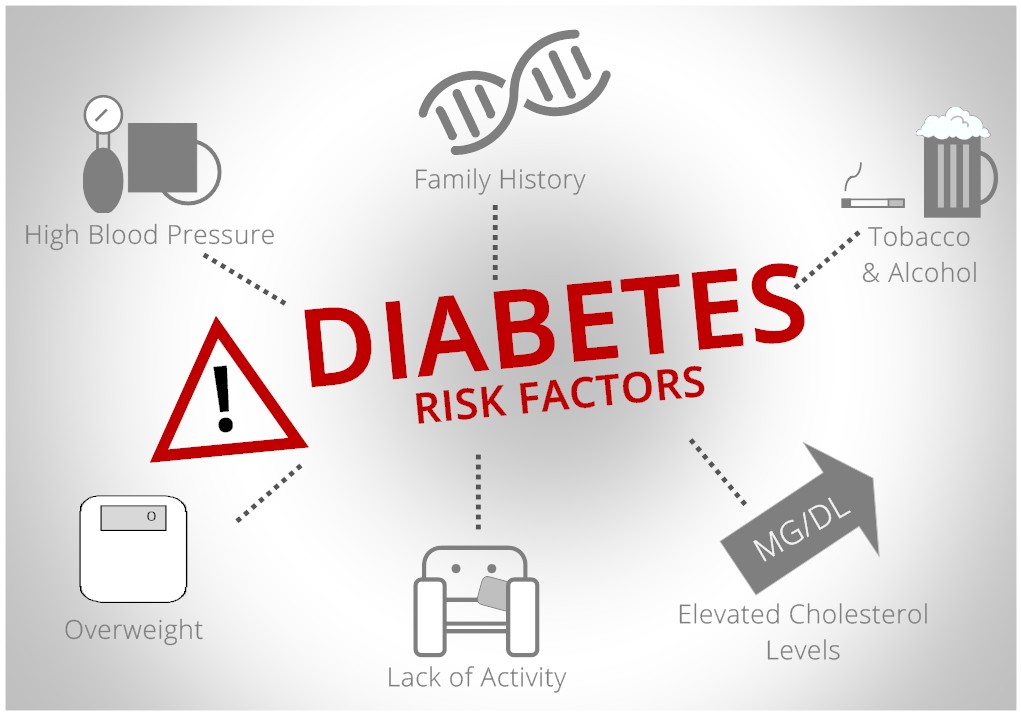
  • Maintain a healthy weight and look out for belly fat
  • Make healthy food choices
  • Be physically active (gradually increase everyday steps and try and reach the 10,000 target)
  • Monitor your sugar levels regularly and keep a check on your blood pressure
  • Get your full body tests done once a year
  • Sleep well and work to manage daily stress
  • Quit smoking
  • If on medications, make sure you take them regularly

Search

Recent Posts

  • Best Foods To Alleviate Irritable Bowel Syndrome
  • ALL ABOUT VERTIGO!
  • PCOS and Anxiety: Discover Relief with the 54321 Technique
  • Navigating the Maze of Nutrition: Finding Clarity Amidst Confusion
  • Get children active and keep them healthy

Stay Updated

Archives

  • December 2025 (6)
  • November 2025 (15)
  • October 2025 (20)
  • September 2025 (6)
  • August 2025 (6)
  • July 2025 (12)
  • June 2025 (18)
  • May 2025 (16)
  • April 2025 (23)
  • March 2025 (23)
  • February 2025 (22)
  • January 2025 (26)
  • December 2024 (26)
  • November 2024 (25)
  • October 2024 (22)
  • September 2024 (24)
  • August 2024 (31)
  • July 2024 (21)
  • June 2024 (26)
  • May 2024 (31)
  • April 2024 (27)
  • March 2024 (29)
  • February 2024 (26)
  • January 2024 (25)
  • December 2023 (15)
  • November 2023 (11)
  • October 2023 (20)
  • September 2023 (22)
  • August 2023 (20)
  • July 2023 (22)
  • June 2023 (24)
  • May 2023 (24)
  • April 2023 (24)
  • March 2023 (23)
  • February 2023 (20)
  • January 2023 (16)
  • December 2022 (12)
  • November 2022 (15)
  • October 2022 (15)
  • September 2022 (12)
  • August 2022 (10)
  • July 2022 (17)
  • June 2022 (11)
  • May 2022 (10)
  • April 2022 (6)
  • March 2022 (6)
  • February 2022 (13)
  • January 2022 (12)
  • December 2021 (7)
  • November 2021 (3)
  • October 2021 (6)
  • September 2021 (3)
  • August 2021 (8)
  • July 2021 (7)
  • June 2021 (15)
  • May 2021 (16)
  • April 2021 (10)
  • March 2021 (7)
  • February 2021 (4)
  • January 2021 (4)
  • December 2020 (3)
  • November 2020 (4)
  • October 2020 (10)
  • September 2020 (3)
  • August 2020 (3)
  • July 2020 (2)
  • June 2020 (4)
  • May 2020 (10)
  • April 2020 (12)
  • March 2020 (10)
  • February 2020 (4)
  • January 2020 (4)
  • December 2019 (3)
  • November 2019 (7)
  • October 2019 (5)
  • September 2019 (4)
  • August 2019 (9)
  • July 2019 (9)
  • June 2019 (11)
  • May 2019 (4)
  • April 2019 (9)
  • March 2019 (8)
  • February 2019 (9)
  • January 2019 (8)
  • December 2018 (9)
  • November 2018 (3)
  • October 2018 (3)
  • September 2018 (5)
  • August 2018 (10)
  • July 2018 (6)
  • June 2018 (13)
  • May 2018 (8)
  • April 2018 (18)
  • March 2018 (9)
  • February 2018 (8)
  • January 2018 (15)
  • December 2017 (12)
  • November 2017 (19)
  • October 2017 (13)
  • September 2017 (15)
  • August 2017 (4)
  • July 2017 (8)
  • June 2017 (7)
  • May 2017 (6)
  • April 2017 (8)
  • March 2017 (6)
  • February 2017 (7)
  • January 2017 (9)
  • December 2016 (10)
  • November 2016 (7)
  • October 2016 (7)
  • September 2016 (7)
  • August 2016 (11)
  • July 2016 (9)
  • June 2016 (9)
  • May 2016 (12)
  • April 2016 (17)
  • March 2016 (17)
  • February 2016 (8)
  • January 2016 (6)
  • December 2015 (2)
  • November 2015 (9)
  • October 2015 (7)
  • September 2015 (9)
  • August 2015 (11)
  • July 2015 (9)
  • June 2015 (12)
  • May 2015 (9)
  • April 2015 (13)
  • March 2015 (8)
  • February 2015 (5)
  • January 2015 (12)
  • December 2014 (14)
  • November 2014 (11)
  • October 2014 (6)
  • September 2014 (13)
  • August 2014 (12)
  • July 2014 (6)
  • June 2014 (2)
  • May 2014 (7)
  • April 2014 (5)

From “Laddu Nawin” to Fit and Fierce: How a 25-Year-Old Insurance Advisor Shed 20 Kilos and Gained His Life Back

When 25-year-old Nawin Yadav from Hyderabad walked into his office every morning, he carried more than just his files and policy papers. He had the weight of fatigue, sluggish energy, and an ever-growing belly that was becoming the butt of jokes. “People … [Read More...]

“I’ve Challenged Myself to Live 100 Years” – The Story of Chandubhai Savani’s Second Chance at Life

At 67, most people start slowing down. Not Chandubhai Savani. A resident of Surat, Chandubhai, thought life was on track. “My life was going well till I had my bypass surgery,” he says. That surgery, back in 2021, was a wake-up call.  Medication was routine, but exercise wasn’t. His diet? What he calls ‘normal.’ “I […]

From Shimla’s Slopes to Chandigarh’s Sidewalks: Surinder Kaur Bhalla’s Journey from Chaos to Control

Some journeys start with a plan. Others begin with a stumble literally. Surinder Bhalla, a government professional, born and raised in the scenic hill town of Shimla, had always lived a life of movement. “In Shimla, you walked everywhere,” she reflects. “Walking was never an exercise. It was just life.” But after shifting to Chandigarh, […]

Ananda Mukherjee Health Story

From Terminal Illness To Complete Wellness! Ananda Mukherjee Health Story

As we observe World Cancer Day under the powerful theme ‘United by Unique’ (2025-2027)**, we are reminded that every individual’s journey with cancer is distinct, yet united by shared resilience, hope, and the collective fight against this disease. This theme places people at the centre of care and their stories at the heart of the […]

  • HOME
  • HEALTHY LIVING
  • FITNESS
  • HEALTHY RECIPES
  • USER STORIES
  • KARMA
  • BUY GOQii

Copyright ©2016 GOQii



