GOQii

Blog

  • HOME
  • HEALTHY LIVING
  • FITNESS
  • HEALTHY RECIPES
  • USER STORIES
  • KARMA
  • BUY GOQii

November 14, 2025 By Pradnya Shinde Leave a Comment

The Hidden Link Between Diabetes and Mental Health – And How to Break the Cycle

A concerned woman holding a glucose meter with a high blood sugar reading, symbolising the connection between diabetes and mental health.This World Diabetes Day, the theme is “Diabetes across life stages,” with a special focus on “Diabetes and Well-being.” This highlights a crucial truth: managing diabetes isn’t just about blood sugar; it’s a lifelong mental and emotional journey.

Is the fear of diabetes complications weighing you down, leaving you anxious and uncertain about your health?

Living with diabetes can feel like a full-time job. The constant blood sugar checks, meal planning, and insulin management can be overwhelming. However, what often goes unnoticed is how much diabetes affects mental health. Did you know that people with diabetes are 50% more likely to experience depression than those without it? And the connection works both ways, depression can also increase the risk of developing diabetes.

So, what’s the link? And more importantly, what can you do about it?

How Diabetes Affects Your Brain

High blood sugar doesn’t just impact your body, it affects your brain too. The hippocampus, which controls memory and emotions, is particularly vulnerable. Over time, elevated blood sugar levels can shrink brain cells, making it harder to focus, think clearly, or remember things.

But that’s not all. It can also trigger mood swings, anxiety, and even lead to depression or dementia. If you’ve been feeling foggy, forgetful, or just “off,” your blood sugar levels might be playing a bigger role than you realise.

Can Depression Lead to Diabetes?

It’s not just diabetes affecting mental health—mental health can impact diabetes too. Depression makes it harder to stay active, eat well, or take care of yourself. This, in turn, can lead to weight gain and insulin resistance, increasing the risk of type 2 diabetes.

To make things even trickier, some antidepressants can cause weight gain, making it harder to manage blood sugar. It’s a vicious cycle—similar to the classic “chicken or egg” dilemma.

The Role of Stress in All of This

Stress is the common thread linking diabetes and depression. When you’re stressed, your body releases cortisol, the “fight or flight” hormone. While short bursts of cortisol are helpful, chronic stress can raise blood sugar levels and make your body less responsive to insulin.

This is why managing stress is just as important as managing your diet or exercise routine. The good news? There are proven ways to break the diabetes-stress cycle.

Stress Through the Life Stages

This “diabetes-stress cycle” can feel different depending on your stage of life.

  • In Childhood & Teens: The stress often comes from feeling different at school, managing blood sugar during exams, or navigating social events and peer pressure.
  • In Adulthood: The pressure shifts to the workplace. This includes discreetly checking blood sugar in meetings, worrying about a hypo-glycaemic episode during a presentation, or balancing a demanding career with self-care.
  • In Older Age: The anxiety might shift to a greater focus on managing complications or fears about the future.

The good news is that the same mind-body tools can help you take control, no matter your age or environment.

How to Take Control of Your Health (Both Physical & Mental)

The key is a mind-body approach—where you care for your mental well-being just as much as your physical health. Here are two effective strategies:

  1. Move More

Exercise is one of the best natural antidepressants out there. When you work out, your body releases endorphins, the “feel-good” chemicals that boost your mood and lower stress. Plus, exercise improves insulin sensitivity, helping your body use glucose more effectively.

Even 15-30 minutes of movement a day—like walking, dancing, or yoga—can make a huge difference in both diabetes management and mental well-being.

  1. Try Cognitive Behavioural Therapy (CBT)

CBT is a type of therapy that helps you reframe negative thoughts. Studies show that when combined with exercise, CBT is more effective than medication alone for improving mental health—and it has long-term benefits.

Here’s a simple CBT trick:

  • If you find yourself thinking, “I’ll never stick to this diet,” try shifting it to, “I might struggle, but I can take it one step at a time.”
  • Small shifts in mindset can reduce stress and help you stay on track.

CBT usually involves 6 to 18 sessions with a therapist, where you’ll set goals, learn healthy coping skills, and challenge unhelpful thinking patterns. Over time, this can transform how you approach both diabetes and your overall well-being.

Dealing With Emotional Eating

Ever find yourself reaching for food when you’re stressed, bored, or feeling low? You’re not alone. Emotional eating is common—but recognising triggers is the first step in managing it.

Here’s how to keep it under control:

  • Keep healthy snacks nearby – like nuts, yoghurt, or fruit.
  • Stay hydrated – sometimes thirst feels like hunger.
  • Practise mindful eating – focus on your food, chew slowly, and avoid distractions.
  • Find other stress relievers – try deep breathing, a short walk, or listening to music.

Balanced meals with protein, healthy fats, and fibre can also help stabilise mood and reduce cravings.

Breaking the Cycle

Living with diabetes can be overwhelming, but you don’t have to do it alone. By incorporating simple strategies like exercise, CBT, and mindful eating, you can take charge of both your mental and physical health.

It’s not about being perfect—it’s about progress. Small changes, done consistently, can have a huge impact over time.

By addressing both physical and mental health, you can break the diabetes-stress cycle and regain control of your well-being. Whether it’s through movement, therapy, stress management, or better eating habits, the goal is progress—not perfection.

If you’re struggling, reach out for support—you deserve to feel your best.

What has helped you manage stress or mental health while living with diabetes? Share your experience in the comments below!

#BeTheForce

Disclaimer: The information provided in this blog is for general awareness and educational purposes only. It is not intended to replace professional medical advice, diagnosis, or treatment. Always consult a qualified healthcare provider for personalised medical guidance or concerns related to your health.

November 13, 2025 By GOQii Leave a Comment

Delicious Low-Carb Desserts You Can Enjoy Guilt-Free

Who says you can’t have your dessert and eat it too, without compromising your health goals? Satisfying your sweet tooth doesn’t have to mean ditching nutrition! These low-carb, nutrient-rich, and utterly delicious treats let you indulge in the flavours you love while staying on track with your wellness journey.



From the fudgy richness of Flourless Chocolate Avocado Brownies to the creamy delight of Keto-Friendly Cheesecake Bites, and the refreshing fruitiness of Raspberry/Strawberry Chia Seed Pudding, each recipe is crafted with wholesome ingredients that nourish your body and leave you feeling great.

So go ahead, treat yourself and feel good about every bite!

Flourless Chocolate Avocado Brownies

Who said brownies need sugar and flour to be tasty? These brownies are proof that you can indulge in rich, fudgy goodness without the guilt. Packed with healthy fats from avocado and naturally sweetened, this dessert is a dream come true for chocolate lovers following a low-carb lifestyle.

Ingredients

  • 2 ripe avocados
  • ½ cup unsweetened cocoa powder
  • ½ cup sugar-free sweetener (erythritol or stevia)
  • 2 eggs
  • 1 tsp vanilla extract
  • ¼ tsp salt
  • Optional: sugar-free chocolate chips for added indulgence

Method

  1. Preheat oven to 350°F (175°C) and grease a baking dish.
  2. In a food processor, blend avocados, cocoa powder, sugar-free sweetener, eggs, vanilla extract, and salt until smooth and creamy.
  3. Pour into the greased dish and spread evenly. Add sugar-free chocolate chips if desired.
  4. Bake for 25–30 minutes, or until a toothpick inserted comes out clean.
  5. Let cool completely before slicing into squares.

Why It’s Good for You

✔ Rich in healthy fats from avocado to support heart health
✔ Low in sugar, perfect for low-carb or keto lifestyles
✔ Antioxidant boost from cocoa to help reduce inflammation

These brownies are everything you could want—rich, fudgy, and packed with nutrients. Have a slice (or two) without the guilt!

Keto-Friendly Cheesecake Bites

Craving cheesecake while watching carbs? You can absolutely indulge with these mini creamy delights that hit the sweet spot while staying healthy.

Ingredients

  • 225g (8oz) cream cheese, softened
  • ¼ cup sugar-free sweetener (erythritol or stevia)
  • 1 egg
  • 1 tsp vanilla extract
  • Optional: sugar-free fruit preserves for topping

Method

  1. Preheat oven to 350°F (175°C) and line a mini muffin tin with paper liners.
  2. In a mixing bowl, beat the softened cream cheese and sugar-free sweetener until smooth.
  3. Add egg and vanilla extract, mixing well.
  4. Spoon the mixture into liners, filling each nearly to the top.
  5. Bake for 12–15 minutes, until lightly golden at edges.
  6. Cool before topping with sugar-free fruit preserves if using.

Why It’s Good for You

✔ High in protein and healthy fats for sustained energy
✔ Low in carbs, ideal for keto and diabetic-friendly diets
✔ Small portions, big flavour – indulgence without overdoing it

Chilled or room temperature, these cheesecake bites are a creamy, satisfying treat you’ll want to make again and again.

Raspberry/Strawberry Chia Seed Pudding

Looking for a light yet satisfying dessert? This pudding is creamy, fruity, and loaded with nutrients—perfect for a refreshing end to your day.

Ingredients

  • 1 cup unsweetened almond milk
  • ¼ cup chia seeds
  • ½ tsp vanilla extract
  • 1 tbsp sugar-free sweetener (erythritol or stevia)
  • ½ cup fresh raspberries / strawberries

Method

  1. Whisk almond milk, chia seeds, vanilla extract, and sugar-free sweetener in a bowl.
  2. Let sit for 5 minutes, whisk again to avoid clumping.
  3. Cover and refrigerate for at least 2 hours or overnight.
  4. Stir well before serving, top with raspberries / strawberries.

Why It’s Good for You

✔ High in fibre – aids digestion and keeps you fuller for longer
✔ Rich in omega-3s – supports brain and heart health
✔ Naturally sweet & low-carb – enjoy without a sugar crash

A perfect make-ahead dessert that’s simple, tasty, and good for your health!

With the right ingredients and smart swaps, desserts can be both indulgent and nutritious. These low-carb delights show that you don’t need refined sugar or heavy carbs to enjoy rich, satisfying treats.

Whether you’re after chocolatey decadence, creamy cheesecake, or fruity, nutrient-packed pudding, these recipes fit into a balanced, healthy lifestyle.

Simple to prepare and a joy to eat—because healthy eating should always taste this good!

💬 Which one will you try first? Let us know in the comments!

#BeTheForce

Disclaimer: The information provided in this blog is for general awareness and educational purposes only. It is not intended to replace professional medical advice, diagnosis, or treatment. Always consult a qualified healthcare provider for personalised medical guidance or concerns related to your health.

April 21, 2025 By Arooshi Garg Leave a Comment

Improve your immunity with yoga

Interesting facts about yogaOur immune system is constantly working behind the scenes to protect us from illness and infection. But sometimes, it needs a little help. The good news? Yoga can offer that support. Practised regularly, specific yoga poses not only strengthen the body but also stimulate the physiological systems closely linked to immunity—such as the digestive, circulatory, endocrine, and nervous systems.



Let’s explore how yoga can enhance your immunity and the simple poses you can start with today.

How Yoga supports immunity?

  • Stimulates key systems: Yoga activates the digestive, circulatory, endocrine, and nervous systems—each crucial for immune function.
  • Improves detoxification and oxygenation: It boosts lymphatic circulation, helping your body remove toxins more efficiently.
  • Balances body chemistry: Through stimulation of glands like the thymus and thyroid.
  • Reduces stress and fatigue: Chronic stress compromises immunity—yoga counters this by calming the mind and body.
  • Supports digestion: Better digestion leads to improved nutrient absorption and toxin elimination.
  1. Legs Up The Wall (Viparita Karani)

legs-up-the-wall-pose-viparita-karani

This gentle inversion helps drain lymphatic fluid, refresh tired legs, and ease tension in the lower back.

How to do it:

  • Sit side-on to a wall and swing your legs up as you lie back.
  • Adjust your hips closer to the wall for comfort.
  • Rest your arms by your side or on your belly.
  • Stay for 5–10 minutes, breathing slowly and deeply.

Benefits:

  • Reduces swelling and fatigue
  • Aids circulation and relaxation
  • Calms the nervous system

Avoid if you have: Glaucoma, hernia, hypertension, or serious cardiac issues.

  1. Cobra Pose (Bhujangasana)

Bhujangasana-2

A gentle backbend that stimulates the thymus gland—boosting T-cell production and improving immune response.

How to do it:

  • Lie on your stomach, hands beneath your shoulders.
  • Press into your palms as you lift your chest, engaging your core.
  • Keep your elbows close and neck neutral.
  • Hold for a few breaths, then release.

Benefits:

  • Strengthens the back and spine
  • Improves breathing capacity

Boosts circulation and energy

Precautions: Common postural errors during this asana include overarching the neck and lower back. One recommendation is to keep the gaze directed down at the floor and focus on bringing movement into the area between the shoulder blades (the thoracic area, or middle back).

  1. Fish Pose (Matsyasana)

Fishpose-3

This heart-opening posture supports lung health and stimulates the immune-regulating thymus gland.

How to do it:

  • Lie on your back and prop yourself up on your elbows.
  • Gently arch your back and allow the crown of your head to rest lightly on the mat.
  • Breathe deeply and hold for 30 seconds to a minute.

Benefits:

  • Enhances respiratory health
  • Releases chest and sinus congestion

Improves digestion and spinal mobility

  1. Downward Dog Asana (Urdhav Mukha Svanasana)

Adho Mukha Svanasana-4 - Copy

This classic pose energises the body, stretches key muscles, and improves blood flow—especially to the head and sinuses.

How to do it:

  • Start on all fours.
  • Tuck your toes and lift your hips, forming an inverted “V”.
  • Keep your spine long, arms strong, and heels reaching towards the floor.

Benefits:

  • Strengthens the whole body
  • Drains sinuses and boosts immunity
  • Calms the mind and relieves fatigue
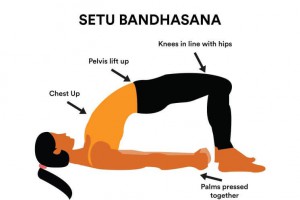
  1. Bridge Pose (Setu Bandhasana)

setu -5

This restorative backbend opens the chest, massages the spine, and relieves stress and tension.

How to do it:

  • Lie on your back, knees bent, feet hip-width apart.
  • Press your feet into the floor and lift your hips.
  • Clasp your hands under your back and roll onto your shoulders.
  • Hold for 30 seconds to 1 minute.

Benefits:

  • Stimulates the lungs and thyroid gland
  • Relieves anxiety and fatigue
  • Encourages spinal flexibility

Yoga is more than physical movement—it’s a tool for resilience. Regular practice can support immunity not only by enhancing the body’s natural defences but also by calming the mind and easing stress, both of which are critical for immune health.

That said, if you have an existing medical condition, are recovering from illness, or are new to yoga, please consult your doctor before beginning any new exercise routine—especially if you’re unsure whether certain poses are safe for you.

Start small. Choose one or two poses that resonate with you and practise them daily. Over time, you’ll feel stronger, calmer, and better equipped to handle whatever life throws your way.

#BeTheForce

Disclaimer: The information provided in this blog is for general awareness and educational purposes only. It is not intended to replace professional medical advice, diagnosis, or treatment. Always consult a qualified healthcare provider for personalised medical guidance or concerns related to your health.

April 18, 2025 By GOQii Leave a Comment

How to Survive Festive Celebrations Without the Extra Pounds: A Low-Carb Guide for Healthier Living

Festive celebrations like Easter, Christmas, birthdays, or long weekends are often filled with joy, family, and… food. Lots of it. But while these occasions are meant to be enjoyed, they also tend to lead to unwanted weight gain—with many people putting on an average of 7lbs during festive periods, which can take months to lose, if it comes off at all.



This year, instead of undoing all your hard work, you can celebrate mindfully and still stay on track with your health goals. Whether you’re following a health programme or simply trying to eat better, here are some practical ways to enjoy the festivities—without the guilt.

  1. Stick to Your Plan – You Shouldn’t Feel Hungry

One of the best things about a low-carb, higher fat and protein approach is that it keeps you feeling full and satisfied. This means you’re less likely to snack on sweets and pastries just because they’re in front of you. Let your eating plan be your guide.

  1. Make Your Home a Trigger-Free Zone

If you know certain foods are your weakness, don’t bring them home. It’s much easier to avoid temptation when it’s not staring you in the face every time you open the cupboard. Stock your kitchen with foods that support your goals and ditch the rest.

  1. Shop Smart

Never go shopping hungry—that’s when impulse buys happen. Head to the supermarket with a plan, a full stomach, and a clear idea of what you need.

  1. Be Work-Snack Savvy

Celebrations at work can turn into snack fests. Tins of biscuits, free cakes, sandwich platters—it all adds up. Take your food so you’re not caught off-guard. If sandwiches are on offer, ditch the bread and enjoy the filling.

Boiled eggs (if they’re available!) are a brilliant, protein-packed snack to keep on hand.

  1. Plan Well When Eating Out

If you’re heading to a restaurant or someone else’s home, look at the menu ahead of time or think through your food choices before you go. Commit to your plan in advance, and stick to it once you’re there.

  1. Embrace Low-Carb Festive Foods

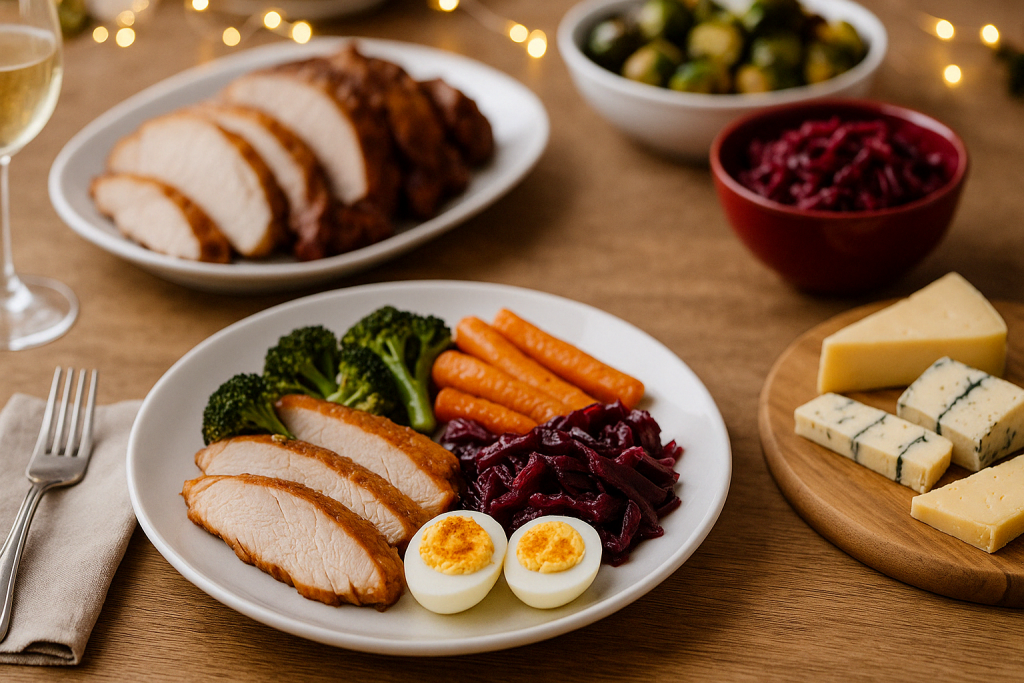
Great news—many celebration foods are naturally low in carbohydrates. You can still enjoy:

  • Smoked salmon
  • Roast meats like turkey or lamb
  • Eggs (devilled or boiled)
  • Roasted vegetables
  • Red cabbage and sprouts (especially with bacon!)
  • Cheese boards with options like stilton or cheddar

Let others know you’re eating low-carb—most people will be supportive, and it helps avoid awkward explanations at the table.

  1. If You’re Having a Big Meal, Make It Your Only Meal

If you know you’ll be indulging in a large festive lunch or dinner, let that be your main meal of the day. Skip the extra nibbles before and after—quality over quantity wins every time.

  1. Move More During the Break

Holidays often mean time off work, so use it to your advantage. Even a 20-minute walk after meals can help balance blood sugar levels and aid digestion. It’s also a great opportunity to connect with family, and friends, or simply enjoy some fresh air.

  1. Handle Cravings with Intention

Cravings will come. Here’s how to manage them:

  • Have a glass of water or herbal tea
  • Take a short walk or stretch
  • Still hungry? Opt for a meal rich in protein and healthy fats

Often, just pausing and doing something else helps you realise the craving will pass.

  1. Lean on Your Support System

Use tools like the GOQii app to message your coach, or reach out to a supportive friend or family member. A few encouraging words can help you stay focused and avoid emotional eating.

  1. If You Slip, Reset Right Away

A moment of indulgence doesn’t mean the whole celebration is ruined. The most important thing is to get back on track with your next meal—don’t wait until Monday or after the holidays. Progress isn’t about being perfect, it’s about being consistent.

Festive celebrations are meant to be joyful, but that joy doesn’t have to come at the cost of your health. With a little preparation, awareness, and self-compassion, you can enjoy the food, fun, and family time while staying true to your goals.

This Easter—or any special occasion—celebrate with intention, savour every bite, and remind yourself how far you’ve come. Healthy habits don’t take holidays—but they can make holidays even better.

#BeTheForce

  • 1
  • 2
  • 3
  • …
  • 5
  • Next Page »

Search

Recent Posts

  • Best Foods To Alleviate Irritable Bowel Syndrome
  • ALL ABOUT VERTIGO!
  • PCOS and Anxiety: Discover Relief with the 54321 Technique
  • Navigating the Maze of Nutrition: Finding Clarity Amidst Confusion
  • Get children active and keep them healthy

Stay Updated

Archives

  • December 2025 (6)
  • November 2025 (15)
  • October 2025 (20)
  • September 2025 (6)
  • August 2025 (6)
  • July 2025 (12)
  • June 2025 (18)
  • May 2025 (16)
  • April 2025 (23)
  • March 2025 (23)
  • February 2025 (22)
  • January 2025 (26)
  • December 2024 (26)
  • November 2024 (25)
  • October 2024 (22)
  • September 2024 (24)
  • August 2024 (31)
  • July 2024 (21)
  • June 2024 (26)
  • May 2024 (31)
  • April 2024 (27)
  • March 2024 (29)
  • February 2024 (26)
  • January 2024 (25)
  • December 2023 (15)
  • November 2023 (11)
  • October 2023 (22)
  • September 2023 (22)
  • August 2023 (20)
  • July 2023 (22)
  • June 2023 (24)
  • May 2023 (24)
  • April 2023 (24)
  • March 2023 (23)
  • February 2023 (20)
  • January 2023 (16)
  • December 2022 (12)
  • November 2022 (15)
  • October 2022 (15)
  • September 2022 (12)
  • August 2022 (10)
  • July 2022 (17)
  • June 2022 (11)
  • May 2022 (10)
  • April 2022 (6)
  • March 2022 (6)
  • February 2022 (13)
  • January 2022 (12)
  • December 2021 (7)
  • November 2021 (3)
  • October 2021 (6)
  • September 2021 (3)
  • August 2021 (8)
  • July 2021 (7)
  • June 2021 (15)
  • May 2021 (16)
  • April 2021 (10)
  • March 2021 (7)
  • February 2021 (4)
  • January 2021 (4)
  • December 2020 (3)
  • November 2020 (4)
  • October 2020 (10)
  • September 2020 (3)
  • August 2020 (3)
  • July 2020 (2)
  • June 2020 (4)
  • May 2020 (10)
  • April 2020 (12)
  • March 2020 (10)
  • February 2020 (4)
  • January 2020 (4)
  • December 2019 (3)
  • November 2019 (7)
  • October 2019 (5)
  • September 2019 (4)
  • August 2019 (9)
  • July 2019 (9)
  • June 2019 (11)
  • May 2019 (4)
  • April 2019 (9)
  • March 2019 (8)
  • February 2019 (9)
  • January 2019 (8)
  • December 2018 (9)
  • November 2018 (3)
  • October 2018 (3)
  • September 2018 (5)
  • August 2018 (10)
  • July 2018 (6)
  • June 2018 (13)
  • May 2018 (8)
  • April 2018 (18)
  • March 2018 (9)
  • February 2018 (8)
  • January 2018 (15)
  • December 2017 (12)
  • November 2017 (19)
  • October 2017 (13)
  • September 2017 (15)
  • August 2017 (4)
  • July 2017 (8)
  • June 2017 (7)
  • May 2017 (6)
  • April 2017 (8)
  • March 2017 (6)
  • February 2017 (7)
  • January 2017 (9)
  • December 2016 (10)
  • November 2016 (7)
  • October 2016 (7)
  • September 2016 (7)
  • August 2016 (11)
  • July 2016 (9)
  • June 2016 (9)
  • May 2016 (12)
  • April 2016 (17)
  • March 2016 (17)
  • February 2016 (8)
  • January 2016 (6)
  • December 2015 (2)
  • November 2015 (9)
  • October 2015 (7)
  • September 2015 (9)
  • August 2015 (11)
  • July 2015 (9)
  • June 2015 (12)
  • May 2015 (9)
  • April 2015 (13)
  • March 2015 (8)
  • February 2015 (5)
  • January 2015 (12)
  • December 2014 (14)
  • November 2014 (11)
  • October 2014 (6)
  • September 2014 (13)
  • August 2014 (12)
  • July 2014 (6)
  • June 2014 (2)
  • May 2014 (7)
  • April 2014 (5)

From “Laddu Nawin” to Fit and Fierce: How a 25-Year-Old Insurance Advisor Shed 20 Kilos and Gained His Life Back

When 25-year-old Nawin Yadav from Hyderabad walked into his office every morning, he carried more than just his files and policy papers. He had the weight of fatigue, sluggish energy, and an ever-growing belly that was becoming the butt of jokes. “People … [Read More...]

“I’ve Challenged Myself to Live 100 Years” – The Story of Chandubhai Savani’s Second Chance at Life

At 67, most people start slowing down. Not Chandubhai Savani. A resident of Surat, Chandubhai, thought life was on track. “My life was going well till I had my bypass surgery,” he says. That surgery, back in 2021, was a wake-up call.  Medication was routine, but exercise wasn’t. His diet? What he calls ‘normal.’ “I […]

From Shimla’s Slopes to Chandigarh’s Sidewalks: Surinder Kaur Bhalla’s Journey from Chaos to Control

Some journeys start with a plan. Others begin with a stumble literally. Surinder Bhalla, a government professional, born and raised in the scenic hill town of Shimla, had always lived a life of movement. “In Shimla, you walked everywhere,” she reflects. “Walking was never an exercise. It was just life.” But after shifting to Chandigarh, […]

Ananda Mukherjee Health Story

From Terminal Illness To Complete Wellness! Ananda Mukherjee Health Story

As we observe World Cancer Day under the powerful theme ‘United by Unique’ (2025-2027)**, we are reminded that every individual’s journey with cancer is distinct, yet united by shared resilience, hope, and the collective fight against this disease. This theme places people at the centre of care and their stories at the heart of the […]

  • HOME
  • HEALTHY LIVING
  • FITNESS
  • HEALTHY RECIPES
  • USER STORIES
  • KARMA
  • BUY GOQii

Copyright ©2016 GOQii