
GOQii

Blog

  • HOME
  • HEALTHY LIVING
  • FITNESS
  • HEALTHY RECIPES
  • USER STORIES
  • KARMA
  • BUY GOQii

March 13, 2026 By GOQii Leave a Comment

Sleep Well, Live Better: Lifestyle Habits That Improve Sleep Quality

Sleep is one of the most important pillars of preventive health. Good sleep improves energy levels, supports metabolism, strengthens immunity and enhances mental clarity. Yet in today’s fast-paced lifestyle, sleep is often the first thing we sacrifice. Late-night work, excessive screen time and irregular schedules disrupt the body’s natural sleep rhythm. Over time, poor sleep can increase the risk of lifestyle diseases such as obesity, diabetes, hypertension and heart disease. This is why World Sleep Day 2026 highlights the theme “Sleep Well, Live Better.” The message is simple: when you prioritise sleep, you improve not just your rest but your overall quality of life. The good news is that improving sleep often does not require drastic changes. In many cases, small lifestyle habits can significantly improve sleep quality. Sleep is one of the most important pillars of preventive health. Good sleep improves energy levels, supports metabolism, strengthens immunity and enhances mental clarity. Yet in today’s fast-paced lifestyle, sleep is often the first thing we sacrifice.

Late-night work, excessive screen time and irregular schedules disrupt the body’s natural sleep rhythm. Over time, poor sleep can increase the risk of lifestyle diseases such as obesity, diabetes, hypertension and heart disease.

This is why World Sleep Day 2026 highlights the theme “Sleep Well, Live Better.” The message is simple: when you prioritise sleep, you improve not just your rest but your overall quality of life.

The good news is that improving sleep often does not require drastic changes. In many cases, small lifestyle habits can significantly improve sleep quality.

How Can You Improve Sleep Quality Naturally?

You can improve sleep quality naturally by maintaining a consistent sleep schedule, limiting screen exposure before bedtime, creating a relaxing night routine, optimising your bedroom environment and paying attention to what you eat and drink in the evening.

These lifestyle habits help regulate your circadian rhythm, allowing the body to enter deeper and more restorative sleep cycles. If your body clock feels constantly out of sync, understanding how the circadian rhythm affects sleep patterns can help restore balance.

Why Good Sleep Matters for Your Health

Sleep is not simply a period of rest. During sleep, the body performs essential biological processes that support long-term health.

These include:

  • cellular repair and tissue recovery
  • hormone regulation
  • memory consolidation
  • immune system strengthening
  • metabolic balance

When sleep quality is poor, these processes are disrupted. Studies have shown that chronic sleep deprivation can contribute to:

  • increased stress hormone levels
  • poor blood sugar regulation
  • weakened immunity
  • reduced concentration and productivity

Lack of sleep can also influence food choices. Research shows that sleep deprivation may lead to cravings for calorie-dense foods and unhealthy eating habits.

According to sleep health guidelines, most adults require 7–9 hours of sleep per night for optimal physical and mental health.

Lifestyle Habits That Improve Sleep Quality

Instead of relying on medication, improving daily habits can naturally support better sleep.

Maintain a Consistent Sleep Schedule

Your body operates on an internal clock known as the circadian rhythm. Going to bed and waking up at different times each day disrupts this rhythm.

Try to:

  • go to bed at the same time each night
  • wake up at the same time each morning
  • maintain this schedule even on weekends

Consistency helps train your body to recognise when it is time to sleep.

If you’re looking to improve your daily sleep habits, incorporating simple rituals for better sleep can make a significant difference.

Limit Screen Exposure Before Bed

Smartphones, laptops and tablets emit blue light, which suppresses melatonin — the hormone that regulates sleep.

To improve sleep quality:

  • avoid screens at least one hour before bedtime
  • dim the lights in your home during the evening
  • switch devices to night mode if screen use is necessary

Reducing screen exposure before bedtime allows the body to prepare naturally for sleep. If you want to explore practical ways to sleep better without gadgets interfering with your routine, check out this guide.

Create a Relaxing Night Routine

Your mind needs time to transition from daily activity to rest.

Develop a relaxing routine before bedtime, such as:

  • reading a book
  • practising meditation or deep breathing
  • light stretching or yoga
  • taking a warm shower

Over time, these small habits train the brain to associate specific behaviours with sleep, making it easier to fall asleep naturally.

Be Mindful of Evening Food and Drinks

What you eat and drink before bedtime can influence sleep quality.

Avoid the following close to bedtime:

  • caffeine
  • alcohol
  • heavy meals
  • sugary snacks

Instead, choose lighter options if you feel hungry, such as:

  • warm milk
  • bananas
  • nuts
  • herbal tea

Certain foods naturally support relaxation and sleep. You can explore a list of foods that help promote better sleep here.

Optimise Your Sleep Environment

Your bedroom environment plays an important role in sleep quality.

To create a sleep-friendly space:

  • keep the room cool and dark
  • minimise noise and distractions
  • use comfortable bedding
  • avoid keeping electronic devices nearby

Prioritising sleep as an essential component of health rather than something to compromise on is one of the most powerful lifestyle shifts you can make.

Key Takeaways for Better Sleep

  • Sleep is a critical pillar of preventive health.
  • Adults should aim for 7–9 hours of quality sleep each night.
  • Consistent sleep schedules support the body’s circadian rhythm.
  • Reducing screen exposure before bedtime improves sleep onset.
  • A relaxing nighttime routine can help the body prepare for rest.
  • Good sleep habits improve energy, metabolism and overall wellbeing.

Small lifestyle changes can lead to meaningful improvements in sleep quality over time.

Sleep Well, Live Better

The theme of World Sleep Day 2026 – “Sleep Well, Live Better” reminds us that quality sleep is essential for overall wellbeing.

When you prioritise sleep, you support your body’s ability to recover, regulate hormones, maintain energy levels and protect long-term health.

Start by making small changes today. Over time, these habits can help you experience deeper sleep, improved energy and better overall health.

Because when you sleep well, you truly live better.

Take charge of your sleep health today. If you are struggling with sleep issues, speak with your GOQii Coach for personalised lifestyle strategies that help improve sleep quality and overall wellbeing.

#BeTheForce

Frequently Asked Questions

How many hours of sleep do adults need?
Most adults require between 7 and 9 hours of sleep per night for optimal physical and mental health.

What is the fastest way to improve sleep quality?
Maintaining a consistent sleep schedule and reducing screen exposure before bedtime are two of the most effective ways to improve sleep quality.

Can lifestyle changes improve sleep naturally?
Yes. Habits such as regular exercise, good nutrition, stress management and proper sleep hygiene can significantly improve sleep quality over time.

Disclaimer: GOQii is committed to providing accurate, up-to-date and comprehensive health information. This article is intended for informational purposes only and should not be used as a substitute for professional medical advice, diagnosis or treatment. Always consult a qualified healthcare professional before making changes to your health routine. Individual responses may vary.

March 10, 2026 By GOQii Leave a Comment

The Sleep-Metabolism Connection: Why Rest is Your Best GLP-1 Partner

When we think about GLP-1 therapy, we usually think about what happens in the kitchen or at the gym. But some of the most important work happens while you are fast asleep. Have you noticed a change in your sleep patterns since starting your journey? Or perhaps you’ve found that on nights you sleep poorly, your “food noise” seems to whisper a little louder the next day?
The Biology of the Midnight Reset

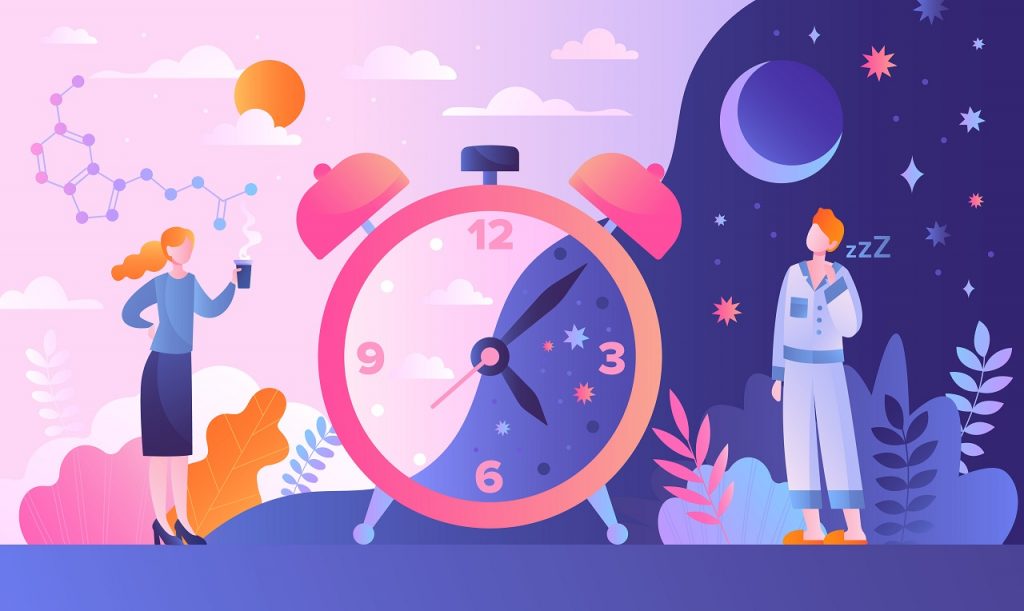
GLP-1 is a metabolic powerhouse, but it doesn’t work in a vacuum. It interacts closely with your circadian rhythm the internal clock that tells your body when to burn energy and when to store it.

When you are on this therapy, your body is undergoing a massive internal renovation. This requires energy. If you aren’t getting 7–9 hours of quality sleep, your body produces more ghrelin (the hunger hormone) and cortisol (the stress hormone). High cortisol can actually work against your GLP-1 medication, making it harder for the hormone to regulate your blood sugar and appetite effectively.

Mastering Your GLP-1 Sleep Hygiene

To ensure your body has the “downtime” it needs to repair muscle and burn fat, try these GOQii-approved sleep strategies:

  • The 3-Hour Buffer: Because GLP-1 slows down gastric emptying, lying down with a full stomach can lead to acid reflux or “heavy” discomfort. Aim to finish your last meal at least 3 hours before bed to give your stomach a head start.
  • Cool and Dark: Your metabolic rate is shifting, which can sometimes lead to changes in body temperature. Keep your bedroom slightly cooler (18∘C is the sweet spot) to help your body drop its core temperature for deep sleep.
  • Magnesium Magic: As we discussed in our fiber blog, magnesium is a friend to the digestive system, but it’s also a natural relaxant. Incorporating magnesium-rich foods or a supplement (after consulting your healthcare provider) in the evening can help calm the nervous system.
  • Morning Light Exposure: To keep your GLP-1 signals sharp, get 10 minutes of natural sunlight as soon as you wake up. This “sets” your clock and ensures your hormones are firing at the right time.

Tip: Sleep isn’t “time off” it’s a clinical requirement for weight loss. Treat your bedtime with the same discipline you treat your protein intake.

#BeTheForce

Disclaimer: GOQii is committed to providing accurate, up-to-date, and comprehensive health information. This article is intended for informational purposes only and should not be used as a substitute for professional medical advice, diagnosis, or treatment. Always consult a qualified healthcare professional before starting or changing any medication. Individual responses to treatment may vary.

January 10, 2026 By GOQii Leave a Comment

The Longevity Bank Account: Daily Deposits, Daily Withdrawals

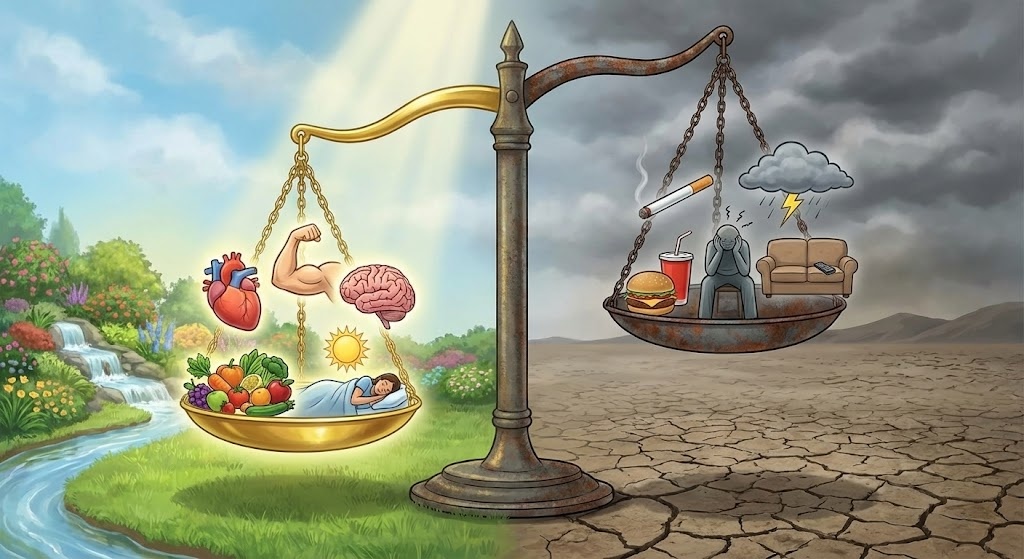
Think about your healthspan the years of your life when you are actually healthy as a bank account.
Every single day, you are making deposits or withdrawals. These aren’t financial transactions; they are biological transactions. Every choice you make influences your balance. The goal should always be to keep the account in the green and, ideally, build enough reserves so that when life gets hard, your body and mind can draw from a well-nourished, resilient foundation.

Visualising Your Longevity Bank

Your body is like a lifetime savings account. Just as early and consistent financial investments create wealth over time, your daily health habits build up (or drain) your vitality.

The beauty of this metaphor is its simplicity. Instead of chasing complex routines or fleeting wellness trends, it brings your focus back to the basics: consistency, awareness, and balance.

You don’t have to get it all right 100% of the time. But you do need to keep checking in with your account and adjusting your inputs.

Daily Deposits: What Adds to Your Longevity Bank

Here are the habits that build your resilience and energy over time. Think of these as small, consistent investments:

  • Sleep: Quality sleep is non-negotiable. It’s when your body heals, your brain resets, and your hormones rebalance. It is the most underrated superpower for health.
  • Strength Training: Muscle is your retirement fund for health. It supports balance, metabolism, bone density, and mobility—all of which are crucial as you age.
  • Fibre-Rich Foods: Colourful vegetables, legumes, and whole grains fuel your gut microbiome, reduce inflammation, and stabilise your metabolism.
  • Sunlight: A few minutes of natural morning light helps set your circadian rhythm, boost mood, and top up your vitamin D stores.
  • Community & Connection: Meaningful relationships are essential. Loneliness is now seen as a health risk comparable to smoking.

Daily Withdrawals: What Drains Your Account

These are the habits that chip away at your resilience and increase the risk of chronic issues. Not all can be avoided, but they can be managed.

  • Ultra-Processed Foods: Foods that come in packages, full of additives and low in nutrients, disrupt your gut, promote inflammation, and leave you nutritionally bankrupt.
  • Chronic Stress Spikes: Stress isn’t inherently bad, but when it becomes your baseline, it accelerates cellular ageing and hormonal imbalances.
  • Sitting for Hours: Prolonged inactivity impacts everything from heart health to mental well-being. Movement isn’t optional; it’s essential.
  • Sleep Debt: Skipping sleep may seem harmless in the short term, but the interest compounds quickly in the form of fatigue, brain fog, and immune dysfunction.

The Real Challenge: Modern Life

The world we live in makes it easy to overspend. Fast food is more accessible than fresh food. Digital life replaces face-to-face connection. Work bleeds into rest.

The trick isn’t perfection; it’s awareness. Start by identifying your biggest daily withdrawals. Then, gently balance the ledger with deposits that feel sustainable.

Balancing the Ledger: Simple Shifts

These are not grand gestures. They are small, steady contributions to your future self:

  1. Replace one processed meal a day with real, whole food.
  2. Get 15–20 minutes of natural morning light.
  3. Add two strength-training sessions a week.
  4. Treat rest like an appointment, and keep it.
  5. Reach out to someone you care about once a week.

Your Body Is a Lifetime Investment

The Longevity Bank Account isn’t just a metaphor; it’s a mindset. Every laugh, every step, every nutrient-rich meal, and every restful night of sleep is a deposit toward a richer, fuller life.

Yes, there will be withdrawals. That’s part of being human. But when your deposits are consistent and intentional, you build a buffer of health and resilience that carries you through.

Treat your body like your most valuable savings account, because that’s exactly what it is. Daily deposits. Mindful withdrawals. That’s the real secret to a life well lived.

We hope this article helps you. For further information or guidance, reach out to our certified experts by subscribing to GOQii’s Personalised Health Coaching here.

#BeTheForce

Disclaimer: The information provided in this blog is for general awareness and educational purposes only. It is not intended to replace professional medical advice, diagnosis, or treatment. Always consult a qualified healthcare provider for personalised medical guidance or concerns related to your health. Images shown are for representation purposes only and may not depict the exact recommendations or outcomes.

April 23, 2025 By Srini Leave a Comment

What Is Circadian Rhythm and Why It Affects Your Sleep

sleep seriesEver wondered why you feel energised in the morning some days and groggy on others? Or why you naturally wake up at the same time every day—even without an alarm? The answer lies in your circadian rhythm—your body’s internal clock that runs the show when it comes to sleep, energy, alertness, and more.



Let’s break it down.

What is Circadian Rhythm?

The term “circadian” comes from Latin:

  • “Circa” – meaning about or around
  • “Dian” – related to the day
  • Rhythm – a repeating pattern or cycle

So, it literally refers to a roughly 24-hour internal cycle your body follows every day—governing things like sleep, wakefulness, body temperature, hormones, and alertness. Interestingly, it’s not exactly 24 hours—it’s about 24 hours and 15 minutes!

The Role of Light in Circadian Rhythm

The main trigger for circadian rhythm is light. Even though research shows it can still function without external light (like in a dark room), light exposure—especially sunlight—greatly influences it.

At the core of this system is a tiny region in your brain called the Suprachiasmatic Nucleus (SCN)—often referred to as your “third eye” or biological clock. It sits just above where the optic nerves from each eye cross and processes signals related to light, helping your body know when it’s time to wake up or wind down.

Your Circadian Type: Early Bird or Night Owl?

Not everyone’s rhythm is the same. People generally fall into three chronotype categories:

  • Early Birds (25%) – feel energised early in the morning
  • Night Owls (25%) – peak energy comes later in the day
  • The Majority (50%) – somewhere in between

This 1–2 hour variation explains why some thrive at sunrise, while others come alive at night. You can find your chronotype through various free online tests.

How Circadian Rhythm Impacts Your Day

Your energy levels, alertness, heart rate, and even body temperature follow a circadian pattern. For example:

  • Core body temperature can drop by 2°C during rest
  • Heart rate can fall by 20 beats per minute

Trying to maintain consistent productivity throughout the day isn’t always natural. That’s why timing your most demanding tasks to match your personal energy peaks—say 11 am to 1 pm or 4 pm to 6 pm—can make a real difference.

Even jet lag is a result of circadian misalignment—your internal body clock is out of sync with the local time zone.

How to Align Your Body Clock for Better Sleep

Want to improve your sleep and energy levels? Here’s how to work with—not against—your body clock:

  1. Understand Your Chronotype
    Discover when you’re naturally most alert and schedule important activities accordingly.
  2. Get Morning Sunlight
    Spend 10–15 minutes in natural light as early as possible. This helps set your body clock for sleep later in the evening.
  3. Use a ‘Bedtime Alarm’
    Instead of setting an alarm to wake up, set one to start your sleep routine. Going to bed at the same time daily trains your circadian rhythm.
  4. Dim the Lights After 7:30 PM
    Reduce screen and light exposure. Even better—enjoy a candlelight dinner to encourage natural melatonin production (your sleep hormone).

Understanding and aligning with your circadian rhythm isn’t just good for sleep—it’s great for your overall well-being. By syncing your routine to your natural rhythms, you’ll find yourself sleeping better, feeling more alert during the day, and living more in tune with your body.

#BeTheForce 

  • 1
  • 2
  • 3
  • Next Page »

Search

Recent Posts

  • Sleep Well, Live Better: Lifestyle Habits That Improve Sleep Quality
  • Our Kidneys, Our Planet: How Environmental Health Impacts Your Body
  • Caution: Smoking is Injurious to health!!
  • The Sleep-Metabolism Connection: Why Rest is Your Best GLP-1 Partner
  • Accelerate Action for Your Health: Why Self-Care Matters This International Women’s Day

Stay Updated

Archives

  • March 2026 (6)
  • February 2026 (14)
  • January 2026 (14)
  • December 2025 (19)
  • November 2025 (15)
  • October 2025 (20)
  • September 2025 (6)
  • August 2025 (6)
  • July 2025 (12)
  • June 2025 (18)
  • May 2025 (16)
  • April 2025 (22)
  • March 2025 (23)
  • February 2025 (22)
  • January 2025 (25)
  • December 2024 (22)
  • November 2024 (23)
  • October 2024 (21)
  • September 2024 (24)
  • August 2024 (30)
  • July 2024 (21)
  • June 2024 (26)
  • May 2024 (31)
  • April 2024 (27)
  • March 2024 (29)
  • February 2024 (25)
  • January 2024 (21)
  • December 2023 (15)
  • November 2023 (11)
  • October 2023 (19)
  • September 2023 (22)
  • August 2023 (18)
  • July 2023 (22)
  • June 2023 (24)
  • May 2023 (24)
  • April 2023 (23)
  • March 2023 (23)
  • February 2023 (19)
  • January 2023 (15)
  • December 2022 (11)
  • November 2022 (15)
  • October 2022 (15)
  • September 2022 (12)
  • August 2022 (10)
  • July 2022 (17)
  • June 2022 (11)
  • May 2022 (10)
  • April 2022 (6)
  • March 2022 (6)
  • February 2022 (13)
  • January 2022 (11)
  • December 2021 (7)
  • November 2021 (3)
  • October 2021 (6)
  • September 2021 (3)
  • August 2021 (8)
  • July 2021 (7)
  • June 2021 (15)
  • May 2021 (16)
  • April 2021 (10)
  • March 2021 (7)
  • February 2021 (4)
  • January 2021 (4)
  • December 2020 (3)
  • November 2020 (4)
  • October 2020 (10)
  • September 2020 (3)
  • August 2020 (3)
  • July 2020 (2)
  • June 2020 (4)
  • May 2020 (10)
  • April 2020 (12)
  • March 2020 (10)
  • February 2020 (4)
  • January 2020 (4)
  • December 2019 (3)
  • November 2019 (7)
  • October 2019 (5)
  • September 2019 (4)
  • August 2019 (9)
  • July 2019 (9)
  • June 2019 (11)
  • May 2019 (4)
  • April 2019 (8)
  • March 2019 (8)
  • February 2019 (9)
  • January 2019 (8)
  • December 2018 (9)
  • November 2018 (3)
  • October 2018 (3)
  • September 2018 (5)
  • August 2018 (10)
  • July 2018 (6)
  • June 2018 (13)
  • May 2018 (8)
  • April 2018 (18)
  • March 2018 (9)
  • February 2018 (8)
  • January 2018 (15)
  • December 2017 (12)
  • November 2017 (19)
  • October 2017 (13)
  • September 2017 (15)
  • August 2017 (4)
  • July 2017 (8)
  • June 2017 (7)
  • May 2017 (6)
  • April 2017 (8)
  • March 2017 (6)
  • February 2017 (7)
  • January 2017 (9)
  • December 2016 (10)
  • November 2016 (7)
  • October 2016 (7)
  • September 2016 (7)
  • August 2016 (11)
  • July 2016 (9)
  • June 2016 (9)
  • May 2016 (12)
  • April 2016 (17)
  • March 2016 (17)
  • February 2016 (8)
  • January 2016 (6)
  • December 2015 (2)
  • November 2015 (9)
  • October 2015 (7)
  • September 2015 (9)
  • August 2015 (11)
  • July 2015 (9)
  • June 2015 (12)
  • May 2015 (9)
  • April 2015 (13)
  • March 2015 (8)
  • February 2015 (5)
  • January 2015 (12)
  • December 2014 (14)
  • November 2014 (11)
  • October 2014 (6)
  • September 2014 (13)
  • August 2014 (12)
  • July 2014 (6)
  • June 2014 (2)
  • May 2014 (7)
  • April 2014 (4)

From “Laddu Nawin” to Fit and Fierce: How a 25-Year-Old Insurance Advisor Shed 20 Kilos and Gained His Life Back

When 25-year-old Nawin Yadav from Hyderabad walked into his office every morning, he carried more than just his files and policy papers. He had the weight of fatigue, sluggish energy, and an ever-growing belly that was becoming the butt of jokes. “People … [Read More...]

“I’ve Challenged Myself to Live 100 Years” – The Story of Chandubhai Savani’s Second Chance at Life

At 67, most people start slowing down. Not Chandubhai Savani. A resident of Surat, Chandubhai, thought life was on track. “My life was going well till I had my bypass surgery,” he says. That surgery, back in 2021, was a wake-up call.  Medication was routine, but exercise wasn’t. His diet? What he calls ‘normal.’ “I […]

From Shimla’s Slopes to Chandigarh’s Sidewalks: Surinder Kaur Bhalla’s Journey from Chaos to Control

Some journeys start with a plan. Others begin with a stumble literally. Surinder Bhalla, a government professional, born and raised in the scenic hill town of Shimla, had always lived a life of movement. “In Shimla, you walked everywhere,” she reflects. “Walking was never an exercise. It was just life.” But after shifting to Chandigarh, […]

Ananda Mukherjee Health Story

From Terminal Illness To Complete Wellness! Ananda Mukherjee Health Story

As we observe World Cancer Day under the powerful theme ‘United by Unique’ (2025-2027)**, we are reminded that every individual’s journey with cancer is distinct, yet united by shared resilience, hope, and the collective fight against this disease. This theme places people at the centre of care and their stories at the heart of the […]

  • HOME
  • HEALTHY LIVING
  • FITNESS
  • HEALTHY RECIPES
  • USER STORIES
  • KARMA
  • BUY GOQii

Copyright ©2016 GOQii
