
GOQii

Blog

  • HOME
  • HEALTHY LIVING
  • FITNESS
  • HEALTHY RECIPES
  • USER STORIES
  • KARMA
  • BUY GOQii

Search Results for: acidity

December 13, 2015 By Parwage Alam 2 Comments

The Best Post-Run Recovery Foods

healthy_food_zps7b67d197

All athletes plan their routine, in terms of their exercise, nutrition; practice sessions all of this is done to get the best results from his/her body. While you might get the expected results with your performance but, that certainly does not mean that your body is also getting the expected nutrition. In fact, some of the best athletes and more recently we have come across cases of regular marathon runners fainting or blacking out during the run or after the run. This situation occurs due to nutrition imbalance in body.

To be healthy we have to take care of our meals throughout the day. Similarly, we have to take care of our post run meals as well to recover our body. By eating the right foods at right times your body will recover and be able to perform the way you want it to. So if you are a runner or planning to run you need to be aware of what exactly you should be eating before, during and after your running events. This is important so that you are able to keep your body in optimal condition.

So let’s understand more about this.

  1. Some basics before your run: If you are planning to jog no longer than 40 or 50 minutes at a relaxed pace, a glass of water might be all that’s needed ahead of time—provided you have had a decent dinner the night before. But, if the previous night’s meal wasn’t filling or if you ate it early, downing some orange juice or a banana will replace glycogen stores in your muscles to wave off sluggishness. If you’re heading out in the afternoon, have a snack with about 50 grams of carbs in it—like yogurt and a granola bar—an hour or two before hand
  2. Post run, our body requires lot of different nutrition, so let’s divide into different category – PROTEIN, CARBS, ELECTROLYTES AND ANTIOXIDANTS.
  • Protein: Protein is the best resource to repair your body. It repairs muscle damage, diminishes the effects of cortisol—the so-called “stress” hormone that breaks down muscle—and, when taken with carbohydrates it speeds your body’s ability to replenish its glycogen stores, your all-important energy source for those long runs during marathon season. So post run your Protein ratio should be 1:4 which means 1 gram of protein for every 4 gram of CARBS
  • Carbs: Carbohydrates or carbs as is known commonly are body’s main fuel source, and are stored as glycogen in the muscles and liver, so eating carbs shortly after your workout helps optimize your body’s recovery. And it is during this time that your muscles are most receptive to rebuilding your glycogen reserves.
  • Electrolytes and Antioxidants: Electrolytes are minerals in our blood and other body fluids like Calcium, Chloride, Magnesium, Phosphorous, Potassium, Sodium, etc that carry an electric charge. It also affects the percentage of water in our body, the acidity of our blood (pH), our muscle functionality, and other important processes. While running, we sweat a lot and we lose electrolytes when we sweat. So we really have to replace our sweat by drinking fluids that contain electrolytes.

The techniques we can use

The fastest recovery techniques post training is rehydration, glycogen resynthesis and protein and antioxidant supplementation. These techniques replenish our muscle fuel supplies, hasten the repair of muscle damage and combat free radical formation in our cells.

Having said all of the above now it’s time for me to provide you with some resources for the post recovery foods that can help to replenish your body with the vital nutrients discussed above.

At first you start restoring the fluids in the body after your long run – the quick fixes for this are sports drink, lemon water or some plain water. However, the recovery process does not stop here so we have some specific foods that can help you to restore your body in recovery.

  • Salmon
  • Cherries
  • Kale
  • Oatmeal
  • Greek yogurt
  • Banana
  • Skim Milk
  • Chicken
  • Hummus
  • Green Tea
  • Tomatoes
  • Lean beef
  • Turkey breast
  • Sports/Energy bar
  • Whole-Wheat Pasta
  • Berries
  • Fruit Juice
  • Low-fat cottage cheese
  • Eggs
  • Almonds or other nuts
  • Vegetables

Its recommended to have your post run meal within an hour or so, but incase if it is not possible then you can go for the following options, which will help you to sustain for some time:

  • Have an apple which will give you some energy and raise your glucose level to sustain.
  • Protein bars, Protein shake with the combination of milk or water, whatever is convenient for you.
  • Banana is really good option to get quick energy.
  • Have Bread with some peanut butter.
  • My Favorite – Chocolate Milkshake.
  • Hummus and carrots
  • Some Greek yogurt.

As we love running and it’s a part of our lifestyle, routine and our health journey, so we really need to take care of the hard impact of it on our body. To continue our journey with running and healthy lifestyle we need to give appropriate rest and relaxation after every run and make sure that our body recovers completely after a every rigorous workout/running.




May 25, 2015 By Anushree Ashtekar Leave a Comment

Red Signal to Excess-Part 2 – Moderation is key to Good health

eat in moderation

In Part 1, we saw how good things in excess can adversely affect our health. In this follow up blog, I talk of bad things in excess, which is also not right.

Let’s take a look at some of these bad things in excess and how it could be detrimental to our health.

1) Excessive consumption of junk/processed foods: Fast food means food that can be made and served quickly. These junk foods are mostly processed, containing large amounts of refined carbohydrates, added refined sugars, added salt (sodium) and bad quality fats. They are high on calories but, minimal on nutritional value. Eating junk/processed foods instead of fresh, whole, nutritious food has many adverse effects on the body. Junk foods and drinks are packed with refined sugars which cause insulin spike gradually leading to insulin resistance and Type- 2 diabetes.

The empty calories just go easily go into the body fat store leading to obesity which can further give rise to severe health issues like heart problems, respiratory problems, etc. The trans fats in the junk foods, increase the LDL cholesterol levels and subsequently decrease the HDL cholesterol levels. Lot of salt (sodium) causes water retention, high blood pressure and enlarged heart muscle. Too much sugars cause acidity which destroy the tooth enamel causing dental cavities. MSG (Monosodium Glutamate) found in processed foods create stomach distress. Some of the artificial colors and preservatives used in processed foods are found to be carcinogenic (cancer causing). Drinking too much of soda can leach calcium out of the bones making them soft and brittle. Also, the aluminium soda cans are inwardly lined with an epoxy resin called bisphenol A (BPA) which protects the metal can from the reaction of acids in the sodas. This BPA is found to be disrupting normal hormone functioning that can lead to obesity, diabetes and reproductive cancers.

2) Excessive alcohol consumption: It is no big secret that alcohol consumption has no good effects but, chronic heavy drinking has many bad effects. Researchers have found alcohol to be linked to more than 60 diseases. Alcohol can cause liver cirrhosis. Alcohol is empty calories so, can cause unwanted fat storage in the body. Alcohol disturbs the working of the sympathetic nervous system leading to high blood pressure, heart problems, stroke and kidney disease. Heavy drinking can cause gastritis (stomach irritation), inflammation of pancreas, decrease in immunity, nerve damage (alcoholic neuropathy). As people age, their brains shrink but, heavy drinking can cause faster brain shrinking leading to memory loss and other symptoms of dementia. Depressed people drink to ‘feel good’ but, in fact, drinking leads to further depression. Alcohol can aggravate the condition of gout. It can worsen the condition of an epileptic and cause seizures even in non-epileptic individuals. Chronic heavy drinking can lead to cancer of the mouth, esophagus, liver, breast, and colorectal region.

3) Excessive cigarette smoking/tobacco chewing: Nicotine is a highly addictive drug that alters the brain chemistry making it both, physically and psychologically addictive. According to AHA (American Heart Association), nicotine causes short-term rise in heart-rate, blood flow and blood pressure which, in a long term, can cause cardiovascular complications. Carbon monoxide in cigarette smoke causes fat buildup in arteries leading to hardening of the arterial walls (atherosclerosis). Tobacco smoking and chewing, both, can lead to oral and lung cancers. Smoking/chewing tobacco can also cause tissue damage in various organs of the body and dental diseases.

4) Excessive Tea/Coffee drinking: We all wish to have a cup of tea/coffee to kick-start our day. It’s not too bad to drink tea and coffee. It is the too much drinking that is the concern.

Caffeine is a natural stimulant found in coffee, tea, chocolate, yerba mate and certain herbal teas. Caffeine is generally a very safe stimulant. It improves alertness and is a mood enhancer. Usually, it is 200-300 mg of coffee that can be safely consumed per day (roughly 3 cups) but, this differs from person to person, depending on their own ‘caffeine sensitivity’. Too much coffee consumption can lead to symptoms like irritability, nervousness, headache, dizziness, insomnia, fever, increased heart-rate, increased thirst, stomach upset and muscle tremors. Same is the case with teas. A cup of hot tea in the morning will boost your energy for the day where as a cup of herbal tea at night will help you relax. Tea contains lesser amount of caffeine than coffee but, there are side effects of having too much of it.

Drinking too many cups of tea in a day can lead to symptoms like restlessness, anxiety, disturbed sleep, skeletal fluorosis (a painful bone condition), yellow pigmentation of the teeth. Green tea is no less. Though healthy, if had too much, it can worsen the condition in people suffering from high blood pressure, anxiety and stomach ulcers.

5) Excessive stress: In this fast paced world, stress is become an inevitable part of our lifestyle. Our body reacts/adjusts to outward changes with physical, mental and emotional responses. This response amounts to stress. Stress is a part of our daily, normal lives. Our body is designed to feel and react to 2 kinds of stress; positive and negative stress. Positive stress is the one where the body prepares itself for a ‘fight or flight’ mode. Negative stress is the one in which the body is continuously facing challenges, without time for rest and recovery. As a result, stress related tensions build up. A person going through stress for a very long time without relief, can enter a stage called as ‘distress’. This distress is indicated by many physical symptoms like fatigue, headache, dizziness, disturbed sleep patterns, high blood pressure, stomach upsets. Stress plays a role in aggravating medical conditions like diabetes, blood pressure, heart problems, depression, asthma, anxiety, skin problems, gastrointestinal disorders, Obesity, Alzheimer’s disease. In many cases, chronic, untreated stress can also lead to accelerated ageing and premature death.

Lastly, I would like to end by saying, “too much of anything, is good for nothing”.

May 19, 2015 By Anushree Ashtekar 1 Comment

Red Signal To Excess Good things we overdo -part 1

don't overdo on dietPlato rightly said, “Excess generally causes reaction and produces a change in the opposite direction, whether it be in seasons, or in individuals, or in governments”.
We all crave for healthy and fulfilling lives. In order to achieve this, we try to do our best in matters of food, clothing, shelter; in short, have a good standard of living. But, what about when we go overboard while taking care of ourselves? Overdoing something which is usually good for our health also, has it’s own ill-effects. Let’s take a look at some of the ‘healthy’ things that many of us tend to go high on:-

  • Excessive drinking of water: Almost all of our major body systems depend on water to function properly. Optimum hydration helps in flushing toxins out of the body, preventing digestive ailments like acidity and constipation, regulating body temperature and many other functions. Many a times, people are low on water intake and are dehydrated. But, there are also instances where people tend to go too much on water intake causing a condition known as over hydration. Over hydration is a potentially deadly condition that causes severe imbalance between water and sodium in the body. People, consciously or unconsciously, can go high on water. Especially, when they sweat a lot, increased thirst due to uncontrolled diabetes, some psychiatric conditions like Schizophrenia can cause compulsive drinking of water, certain medications can cause dry mouth and make the person feel thirsty. Also, over hydration due to water retention (inability of the body to get rid of excessive water) can result due to underlying medical conditions such as kidney problems, liver cirrhosis, congestive heart failure and SIADH (Syndrome of Inappropriate Antidiuretic Hormone). Symptoms of over hydration may include headache, nausea and vomiting, confused or disoriented state of mind, loss of sleep as people frequently get up in the night to go to the loo. If not treated early, over hydration may lead to a hyponatremia (dangerously low levels of sodium in blood) leading to much severe conditions like seizures, muscle cramps or spasms, unconsciousness and coma. The best way to ensure optimum hydration is to drink a glass of water at regular intervals in a day. 8-10 glasses of water per day is usually needed for good hydration but, mostly it differs from person to person. Over hydration can be dealt with by treating the underlying medical conditions and consulting a nutritionist about your hydration status.
  • Excessive exercise: A routine of regular exercising gives us health benefits like improved cardiovascular endurance, muscular endurance, musculoskeletal strength and ideal body composition. But, exercising too much can prove detrimental to health. ‘Overtraining Syndrome’ is common among fitness enthusiasts and athletes. It may manifest itself through various physical and psychological symptoms. The physical symptoms of overtraining syndrome are unexplained weight loss, decreased appetite, excessive thirst indicating dehydration, cardiovascular complications(increased Resting Heart Rate), decreased immunity, muscle soreness, increased occurrence of injuries, decreased performance in sports and day to day activities.

Psychological symptoms include fatigue, irritability, disturbed sleep patterns, apathy and hostility. Levels of stress hormones (cortisol) increase and testosterone levels decrease. The adverse effects are seen in both, men and women. Overtraining syndrome can be avoided by following a proper training program with compulsory resting days. Medical treatment for the physical and psychological symptoms.

  • Excessive calorie control in meals: Calorie counting is termed as an eating disorder. It’s not about how many calories we consume but, what quality of calories we are consuming. For eg; we think that low-fat yogurt is healthier than full-fat yogurt as it has less calories. Whereas, the truth is quite opposite. Low-fat yogurt is less in fat but, high on sugars. Fat soluble vitamins A, D, E, and K are lost when you remove the fat. Similar case with skim milk and regular milk. Skim milk is low-fat but, also completely rid of Vitamins A and D which the normal milk is rich in. They may contain added Vitamins but, they are synthetic and harmful. Egg yolk is discarded due to high fat and cholesterol content but, the yolk is almost twice as rich in all the nutrients as the egg white; the egg yolk can resolve most of the common nutrient deficiencies. Also, these so-called ‘low-fat’, ‘low-sugar’ foods cost more than their regular counterparts. Calorie is not what builds up the fat in your body; it is simply the unit of energy that our body uses for it’s functions. Think about building muscle because, more muscle will raise the body BMR and burn calories for energy throughout the day. Moreover, calorie counting leads to mental stress and does not let you enjoy your meals. The solution to this is quality check of foods, mindful eating and portion control.
  • Excessive consumption of fruits, fruit juices and dried fruits: Fruits are packed with vitamins, minerals, water, antioxidants and fiber. Daily consumption of fruits gives us many health benefits. But, over-consumption has it’s own ill effects. Fruits are nutritious but, also high on sugars. Fruit juices and dried fruits contain denser amount of sugars than the fresh, whole fruits. Overeating may lead to high blood glucose levels and eventually the unused calories go into fat store. Too much sugars can also increase acidity. Fruit contains fiber which if consumed too much, can cause gastrointestinal discomfort like cramping, gas, bloating and loose motions. Fruits are simple carbohydrates lacking amino acids and essential fatty acids so, cannot be considered as complete food. 1 or 2 servings of fruits per day can be recommended. Include a variety of fruits in the diet.
  • Excessive fiber intake: Fiber is found in whole grains, fruits and vegetables. It is needed for healthy digestion process. Fiber gives satiety for longer time and prevents constipation. But, too much of it can cause several health problems. Fiber cannot be easily digested so, too much of it can cause cramping. Fiber speeds up the passage of the food in the gut and too much of it can speed up the passage too fast leading to diarrhea. Too much of fiber with less water intake can make you constipated. There can also be , gas, bloating and flatulence. Excessive fiber can lead to malabsorption of certain nutrients like calcium, iron, zinc and magnesium. The worst effect of consuming too much of fiber can be intestinal blockage and may also require surgery. Have both, soluble and insoluble fiber, equally, and adequate amount of water.
  • Excessive sleeping/resting: Many of us think about compensating for the weeks’ lost hours of sleep by oversleeping at the weekends. A good night’s sleep is very much essential for good health but, oversleeping comes with it’s own share of adverse effects. Along with the quantity of the sleep, the quality of the sleep also matters. If you try to compensate low quality of sleep with high quantity of sleep, you will end up feeling more tired. Sleeping too much can lead to many health problems like obesity, heart disease, diabetes and depression. It can slow down the brain functioning. According to WebMD research it has been found that sleeping for more than 8 hours can shorten the span of life.

These are some of the healthy things that we over do. In my next blog part 2 we will see how we overdo ‘unhealthy’ things.

To be continued…….

March 24, 2015 By CHARMI GOGRI 8 Comments

Know the science behind acidic and alkaline foods

ph spectrum

pH balance in the body is extremely important in fact it is a matter of life and death if its imbalanced. The only people who don’t consider this alkaline/acidity balance as vital for better health are ignorant and pop in a pharmaceutical pill for every illness and bug in the body.

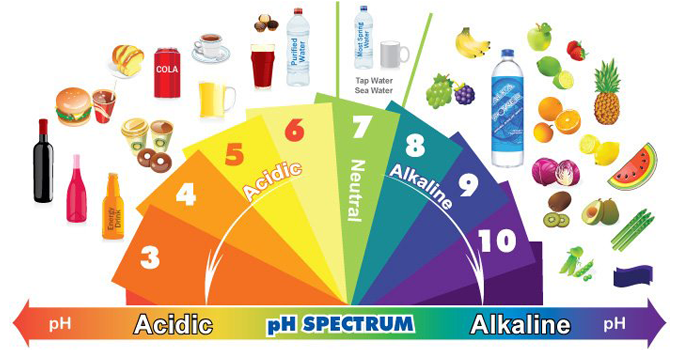
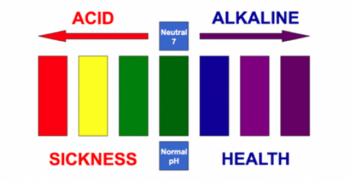
pH stands for power of hydrogen, which is a measurement of the hydrogen ion concentration in the body. The total pH scale ranges from 1 to 14, with 7 considered to be neutral. A pH less than 7 is said to be acidic and a pH greater than 7 are basic or alkaline. Human blood pH should be slightly alkaline ( 7.35 – 7.45 ).


acid alkaline

An acidic pH in the body can occur from, an acid forming diet, emotional stress, toxic overload or any process that deprives the cells of oxygen and other nutrients. The body will try to compensate for acidic pH by using alkaline minerals. If the diet does not contain enough minerals to compensate, a buildup of acids in the cells will occur. This when combined with an arena of other challenging environmental factors (such as lack of rest, psychological stress, and pharmaceutical drugs) will lead to chronic, degenerative illnesses or otherwise deadly conditions sooner or later for which modern medicine can’t claim 100% cure.

Acidic environment will decrease body’s ability to repair damaged cells, decrease its ability to detoxify heavy metals, make tumor cells thrive, and make it more susceptible to fatigue and illness. The reason acidosis is more common in today’s society is due to the drastic changes in the eating patterns as compared to our ancestors. Our food today is far too high in acid producing animal products like meat, eggs and dairy, and far too low in alkaline producing foods like fresh vegetables. Additionally, we eat acid producing processed foods like white flour and sugar and drink acid producing beverages like coffee and soft drinks.

We use too many drugs (for quick fixes), which are acid forming too. Chemical or artificial sweetners are extremely acid forming. On the other hand eating too many alkalizing foods can lead to its own fair share of complications over time, but the risk of this is seemingly less likely considering the current sorry state of today’s highly addictive people’s faulty diet as well as lifestyle.

One of the best things we can do to correct an acidic body is to clean up the diet and lifestyle. In order to maintain optimal health, the diet should consist of 60% alkaline forming foods and 40% acid forming foods. To restore health and reverse the damage caused by acidic body, the diet should consist of 80% alkaline forming foods and 20% acid forming foods.

A small explanation to make you understand things better, when a person ingests food to fuel the body, the digestive and metabolic process of the body breaks food into a kind of ash which is either acidic or alkaline. The laws of modern biochemistry further explains that it is not the organic matter (such as Carbohydrates, Proteins and Fat) of foods (whether the food itself is acidic or alkaline), but their inorganic matter (such as calcium, magnesium, potassium, sodium, sulfur, phosphorous; that is, how they break down in our bodies), that determines either the acidity or alkalinity of this ashy residue.

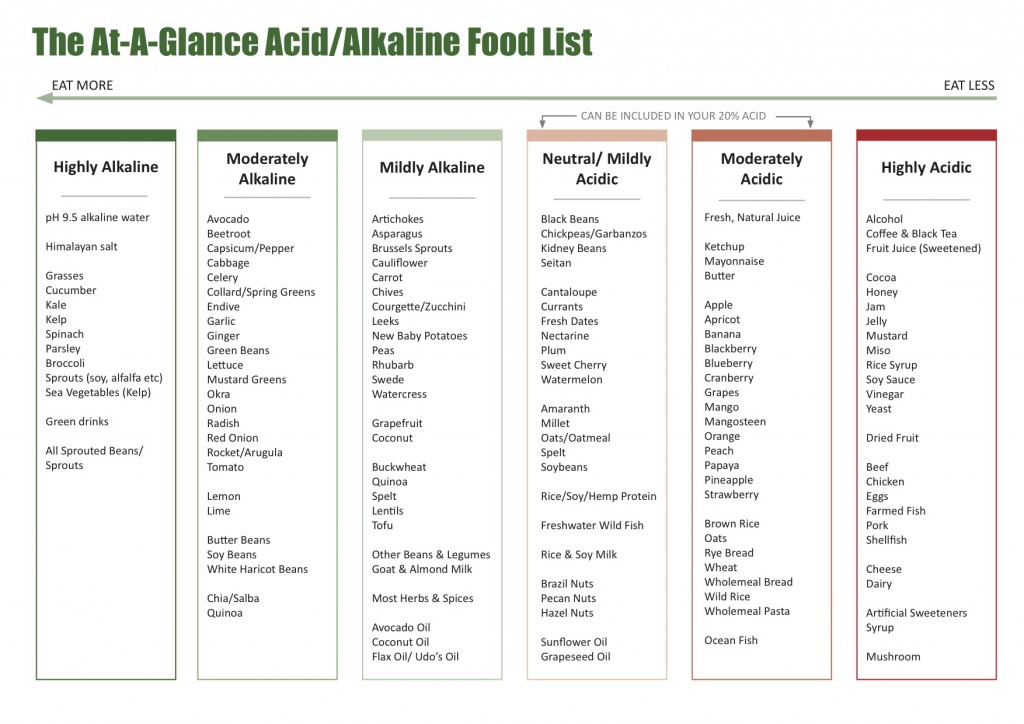
All foods in nature contain both acid and alkaline-forming elements, pH balance is either achieved or thwarted as a direct result of the foods we choose to eat. Broadly speaking alkaline foods includes most fruits, green vegetables, peas, beans, lentils, spices, herbs and seasonings as well as seeds and nuts. And, acid forming foods includes meat, fish, poultry, eggs, grains, and legumes along with all the processed commercial refined foods off course!

Here is the quick list of foods based on their alkalinity and acidity, Have a look at them and follow the tips attached beneath that to make your diets more alkaline.

Acidic and Alkaline foods

Source: energiserforlife.com

Tips :

  1. Cut out sugar completely. Avoid processed sugars as well – no corn syrup, no agave, no maltose, no aspartame (Check Food labels carefully)
  1. Having fresh vegetable juices in the morning will oxidise the nutrients present in the veggies.
  1. The regular practice of Yoga cleanses the acids from the joints and organs
  1. Avoid toxic fats like trans fats. Less known fact about coconut oil is it’s not acidic like all other oils when used for frying. Using coconut oil for cooking is the best recommendation.
  1. Stop using deodorants and creams. They have massive chemical load that makes body acidic, also they often suppress the body’s natural functions like sweating, which actually helps to eliminate acid, and pushes the acid back into the lymph nodes.
  1. Stop drinking fluoridated tap water. Tap water is bad, don’t even use it for cooking. Use water from water filter for drinking and cooking purpose.
  1. Highly alkalising foods- you can complement your meals with Wheat Grass, Lemon Grass, Apple cider Vinegar, Alfalfa Grass, Kamut Grass, Oat Grass, Broccoli, Kelp, Cayenne, Cucumber (best taken in the morning or lunch, not at night)
  1. Cut right down on meat. Meat is very acidic. Especially red meat.

Above all, the ultimate goal is balance. What you eat and drink will impact our body’s pH. So eat wisely.

  • « Previous Page
  • 1
  • …
  • 20
  • 21
  • 22
  • 23
  • Next Page »

Search

Recent Posts

  • ALL ABOUT VERTIGO!
  • PCOS and Anxiety: Discover Relief with the 54321 Technique
  • Navigating the Maze of Nutrition: Finding Clarity Amidst Confusion
  • Get children active and keep them healthy
  • What Gestational Diabetes Can Do To You & Your Unborn Child

Stay Updated

Archives

  • December 2025 (5)
  • November 2025 (15)
  • October 2025 (20)
  • September 2025 (6)
  • August 2025 (6)
  • July 2025 (12)
  • June 2025 (18)
  • May 2025 (16)
  • April 2025 (23)
  • March 2025 (23)
  • February 2025 (22)
  • January 2025 (26)
  • December 2024 (26)
  • November 2024 (25)
  • October 2024 (22)
  • September 2024 (24)
  • August 2024 (31)
  • July 2024 (21)
  • June 2024 (26)
  • May 2024 (31)
  • April 2024 (27)
  • March 2024 (29)
  • February 2024 (26)
  • January 2024 (25)
  • December 2023 (15)
  • November 2023 (11)
  • October 2023 (22)
  • September 2023 (22)
  • August 2023 (20)
  • July 2023 (22)
  • June 2023 (24)
  • May 2023 (24)
  • April 2023 (24)
  • March 2023 (23)
  • February 2023 (20)
  • January 2023 (16)
  • December 2022 (12)
  • November 2022 (15)
  • October 2022 (15)
  • September 2022 (12)
  • August 2022 (10)
  • July 2022 (17)
  • June 2022 (11)
  • May 2022 (10)
  • April 2022 (6)
  • March 2022 (6)
  • February 2022 (13)
  • January 2022 (12)
  • December 2021 (7)
  • November 2021 (3)
  • October 2021 (6)
  • September 2021 (3)
  • August 2021 (8)
  • July 2021 (7)
  • June 2021 (15)
  • May 2021 (16)
  • April 2021 (10)
  • March 2021 (7)
  • February 2021 (4)
  • January 2021 (4)
  • December 2020 (3)
  • November 2020 (4)
  • October 2020 (10)
  • September 2020 (3)
  • August 2020 (3)
  • July 2020 (2)
  • June 2020 (4)
  • May 2020 (10)
  • April 2020 (12)
  • March 2020 (10)
  • February 2020 (4)
  • January 2020 (4)
  • December 2019 (3)
  • November 2019 (7)
  • October 2019 (5)
  • September 2019 (4)
  • August 2019 (9)
  • July 2019 (9)
  • June 2019 (11)
  • May 2019 (4)
  • April 2019 (9)
  • March 2019 (8)
  • February 2019 (9)
  • January 2019 (8)
  • December 2018 (9)
  • November 2018 (3)
  • October 2018 (3)
  • September 2018 (5)
  • August 2018 (10)
  • July 2018 (6)
  • June 2018 (13)
  • May 2018 (8)
  • April 2018 (18)
  • March 2018 (9)
  • February 2018 (8)
  • January 2018 (15)
  • December 2017 (12)
  • November 2017 (19)
  • October 2017 (13)
  • September 2017 (15)
  • August 2017 (4)
  • July 2017 (8)
  • June 2017 (7)
  • May 2017 (6)
  • April 2017 (8)
  • March 2017 (6)
  • February 2017 (7)
  • January 2017 (9)
  • December 2016 (10)
  • November 2016 (7)
  • October 2016 (7)
  • September 2016 (7)
  • August 2016 (11)
  • July 2016 (9)
  • June 2016 (9)
  • May 2016 (12)
  • April 2016 (17)
  • March 2016 (17)
  • February 2016 (8)
  • January 2016 (6)
  • December 2015 (2)
  • November 2015 (9)
  • October 2015 (7)
  • September 2015 (9)
  • August 2015 (11)
  • July 2015 (9)
  • June 2015 (12)
  • May 2015 (9)
  • April 2015 (13)
  • March 2015 (8)
  • February 2015 (5)
  • January 2015 (12)
  • December 2014 (14)
  • November 2014 (11)
  • October 2014 (6)
  • September 2014 (13)
  • August 2014 (12)
  • July 2014 (6)
  • June 2014 (2)
  • May 2014 (7)
  • April 2014 (5)

From “Laddu Nawin” to Fit and Fierce: How a 25-Year-Old Insurance Advisor Shed 20 Kilos and Gained His Life Back

When 25-year-old Nawin Yadav from Hyderabad walked into his office every morning, he carried more than just his files and policy papers. He had the weight of fatigue, sluggish energy, and an ever-growing belly that was becoming the butt of jokes. “People … [Read More...]

“I’ve Challenged Myself to Live 100 Years” – The Story of Chandubhai Savani’s Second Chance at Life

At 67, most people start slowing down. Not Chandubhai Savani. A resident of Surat, Chandubhai, thought life was on track. “My life was going well till I had my bypass surgery,” he says. That surgery, back in 2021, was a wake-up call.  Medication was routine, but exercise wasn’t. His diet? What he calls ‘normal.’ “I […]

From Shimla’s Slopes to Chandigarh’s Sidewalks: Surinder Kaur Bhalla’s Journey from Chaos to Control

Some journeys start with a plan. Others begin with a stumble literally. Surinder Bhalla, a government professional, born and raised in the scenic hill town of Shimla, had always lived a life of movement. “In Shimla, you walked everywhere,” she reflects. “Walking was never an exercise. It was just life.” But after shifting to Chandigarh, […]

Ananda Mukherjee Health Story

From Terminal Illness To Complete Wellness! Ananda Mukherjee Health Story

As we observe World Cancer Day under the powerful theme ‘United by Unique’ (2025-2027)**, we are reminded that every individual’s journey with cancer is distinct, yet united by shared resilience, hope, and the collective fight against this disease. This theme places people at the centre of care and their stories at the heart of the […]

  • HOME
  • HEALTHY LIVING
  • FITNESS
  • HEALTHY RECIPES
  • USER STORIES
  • KARMA
  • BUY GOQii

Copyright ©2016 GOQii



