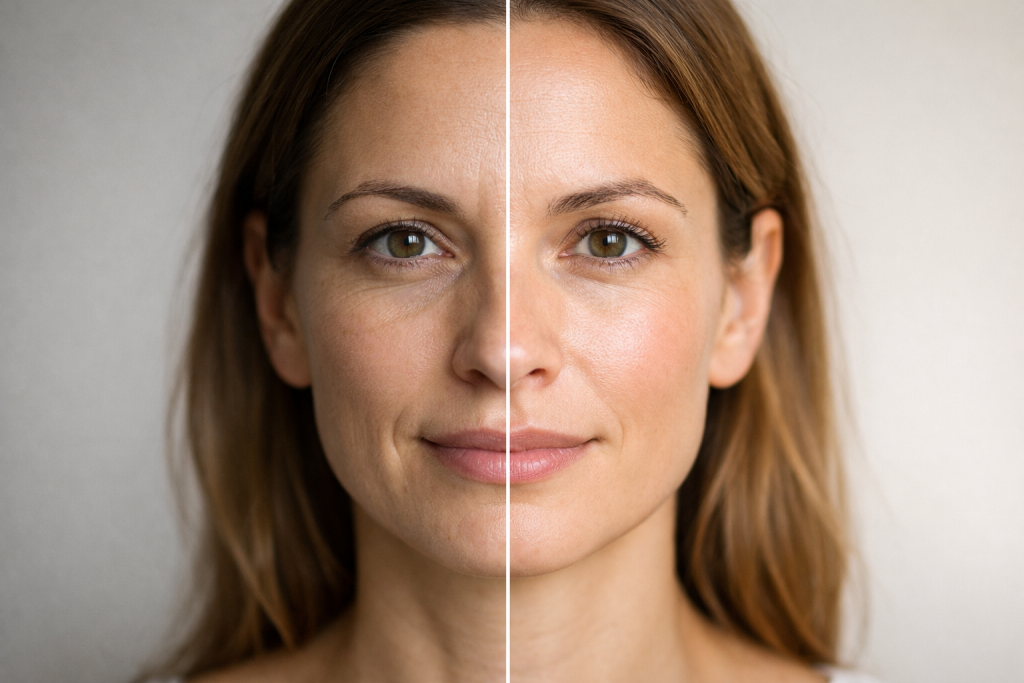
While genetics certainly play a role, your daily lifestyle and nutrition are the primary drivers of how your skin handles this massive physical transformation.
The Science of Skin Elasticity
Your skin relies on two main structural proteins: Collagen (which provides firmness and structure) and Elastin (which provides bounce and flexibility).
When we lose weight rapidly, the subcutaneous fat “padding” underneath the skin disappears quickly. If the body doesn’t have the right raw materials to actively repair and tighten the skin’s scaffolding, we see what the media has dubbed “Ozempic face” or general loose skin.
However, when you are on GLP-1 therapy (or any accelerated weight loss journey), you have a unique opportunity to support your skin from the inside out. By focusing heavily on nutrient density, you can maintain that healthy “GLP-1 glow” even as the weight drops away.
Your Skin-Support Protocol
Here are the four non-negotiable nutritional pillars to keep your skin tight, hydrated, and glowing:
- Hydration (Beyond the Glass) Skin elasticity requires deep “internal moisture.” This doesn’t just mean drinking litres of plain water; it means eating hydrating foods. Cucumbers, watermelon, and oranges provide structured water and are packed with Vitamin C—a crucial biological co-factor required for your body to produce collagen.
- Amino Acid Loading Remember the concept of the “Protein Ceiling”? This is exactly where it helps your skin. Collagen is made entirely of amino acids (specifically glycine, proline, and hydroxyproline). If you consistently hit your daily protein targets, you are literally providing the bricks needed to rebuild your skin’s foundation. (Note: Be sure to hyperlink “Protein Ceiling” to your previous GOQii blog!)
- The Power of Omega-3s Think of healthy fats as a natural lubricant for your skin cells. Omega-3s found in wild salmon, walnuts, chia, and flaxseeds keep your skin barrier incredibly strong. They help lock in moisture and prevent that dull, “sallow” look that can sometimes accompany severe calorie deficits.
- Vitamin C and Antioxidants Rapid weight loss causes your body to process a lot of cellular waste, which can temporarily increase oxidative stress. Loading up on colourful berries and dark leafy greens helps neutralise the “free radicals” that actively break down collagen.
The GOQii Pro-Tip: Do not skip your daily moisturiser or sunscreen, but remember that 90% of your skin’s health actually happens in the gut. A high-protein, antioxidant-rich, whole-food diet is the absolute best anti-ageing serum money can buy.
#BeTheForce
Frequently Asked Questions (FAQs)
- Can diet and nutrition really tighten loose skin after rapid weight loss? While severe cases of loose skin may eventually require medical intervention, nutrition plays a massive, non-negotiable role in improving tissue elasticity. By consistently consuming sufficient protein, omega-3 fatty acids, and vitamin C, you provide your body with the exact raw materials it needs to rebuild collagen and elastin fibres naturally from the inside out.
- Do GLP-1 medications directly cause “Ozempic face” and skin sagging? No, the medications themselves do not directly damage your skin or cause “Ozempic face.” The sagging is simply a physical result of rapid fat loss. When the subcutaneous fat (the padding beneath the skin) diminishes much faster than the skin can naturally shrink, it leads to a hollowed or loose appearance. Prioritising a nutrient-dense protocol helps counteract this effect by strengthening the skin’s structural scaffolding.
- How long does it take for skin elasticity to improve during a weight loss programme? Skin is a living, regenerating organ, and its standard cellular turnover cycle takes roughly 28 to 42 days. However, rebuilding deep structural collagen takes more time. If you strictly follow a hydration and high-protein protocol, you can expect to see noticeable improvements in skin bounce, hydration, and firmness within 3 to 6 months of consistent healthy habits.
Disclaimer: GOQii is committed to providing accurate, up-to-date, and comprehensive health information. This article is intended for informational purposes only and should not be used as a substitute for professional medical advice, diagnosis, or treatment. Always consult a qualified healthcare professional before starting or changing any medication. Individual responses to treatment may vary.




Leave a Reply