GOQii

Blog

  • HOME
  • HEALTHY LIVING
  • FITNESS
  • HEALTHY RECIPES
  • USER STORIES
  • KARMA
  • BUY GOQii

January 8, 2025 By GOQii 2 Comments

Struggling with Sleep? Your Circadian Rhythm Might Be to Blame

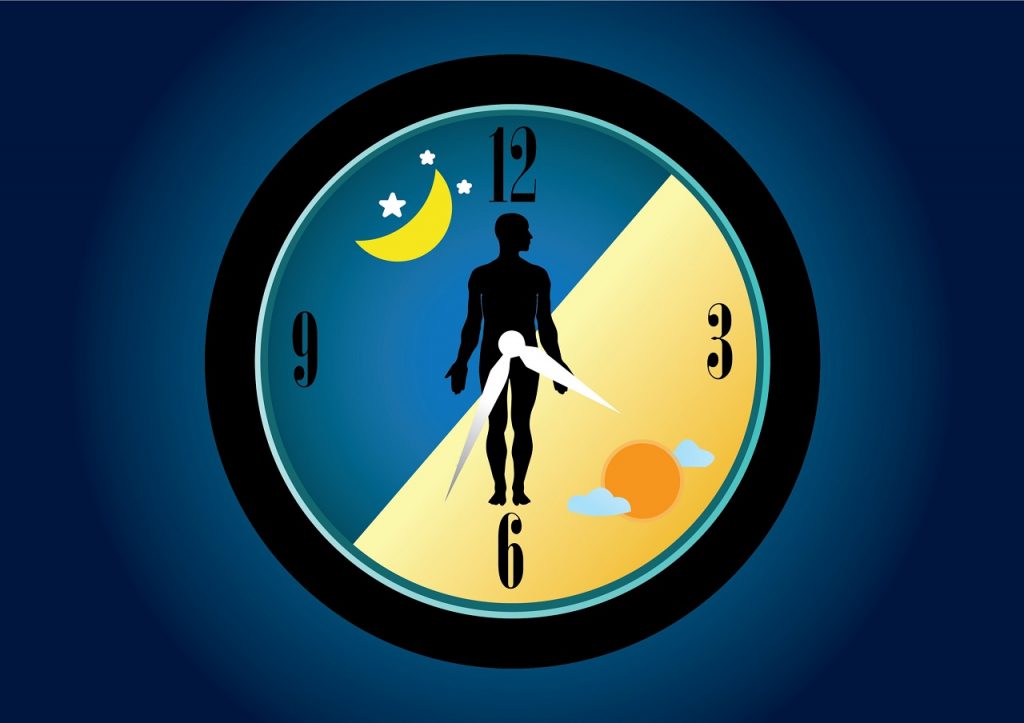
circadian rhythmCircadian Rhythms are 24 hour cycles that are part of the body’s internal clock, which aid essential functions and processes. For instance, the sleep-wake cycle is a well known circadian rhythm. Different parts of the body follow circadian rhythms that are connected to the master clock of the brain. The master clock is affected by the environment, which is why the circadian rhythm is tied to the day and night cycle.

While following your body’s natural clock can help you reap some amazing benefits, doing the opposite can create many health problems. Researchers also believe that circadian rhythms play an important role in the diverse aspects of physical and mental health.

How Does It Affect You?  

Circadian rhythms work best when the body processes are optimized at various points during a 24-hour period. It works with the mental and physical systems throughout the body. The digestive system produces proteins to suit the timings of the meals, and the endocrine system regulates the hormones to suit normal energy expenditure. 

During the day, when you are exposed to sunlight, the master clock sends signals to generate alertness which keeps us awake and active. As night falls, the master clock helps in the production of melatonin, a hormone that promotes sleep, and sends signals that helps us to sleep through the night. When we sleep well at night, it helps us be active during the day.

Straying away from your body’s clock can give rise to serious sleeping problems. Without proper signalling from the body’s internal clock, a person can struggle to fall asleep and wake up during the night, or being unable to sleep as long as they want in the morning. This leaves a person with little energy, attentiveness, focus, etc. 

In addition, studies have found out that Circadian rhythm disruptions as potential contributors to obstructive sleep apnea (OSA), a sleep disorder marked by repeated lapses in breathing. OSA reduces the body’s oxygen levels and causes numerous sleep interruptions through the night.

Types of Sleep-Wake Disorders 

  1. Delayed Sleep Phase Syndrome: This type of circadian rhythm disruption is associated with people who stay up late at night and sleep late in the morning. The main cause is unknown but may be related to genetics, underlying physical conditions and a person’s behaviour.
  2. Jet Lag Disorder: This happens when a person crosses a lot of time zones in a short period of time during intercontinental flights. They are likely to suffer from sleeping problems and fatigue from jet lag.
  3. Irregular Sleep–Wake Disorder: People with this rare disorder have no consistent pattern for their sleep and may have many naps or short sleeping periods throughout the day. It may affect the brain and cause dementia. 
  4. Shift Work Sleep Disorder: commonly affects those who work non-traditional hours, outside the typical 9am to 5pm work day. Shift work schedules go against most people’s internal body clocks or circadian rhythms. 
  5. Non 24 hour Sleep-Wake Disorder: This condition occurs in people who are blind and are not able to receive light. Their body follows a 24 hour cycle, but their sleeping hours change backwards by minutes or hours at a time.

Tips To Maintain Your Circadian Rhythm 

  • Exposure to sunlight: It is good to walk early in the day so that you can get good exposure to natural light and take in some Vitamin D.
  • Avoid caffeine: Stimulants like caffeine can keep you awake and can disturb the circadian rhythm. If you have trouble sleeping, avoid caffeine after noon. 
  • Eat a protein rich breakfast: Protein gives you the strength to be active throughout the day.
  • Avoid stress: Keep a positive attitude. Be assertive instead of aggressive, meditate, do yoga and eat healthy well-balanced meals.
  • Get daily exercise: Take a brisk walk early morning and keep yourself active throughout the day. This can help your internal clock and make it easier to fall asleep at night.
  • Take a short nap in the afternoon: Short naps can relax us while long naps throw our sleep off schedule.
  • Limit light before sleep: Artificial lighting can interfere with the circadian rhythm. Therefore, dim the lights and turn off all electronic devices one hour before bedtime.

Researchers believe that chronic disruptions in circadian rhythms could affect the immune system leading to weight gain, impulsive slower thinking and other physiological and behavioral changes from the observation made in people who work in shifts and those who are often jet lagged. 

If this article intrigued you and you’d like to know more, check out our article on the Circadian Rhythm Diet and how it helps. To balance your sleep-wake cycle or ensure better sleep quality, reach out to a GOQii Coach by subscribing to Personalised Health Coaching here.

#BeTheForce 

Disclaimer: The information provided in this blog is for general awareness and educational purposes only. It is not intended to replace professional medical advice, diagnosis, or treatment. Always consult a qualified healthcare provider for personalised medical guidance or concerns related to your health.
November 13, 2024 By Dr. Viral Thakkar 3 Comments

Sleep Well Without Electronics

Sleep Well Without ElectronicsI am not here to quote articles to tell you that radiation from electronics wrecks sleep. I am here to tell you that it really does. Period. And for the current generation, it is a bad scenario!

Why Should You Believe Me?

Well, after reading this article, put off your WiFi, network and call connection for 2 hours before going to bed. Try and gauge the quality of your sleep. Ask yourself, if you slept deep or if you were disturbed during bedtime? It’s tried and tested, you sleep much deeper and better.

Using TVs, tablets, smartphones, laptops or other electronic devices before bed delays the body’s internal clock & might suppress the release of melatonin which induces sleep.

Radiation from mobile phones delays reduces sleep and causes headaches and confusion. The “glow” from electronics is at work against quality shut-eye. The small amounts of light from these devices pass through the retina into a part of the hypothalamus (the area of the brain that controls several sleep activities) and delay the release of the sleep-inducing hormone, melatonin.

Many of us are into binge-watching television shows. Research shows that those who are identified as binge-watchers report more fatigue, symptoms of insomnia, poorer sleep quality and greater alertness prior going to bed. Further analysis found that binge-watchers had a 98% higher likelihood of having poor sleep quality compared to those who did not consider themselves to be binge-watchers.

Gaming is the worst of all for all age groups. Video games appeared to contribute to sleep problems as well, even if the kids watched or played them during the daytime. Activities like TV, gaming, etc. gets you excited, and in many cases, you end up sleeping late, with disturbed sleeping patterns. In case you’re in your 20s and 30s and manage to sleep well with this scenario, my suggestion is to stop now. TV and computer monitors can keep melatonin levels from rising normally because of the brightness of the screens. Around bedtime, adults and the young should be winding down.

 Why Should Anyone Bother About Good Quality Sleep?

Sleep is important because it enables the body to repair, be fit and ready for another day. Getting adequate rest may also help prevent excess weight gain, heart disease, and increased illness duration. It is extremely essential part of healing well. 

Am I suggesting that we all stop using electronics? Hell No! However, you can do the following

  1. Put your WiFi off 4-5 hours before sleeping
  2. Try to decrease and eventually stop using all electronic items 4-5 hours before bed. Get back to the landline maybe!
  3. Gaming & play outside the house is a YES, and on the phone is a NO for all age groups
  4. Read a book, a newspaper or chat up with friends
  5. Meditating is one of the best options before bed as it induces your healing process and recuperates your body, mind and emotions.

If you really want to experience perfect sleep try to be away from technology for those 6 to 8 hours so you spend 16-18 hours of the other part of the day where you really need it!

We hope this article helps you sleep well. Do leave your thoughts in the comments below! For more on sleep, check out Healthy Reads or ask a GOQii Coach directly by subscribing for Personalized Health Coaching here.

#BeTheForce

Disclaimer: The information provided in this blog is for general awareness and educational purposes only. It is not intended to replace professional medical advice, diagnosis, or treatment. Always consult a qualified healthcare provider for personalised medical guidance or concerns related to your health.

October 11, 2024 By Farida Gohil 7 Comments

Sleep Deprivation Linked To High Calorie Food Choices

Sleep Deprivation Linked To High Calorie Food ChoicesThere is more science supporting the fact that getting a good night’s rest is best for your health. A new study published in the journal Food Product Design, by Author Colin Chapman, MSc, of Uppsala University says that people who were deprived of one night’s sleep purchased more calories and grams of food in a mock supermarket the following day. Sleep deprivation leads to increased blood levels of ghrelin, a hormone that increases hunger. However, there was no correlation between individual ghrelin levels and food purchasing, suggesting that other mechanisms such as impulsive decision making may be more responsible for increased purchasing.

What Did The Study Find?

The Uppsala University of Sweden is the oldest university of the Nordic countries and offers courses in Science and Technology, Medicine, Humanity and Social Sciences. Researchers at Uppsala University investigated whether sleep deprivation may impair or alter an individual’s food purchasing choices based on its established tendency to impair higher-level thinking and to increase hunger.

They hypothesised that sleep deprivation’s impact on hunger and decision making would make for the ‘perfect storm’ with regard to shopping and food purchasing – leaving individuals hungrier and less capable of employing self-control and higher level decision making processes to avoid making impulsive, calorie-driven purchases.

On the morning after one night of total sleep deprivation, as well as after one night of sleep, the researchers gave 14 normal-weight men a fixed budget (approximately $50). The men were instructed to purchase as much as they could out of a possible 40 items, including 20 high-caloric foods and 20 low-caloric foods. The prices of the high-caloric foods were then varied to determine if total sleep deprivation affects the flexibility of food purchasing. Before the task, participants received a standardised breakfast to minimise the effect of Hunger on their purchases.

Sleep-deprived men purchased significantly more calories (+9%) and grams (+18%) of food than they did after one night of sleep. The researchers also measured blood levels of ghrelin, finding that the hormone’s concentration was higher after total sleep deprivation; however, this increase did not correlate with food purchasing behavior.

Their finding provides a strong rationale for suggesting that patients with concerns regarding caloric intake and weight gain should maintain a healthy and normal sleep schedule.

Is There A Link Between Sleep Deprivation and Weight Gain? 

Findings from a study published in the journal Nature Communications found that losing sleep can make you more likely to crave junk food rather than healthy food. Other studies have linked poor sleeping habits to increased appetites.

Results from the study show that sleep deprivation significantly decreased activity in appetitive evaluation regions within the brain during food desirability choices, combined with increased activity in the amygdala. This change in brain activity is further associated with an increase in the desire for weight gain promoting high-calorie foods following sleep deprivation.

Based on the study above, it is evident that one needs a good night of rest. What do you think? Let us know your thoughts in the comments below.

If you have trouble sleeping, speak to an expert by subscribing for GOQii’s Personalised Health Coaching here.

Here’s how our GOQii Coach helped a player overcome insomnia. For tips on how to sleep well, check out Healthy Reads.

#BeTheForce

Disclaimer: The information provided in this blog is for general awareness and educational purposes only. It is not intended to replace professional medical advice, diagnosis, or treatment. Always consult a qualified healthcare provider for personalised medical guidance or concerns related to your health.

August 7, 2024 By Urvi Gohil Leave a Comment

Improve Sleep and Sleep Quality with these Lifestyle Changes

Improve sleep and sleep qualityWhile sleep requirements vary slightly from person to person, most healthy adults need between 7-9 hours of sleep per night to function at best. It has been estimated that more than half of the working population in India have experienced some or the other form of sleep deprivation or alteration during their lifetime.

Globally, the prevalence of insomnia ranges from 10-15%.

Sleep deprivation reduces your cognitive processes like thinking, learning, attention, concentration, etc. Chronic sleep deprivation increases the risk of heart disease, high blood pressure, diabetes, irregular heartbeat, etc. Over time, lack of sleep can contribute to symptoms of depression and kills your sex drive. And yes, lack of optimum sleep can make you gain weight.

How to Improve Sleep and Sleep Quality

1. Stay away from gadgets
Using electronic devices before bedtime can be physiologically and psychologically stimulating in ways that can adversely affect your sleep. The more electronic devices a person uses in the evening, the harder it is to fall asleep or stay asleep. Using TV, tablets, smartphones, laptops or other electronic devices before bed delays your body’s internal clock, suppresses the release of sleep-inducing hormones & makes it difficult to fall asleep. Along, with increase in alertness at the time you should sleep, it, in turn, delays the onset of REM (Rapid Eye Movement) sleep and compromises energy levels the next morning. Over time, these effects can add up to a significant chronic deficiency in sleep.

2. Take a Lukewarm Bath Before Bed
Taking a bath or shower before bedtime is a well-known sleep remedy. This is because a warm bath can help us relax. Our body temperature tends to drop after a warm bath, which can induce better sleep. Research suggests that the best time for taking a shower is 1-2 hours before going to bed. The duration of the bath does not need to be longer than 10 min. This will improve blood circulation and stimulate “temperature circadian rhythm” helping you fall asleep, improving sleep and sleep quality.

3. Perform Deep Breathing Before Sleep
Breathing strongly influences physiology and thought processes including moods. By simply focusing your attention on your breathing and without doing anything to change it, you can move in the direction of relaxation. The 4-7-8 breathing exercise also called “the relaxing breath” promotes better sleep. Here are the steps:

  1. Exhale completely through your mouth, making a whoosh sound.
  2. Close your mouth and inhale quietly through your nose to a mental count of four.
  3. Hold your breath for a count of seven.
  4. Exhale completely through your mouth making a whoosh sound to a count of eight.
  5. This is one breath. Repeat 20 times.

4. Sleep Inducing Foods
There are certain foods which can help induce better sleep.

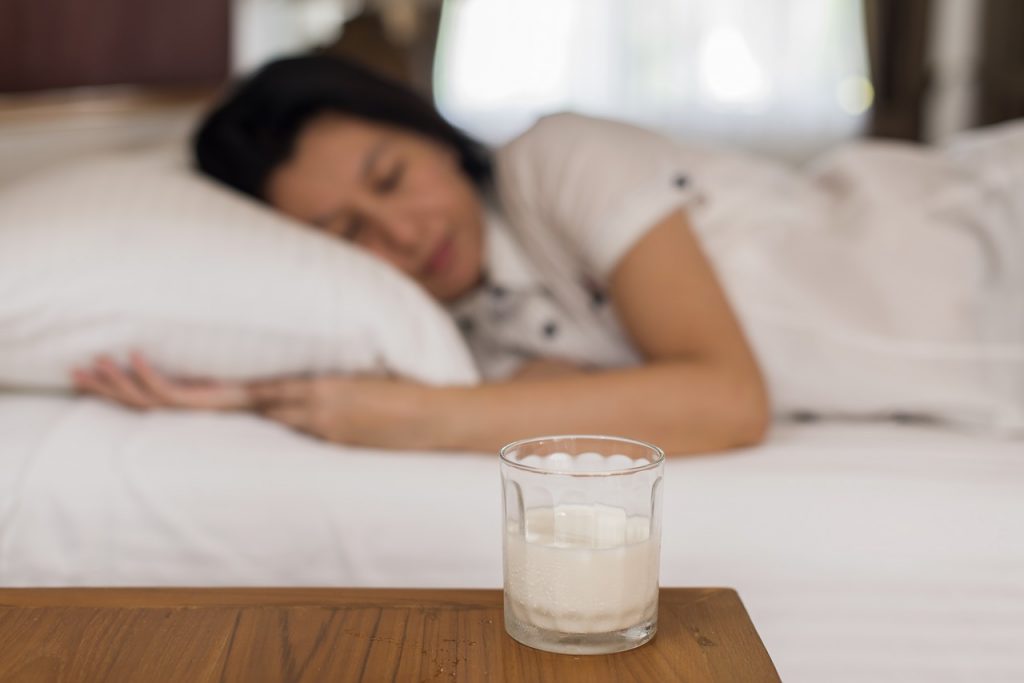
  • A glass of warm milk is a perfect beverage to induce sound sleep. Milk contains tryptophan, an amino acid that converts into serotonin. Serotonin is known to have soothing effects in the brain and helps you sleep well. Adding a pinch of nutmeg, cardamom and some crushed almonds will improve taste and sleep.
  • Chamomile tea: Refreshing, revitalizing and fragrant chamomile tea has soothing effects on nerves and helps induce sleep.
  • Almonds could help you support sound sleep. Almonds also contain tryptophan and magnesium which are helpful in keeping your heart rhythm steady.
  • Avoid tea, coffee, alcohol and other stimulating foods after dusk.

5. Eat Your Dinner Early
When you eat late, you are unable to sleep because of improper digestion. An early dinner is good for digestion, helps in reaching your satiety value earlier and the body is able to utilize the food better and induce sleep. Eating late at night leaves the body on a high alert state which interferes with the circadian rhythm. Minimum 2-3 hours of gap between Dinner and sleep is good.

We hope these tips help you improve sleep and sleep quality! Do leave your thoughts in the comments below.

For more on sleep, check out Healthy Reads or get these tips directly from your GOQii Coach, by subscribing for Personalised Health Coaching here.

#BeTheForce

Disclaimer: The information provided in this blog is for general awareness and educational purposes only. It is not intended to replace professional medical advice, diagnosis, or treatment. Always consult a qualified healthcare provider for personalised medical guidance or concerns related to your health.

  • « Previous Page
  • 1
  • 2
  • 3
  • 4
  • …
  • 8
  • Next Page »

Search

Recent Posts

  • PCOS and Anxiety: Discover Relief with the 54321 Technique
  • Navigating the Maze of Nutrition: Finding Clarity Amidst Confusion
  • Get children active and keep them healthy
  • What Gestational Diabetes Can Do To You & Your Unborn Child
  • Breathing – A Forgotten Art

Stay Updated

Archives

  • December 2025 (4)
  • November 2025 (15)
  • October 2025 (20)
  • September 2025 (6)
  • August 2025 (6)
  • July 2025 (12)
  • June 2025 (18)
  • May 2025 (16)
  • April 2025 (23)
  • March 2025 (23)
  • February 2025 (22)
  • January 2025 (26)
  • December 2024 (26)
  • November 2024 (25)
  • October 2024 (22)
  • September 2024 (24)
  • August 2024 (31)
  • July 2024 (21)
  • June 2024 (26)
  • May 2024 (31)
  • April 2024 (27)
  • March 2024 (29)
  • February 2024 (26)
  • January 2024 (25)
  • December 2023 (15)
  • November 2023 (11)
  • October 2023 (22)
  • September 2023 (22)
  • August 2023 (20)
  • July 2023 (22)
  • June 2023 (24)
  • May 2023 (24)
  • April 2023 (24)
  • March 2023 (23)
  • February 2023 (20)
  • January 2023 (16)
  • December 2022 (12)
  • November 2022 (15)
  • October 2022 (15)
  • September 2022 (12)
  • August 2022 (10)
  • July 2022 (17)
  • June 2022 (11)
  • May 2022 (10)
  • April 2022 (6)
  • March 2022 (6)
  • February 2022 (13)
  • January 2022 (12)
  • December 2021 (7)
  • November 2021 (3)
  • October 2021 (6)
  • September 2021 (3)
  • August 2021 (8)
  • July 2021 (7)
  • June 2021 (15)
  • May 2021 (16)
  • April 2021 (10)
  • March 2021 (7)
  • February 2021 (4)
  • January 2021 (4)
  • December 2020 (3)
  • November 2020 (4)
  • October 2020 (10)
  • September 2020 (3)
  • August 2020 (3)
  • July 2020 (2)
  • June 2020 (4)
  • May 2020 (10)
  • April 2020 (12)
  • March 2020 (10)
  • February 2020 (4)
  • January 2020 (4)
  • December 2019 (3)
  • November 2019 (7)
  • October 2019 (5)
  • September 2019 (4)
  • August 2019 (9)
  • July 2019 (9)
  • June 2019 (11)
  • May 2019 (4)
  • April 2019 (9)
  • March 2019 (8)
  • February 2019 (9)
  • January 2019 (8)
  • December 2018 (9)
  • November 2018 (3)
  • October 2018 (3)
  • September 2018 (5)
  • August 2018 (10)
  • July 2018 (6)
  • June 2018 (13)
  • May 2018 (8)
  • April 2018 (18)
  • March 2018 (9)
  • February 2018 (8)
  • January 2018 (15)
  • December 2017 (12)
  • November 2017 (19)
  • October 2017 (13)
  • September 2017 (15)
  • August 2017 (4)
  • July 2017 (8)
  • June 2017 (7)
  • May 2017 (6)
  • April 2017 (8)
  • March 2017 (6)
  • February 2017 (7)
  • January 2017 (9)
  • December 2016 (10)
  • November 2016 (7)
  • October 2016 (7)
  • September 2016 (7)
  • August 2016 (11)
  • July 2016 (9)
  • June 2016 (9)
  • May 2016 (12)
  • April 2016 (17)
  • March 2016 (17)
  • February 2016 (8)
  • January 2016 (6)
  • December 2015 (2)
  • November 2015 (9)
  • October 2015 (7)
  • September 2015 (9)
  • August 2015 (11)
  • July 2015 (9)
  • June 2015 (12)
  • May 2015 (9)
  • April 2015 (13)
  • March 2015 (8)
  • February 2015 (5)
  • January 2015 (12)
  • December 2014 (14)
  • November 2014 (11)
  • October 2014 (6)
  • September 2014 (13)
  • August 2014 (12)
  • July 2014 (6)
  • June 2014 (2)
  • May 2014 (7)
  • April 2014 (5)

From “Laddu Nawin” to Fit and Fierce: How a 25-Year-Old Insurance Advisor Shed 20 Kilos and Gained His Life Back

When 25-year-old Nawin Yadav from Hyderabad walked into his office every morning, he carried more than just his files and policy papers. He had the weight of fatigue, sluggish energy, and an ever-growing belly that was becoming the butt of jokes. “People … [Read More...]

“I’ve Challenged Myself to Live 100 Years” – The Story of Chandubhai Savani’s Second Chance at Life

At 67, most people start slowing down. Not Chandubhai Savani. A resident of Surat, Chandubhai, thought life was on track. “My life was going well till I had my bypass surgery,” he says. That surgery, back in 2021, was a wake-up call.  Medication was routine, but exercise wasn’t. His diet? What he calls ‘normal.’ “I […]

From Shimla’s Slopes to Chandigarh’s Sidewalks: Surinder Kaur Bhalla’s Journey from Chaos to Control

Some journeys start with a plan. Others begin with a stumble literally. Surinder Bhalla, a government professional, born and raised in the scenic hill town of Shimla, had always lived a life of movement. “In Shimla, you walked everywhere,” she reflects. “Walking was never an exercise. It was just life.” But after shifting to Chandigarh, […]

Ananda Mukherjee Health Story

From Terminal Illness To Complete Wellness! Ananda Mukherjee Health Story

As we observe World Cancer Day under the powerful theme ‘United by Unique’ (2025-2027)**, we are reminded that every individual’s journey with cancer is distinct, yet united by shared resilience, hope, and the collective fight against this disease. This theme places people at the centre of care and their stories at the heart of the […]

  • HOME
  • HEALTHY LIVING
  • FITNESS
  • HEALTHY RECIPES
  • USER STORIES
  • KARMA
  • BUY GOQii

Copyright ©2016 GOQii