GOQii

Blog

  • HOME
  • HEALTHY LIVING
  • FITNESS
  • HEALTHY RECIPES
  • USER STORIES
  • KARMA
  • BUY GOQii

About Neha Goyal

Neha Goyal is passionate about keeping herself healthy and educating others about the same. She believes that a fit and healthy body is our greatest asset. Being a post-graduate in Nutrition, she promotes healthy living and eating. She is also a REEBOK certified aerobics instructor. According to her, health is a relationship between you and your body, and you have to take full responsibility for the same. Her health mantra is, "Eat mindfully, sleep soundly, and stay active as much as you can, so that you age gracefully"

October 8, 2025 By Neha Goyal Leave a Comment

How To Correct Your Posture At Work

Correct your posture

You’ve probably heard the phrase “sitting is the new smoking,” and it’s no surprise. With modern work demanding long hours in front of a screen, many of us are feeling the effects. Increased time in a chair can lead to inactivity, backaches, and neck issues, primarily caused by poor posture.

While you may not be able to swap your job for a more active one, you can start correcting your posture right now.

How Can You Correct Your Posture? 

Good posture is when your muscles and ligaments that support your back and neck have to bear the least amount of strain while sitting. Besides standing and walking as much as possible, and taking a few breaks from sitting at the desk, the next best thing one can do is to have an excellent sitting posture.

  1. The very first step to find and correct your posture is to adjust your desk height for your eyes to look ahead on your computer screen without the need of flexing your neck to see your work. 
  2. Your ears should be in the same line as your shoulder which means no leaning forward. 
  3. Roll and pull back your shoulders to avoid protracting your shoulders. 
  4. Your feet should be flat on the floor. Neither tucked under the chair, nor stretched out too far away in front of you. Do not cross your legs either. 
  5. Your weight should be evenly spread over both of the hips & lower back. The buttocks should touch the back of the chair.
  6. Natural back curve should be maintained all the time. One can also place a rolled-up towel or lumbar roll.
  7. Your knees should be bent at a 90 degree angle or can be slightly higher than hip level. You can also place a low stool below your feet.

Some Additional Tips 

  • While sitting in a chair that rolls or pivots, rather than twisting at the waist, turn the whole body to prevent any jerks.
  • When standing up from a chair, first move to the front of the chair and then stand up by straightening your legs.
  • Try to avoid sitting for longer hours at a stretch in the same position.
  • Keep frequently used objects within close reach.
  • Keep the keyboard in the right position so as to leave a gap of 4-6 inch between the edge of the keyboard and the table so your wrists can rest while you type something.

Long Term Approach 

Knowing what’s right is definitely the first step if you want to improve your posture, but this is not a one time thing. It does take work and dedication on a regular basis along with some lifestyle changes to improve your posture in the long run. 

  • When you walk, stand, sit or run, make sure you are practicing good posture. If you notice that you are slouching or returning to old bad posture, correct your alignment right away.
  • If you are carrying around some extra weight, try to shed that as having the right body weight for height can do a lot to improve your posture.
  • Practice stretching regularly to ease up stiffness in the muscles that develop due to staying in the same posture for a long time, whether it’s prolonged standing or sitting.
  • Make strengthening exercises a part of your routine as it will improve muscle power to fight gravity and keep you upright in proper posture.

We hope this article will help you correct your posture. Do let us know your thoughts in the comments below! For more tips, check out Healthy Reads or ask a GOQii Coach by subscribing for personalised health coaching here.

#BeTheForce 

Disclaimer: The information provided in this blog is for general awareness and educational purposes only. It is not intended to replace professional medical advice, diagnosis, or treatment. Always consult a qualified healthcare provider for personalised medical guidance or concerns related to your health. Images shown are for representation purposes only and may not depict the exact recommendations or outcomes.

July 22, 2025 By Neha Goyal 6 Comments

Why Does Your Body Look Different From Others? We’ve Got the Answer!

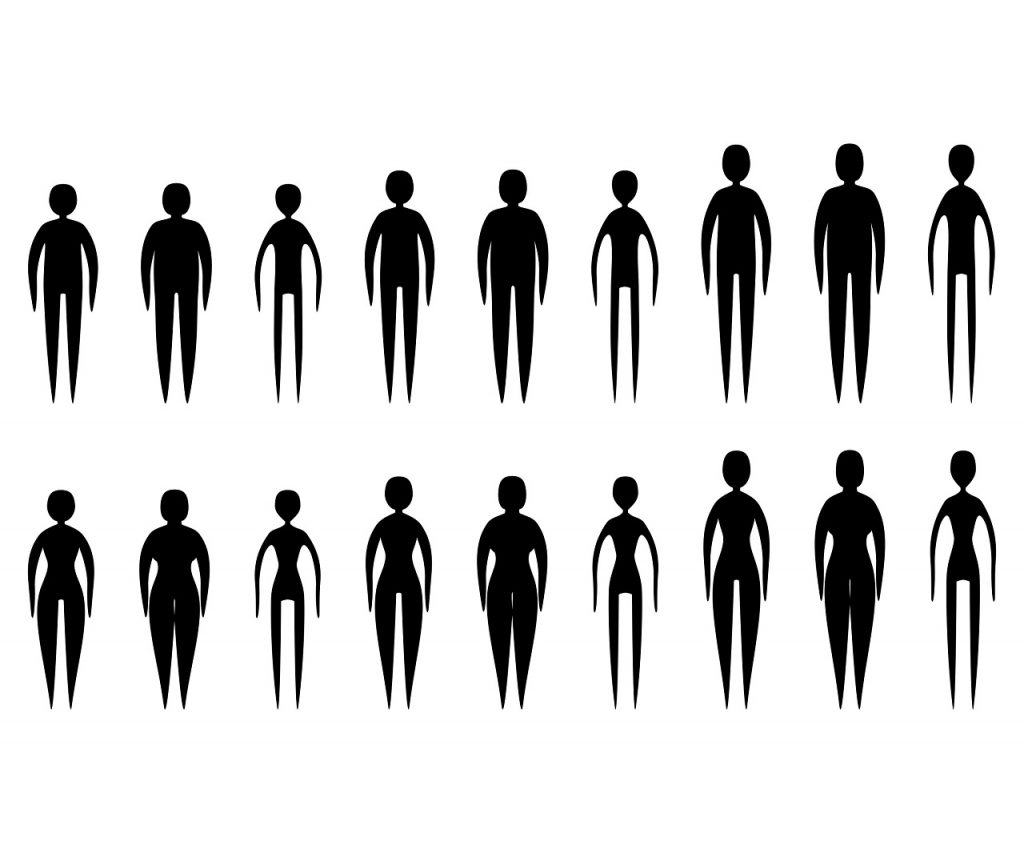
Have you ever wondered why a friend or neighbour, who’s the same age, height and weight as you, appears leaner? Or why they fit into size M clothes while you need size L- even if the numbers look similar? The answer lies in Body Composition.

What is Body Composition?

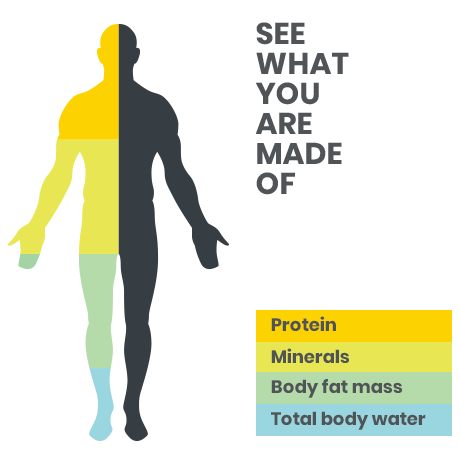
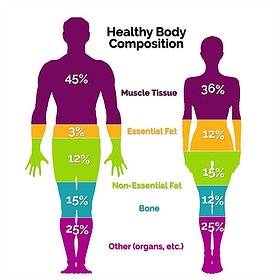
Body composition refers to the percentages of fat, bone, water and muscle in the human body. Two individuals of the same sex and weight may look completely different because they have different amounts of fat and lean mass.

In physical fitness, body composition is important because muscular tissue takes up less space than fat tissue. So it’s not just your weight that determines how lean you look – it’s the ratio of fat to muscle and other lean tissues.

body composition

What is Body Composition Analysis (BCA)?

As rates of overweight and obesity continue to rise, Body Composition Analysis is gaining traction as a more accurate way to assess health than simply looking at weight or BMI. Unlike weight scales or BMI charts, BCA tells you how much of your body is fat versus lean tissue such as muscle, water, bone, and organs.

Lean tissue is metabolically active, meaning it burns calories even when you’re at rest. So a person with more lean mass generally has a higher metabolism.

Why Should You Measure It?

Health experts agree: excess body fat increases the risk of numerous conditions including:

  • High blood pressure
  • High cholesterol and triglycerides
  • Type 2 diabetes
  • Heart disease
  • Breathing difficulties
  • Gallbladder disease
  • And more

Measuring body composition provides better insights than weight alone. It’s common to assume that “thin” means “healthy,” but that’s not always true. Being thin refers to weighing less than average, while leanness refers to a healthier ratio of muscle to fat. You can be thin and still have high body fat (sometimes called “skinny fat”).

body composition

Benefits of BCA

Understanding your body composition helps you and your healthcare providers in several ways:

  • Establishes a baseline for nutrition and obesity treatment
  • Supports targeted plans for muscle gain and fat loss
  • Tracks fat loss and muscle gain from diet and exercise
  • Gives insights into your metabolic rate and hydration levels
  • Highlights fat distribution, which can signal hormonal imbalances
  • Measures dangerous visceral fat (fat around organs)
  • Helps assess bone health and risk for osteoporosis
  • Identifies personal long-term health risks

How Do You Measure Body Composition?

There are several ways to estimate your body fat percentage, either at home, at the gym, or via a medical professional. Common methods include:

  1. Body Circumference Measurements:This involves measuring body parts like the waist, hips, and neck to estimate fat levels. It’s simple, affordable and useful for tracking changes over time. However, it may be inaccurate for certain body shapes and fat distributions.body composition
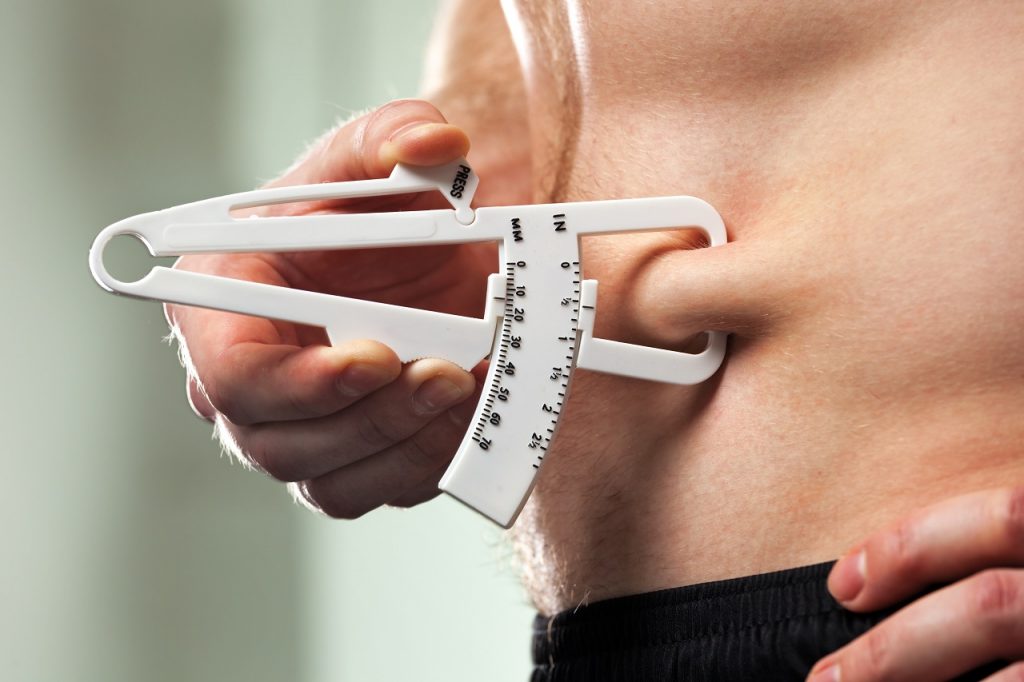
  1. Skinfold Calipers:Calipers measure the thickness of skin and subcutaneous fat in specific areas such as the triceps, abdomen, and shoulder blades. It’s affordable and quick but requires some practice and anatomical knowledge.body composition
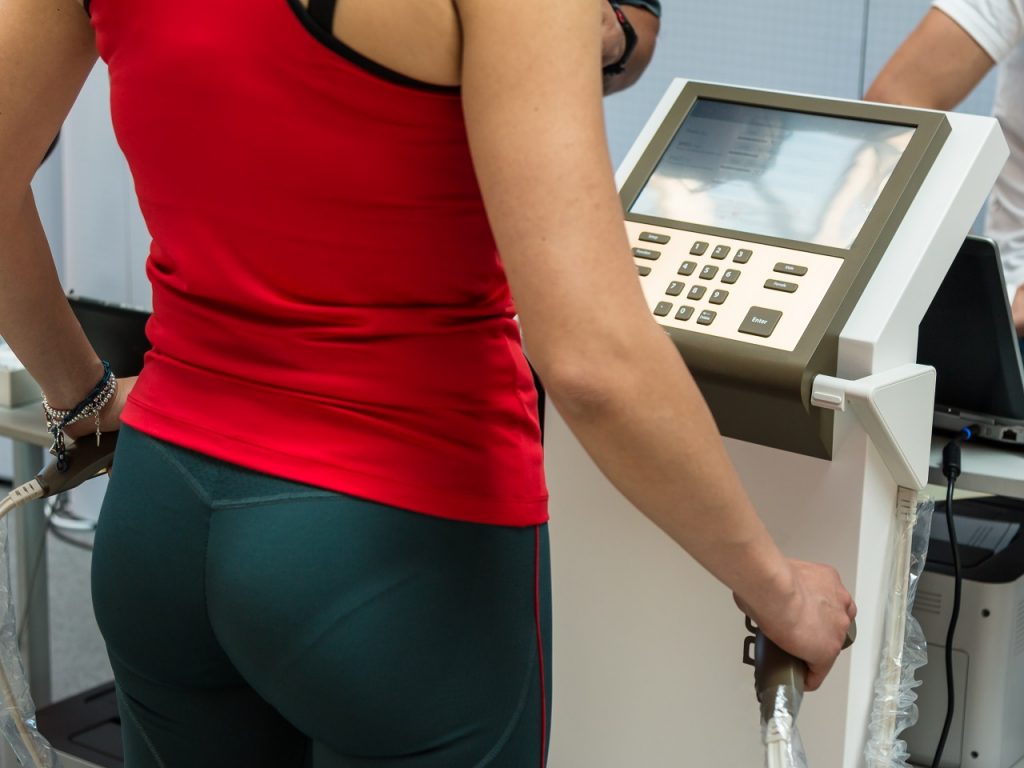
  1. Bioelectrical Impedance Analysis:This method sends a small electrical current through your body via a handheld or scale-based device. Since fat resists electrical flow more than muscle or water, the drop in current gives an estimate of body fat percentage. It’s convenient and non-invasive, but hydration levels can affect accuracy.body composition

Advanced (But Less Accessible) Methods

Some highly accurate methods are available in medical or research settings but are expensive and less accessible:

  • Dual-energy X-ray absorptiometry (DEXA)
  • Hydrostatic weighing
  • Air displacement plethysmography (e.g. Bod Pod)
  • 3D body scanning
  • MRI or Spectroscopy
  • Isotopic dilution

When to Measure

No matter the method, it’s best to measure body composition first thing in the morning, on an empty stomach, after using the toilet. This helps reduce variation due to hydration, food intake, or daily activities.

Body composition helps explain why people with the same weight may look or feel very different. It’s a far more insightful indicator of health than the number on a scale.

Want to learn more about nutrition and fat loss? Browse Healthy Reads. Or get personalised guidance from a GOQii Coach by subscribing here.

#BeTheForce 

Disclaimer: The information provided in this blog is for general awareness and educational purposes only. It is not intended to replace professional medical advice, diagnosis, or treatment. Always consult a qualified healthcare provider for personalised medical guidance or concerns related to your health. Images shown are for representation purposes only and may not depict the exact recommendations or outcomes.
February 7, 2025 By Neha Goyal 1 Comment

Is Olive Oil Suitable For Indian Cooking?

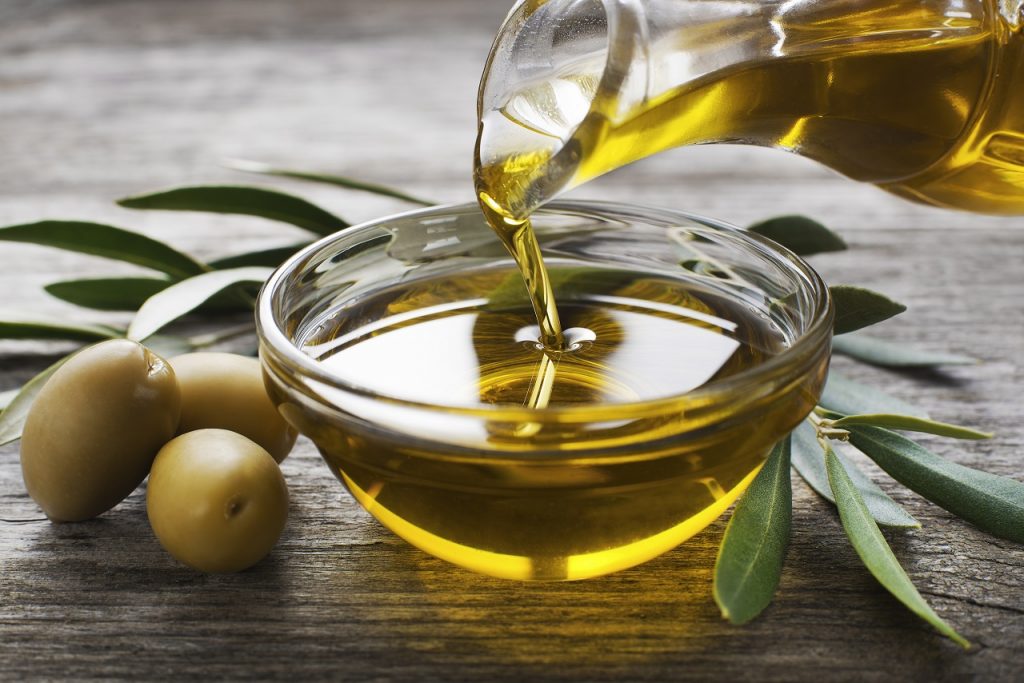
Olive OilWith newer superfoods making their mark on our plates, olive oil has gained a lot of popularity in India. Indians use oil in everything while searching for the healthiest alternative at the same time. As a result, the markets are flooded with brands and variants of olive oil. The most important question to ask here is: Does it fit in the Indian kitchen? Let’s find out by understanding what you are buying from the market because not all of them are created equally!

Different Types of Olive Oil 

There is no doubt that olive oil is healthy fat obtained by crushing olives using different methods. The catch is that the quality of olive oil sitting in your pantry is determined by the process of extracting the oil from the olives, the varieties, and how/whether they should be used in different cooking methods. Here’s a breakdown of the most common types:

  1. Extra Virgin Olive Oil: This is the highest quality extracted from freshly squeezed juice from olives using stone, wood or steel rollers. It has a very strong flavor, aroma and contains no more than 0.8% acidity. No chemical solvent or industrial refining process is used while producing this variant. In fact, temperatures are kept below 75 degree Fahrenheit during the whole process. Even after packaging, it is mandatory to keep it away from heat and sunlight. So it is clear that to get benefits from this high grade oil, you should not heat it. You can drizzle it over your pasta, salad, soups or use it for making dips.

  2. Virgin Olive Oil: This is also an unrefined variety but slightly lower in quality. Containing 1.5% acidity, it is considerably a subpar option to extra virgin variant. Still, it has a good aroma and is suitable for low temperature sautéing and baking as you are trying to substitute butter or any other saturated fat.

  3. Refined Olive Oil: If you see a bottle with “pure olive oil”, “Lite olive oil” or simply “olive oil” in a supermarket, they are usually Refined olive oils (or are mixed with some other refined oils). They are prepared using olives that are in bad condition or rancid olive oil after treating them with heat and chemicals to remove any unpleasant flavors as well as neutralize free fatty acid content. Being heavily processed, they do not contain any benefits of the extra virgin variant. You can use these for any kind of regular cooking. But don’t expect too much from it in terms of health.

  4. Olive Pomace Oil: Pomace is the word used for the leftover olive pulp after the first extraction which consists of skin, pulp, seeds and stems. The amount of oil present in pomace is so minimal that it cannot be extracted through pressing but only using chemical solvents like hexane and high heat. Clearly it has no benefits but calories. This variant is for people who are attracted by the benefits of olive oil, but are looking for something in their budget.

Are These Variants Suitable For The Indian Kitchen? 

After going over these variants, if you’re wondering which oil is suitable for an Indian pantry, then go back to your grandma’s kitchen. In India itself, we have so many healthy oil options that you don’t need to run after everything that the western world is popularizing . But just like olive oil, you need to choose the least processed or filtered variety of different oils. Some good options for Indian style high heat cooking are filtered or cold pressed varieties of sesame, groundnut, coconut or mustard oil. Also, let’s not forget desi ghee which accompanies “Maa ka pyar” in every traditional meal. Last but not the least, Consumption of any oil should be in moderation while following a balanced diet and regular exercise for good health.

Olive oil can be a part of your Indian kitchen, but it’s important to choose the right type based on your cooking needs. Use extra virgin olive oil for raw applications like salads and dips, virgin olive oil for low-heat cooking, and refined olive oil for regular cooking. However, for high-heat cooking methods like frying and tempering, traditional Indian oils like mustard, coconut, and sesame oil are better suited. Remember, moderation is key, and a balanced diet paired with regular exercise is the foundation of good health.

Have you tried using olive oil in your Indian recipes? Share your experiences in the comments below! For more tips on healthy cooking and nutrition, explore our Healthy Reads or consult a GOQii Coach for Personalised health advice. Subscribe now to start your wellness journey!

#BeTheForce 

December 9, 2024 By Neha Goyal 2 Comments

Pistachios – Your Powerful Nutritional Punch!

Pistachios - Your Powerful Nutritional Punch!Pistachios are edible seeds of the pistachio tree, member of the cashew family. They are nutrient-packed nuts that can be enjoyed both as a healthy snack or as part of a delicious recipe. Available both in the shell (in-shell) or with their shell already removed (shelled), they’re typically sold roasted and salted, although unsalted options are available, as well as some flavoured varieties, too.

How Does It Give a Powerful Nutritional Punch?

  • Loaded with Vitamins and Minerals: Pistachios are a rich source of protein, dietary fibre, several minerals such as phosphorus, potassium, calcium, iron, magnesium, manganese, zinc, copper, sodium and selenium. It is also a good source of vitamins like vitamin A, K, C, E, B6, B1, B2, B3, B9, and B5.
  • Good Source of Antioxidants: They contain more antioxidants than most nuts and seeds, second only to walnuts and pecans. You can literally “see” the nutrients through the various colours in pistachio. The green and yellow colour of the actual nut comes from lutein and zeaxanthin. The thin purple skin surrounding the nut is loaded with anthocyanins, the same type of antioxidants found in grapes and cranberries.
  • Lowest in Fat: A serving of pistachios has 13 grams of fat, of which about 1.7 grams are saturated, 3.5 grams are polyunsaturated, and 7 grams are monounsaturated fats. Compared to most other tree nuts, pistachios are one of the lowest in fat.
  • Cholesterol-Free: Pistachios have the highest phytosterol content (214 milligrams per 100 grams) amongst nuts. Phytosterols come from plants and because they have a similar structure to cholesterol, they compete with cholesterol for absorption by the body, ultimately limiting the amount of cholesterol absorbed.
  • Compared to other tree nuts, pistachios have a higher essential amino acid ratio and the highest percentage of branched-chain amino acids. Pistachios are a great plant-based protein option for everyone, but especially those eating a vegetarian or vegan diet.

Health Benefits of Eating Pistachios

  1. Heart Health: A number of studies have shown that pistachios significantly reduced total cholesterol and the “bad” LDL-cholesterol levels while increasing the “good” HDL-cholesterol level. They may increase antioxidant concentrations, which is linked to improved dilation of blood vessels as a result of a reduction in inflammation.
  2. Weight Management: It may seem counterintuitive but eating pistachios—a high-fat, calorie-dense food—has actually been associated with weight management. Pistachios are rich in fiber and protein, both of which increase satiety by helping you feel full and eat less .
  3. Gut Health: Pistachios are high in fiber, which moves through our digestive system mostly undigested. But some types of fiber are digested by the good bacteria in your gut, acting as prebiotics. Gut bacteria then ferment the fiber and convert it into inflammation-fighting short-chain fatty acids, & also results in decreased the number of lactic acid bacteria. It also increases the number of butyrate-producing bacteria in the gut more than eating almonds does.
  4. Blood Sugar Control: Despite having a higher carb content than most nuts, pistachios have a low glycemic index, meaning they don’t cause a large spike in your blood sugar. Also rich in fiber and healthy fats, antioxidants, magnesium, carotenoids and phenolic compounds, which are beneficial for blood sugar control.
  5. Good For Eye Health: Pistachios are rich in antioxidants lutein and zeaxanthin, which are essential for eye health, as they reduce the chances of developing eye conditions, including age-related macular degeneration (AMD) and cataracts.
  6. Prevents Cellular Damage: As our cells grow older, they accumulate oxidative damage due to the presence of free radicals, which can cause considerable damage to cells. Pistachios, being rich in antioxidants, including lutein, beta-carotene, and gamma-tocopherol, has oxidative damage-fighting benefits which also play a key role in reducing the risk of disease, such as cancer.

How to Include Pistachios in Your Diet?

One of the simplest ways to enjoy pistachios is as a snack on their own. You can also throw chopped pistachios on your yogurt or morning oatmeal or use them as a crunchy topping for your salads. Pair pistachios with a piece of fruit for your afternoon snack, their fiber, fat and protein will keep you satisfied.

Takeaway

Pistachios are very nutritious. Regularly eating pistachios may be a good way to improve health and wellbeing. But stick to plain, unsalted pistachio nuts in their shells and avoid eating more than 30gm a day. Before you begin eating them, do consult with your doctor, nutritionist or dietitian.

For more on nutrition and healthy eating, check out Healthy Reads or speak to an expert by subscribing for GOQii’s Personalised Health Coaching here.

#BeTheForce 

  • 1
  • 2
  • 3
  • …
  • 7
  • Next Page »

Search

Recent Posts

  • Navigating the Maze of Nutrition: Finding Clarity Amidst Confusion
  • Get children active and keep them healthy
  • What Gestational Diabetes Can Do To You & Your Unborn Child
  • Breathing – A Forgotten Art
  • The Incredible Benefits Of Milk You Might Not Know

Stay Updated

Archives

  • December 2025 (3)
  • November 2025 (15)
  • October 2025 (20)
  • September 2025 (6)
  • August 2025 (6)
  • July 2025 (12)
  • June 2025 (18)
  • May 2025 (16)
  • April 2025 (23)
  • March 2025 (23)
  • February 2025 (22)
  • January 2025 (26)
  • December 2024 (26)
  • November 2024 (25)
  • October 2024 (22)
  • September 2024 (24)
  • August 2024 (31)
  • July 2024 (21)
  • June 2024 (26)
  • May 2024 (31)
  • April 2024 (27)
  • March 2024 (29)
  • February 2024 (26)
  • January 2024 (25)
  • December 2023 (15)
  • November 2023 (11)
  • October 2023 (22)
  • September 2023 (22)
  • August 2023 (20)
  • July 2023 (22)
  • June 2023 (24)
  • May 2023 (24)
  • April 2023 (24)
  • March 2023 (23)
  • February 2023 (20)
  • January 2023 (16)
  • December 2022 (12)
  • November 2022 (15)
  • October 2022 (15)
  • September 2022 (12)
  • August 2022 (10)
  • July 2022 (17)
  • June 2022 (11)
  • May 2022 (10)
  • April 2022 (6)
  • March 2022 (6)
  • February 2022 (13)
  • January 2022 (12)
  • December 2021 (7)
  • November 2021 (3)
  • October 2021 (6)
  • September 2021 (3)
  • August 2021 (8)
  • July 2021 (7)
  • June 2021 (15)
  • May 2021 (16)
  • April 2021 (10)
  • March 2021 (7)
  • February 2021 (4)
  • January 2021 (4)
  • December 2020 (3)
  • November 2020 (4)
  • October 2020 (10)
  • September 2020 (3)
  • August 2020 (3)
  • July 2020 (2)
  • June 2020 (4)
  • May 2020 (10)
  • April 2020 (12)
  • March 2020 (10)
  • February 2020 (4)
  • January 2020 (4)
  • December 2019 (3)
  • November 2019 (7)
  • October 2019 (5)
  • September 2019 (4)
  • August 2019 (9)
  • July 2019 (9)
  • June 2019 (11)
  • May 2019 (4)
  • April 2019 (9)
  • March 2019 (8)
  • February 2019 (9)
  • January 2019 (8)
  • December 2018 (9)
  • November 2018 (3)
  • October 2018 (3)
  • September 2018 (5)
  • August 2018 (10)
  • July 2018 (6)
  • June 2018 (13)
  • May 2018 (8)
  • April 2018 (18)
  • March 2018 (9)
  • February 2018 (8)
  • January 2018 (15)
  • December 2017 (12)
  • November 2017 (19)
  • October 2017 (13)
  • September 2017 (15)
  • August 2017 (4)
  • July 2017 (8)
  • June 2017 (7)
  • May 2017 (6)
  • April 2017 (8)
  • March 2017 (6)
  • February 2017 (7)
  • January 2017 (9)
  • December 2016 (10)
  • November 2016 (7)
  • October 2016 (7)
  • September 2016 (7)
  • August 2016 (11)
  • July 2016 (9)
  • June 2016 (9)
  • May 2016 (12)
  • April 2016 (17)
  • March 2016 (17)
  • February 2016 (8)
  • January 2016 (6)
  • December 2015 (2)
  • November 2015 (9)
  • October 2015 (7)
  • September 2015 (9)
  • August 2015 (11)
  • July 2015 (9)
  • June 2015 (12)
  • May 2015 (9)
  • April 2015 (13)
  • March 2015 (8)
  • February 2015 (5)
  • January 2015 (12)
  • December 2014 (14)
  • November 2014 (11)
  • October 2014 (6)
  • September 2014 (13)
  • August 2014 (12)
  • July 2014 (6)
  • June 2014 (2)
  • May 2014 (7)
  • April 2014 (5)

From “Laddu Nawin” to Fit and Fierce: How a 25-Year-Old Insurance Advisor Shed 20 Kilos and Gained His Life Back

When 25-year-old Nawin Yadav from Hyderabad walked into his office every morning, he carried more than just his files and policy papers. He had the weight of fatigue, sluggish energy, and an ever-growing belly that was becoming the butt of jokes. “People … [Read More...]

“I’ve Challenged Myself to Live 100 Years” – The Story of Chandubhai Savani’s Second Chance at Life

At 67, most people start slowing down. Not Chandubhai Savani. A resident of Surat, Chandubhai, thought life was on track. “My life was going well till I had my bypass surgery,” he says. That surgery, back in 2021, was a wake-up call.  Medication was routine, but exercise wasn’t. His diet? What he calls ‘normal.’ “I […]

From Shimla’s Slopes to Chandigarh’s Sidewalks: Surinder Kaur Bhalla’s Journey from Chaos to Control

Some journeys start with a plan. Others begin with a stumble literally. Surinder Bhalla, a government professional, born and raised in the scenic hill town of Shimla, had always lived a life of movement. “In Shimla, you walked everywhere,” she reflects. “Walking was never an exercise. It was just life.” But after shifting to Chandigarh, […]

Ananda Mukherjee Health Story

From Terminal Illness To Complete Wellness! Ananda Mukherjee Health Story

As we observe World Cancer Day under the powerful theme ‘United by Unique’ (2025-2027)**, we are reminded that every individual’s journey with cancer is distinct, yet united by shared resilience, hope, and the collective fight against this disease. This theme places people at the centre of care and their stories at the heart of the […]

  • HOME
  • HEALTHY LIVING
  • FITNESS
  • HEALTHY RECIPES
  • USER STORIES
  • KARMA
  • BUY GOQii

Copyright ©2016 GOQii