GOQii

Blog

  • HOME
  • HEALTHY LIVING
  • FITNESS
  • HEALTHY RECIPES
  • USER STORIES
  • KARMA
  • BUY GOQii

September 13, 2025 By GOQii Leave a Comment

“I’ve Challenged Myself to Live 100 Years” – The Story of Chandubhai Savani’s Second Chance at Life

At 67, most people start slowing down. Not Chandubhai Savani.

A resident of Surat, Chandubhai, thought life was on track. “My life was going well till I had my bypass surgery,” he says. That surgery, back in 2021, was a wake-up call.  Medication was routine, but exercise wasn’t. His diet? What he calls ‘normal.’ “I wasn’t walking much, and I didn’t think about changing anything.”

Then, in May 2024, something changed. A gift. A GOQii smart watch, and along with it, a coach who didn’t just give him advice but gave him direction.

From One Kilometre to Fifteen: A Walk He Never Thought He’d Take

“When I started with GOQii, walking one kilometre would leave me breathless,” Chandubhai admits. His HbA1c was dangerously high at 9, fasting sugars hovered around 150, and even his cardiologist knew his arteries were in poor shape, three blockages, one at 100%, the other two at 90%.

That’s where his journey with Coach Dr. Payal Mahan began.

“We didn’t jump into tough workouts. We started small. Chair yoga, flaxseeds in his diet, gentle post-meal walks,” says Dr. Payal. “And then, something shifted.”

Chandubhai took his first steps. Literally. His body responded, his confidence grew, and soon, he was walking more. Then more. His coach recalls the moment it turned into something bigger. “He started joining GOQii challenges. His steps increased to 25,000 a day. I had to ask him to slow down!” she says.

“Earlier, I used to take my two-wheeler even for short distances,” Chandubhai laughs. “Now, I don’t even think about it. I prefer walking. Ten to fifteen kilometres daily feels normal now.”

The Diet Tweaks That Transformed His Health

Every 15 days, his coach would introduce a new habit. Fenugreek seeds, cinnamon, turmeric milk, soaked nuts, and morning yoga. He learned when to eat fruits, when to avoid them, and how to balance his meals.

“Earlier, I ate fruits with my meals. I thought that was healthy. Now, I know better,” he says.

By December 2024, his HbA1c had dropped to 7. His doctors, both his cardiologist and endocrinologist, were amazed. His energy levels didn’t match his age; they matched his new mindset.

By May 2025, his HbA1c had fallen to 6.8. His fasting sugar levels stayed between 90 and 100. But the bigger victory? His body felt lighter. His mind felt clearer. And for the first time in years, he felt in control.

“I’ve challenged myself,” Chandubhai says proudly. “I want to live 100 years. With GOQii, I’ve become ready for that. My body feels lighter. My mood is better. I feel good.”

To understand Digvijay Singh’s journey, check out this session of GOQii Health Talks

Inspiring His Circle and Himself

Chandubhai hasn’t kept his transformation to himself. “He’s become a role model for his friends,” says Dr. Payal. “People in his age group now walk more, eat better, and have a reason to smile because of him.”

She often tells him, “Don’t let the calendar define your capability. You’re not too old to start something new. You’re not too late to feel strong, light, and full of life. You are not your age, you are your energy, your habits, and your mindset.”

Chandubhai’s story isn’t about a miracle. It’s about a man who chose to stop letting life ‘just happen’ to him. With steady guidance, consistent habits, and a little belief, he took control of his health. He started walking when he thought he couldn’t. He changed what he thought couldn’t be changed.

And today? He’s walking towards 100 with a smile on his face and lightness in his step.“Thank you for your guidance,” he says simply, “but this journey is mine now.” And that, perhaps, is the real victory.

#BeTheForce 

Disclaimer: The information provided in this blog is for general awareness and educational purposes only. It is not intended to replace professional medical advice, diagnosis, or treatment. Always consult a qualified healthcare provider for personalised medical guidance or concerns related to your health. Images shown are for representation purposes only and may not depict the exact recommendations or outcomes.

September 11, 2025 By GOQii Leave a Comment

Body Doubling: The Surprisingly Simple Focus Hack That Works

Ever noticed how it’s easier to concentrate when someone else is in the room, even if they’re just reading a book or quietly working on something else? You’re not imagining it. That quiet presence isn’t just company it’s a powerful productivity strategy.

Welcome to the world of body doubling, a deceptively simple technique that’s become a go-to for many people, especially those with ADHD.

What Exactly Is Body Doubling?

Body doubling is the simple act of performing a task in the presence of another person. They could be working on the same thing, something completely unrelated, or simply keeping you company. The best part? It doesn’t have to be in person; a virtual session on a video call works just as well.

This presence, subtle as it is, creates a gentle sense of accountability and structure. Think of it as a mental anchor; it helps quiet the internal chatter, makes you less likely to wander off, and keeps you on track.

It’s not about pressure. It’s about support.

Here’s what body doubling can look like:

  • You’re finishing a report while your flatmate reads a book nearby.
  • You and a friend are on a video call, each working on separate projects.
  • A family member is watching TV while you catch up on emails beside them.
  • You get more done in a calm, open-plan office than when you’re working from home alone.

Your body double can be anyone: a classmate, sibling, co-worker, or even a friend who doesn’t mind sitting silently while you work. It’s not about talking; it’s about presence.

The Simple Psychology: Why Does It Work?

For many people, especially those with neurodivergent brains, just getting started on a task can feel like the hardest part. You know what you need to do, but your brain resists. That’s where a body double steps in.

Having someone else there, even silently, adds just enough gentle social presence to help your brain shift gears. It creates a focused energy in the space, making you feel less isolated, less likely to start endlessly scrolling, and more likely to dive in.

You Don’t Need a Study Buddy, Just a Body

Here’s the best part: your body double doesn’t need to be doing the same thing as you. They could be working on their own tasks, cooking, journaling, or just sitting nearby with a cup of tea.

And if you can’t find someone to be with you physically, virtual body doubling works just as well. Plenty of online communities offer co-working sessions where you simply log on, say hello, and then mute yourselves while you work quietly together. Some people even find that having a pet in the room brings the same calming, grounding effect.

Ready to Try It? Here’s How to Get Started

  1. Ask a friend or colleague if they’d be up for a co-working session, in person or online. Even 30 minutes can help you build momentum.
  2. Look for online communities. There are dedicated platforms, ADHD forums, and even YouTube live streams designed specifically for body doubling.
  3. Try it with family. If your child is doing homework, sit beside them and work on your own tasks. The effect is often mutual.
  4. Use pets as quiet companions. They won’t help with your to-do list, but their silent company might be all you need to settle down and focus.

If you struggle with focus or motivation, especially when you’re alone, body doubling might just be your secret weapon. It’s simple, it’s free, and it can completely change how you work.

So next time you’re stuck in a spiral of procrastination, don’t tough it out solo. Find your body double. You’ll be amazed at the difference a little shared silence can make.

#BeTheForce

Disclaimer: This blog is for informational purposes only and is not a substitute for professional medical advice, diagnosis, or treatment. Please consult a doctor for personalised guidance and recommendations related to ADHD.

September 10, 2025 By GOQii Leave a Comment

How to Manage the Break Moment: Life Beyond Six Months on GLP-1

For many people on GLP-1 therapy, the six-month mark is a significant milestone. This is often a planned part of the treatment protocol, where doctors advise a pause or dose reduction to assess how the body responds independently. While this “break moment” can bring a wave of uncertainty, it’s also a powerful opportunity to trust your new habits and embrace the next phase of your health journey.

Understanding the Break Moment

GLP-1 medications work by regulating appetite, slowing digestion, and supporting blood sugar control. Over several months, they create the space for people to reset their relationship with food, manage cravings, and rebuild their confidence in metabolic health.

When the treatment is paused, however, it can feel like stepping into unknown territory. Questions naturally arise:

  • Will my hunger return?
  • What if I start regaining weight?
  • Was my progress down to the medication, or have I truly changed?

These concerns are valid, but the reality is that GLP-1 was never intended as a permanent crutch. Instead, it acts as a tool to support change while healthier patterns take root. The break moment is about testing and trusting those patterns.

Three Strategies for Navigating the Transition

1. Rely on the Habits You’ve Built

Over the course of six months, most people adapt to smaller portions, find satisfying food choices, and develop healthier eating habits. These habits are now the anchors. The focus should be on continuing with consistency rather than reverting to restrictive diets or old cycles of guilt.

2. Reset the Mind Alongside the Body

This stage is as much about psychology as it is about physiology. It helps to:

  • Accept that appetite fluctuations are normal.
  • Recognise that six months of change has strengthened not only metabolism but also mindset.
  • Frame the break as the beginning of a new chapter, not the end of progress.

3. Stay Connected and Accountable

Support makes a difference. Whether through medical guidance, coaching, or trusted peers, staying accountable encourages steadiness. Tools such as journaling, tracking progress, or participating in support groups can help maintain focus.

Embracing the New Normal

Rather than viewing the break as a setback, it can be reframed as a checkpoint—a moment to pause, evaluate, and continue forward. Just as a cyclist wobbles before finding balance when training wheels come off, it may feel uncertain at first. With time, however, confidence builds.

GLP-1 therapy provides the initial reset, but the long-term journey belongs to the individual. By leaning on established habits, aligning mindset, and maintaining support, the break moment can transform into proof of resilience and self-trust.

Ultimately, wellness is not defined by medication alone, but by the ability to sustain health and balance when external supports are adjusted. The break moment is not the end of the road it is a reminder that the journey is still unfolding, and you are ready to continue it.

#BeTheForce

Disclaimer: The information provided in this blog is for general awareness and educational purposes only. It is not intended to replace professional medical advice, diagnosis, or treatment. Always consult a qualified healthcare provider for personalised medical guidance or concerns related to your health. Images shown are for representation purposes only and may not depict the exact recommendations or outcomes.

August 7, 2025 By GOQii Leave a Comment

Hypertension and Obesity: Connecting the dots

Hypertension and Obesity: Connecting the dotsYou’ve been taking your blood pressure tablets for years. You rarely miss a dose. Yet, every time you check, those numbers stubbornly stay high.

Ideally, an individual’s blood pressure should be around 120/80 mmHg. But yours? It hovers around 140/90 mmHg or higher. Some days, it’s only within a normal range because of the medication. Sounds familiar?

Now, imagine this: You visit your doctor, expecting yet another tweak in your prescription, but instead, they ask about something else, your weight. You sigh, thinking, Not again. But what if your weight is playing a bigger role in your hypertension than you realise?

Many of us focus on treating hypertension with medication alone, but what if the missing link is something else something closer to home, like the extra pounds we carry? Let’s connect the dots between hypertension and obesity and uncover why tackling this could be the key to managing both conditions.

What is Hypertension? And Its Biggest Triggers

Hypertension occurs when the pressure inside your blood vessels runs too high, putting extra strain on your heart. It’s often called the silent killer because, most of the time, there are no obvious symptoms until you check your blood pressure. And if left unchecked? It can quietly pave the way for heart disease, stroke, and kidney problems.

What causes it? Some factors, like genetics and ageing, are beyond our control. But others such as lack of exercise, too much salt, excessive alcohol consumption, and obesity are within our reach.

Here’s the game-changer: while you can’t turn back time or change your genetics, you can take charge of your weight. Obesity and hypertension are deeply connected and tackling one can be the key to controlling the other.

Are You Obese? Here’s How to Find Out

We often associate obesity with being “overweight”, but not all extra weight is a problem. A few extra kilos won’t necessarily harm you. However, when excess fat starts affecting your health, that’s when it turns into obesity a condition that raises the risk of hypertension, heart disease, diabetes, and more.

How to Check If You’re Obese

  • Body Mass Index (BMI):

✔ BMI = Weight (kg) ÷ Height (m²)

✔ A BMI over 30 is classified as obese.

  • Waist Circumference:

✔ Men: Over 102 cm (40 inches)

✔ Women: Over 88 cm (35 inches)

Note: For people of Middle Eastern or Asian descent, some health experts recommend lower cutoff points (e.g., >90 cm for men, >80 cm for women) due to different body compositions. It’s best to discuss your personal risk with your doctor.

If you fall into these categories, it’s time to take action.

How Obesity Raises Your Blood Pressure

Obesity isn’t just about carrying extra weight it puts your entire cardiovascular system under strain, making it harder for your heart to function properly. Here’s how:

  • Clogged Arteries & Increased Pressure: Excess weight raises cholesterol levels, leading to plaque build-up in the arteries. This narrows blood vessels, forcing the heart to work harder resulting in high blood pressure.
  • More Weight = More Work for Your Heart: Your heart has to pump blood for your entire body. The more weight you carry, the harder it has to work, increasing blood pressure levels.
  • Insulin Resistance & Nerve Overload: Obesity can lead to insulin resistance, which raises insulin levels in your blood. This triggers nerve activity in the brain, causing blood pressure to rise.
  • Kidneys Under Pressure: Excess belly fat compresses your kidneys, making it harder for them to flush out waste and excess fluid. More fluid = higher blood pressure.
  • Stress Hormones & Water Retention: Being overweight often raises cortisol (the stress hormone). High cortisol leads to more salt and water retention, which in turn leads to higher blood pressure.
  • Inflammation & Poor Heart Health: Obesity fuels chronic inflammation, which damages blood vessels and increases oxidative stress one of the main drivers of high blood pressure.

The bottom line? Obesity is a major driver of hypertension, affecting your entire body. But here’s the good news—you can take control and reduce your risk!

How to Control Hypertension & Lose Weight Naturally

Eat Smart, Stay Healthy

The key to weight loss? Burn more calories than you consume. This is called a calorie deficit.

  • Control Your Portions: Eating smaller meals helps keep calorie intake in check.
  • Choose Low-Calorie Foods: Load up on vegetables, lean protein, and whole grains.

Boost Your Metabolism with Protein

Protein is one of the most essential nutrients for weight loss because it helps burn more calories and keeps you full for longer.

  • Include lean meats, fish, eggs, dairy, soy, lentils, and legumes.
  • Reduce refined carbohydrates like white flour and sugary foods, which lead to fat accumulation.

Ditch the Sugar Trap

Fast food and sugary snacks contribute to insulin resistance, a major factor in high blood pressure.

  • Processed foods contain hidden sugars, so check labels and choose whole, natural foods.

Less Salt, Less Weight, Better Blood Pressure

Reducing salt intake can help with weight loss and blood pressure control.

  • Processed foods, ready meals, and salty snacks add excess sodium, leading to bloating and water retention.
  • Opt for fresh, home-cooked meals whenever possible.

Finding the Right Diet for You

Intermittent fasting, keto, low-carb, or plant-based diets can all be effective—but not every diet suits everyone.

  • Consult a nutritionist or your doctor before making major dietary changes to find what works best for your body.

Get Moving – Exercise Regularly

One of the best ways to lose weight and lower blood pressure is simple: move more!

    • Aim for at least 30 minutes of activity per day.
    • Try brisk walking, cycling, swimming, dancing, or strength training.
    • Start small, stay consistent – every little movement counts!

Think of it like this: Imagine carrying a 10-pound backpack all the time sounds exhausting, right? That’s what obesity does to your body. At first, moving more might feel tough, but your stamina will build, and every step will get easier. One pound at a time.

Manage Stress & Sleep Well

Lack of sleep and high stress levels contribute to weight gain & high blood pressure.

  • Prioritise 7-9 hours of quality sleep.
  • Practise mindfulness, deep breathing, or yoga.
  • Limit screen time before bed.

Take Charge of Your Health Today

Now you know the secret: losing weight is one of the most effective ways to manage blood pressure. The best part? It all starts with two things eating better and moving more. Set your target weight, make a plan, and start today. Your future self will thank you! 

If you’re currently on blood pressure medication, don’t stop it abruptly.Instead, use this blog as a guide to complement your medical care, and talk to your doctor before making any major lifestyle or diet changes.

#BeTheForce

Disclaimer: The information provided in this blog is for general awareness and educational purposes only. It is not intended to replace professional medical advice, diagnosis, or treatment. Always consult a qualified healthcare provider for personalised medical guidance or concerns related to your health. Images shown are for representation purposes only and may not depict the exact recommendations or outcomes.

  • « Previous Page
  • 1
  • 2
  • 3
  • 4
  • 5
  • …
  • 83
  • Next Page »

Search

Recent Posts

  • Navigating the Maze of Nutrition: Finding Clarity Amidst Confusion
  • Get children active and keep them healthy
  • What Gestational Diabetes Can Do To You & Your Unborn Child
  • Breathing – A Forgotten Art
  • The Incredible Benefits Of Milk You Might Not Know

Stay Updated

Archives

  • December 2025 (3)
  • November 2025 (15)
  • October 2025 (20)
  • September 2025 (6)
  • August 2025 (6)
  • July 2025 (12)
  • June 2025 (18)
  • May 2025 (16)
  • April 2025 (23)
  • March 2025 (23)
  • February 2025 (22)
  • January 2025 (26)
  • December 2024 (26)
  • November 2024 (25)
  • October 2024 (22)
  • September 2024 (24)
  • August 2024 (31)
  • July 2024 (21)
  • June 2024 (26)
  • May 2024 (31)
  • April 2024 (27)
  • March 2024 (29)
  • February 2024 (26)
  • January 2024 (25)
  • December 2023 (15)
  • November 2023 (11)
  • October 2023 (22)
  • September 2023 (22)
  • August 2023 (20)
  • July 2023 (22)
  • June 2023 (24)
  • May 2023 (24)
  • April 2023 (24)
  • March 2023 (23)
  • February 2023 (20)
  • January 2023 (16)
  • December 2022 (12)
  • November 2022 (15)
  • October 2022 (15)
  • September 2022 (12)
  • August 2022 (10)
  • July 2022 (17)
  • June 2022 (11)
  • May 2022 (10)
  • April 2022 (6)
  • March 2022 (6)
  • February 2022 (13)
  • January 2022 (12)
  • December 2021 (7)
  • November 2021 (3)
  • October 2021 (6)
  • September 2021 (3)
  • August 2021 (8)
  • July 2021 (7)
  • June 2021 (15)
  • May 2021 (16)
  • April 2021 (10)
  • March 2021 (7)
  • February 2021 (4)
  • January 2021 (4)
  • December 2020 (3)
  • November 2020 (4)
  • October 2020 (10)
  • September 2020 (3)
  • August 2020 (3)
  • July 2020 (2)
  • June 2020 (4)
  • May 2020 (10)
  • April 2020 (12)
  • March 2020 (10)
  • February 2020 (4)
  • January 2020 (4)
  • December 2019 (3)
  • November 2019 (7)
  • October 2019 (5)
  • September 2019 (4)
  • August 2019 (9)
  • July 2019 (9)
  • June 2019 (11)
  • May 2019 (4)
  • April 2019 (9)
  • March 2019 (8)
  • February 2019 (9)
  • January 2019 (8)
  • December 2018 (9)
  • November 2018 (3)
  • October 2018 (3)
  • September 2018 (5)
  • August 2018 (10)
  • July 2018 (6)
  • June 2018 (13)
  • May 2018 (8)
  • April 2018 (18)
  • March 2018 (9)
  • February 2018 (8)
  • January 2018 (15)
  • December 2017 (12)
  • November 2017 (19)
  • October 2017 (13)
  • September 2017 (15)
  • August 2017 (4)
  • July 2017 (8)
  • June 2017 (7)
  • May 2017 (6)
  • April 2017 (8)
  • March 2017 (6)
  • February 2017 (7)
  • January 2017 (9)
  • December 2016 (10)
  • November 2016 (7)
  • October 2016 (7)
  • September 2016 (7)
  • August 2016 (11)
  • July 2016 (9)
  • June 2016 (9)
  • May 2016 (12)
  • April 2016 (17)
  • March 2016 (17)
  • February 2016 (8)
  • January 2016 (6)
  • December 2015 (2)
  • November 2015 (9)
  • October 2015 (7)
  • September 2015 (9)
  • August 2015 (11)
  • July 2015 (9)
  • June 2015 (12)
  • May 2015 (9)
  • April 2015 (13)
  • March 2015 (8)
  • February 2015 (5)
  • January 2015 (12)
  • December 2014 (14)
  • November 2014 (11)
  • October 2014 (6)
  • September 2014 (13)
  • August 2014 (12)
  • July 2014 (6)
  • June 2014 (2)
  • May 2014 (7)
  • April 2014 (5)

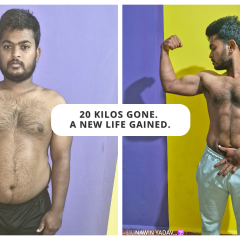
From “Laddu Nawin” to Fit and Fierce: How a 25-Year-Old Insurance Advisor Shed 20 Kilos and Gained His Life Back

When 25-year-old Nawin Yadav from Hyderabad walked into his office every morning, he carried more than just his files and policy papers. He had the weight of fatigue, sluggish energy, and an ever-growing belly that was becoming the butt of jokes. “People … [Read More...]

“I’ve Challenged Myself to Live 100 Years” – The Story of Chandubhai Savani’s Second Chance at Life

At 67, most people start slowing down. Not Chandubhai Savani. A resident of Surat, Chandubhai, thought life was on track. “My life was going well till I had my bypass surgery,” he says. That surgery, back in 2021, was a wake-up call.  Medication was routine, but exercise wasn’t. His diet? What he calls ‘normal.’ “I […]

From Shimla’s Slopes to Chandigarh’s Sidewalks: Surinder Kaur Bhalla’s Journey from Chaos to Control

Some journeys start with a plan. Others begin with a stumble literally. Surinder Bhalla, a government professional, born and raised in the scenic hill town of Shimla, had always lived a life of movement. “In Shimla, you walked everywhere,” she reflects. “Walking was never an exercise. It was just life.” But after shifting to Chandigarh, […]

Ananda Mukherjee Health Story

From Terminal Illness To Complete Wellness! Ananda Mukherjee Health Story

As we observe World Cancer Day under the powerful theme ‘United by Unique’ (2025-2027)**, we are reminded that every individual’s journey with cancer is distinct, yet united by shared resilience, hope, and the collective fight against this disease. This theme places people at the centre of care and their stories at the heart of the […]

  • HOME
  • HEALTHY LIVING
  • FITNESS
  • HEALTHY RECIPES
  • USER STORIES
  • KARMA
  • BUY GOQii

Copyright ©2016 GOQii