GOQii

Blog

  • HOME
  • HEALTHY LIVING
  • FITNESS
  • HEALTHY RECIPES
  • USER STORIES
  • KARMA
  • BUY GOQii

Search Results for: doctor

August 7, 2025 By GOQii Leave a Comment

Hypertension and Obesity: Connecting the dots

Hypertension and Obesity: Connecting the dotsYou’ve been taking your blood pressure tablets for years. You rarely miss a dose. Yet, every time you check, those numbers stubbornly stay high.

Ideally, an individual’s blood pressure should be around 120/80 mmHg. But yours? It hovers around 140/90 mmHg or higher. Some days, it’s only within a normal range because of the medication. Sounds familiar?

Now, imagine this: You visit your doctor, expecting yet another tweak in your prescription, but instead, they ask about something else, your weight. You sigh, thinking, Not again. But what if your weight is playing a bigger role in your hypertension than you realise?

Many of us focus on treating hypertension with medication alone, but what if the missing link is something else something closer to home, like the extra pounds we carry? Let’s connect the dots between hypertension and obesity and uncover why tackling this could be the key to managing both conditions.

What is Hypertension? And Its Biggest Triggers

Hypertension occurs when the pressure inside your blood vessels runs too high, putting extra strain on your heart. It’s often called the silent killer because, most of the time, there are no obvious symptoms until you check your blood pressure. And if left unchecked? It can quietly pave the way for heart disease, stroke, and kidney problems.

What causes it? Some factors, like genetics and ageing, are beyond our control. But others such as lack of exercise, too much salt, excessive alcohol consumption, and obesity are within our reach.

Here’s the game-changer: while you can’t turn back time or change your genetics, you can take charge of your weight. Obesity and hypertension are deeply connected and tackling one can be the key to controlling the other.

Are You Obese? Here’s How to Find Out

We often associate obesity with being “overweight”, but not all extra weight is a problem. A few extra kilos won’t necessarily harm you. However, when excess fat starts affecting your health, that’s when it turns into obesity a condition that raises the risk of hypertension, heart disease, diabetes, and more.

How to Check If You’re Obese

  • Body Mass Index (BMI):

✔ BMI = Weight (kg) ÷ Height (m²)

✔ A BMI over 30 is classified as obese.

  • Waist Circumference:

✔ Men: Over 102 cm (40 inches)

✔ Women: Over 88 cm (35 inches)

Note: For people of Middle Eastern or Asian descent, some health experts recommend lower cutoff points (e.g., >90 cm for men, >80 cm for women) due to different body compositions. It’s best to discuss your personal risk with your doctor.

If you fall into these categories, it’s time to take action.

How Obesity Raises Your Blood Pressure

Obesity isn’t just about carrying extra weight it puts your entire cardiovascular system under strain, making it harder for your heart to function properly. Here’s how:

  • Clogged Arteries & Increased Pressure: Excess weight raises cholesterol levels, leading to plaque build-up in the arteries. This narrows blood vessels, forcing the heart to work harder resulting in high blood pressure.
  • More Weight = More Work for Your Heart: Your heart has to pump blood for your entire body. The more weight you carry, the harder it has to work, increasing blood pressure levels.
  • Insulin Resistance & Nerve Overload: Obesity can lead to insulin resistance, which raises insulin levels in your blood. This triggers nerve activity in the brain, causing blood pressure to rise.
  • Kidneys Under Pressure: Excess belly fat compresses your kidneys, making it harder for them to flush out waste and excess fluid. More fluid = higher blood pressure.
  • Stress Hormones & Water Retention: Being overweight often raises cortisol (the stress hormone). High cortisol leads to more salt and water retention, which in turn leads to higher blood pressure.
  • Inflammation & Poor Heart Health: Obesity fuels chronic inflammation, which damages blood vessels and increases oxidative stress one of the main drivers of high blood pressure.

The bottom line? Obesity is a major driver of hypertension, affecting your entire body. But here’s the good news—you can take control and reduce your risk!

How to Control Hypertension & Lose Weight Naturally

Eat Smart, Stay Healthy

The key to weight loss? Burn more calories than you consume. This is called a calorie deficit.

  • Control Your Portions: Eating smaller meals helps keep calorie intake in check.
  • Choose Low-Calorie Foods: Load up on vegetables, lean protein, and whole grains.

Boost Your Metabolism with Protein

Protein is one of the most essential nutrients for weight loss because it helps burn more calories and keeps you full for longer.

  • Include lean meats, fish, eggs, dairy, soy, lentils, and legumes.
  • Reduce refined carbohydrates like white flour and sugary foods, which lead to fat accumulation.

Ditch the Sugar Trap

Fast food and sugary snacks contribute to insulin resistance, a major factor in high blood pressure.

  • Processed foods contain hidden sugars, so check labels and choose whole, natural foods.

Less Salt, Less Weight, Better Blood Pressure

Reducing salt intake can help with weight loss and blood pressure control.

  • Processed foods, ready meals, and salty snacks add excess sodium, leading to bloating and water retention.
  • Opt for fresh, home-cooked meals whenever possible.

Finding the Right Diet for You

Intermittent fasting, keto, low-carb, or plant-based diets can all be effective—but not every diet suits everyone.

  • Consult a nutritionist or your doctor before making major dietary changes to find what works best for your body.

Get Moving – Exercise Regularly

One of the best ways to lose weight and lower blood pressure is simple: move more!

    • Aim for at least 30 minutes of activity per day.
    • Try brisk walking, cycling, swimming, dancing, or strength training.
    • Start small, stay consistent – every little movement counts!

Think of it like this: Imagine carrying a 10-pound backpack all the time sounds exhausting, right? That’s what obesity does to your body. At first, moving more might feel tough, but your stamina will build, and every step will get easier. One pound at a time.

Manage Stress & Sleep Well

Lack of sleep and high stress levels contribute to weight gain & high blood pressure.

  • Prioritise 7-9 hours of quality sleep.
  • Practise mindfulness, deep breathing, or yoga.
  • Limit screen time before bed.

Take Charge of Your Health Today

Now you know the secret: losing weight is one of the most effective ways to manage blood pressure. The best part? It all starts with two things eating better and moving more. Set your target weight, make a plan, and start today. Your future self will thank you! 

If you’re currently on blood pressure medication, don’t stop it abruptly.Instead, use this blog as a guide to complement your medical care, and talk to your doctor before making any major lifestyle or diet changes.

#BeTheForce

Disclaimer: The information provided in this blog is for general awareness and educational purposes only. It is not intended to replace professional medical advice, diagnosis, or treatment. Always consult a qualified healthcare provider for personalised medical guidance or concerns related to your health. Images shown are for representation purposes only and may not depict the exact recommendations or outcomes.

August 6, 2025 By GOQii Leave a Comment

The 5-Minute Rule: A Simple Trick to Get Started When You’re Stuck

We’ve all been there. The task is right in front of you, you know it needs to get done, but somehow, you just can’t bring yourself to start. Minutes turn into hours, the to-do list grows longer, and that heavy feeling of being stuck starts to take over.
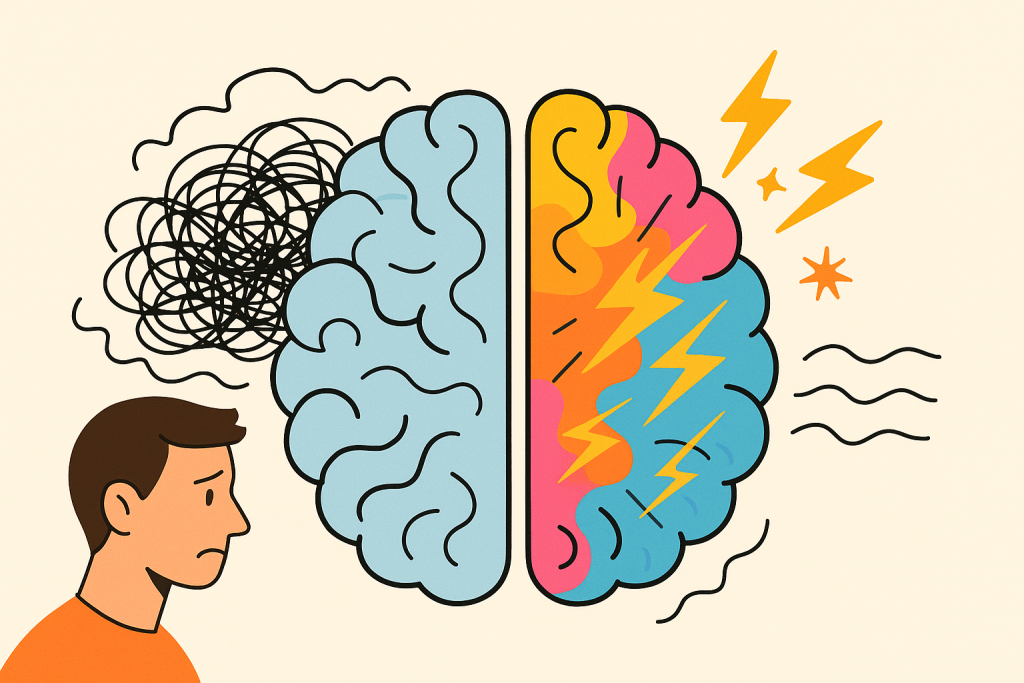
For many people, especially those with ADHD, this isn’t just a bad habit; it’s task paralysis, and it shows up more often than anyone would like. But here’s something surprisingly simple that can help: The 5-Minute Rule.

The Hardest Part is Just Getting Started

Often, the biggest hurdle is the beginning. This is especially true when a task feels overwhelming, boring, or just too big to tackle in one go. For many, this isn’t about laziness or a lack of discipline it’s about the mental weight of the task. It looms. It can even feel paralysing.

But what if your only job was to work on it for just five minutes?

How the 5-Minute Rule Works

It’s as straightforward as it sounds. Follow these simple steps:

  1. Pick one task you’ve been avoiding.
  2. Set a timer for five minutes.
  3. Tell yourself: “I only have to do this for five minutes. After that, I can stop if I want to.”

There’s no pressure to finish. The goal isn’t to tick the whole thing off the list. You’re simply tricking your brain into taking that first, tiny step. That’s it.

Why It’s So Effective

Here is the magic of this rule: once you begin, momentum often follows.

An object in motion stays in motion. Five minutes pass, and you might find yourself thinking, “Okay, maybe just another five.” Suddenly, you’re in the flow. The task that felt like a mountain turns out to be far more manageable once you’ve started climbing.

And if five minutes is all you can manage today? That’s perfectly fine. You still showed up. You still took action against paralysis. That matters.

It’s About Progress, Not Perfection

The 5-Minute Rule works because it gives your brain an out; it dramatically lowers the stakes.

You’re not committing to an hour-long slog, just a tiny step forward. And more often than not, that’s all it takes to unlock movement.

So, the next time you feel stuck, whether it’s replying to an email, tidying a room, or starting a work project just set that timer for five minutes.

Don’t underestimate the power of small starts. They build momentum. They build habits. And sometimes, they build the bridge you need to get from paralysis to progress.

Give it a go today. Just five minutes. You might be surprised at what gets done.

#BeTheForce

Disclaimer: This blog is for informational purposes only and is not a substitute for professional medical advice, diagnosis, or treatment. Please consult a doctor for personalised guidance and recommendations related to ADHD.

August 4, 2025 By GOQii Leave a Comment

ADHD Brain Basics: Not Broken, Just Brilliantly Wired

Ever felt like your mind is ten steps ahead of the world, and sometimes even ten steps ahead of you? Thoughts racing, ideas bursting at the seams, yet the simplest task feels like trying to climb a mountain in flip-flops?



If that sounds familiar, you’re not alone. And no, your brain is not broken. You may just have an ADHD brain one that is wired differently, not defectively.

The ADHD Brain: A Race Car with Unpredictable Brakes

Here’s a metaphor that often hits home: think of the ADHD brain as a high-performance race car. The engine roars with power, the design is sleek, and the potential is immense. But the brakes? They can be a bit unreliable.

That’s ADHD in a nutshell. The spark, creativity, and momentum are all there in abundance. The challenge appears when it’s time to pause, shift gears, or tune into something that isn’t immediately engaging. This isn’t about laziness or a lack of discipline; it’s about the brain’s executive functions like planning, organisation, and impulse control which simply operate on a different system and require different kinds of support.

Why This Understanding Changes Everything

Many people say that when they first understand this concept, it reframes their entire life. ADHD isn’t about having less ability; it’s about having a different kind of ability.

The core issue isn’t an inability to focus. It’s that focus doesn’t always turn up on cue or for the “right” things. The same brain that can’t recall where it left the house keys can dive into hours of intense, joyful hyperfocus on something it finds meaningful, urgent, or exciting.

That’s not dysfunction. That’s divergence. And with the right approach, it’s a gift that can be channelled into incredible things.

Start with Understanding, Not Shame

When ADHD is met with curiosity instead of judgment, something powerful begins to unfold. The behaviours that once felt like personal flaws start to make perfect sense.

  • Struggling to get started? That’s not laziness; it’s often executive dysfunction causing a feeling of being overwhelmed.
  • Chronic lateness? It’s rarely rudeness; it’s more likely a different internal sense of time, sometimes called “time blindness.”
  • Forgetting things often? It’s probably not carelessness; it’s an overloaded working memory struggling to hold onto too many details at once.

The more we understand the “why” behind the behaviour, the more compassion we can build for ourselves and for the people around us who live with ADHD.

The Superpowers: Real, Tangible Strengths

Brains with ADHD can be:

  • Intensely creative and innovative problem-solvers.
  • Emotionally intuitive and empathetic.
  • Unusually perceptive, noticing things others miss.
  • Fiercely passionate and driven when engaged.

The goal isn’t to “fix” someone. It’s to help them understand their unique wiring so they can partner with their brain, not battle against it.

Not Alone, Just Wired Differently

ADHD doesn’t define you, but understanding it can be life-changing. Your brain is full of power, insight, and potential. The journey ahead isn’t about becoming someone new it’s about learning how to become more authentically you.

So stay curious. Be gentle with yourself. And know this: a whole world of insight, support, and possibility is waiting for you.

#BeTheForce

Disclaimer: This blog is for informational purposes only and is not a substitute for professional medical advice, diagnosis, or treatment. Please consult a doctor for personalised guidance and recommendations related to ADHD.

August 1, 2025 By GOQii Leave a Comment

Navigating the Anxiety and ADHD: Daily Struggles, Coping Strategies

If you’re living with ADHD, you’ve likely met its constant companion: anxiety. The two are like old acquaintances, often showing up together in the background of your daily life. ADHD brings its vibrant mix of curiosity and distraction, while anxiety adds a layer of restlessness, self-doubt, and that nagging sense that something might go wrong.

It’s no surprise, really. The unpredictable nature of ADHD – missed deadlines, impulsive decisions, and forgotten appointments—can create a daily rhythm filled with uncertainty. And uncertainty is anxiety’s favourite playground.

But here’s the hopeful part: understanding how ADHD and anxiety interact is half the battle. With the right strategies, support, and a little self-compassion, you can learn to manage both with more confidence.

Why Do ADHD and Anxiety So Often Overlap?

Think of the ADHD brain as one that’s wired for interest-based focus. This means you might find it hard to stick with tasks that don’t feel engaging or urgent. When the demands of a world designed for neurotypical processing start to pile up—misunderstood instructions, forgotten chores, a backlog of emails anxiety naturally creeps in.

You may find yourself constantly worrying about forgetting something crucial. Ruminating over past conversations. Or feeling overwhelmed at the thought of making choices that seem easy for others.

This isn’t a weakness. It’s the experience of a neurodivergent mind navigating a world that isn’t always built for it.

Common Daily Triggers for ADHD-Related Anxiety

For many with ADHD, anxiety doesn’t just come from big life events. It often bubbles up from everyday moments:

  • Feeling overwhelmed by choices, even simple ones.
  • Struggling to start a task because you don’t know where to begin.
  • Having difficulty concentrating at work or school.
  • Fearing you’ve misread social cues or said the wrong thing.
  • Feeling like you’re constantly behind, no matter how hard you try.

These moments can feel isolating, but you are not alone.

Coping Strategies That Work

Managing ADHD and anxiety takes practice and patience, but small, consistent changes can make a vast difference.

  • Establish Simple Routines

Structure can be incredibly calming for an ADHD brain. Start with small morning or evening rituals. Something as simple as making your tea the same way each morning or laying out your clothes the night before can create a reassuring sense of control.

  • Break Down Overwhelming Tasks

Instead of writing “finish report” on your to-do list, break it down into smaller steps: Open laptop, write introduction, outline key points. Clear, actionable steps reduce the feeling of being overwhelmed.

  • Use External Reminders

Don’t rely on your memory alone. Use phone alarms, sticky notes, or visual planners. These external cues can serve as gentle, non-judgmental reminders throughout the day.

  • Practice Mindful Breathing

When you feel anxiety building, just one minute of intentional breathing can help reset your nervous system. Inhale deeply, hold for a moment, and exhale slowly. Repeat.

  • Try Body Doubling

Working on a task alongside someone else (even if they’re working on something different, either in-person or remotely) can significantly improve focus and quiet the mental chatter that fuels anxiety.

  • Practice Self-Compassion

ADHD and anxiety often bring a loud inner critic. Experiment with changing that voice. “I’m doing my best with the tools I have” goes much further than, “Why can’t I just get my act together?”

You Don’t Have to Choose Between Functioning and Feeling Okay

It’s easy to fall into the trap of thinking you must push yourself endlessly to manage ADHD, or that anxiety is just something you have to live with.

But the reality is, it’s okay to slow down. It’s okay to ask for help. It’s okay to celebrate the small victories.

You’re not lazy. You’re not broken. You’re navigating a brain that works differently, and it’s okay for things to feel hard sometimes.

When it comes to managing ADHD and anxiety, there is no one-size-fits-all approach. What works for one person might not work for another and that’s okay. The most important thing is to remain curious. Experiment. And treat yourself with the same kindness you would offer to someone you truly love.

Because even though the path may feel tumultuous, it’s yours. And you’re more on track than you realise.

#BeTheForce

Disclaimer: This blog is for informational purposes only and is not a substitute for professional medical advice, diagnosis, or treatment. Please consult a doctor for personalised guidance and recommendations related to ADHD.

  • « Previous Page
  • 1
  • …
  • 3
  • 4
  • 5
  • 6
  • 7
  • …
  • 85
  • Next Page »

Search

Recent Posts

  • PCOS and Anxiety: Discover Relief with the 54321 Technique
  • Navigating the Maze of Nutrition: Finding Clarity Amidst Confusion
  • Get children active and keep them healthy
  • What Gestational Diabetes Can Do To You & Your Unborn Child
  • Breathing – A Forgotten Art

Stay Updated

Archives

  • December 2025 (4)
  • November 2025 (15)
  • October 2025 (20)
  • September 2025 (6)
  • August 2025 (6)
  • July 2025 (12)
  • June 2025 (18)
  • May 2025 (16)
  • April 2025 (23)
  • March 2025 (23)
  • February 2025 (22)
  • January 2025 (26)
  • December 2024 (26)
  • November 2024 (25)
  • October 2024 (22)
  • September 2024 (24)
  • August 2024 (31)
  • July 2024 (21)
  • June 2024 (26)
  • May 2024 (31)
  • April 2024 (27)
  • March 2024 (29)
  • February 2024 (26)
  • January 2024 (25)
  • December 2023 (15)
  • November 2023 (11)
  • October 2023 (22)
  • September 2023 (22)
  • August 2023 (20)
  • July 2023 (22)
  • June 2023 (24)
  • May 2023 (24)
  • April 2023 (24)
  • March 2023 (23)
  • February 2023 (20)
  • January 2023 (16)
  • December 2022 (12)
  • November 2022 (15)
  • October 2022 (15)
  • September 2022 (12)
  • August 2022 (10)
  • July 2022 (17)
  • June 2022 (11)
  • May 2022 (10)
  • April 2022 (6)
  • March 2022 (6)
  • February 2022 (13)
  • January 2022 (12)
  • December 2021 (7)
  • November 2021 (3)
  • October 2021 (6)
  • September 2021 (3)
  • August 2021 (8)
  • July 2021 (7)
  • June 2021 (15)
  • May 2021 (16)
  • April 2021 (10)
  • March 2021 (7)
  • February 2021 (4)
  • January 2021 (4)
  • December 2020 (3)
  • November 2020 (4)
  • October 2020 (10)
  • September 2020 (3)
  • August 2020 (3)
  • July 2020 (2)
  • June 2020 (4)
  • May 2020 (10)
  • April 2020 (12)
  • March 2020 (10)
  • February 2020 (4)
  • January 2020 (4)
  • December 2019 (3)
  • November 2019 (7)
  • October 2019 (5)
  • September 2019 (4)
  • August 2019 (9)
  • July 2019 (9)
  • June 2019 (11)
  • May 2019 (4)
  • April 2019 (9)
  • March 2019 (8)
  • February 2019 (9)
  • January 2019 (8)
  • December 2018 (9)
  • November 2018 (3)
  • October 2018 (3)
  • September 2018 (5)
  • August 2018 (10)
  • July 2018 (6)
  • June 2018 (13)
  • May 2018 (8)
  • April 2018 (18)
  • March 2018 (9)
  • February 2018 (8)
  • January 2018 (15)
  • December 2017 (12)
  • November 2017 (19)
  • October 2017 (13)
  • September 2017 (15)
  • August 2017 (4)
  • July 2017 (8)
  • June 2017 (7)
  • May 2017 (6)
  • April 2017 (8)
  • March 2017 (6)
  • February 2017 (7)
  • January 2017 (9)
  • December 2016 (10)
  • November 2016 (7)
  • October 2016 (7)
  • September 2016 (7)
  • August 2016 (11)
  • July 2016 (9)
  • June 2016 (9)
  • May 2016 (12)
  • April 2016 (17)
  • March 2016 (17)
  • February 2016 (8)
  • January 2016 (6)
  • December 2015 (2)
  • November 2015 (9)
  • October 2015 (7)
  • September 2015 (9)
  • August 2015 (11)
  • July 2015 (9)
  • June 2015 (12)
  • May 2015 (9)
  • April 2015 (13)
  • March 2015 (8)
  • February 2015 (5)
  • January 2015 (12)
  • December 2014 (14)
  • November 2014 (11)
  • October 2014 (6)
  • September 2014 (13)
  • August 2014 (12)
  • July 2014 (6)
  • June 2014 (2)
  • May 2014 (7)
  • April 2014 (5)

From “Laddu Nawin” to Fit and Fierce: How a 25-Year-Old Insurance Advisor Shed 20 Kilos and Gained His Life Back

When 25-year-old Nawin Yadav from Hyderabad walked into his office every morning, he carried more than just his files and policy papers. He had the weight of fatigue, sluggish energy, and an ever-growing belly that was becoming the butt of jokes. “People … [Read More...]

“I’ve Challenged Myself to Live 100 Years” – The Story of Chandubhai Savani’s Second Chance at Life

At 67, most people start slowing down. Not Chandubhai Savani. A resident of Surat, Chandubhai, thought life was on track. “My life was going well till I had my bypass surgery,” he says. That surgery, back in 2021, was a wake-up call.  Medication was routine, but exercise wasn’t. His diet? What he calls ‘normal.’ “I […]

From Shimla’s Slopes to Chandigarh’s Sidewalks: Surinder Kaur Bhalla’s Journey from Chaos to Control

Some journeys start with a plan. Others begin with a stumble literally. Surinder Bhalla, a government professional, born and raised in the scenic hill town of Shimla, had always lived a life of movement. “In Shimla, you walked everywhere,” she reflects. “Walking was never an exercise. It was just life.” But after shifting to Chandigarh, […]

Ananda Mukherjee Health Story

From Terminal Illness To Complete Wellness! Ananda Mukherjee Health Story

As we observe World Cancer Day under the powerful theme ‘United by Unique’ (2025-2027)**, we are reminded that every individual’s journey with cancer is distinct, yet united by shared resilience, hope, and the collective fight against this disease. This theme places people at the centre of care and their stories at the heart of the […]

  • HOME
  • HEALTHY LIVING
  • FITNESS
  • HEALTHY RECIPES
  • USER STORIES
  • KARMA
  • BUY GOQii

Copyright ©2016 GOQii

